Archive for the ‘Uncategorized’ Category

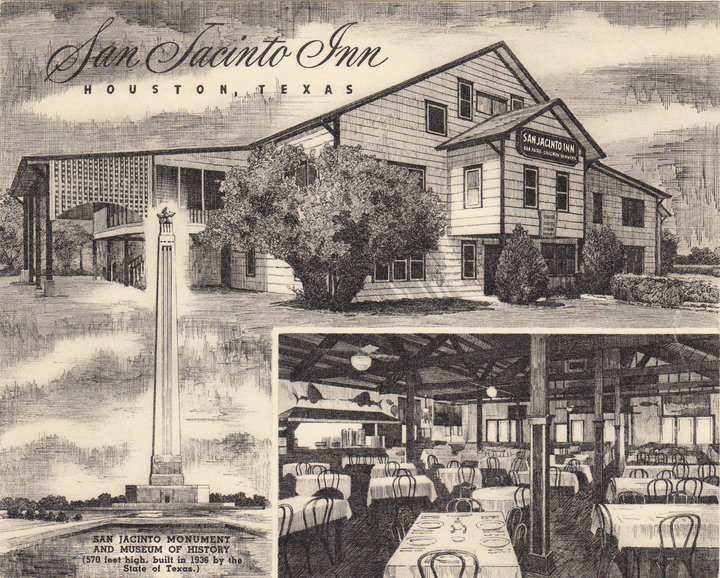
The San Jacinto Inn

August 8, 2010

The San Jacinto Inn, 1918-1987.

For seventy years, the San Jacinto Inn reigned as the place to eat at the battlegrounds twenty miles east of downtown Houston where Texas won (or, at least, thought it had won) its independence from the Republic of Mexico. In an eighteen minute crushing battle on April 21, 1836, General Sam Houston and his Army of Texas volunteers totally overwhelmed General Santa Anna and his Mexican Army, forcing their surrender and their withdrawal from Texas. Back then, and even in 1936, when the San Jacinto Monument was started, no one had counted on the Mexican “army” pouring back into Texas one-by-one and in twos and threes from the latter 20th century forward, but that’s a whole other story altogether.

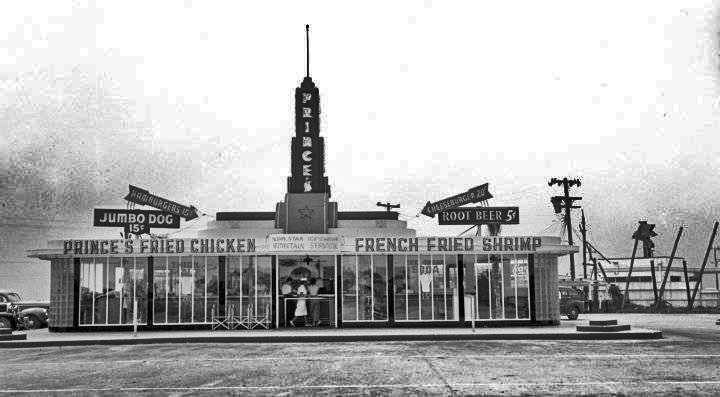
Today I’m writing about a Houston dining institution that was very special – even in an era when dining out was special. For my own mom ad dad, it was a place they liked to go, once in a very blue moon, when they really wanted to get away from us kids. I don’t recall going with them very often on any of those SJI trips. We were much more likely to get in on trips to Prince’s Drive Inn or Weldon’s Cafeteria on South Main, or to Felix’s Mexican Restaurant on Westheimer.

The San Jacinto Inn was just a place that Mom and Dad made into their own getaway destination. I was there just often enough to discover the culinary reasons that influenced their choice of it. The Inn offered all-you-can-eat shrimp, crab, or whatever other seafood was in season and on-board, plus delicious fried chicken and the most deliciously sweet and moist biscuits that ever melted in your mouth. Located on the monument grounds road that feeds directly into the Lynchburg Ferry, the San Jacinto Inn thrived as an ongoing celebration of the Texas Spirit. People just loved it – and they loved the tight connection to Texas history that came with the restaurant’s proximity to both the San Jacinto Monument and the Battleship Texas.

The all-you-can-eat feature was an almost trademark presentation of the Inn’s operations from the start, but the place’s beginnings were even simpler. Started on the north side of the Houston Ship Channel in 1918,  Jack and Bertha Sanders teamed up as a married couple by opening the place with room for only five tables. Jack supplied the fish and cooking wood from his own fishing and foraging – and Bertha did the cooking. It was said to be so good even then that people just couldn’t get enough of it.

Fire wiped out the first little place, but the Sanders couple just moved and built a bigger place, and on a site that would one day put it next door to the retired Battleship Texas. The deal grew in sweetness during the 1920s, when the all-you-can-eat price steadied at one dollar a person. The price doubled to two bucks a head (or mouth) in the 1930s, but that 100% price jump during the Great Depression didn’t stop people from swarming the place on weekends.

A major restaurant review of the Inn in 1925 elevated the local eatery into one that then and thereafter thrived upon rave national approval, transforming the audience somewhat to the regular inclusion of out-of-state diners during the vacation travel seasons. The service was southern and loyal. Many of the wait staff worked at the Inn for thirty to forty years.

A fire took the place down again in 1927, but the rebuilding resulted in the iconic two-story building you see featured as a picture with this story. Things continued beautifully until they finally came to an end in 1987.

The San Jacinto Inn remains a prime example of a larger truth: You, or Father Time, may kill something beautiful in it’s physical form, eventually, but the memory of anything lovely or happy or delicious lives on forever in those who lived it – whatever it may have been.

Long live the memory of the San Jacinto Inn!

Price Check on Aisle 2010

August 7, 2010

In 1946, Princes's burgers were 15 cents; a nickel more with cheese.

For those of us who came of age in the late 1950s, a couple of ridiculous factors stand out about the economics of those times, when you look at it by today’s money standards. One was the low-cost of everything; the other was how little we got paid for anything we did. In fairness though, can we really compare economic conditions in 2010 with those in 1955? I don’t know. Wiser heads than me have said we cannot, but I’m sometimes a ornery curmudgeon. (You don’t have to be ornery all the time to become a curmudgeon. You just have that gene in you and get older to earn the distinction.)

Economists are a little like baseball historians in this regard when it comes to comparing conditions from one era to those of another. Many say you can’t do it because of the deflationary/inflationary slide that prices take on both income possibility and the cost of living due to changes in the world economy.

What the heck does that mean? If something like a Prince’s hamburger cost us 15 cents in 1945 and now sells for five to six bucks, if minimum wage in 1945 was 40 cents ann hour and then $7.25 an hour in 2009, shouldn’t we be a little concerned with trying to simplify the reasons things have changed. To me, that makes sense, but what do I know? I grew up in the Houston East End, where nobody I know ever took any courses in economics, and where the goal of making $10,000 a year someday seemed like the best answer to all our basic needs.

With all that in mind, here’s what I’ve tried to learn and piece together from banging around in the world for a half century in the marketplace. Feedback, corrections, and additions from all of you are welcome. Today’s subject is about as close as I will ever come to a serious column on world conditions.

Here are the differences i now see between 1956, the year I finished high school and started college, and 2010:

(1) In 1956, we didn’t live on credit cards. If we didn’t have the money for something, we didn’t buy it.

(2) In 1956, we were the manufacturing giant of the world. We lost much of that ability to make things for sale to ourselves and others because (a) our own cost of union labor and (b) federally guaranteed minimum wages took us out of competition from countries that had large supplies of incredibly cheap, exploitable labor.

(3) Even though we make fewer things today, our population continues to grow, increasing competition for the skilled jobs available and pushing more people toward minimum wage service jobs, and subsidy living paid for by the government at all levels.

(4) Job competition in the past half century also has increased rightfully too as a direct result of a more balanced playing field for women and minorities. In spite of the good changes, we still have fewer people working at taxable jobs that pay for everything else.

(5) Americans are now so busy that this need for immediate help from others drives the product and service markets to become the best at “give it to them now and put it on the card” kinds of selling. If it’s popcorn at the movies or a house full of new furniture, you just put it on the credit card and worry about it tomorrow.

(6) Unfortunately, our culture also now gives us a Congress that puts “our” government program needs on the credit “tab” that leaves both the problem and the explanation for debt to our grandchildren and politicians of the future.

(7) Bottom Line: At our present rate, we are in line for a “going out of business” sale that will be immensely helped by the booming new economy of China.

So, what can we do about it, if anything? I’m not sure, but here’s what seems important to me:

(1) We need to find a true bipartisan approach to solving the national debt problem. This business of the party on the outside always doing everything it can to promote the failure of the party on the inside is getting to be like the two sailors arguing over who put the hole on “my side of the boat” with the harmed party getting even by putting a hole on his sailing mate’s floor – just to get even.

(2) We need to start making things we need again – and buying only those things we need with cash. If we sink the credit-spending industry, maybe that’s what we need to do. How can we ever hope to get out of debt when  a whole industry exists to make sure we stay there?

(3) If we could do the first two things, maybe we could also find a way to install the third leg of this stool. And that is – to find a reasonable balance between income and expenses for our so-called American “way of life.” It seems to me that the balance will find itself if we are all trying to live on what we make and then buying only what we can afford to pay for now.

(4) I also think it’s imperative that we find a way to control our borders so that immigration takes place as a legal process. Illegal immigration creates a source of cheap labor that actually becomes an addiction to the American industries that depend upon it, while at the same time passing on the cost of health and educational programs for the children of illegals to the American workers who are paying taxes.

We can’t keep doing what we’re doing and hope to survive as the America we know and love. I will be going back to baseball, local history, and the lighter side tomorrow, but I just had to get this stuff off my chest this Saturday morning.

We are going to need all the guts and wisdom we can muster to survive this one, folks, and I sure make no claim for having any or all the answers. Maybe debt is important to economic expansion, or simply  practically necessary in the matter of homes and cars, but what else do we have to go in the hole to own, season tickets to the Astros home games? As much as I love our team, I don’t think so.

Maybe we can all start the turnaround in this way: It’s Saturday. If you’re going out to a weekend movie, try not to charge the tickets or the pop corn. It’s a start.

And please weigh in with your own thoughts about what we need to do to right the ship of our economy. If we wait on our politicians to come up the answers, left or right, we may just be waiting until hell freezes over. Most politicians seem to be about taking good care of their own needs while they strive to take or hold on to power while hoping to come across to the voting public as people who care about their constituents and their country.

The City Auditorium: Home of Houston Wrestling

August 6, 2010

I first wrote this basic article over on the Houston ChronCom site back on July 11, 2008. Due to renewed interest that fired from the spark of yesterday’s Jim Menutis article, here it is again. The City Auditorium was the site of some memorable concerts and appearances by some iconic people. Certainly the famous stand of Fats Domino there against segregation was major – as was the early 1930s appearance by Babe Ruth for a role model talk to the youth of Houston, but even these major events failed to leave the old place with its major venue identity.

You see, the City Auditorium will always be first remembered as the home of Friday Night Wrestling. Let’s have a nice familiar-face look this morning at that little file in Houston History:
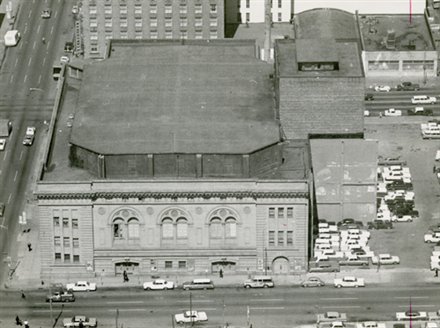
City Auditorium ~ Houston, Texas

The City Auditorium in Houston, located at 615 Louisiana, thrived from 1910 until 1962 as the downtown site of some top of the line historical speakers and entertainers. As mentioned earlier, Babe Ruth spoke there during the early 1930s. Elvis Presley performed there in 1955. Countless religious figures, including Billy Graham, conducted revivals there over the years.

The above photo is facing north. The tall building at the top is where most guests stayed, if they played the City Auditorium. It’s the Lancaster Hotel now. It was called the City Auditorium Hotel back then.
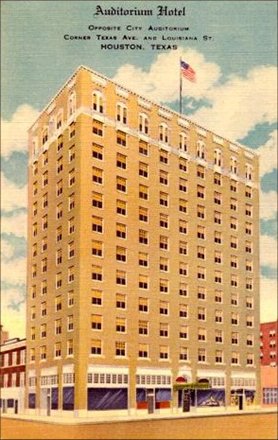
 

The Lancaster – in its days as The City Auditorium Hotel

The Lancaster Hotel is now the commodious and convenient place to be for those happy out-of-towners attending symphony concerts at the City Auditorium’s successor, Jones Hall, the venue that replaced the old auditorium in 1966.

For as long as we are honestly trying to maintain the true history of what has gone on in Houston over the years, we shall never be able to dismiss the most popular act that ever played this site as the very heart of the old City Auditorium’s dance card. The post World II popularity of professional wrestling married with the advent of television to make “Friday Night TV Wrestling” the most popular show in Houston for years.

Wrestling was not new to Houston after World War II. It had been around since the 1920s under the promotional drive of the late Morris Siegel. Wrestling just took to the “Big Eye” like fried eggs to a hot skillet. The combination instantly and simply cooked up the answer to every Houstonian’s hunger for easy answers to the many questions of Good versus Evil.

You didn’t have to think. All you had to do was watch.

We all knew it was fake. (OK, maybe 80% of us knew it was fake.) But it still didn’t matter. We tuned in to see the Good Guys and Good Gals win. (Yep!. We had “lady wrestlers” in those days too.) It would be impossible to recount them all here, but I will try to cover my favorites with a few words of special remembrance.

First of all, everything about Houston wrestling begins and ends with the name of one man, a man named Paul Boesch.
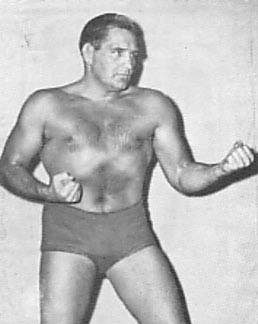
Paul Boesch followed Morris Sigel as Houston’s iconic wrestling promoter.

Paul Boesch (shown above) was a mostly retired wrestler with caulifower ears and a sharp, articulate intelligence. Boeach had an incredible intuitive feel for the dramatic moment and how to use the grudge element as everyday fodder for TV melodrama. As the announcer, and later as the promoter who replaced Morris Siegel, Paul Boesch was a master genius at knowing how to give the public what they wanted.

Once, in 1951, a bad guy wrestler named Danny Savich came on Boesch’s show to explain his atrocious behavior in a match he had just “won.” Instead of explaining, he punched out Paul Boesch too, daring him to do anything about it. By show’s end, Boesch had recovered enough to tell us over the air that he had spoken with Mr Siegel by phone – and that he would be making a one-match comeback next Friday to answer Danny Savich’s challenge.

There was just one catch. Because Paul Boesch was wrestling on the next card, he could not also broadcast that next Friday too. Anyone wanting to see the Boesch-Savich main event would have to buy tickets and see it live. I didn’t get to go, but I couldn’t wait to see the Saturday morning Houston Post sports page report. To my smiling great pleasure, the headline read: “BOESCH KOs SAVICH!”
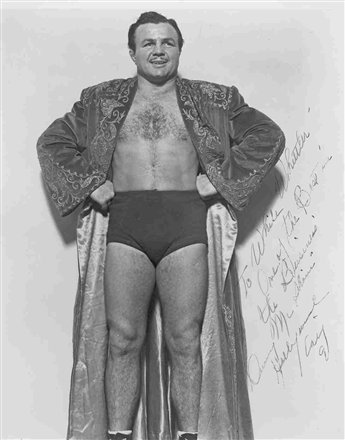


Irish Danny McShane drew love and hate.

I hated Danny Savich, but I loved Irish Danny McShane! “Irish Danny” was sort of a gray-colored anti-heroic fellow in this black and white world, one who could be a good guy or a bad guy, depending upon the character of the other wrestler and the circumstances of how right and wrong was tilting in the wind on a particular Friday. In other words, McShane was sort of a politician who wrestled. He could stand up for justice, if that’s what the fans seemed to want. Or, if need be, he could remove a bar of soap he had hidden in his wrestling trunks and rub it in a opponent’s eyes, if that would help him win. On those times he battered a foe down or unconscious, McShane had this little bold chesty rooster strut he did around the ring. It angered the fans who didn’t like him, and it frequently had a way of reviving the fallen opponent, who then would suddenly get up and whip Danny’s donkey until he begged for mercy! I hated it when I saw Danny beg. “Get up and fight, you big galoot,” I would yell at the tiny TV screen, but, if it wasn’t in the script that night, poor Danny would just get whipped. Then I got to hate him too for giving up – at least, for a while.


Duke Keomuka – He karate chopped his foes before they even called those open hand blows to the neck by that term.

In the Post World War II era, Hawaiian-born Duke Keomuka was cast in the role of a guy who was still fighting the Battle of Iwo Jima – on the side of the Japanese! Buried deep in that politically incorrect era were all kinds of racial hatreds that I couldn’t stand, even then. “How can you take sides with that dirty Jap?” some of the other kids would ask me. “That’s easy,” I answered. “The guy is really an American too. He’s just a great performer and he does things that nobody else can do! Besides, the war is over. My uncle fought there. And even he doesn’t hate all the Japanese people as you seem to hate them!” (I wasn’t the most articulate opponent of blind racial hatred in those days, but I tried.)

What could Keomuka do? He was the only wrestler back then who took his foes down with karate chops, and he was also the guy who taught all the others how to win a match with the “Asian sleep hold,” a move that fell only inches and seconds short of outright strangulation.

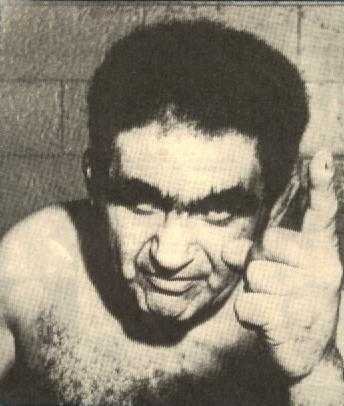
Boston’s Wild Bull Curry was a non-stop, two-fisted fury. The former boxer turned grappler never saw a chin he didn’t like to smack until its owner fell unconscious.

Wild Bull Curry had no redeeming or likable social qualities. He was just mean, mean, mean – and totally inarticulate on the verbal level. All he seemed to want was to separate every competitive head he saw from the shoulders of its owner, bashing his way mindlessly as a mad dog, I guess, to the top of the wrestling world. As far as I know, he never made it, but he sure left a large number of other wrestlers with smashed faces and heavy headaches along the way.
Miguel “Black” Guzman

Miguel “Black” Guzman was a highly popular Good Guy and a very big star with Hispanic wrestling fans. Guzman later became one of my favorite customers when I was selling mens clothes at Merchants Wholesale Exchange as a working UH college student. Blackie always came into the store with this beautiful woman. I never asked about their relationship. I was afraid to ask. Besides, it was none of my business. – Whatever happened in Merchants Wholesale – stayed in Merchants Wholesale!

Rito Romero. You always knew that Rito was a Good Guy. It took the PA announcer twenty seconds to say his name prior to bouts.

Rito Romero was another popular Hispanic Good Guy wrestler. When he and Black Guzman fought as a tag team against Duke Keomuka and Dirty Don Evans, some of the TV viewers trucked downtown and spilled into the live attendance crowd.

Dirty Don Evans Went to Our Church (I think).

Dirty Don Evans held nothing back. He specialized in rubbing soap into the eyes of his opponents to make sure that they could see cleanly, if not clearly, I suppose. As dirty as he did it at work, Evans also attended our church on Sundays during his stays in Houston. At least, I always thought this one guy was Evans. He sure looked like him, but maybe I was wrong. Not once did I ever see the guy in church rub soap in the eyes of the person sitting in the pew ahead of him. So, maybe it wasn’t Dirty Don after all.

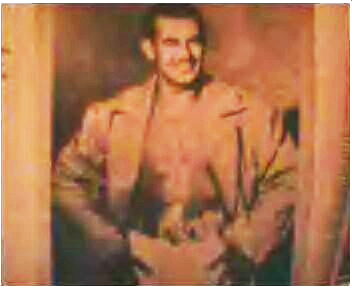
Ray Gunkel, Getting Advice from Jack Dempsey

Ray Gunkel was the ultimate pretty boy Good Guy when he started his career in his 20s. When he returned to Houston in his 40s, he had transformed into one of the most mean-spirited Bad Guys in town. Must’ve been something he ate, maybe something like …  alimony payments? I can’t think of anything else that may have turned a good man into somebody that mean over a fairly short passage of time.
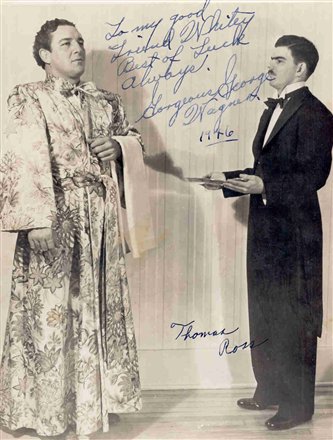
Gorgeous George dropped out of Milby High School in Houston.

Gorgeous George Wagner was a drop out from Milby High School in the Houston East End who went on to become the most famous wrestler of the early TV era. He sprayed the ring with perfume, dispensed golden bobby pins, and strutted around the ring like a haughty woman on his way to committing some dirty mayhem of his own upon “unsuspecting” opponents.

Those were the days, my friend. If you could suspend your recognition of the bogus reality that was pro wrestling back in the day, it was a great Friday night escape for Houstonians of a half century ago. And it was too, without a doubt, the main reason that most people remember the old City Auditorium today.

The place lived for years as the home of professional wrestling in Houston.

Try not to grunt and groan too much today, folks. It’s Friday and the weekend is upon us. Unfortunately for all of us, including those of you who are too young to remember: There is no more City Auditorium. No Jimmy Menutis. No Tin Hall. And, maybe worst of all, no Valian’s.

Have a nice weekend, anyway.
 

Jimmy Menutis: Houston Heart of Rock ‘n Roll

August 5, 2010

Jimmy Menutis: Houston’s Home for Rock ‘n Roll

Sometime in the late 1950s, a swarthy-looking, cigar-chomping, ever-smiling Greek fellow named Jimmy Menutis bought The Wayside, an east end suburban movie theatre on Telephone Road, near Wayside Drive, and turned it into a club for contemporary music and dancing. For about five years, the place flourished as the biggest big-name rock ‘n roll music venue to ever hit Houston.

Jimmy Menutis’s place boomed fast as no ordinary club in town ever had – and with good reason. Jimmy started bringing in some of the biggest, most popular rock ‘n roll, jazz, and blues stars in the country – and they were all pumping their talents into the lore of the Houston East End at a scale and rate that no one could ever  have predicted, or accepted as reality, until it actually landed on top of us and happened.

Louis Armstrong, Chuck Berry, Fats Domino Little Richard, Jerry Lee Lewis, Bo Diddley, Brook Benton, Sam Cooke, Earl Grant, Jimmy Reed, and countless others were simply a few of the headliners who played at Jimmy Menutis. Except for Elvis, and I’m not sure what happened there; Elvis loved playing Houston; just about everyone else made it here to play this hottest venue in the South.

Menutis had gutted the old theater seats, replacing that area with ample table settings and plenty of room left over for dancing. The old stage remained for performers, but acts were free to wind their away into the seating areas and perform up close and personal for members of the audience.

As a young man who got to experience the greats of rock and roll in live performances because of Jimmy Menutis, all I can tell you is that it was one “cool and crazy” ride, my friends. For me personally, on a site  that stood no more than two miles from my childhood home in Pecan Park, I was getting to hear all of my major music heroes in person, doing all the popular music I then still owned on vinyl .45’s and very  breakable .78s.

“Maybelline” by Chuck Berry, “Good Golly, Miss Molly” by Little Richard, “Blueberry Hill” by Fats Domino, “Jeepers Creepers” by Louis Armstrong, “What a Wonderful World It Will Be” by Sam Cooke, “Whole Lotta Shakin’ Goin’ On” by Jerry Lee Lewis, and “Ain’t That Lovin’ You, Baby” by Jimmy Reed,  are just a few of the great songs that came straight to the heart of Houston because of Jimmy Menutis.

Jimmy Menutis closed sometime in the mid-1960s, during the time I already had moved to New Orleans for graduate school at Tulane. Music was changing by then and so was the country. By then, the Beatles had captured the hearts of the even younger generation and Viet Nam and the Civil Rights Movement had put a final wrap on our old 1950s age of innocent denial or oblivion to weightier matters.

Rock ‘n Roll wasn’t going away with the death of places like Jimmy Menutis. It was simply heading into a quieter phase of it’s still continuous evolution as an American musical art form. Those of us who came of age with Chuck, Fats, Jerry Lee, and Little Richard will keep their brash bashing of words, beat, and melody alive for as long as we all last and longer.

By the time I came back to Houston from school and teaching at Tulane, some of the old rock ‘n rollers were still skirting through Houston for a few gigs and, as a still single young man at that time, I did what I could to catch their acts whenever any of the biggies came to town.

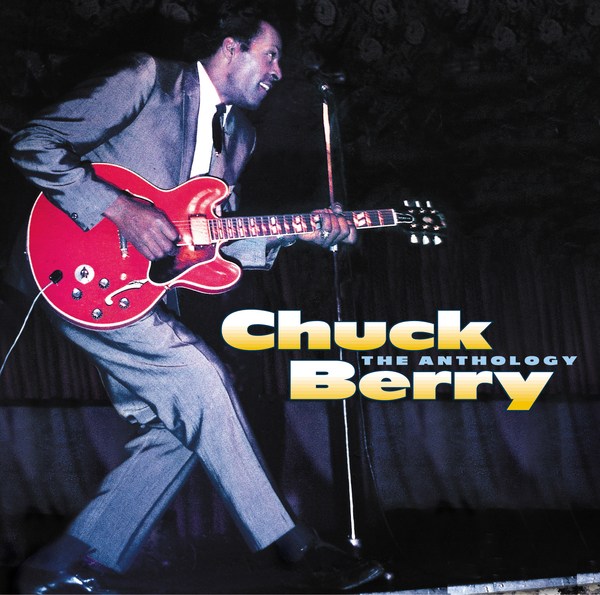
My favorite memory dates back to 1970, when my date and I went out to the Club Bwana in Pasadena to hear a weekend performance by Chuck Berry. It’s good we made early reservations for the Saturday night show because the little place was packed with people waiting on stand-by in the hope of getting in. Our small table was right near the performer’s dressing room, which was great because Chuck Berry would have to pass right by us to get to the stage. My back was to his dressing room door, but I kept looking over my shoulder, hoping to catch him from the moment he appeared.

I didn’t make it. I got distracted by the emcee’s introduction. Then it suddenly dawned on me that he was no longer doing a blah-lah about someone else. He was introducing Chuck Berry.

Chuck Berry Rocked the Club Bwana Back in 1970!

I turned to my left and abruptly found myself staring eye-level into the shine of a beautifully red-surfaced, heart-shaped guitar. Lifting my gaze, I just as suddenly found myself staring into the eyes of the one and only Chuck Berry. He was standing right beside our table, waiting for the emcee to finish his intro.

“Hi Ya, Chuck!” I blurted out.

“How you doin’, man?” Chuck Berry answered.

“LADIES AND GENTLEMEN, … THE ONE AND ONLY … CHUCK BERRY!” The emcee boomed.

The golden moment had ended, but the imagery lives on forever in my brain, right there with the time I made eye contact with Joe DiMaggio in April 1951, right after he caught a fly ball in the outfield at Buff Stadium and I was standing behind the SRO crowd ropes in left center field near the spot of his catch.

People like me never forget a conversation with someone like Chuck Berry, even one as short as ours in 1970.

The rest of the night was legendary for all who crowded into the Club Bwana that night. Chuck Berry played on violently for about two hours, stopping only long enough to wipe perspiration and slug down another glass of water. He was getting all of our love that special night and he fed on it with a non-stop heart and soul performance.

I don’t get around much, anymore, but I sure remember the times I did. And I wouldn’t trade any of them for anything in the world. And places like Jimmy Menutis and the Club Bwana hold a lot of very special memories for me.

Lagniappe and Marse Joe McCarthy

August 4, 2010

Lagniappe is a word I learned during my graduate school years at Tulane in New Orleans. Spanish in origin, it basically means anything you give to another person as a little something extra. It pretty well conveys the same idea we embrace in English as the “baker’s dozen.” In lagniappe, the reward is in the giving itself. – How’s that for a novel idea?

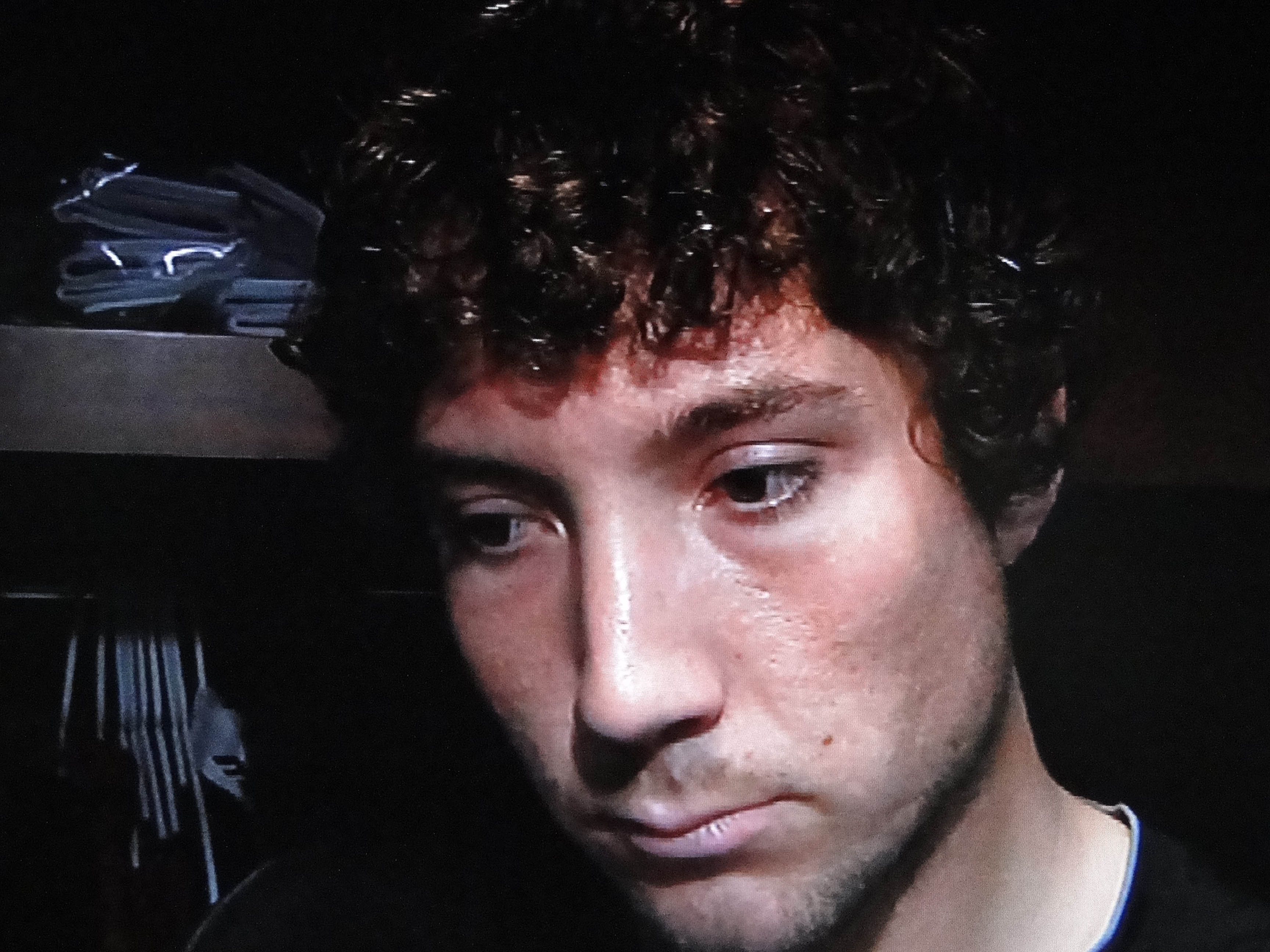
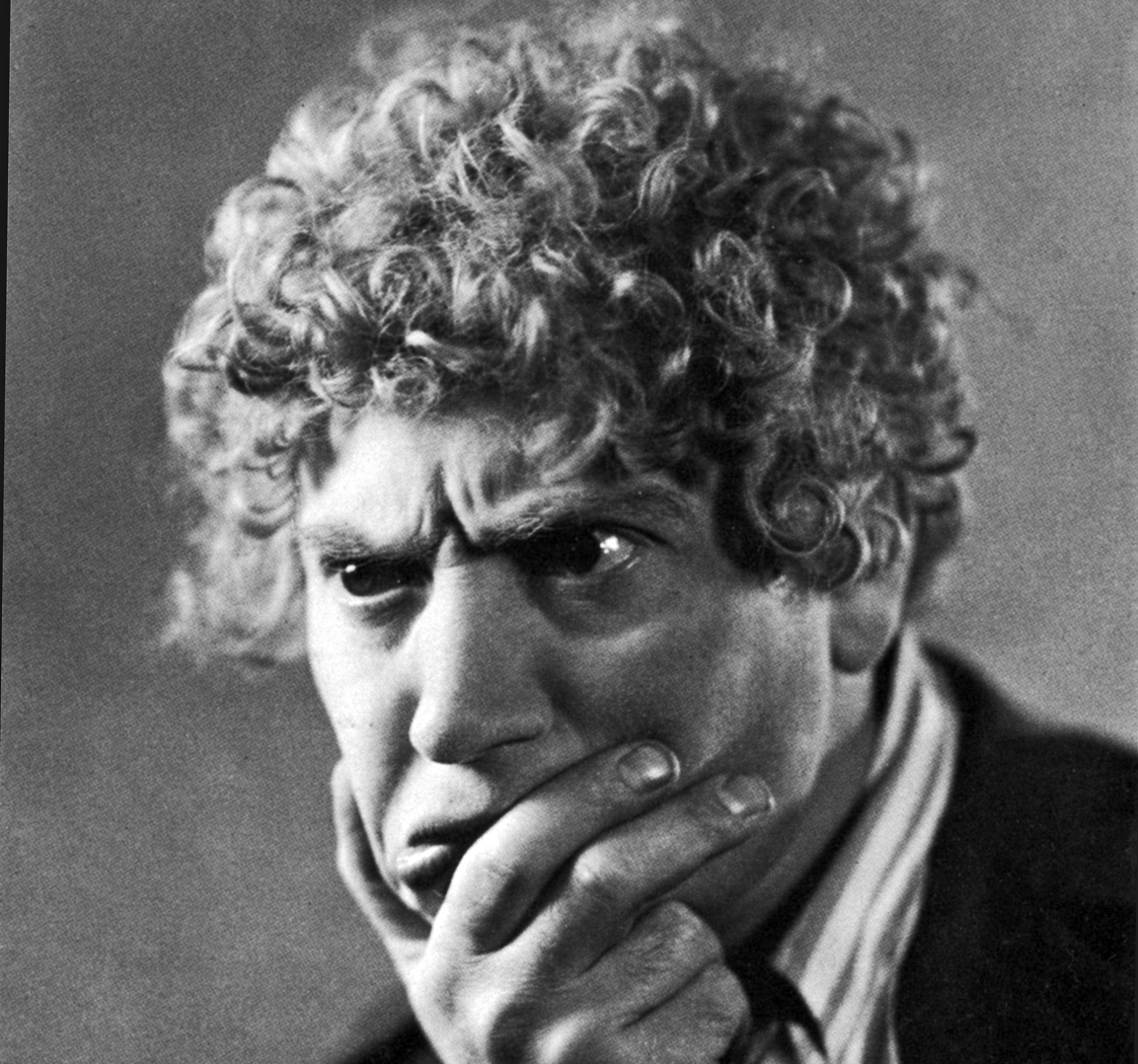
At any rate, my lagniappe addition today to my usual lagniappe column, anyway, is to point out or try to clarify my transferential association of Astros new first baseman Brett Wallace in physical appearance to a certain comic from yesterday.

Am I wrong, or does Brett Wallace sort of look like a youthful version of Harpo Marx, before his hair turned white with the help of a fright wig? Check out these comparison photos and let us know what you think in the space below. Please.

Brett Wallace

Harpo Marx

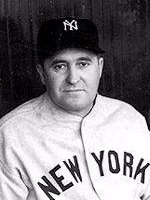
Now for a few comments on Marse Joe McCarthy, the manager who capitalized the “D” in Dynasty when he took over the club’s field reins in 1931. Over the next thirteen seasons, the modest, unselfish McCarthy would lead the Bronx Bombers to eight AL pennants, seven World Series titles, and the first run for any team through four World Series championships in a row (1936-39).

How unattached was “Marse Joe,” a racist-sounding nickname for his plantation slavedriver status in the New York Yankee baseball killing fields, – how really attached was McCarthy from his own needs for ego attention during this several season melee?

The answer: plenty. Joe McCarthy didn’t even wear a uniform number on his back.

Joe McCarthy

Lacking the need for personal attention isn’t to be construed as an assessment of Joe McCarthy as an angel. He had some ego needs all right, and they just happened to mesh perfectly with the man who hired him, Yankees owner Jacob Ruppert. You see, Joe McCarthy lived to destroy his opponents by as big a run margin as possible. McCarthy would have loved walking around in Astros Manager Brad Mills shoes last night. He loved scores like 18-4 – as long as the heavy first figure favored his Yankees.

It’s no wonder the  world hates the Yankees. Owner Ruppert cared little about close individual game outcomes. He just wanted to know how soon the club was going to clinch the pennant each year. Jake Ruppert hated finishing second and so did Joe McCarthy.

In Talmadge Boston’s excellent work, “1939,” he outlines Yankee manager Joe McCarthy’s Ten Commandments of Baseball:

(1) Nobody ever became a ballplayer by walking after a ball.

(2) You will never become a .300 hitter unless you take the bat off your shoulder.

(3) An outfielder who throws back of a runner is locking the barn after the horse is stolen.

(4) Keep your head up and you may not have to keep it down.

(5) When you start to slide, slide. He who changes his mind may have to change a good leg for a bad one.

(6) Do not alibi on bad hops. Anybody can field the good ones.

(7) Always run them out. You never can tell.

(8) Do not quit.

(9) Do not find too much fault with the umpires. You cannot expect them to be as perfect as you are.

(10) A pitcher who hasn’t control, hasn’t anything.

In spite of his demands for excellence, Joe McCarthy was not a screamer. He believed in giving pats on the back and nurturing the best from his players in his own grandfatherly way. A player simply had to go all out and show signs of excellence to get any long-term support from Joe McCarthy. The player didn’t put out was quickly dumped. When ace reliever Johnny Murphy finally convinced Joe McCarthy that he was concerned more about himself than the Yankees, the club shipped Murphy off to Cleveland.

Most players can have a big league career winning some and losing some. To play for Joe McCarthy, and just about every other New York Yankee club that’s come down the pike ever since, you had to win some and then win some more – just to stick.

Joe McCarthy was one of the strongest early links in the Yankee chain of winning. As a player, you didn’t have to like him. You just had to play on a level you may never previously have realized you had in you to stay on the Yankee roster.

Stay out of the Houston heat today, folks. It literally sucks the life out of you, if you push it too hard.

Graham McNamee: The Inventor of Play-by-Play

August 3, 2010

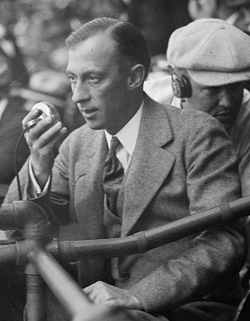
Graham McNamee: Father of the Play-by-Play

“The father of us all.” That’s how renowned sports broadcaster Dick Enberg described Graham McNamee, the man who invented play-by-play broadcasting as e know it today. Deservedly, McNamee stood out as one the first class inductees when the American Sportscasters Association (ASA) formed and created their Hall of Fame in 1984. The other members of that tribute to high standards in sports broadcasting included Red Barber, Don Dunphy, Ted Husing, and Bill Stern. Only Barber was strictly baseball, but none did baseball earlier, or contributed anything more basic to the performing art than Graham McNamee. Yet, when the National Baseball Hall of Fame organized its own annual Ford C. Frick Award in 1978 for contributions to baseball broadcasting it chose Mel Allen and Red Barber, plus a hot of others since, but never Graham McNamee for his most essential contribution to baseball over the airways, first and foremost, among all American sports.

What did Graham McNamee do? All he did was invent play-by-play broadcasting in real-time. All he did in 1923 was to become the first broadcaster to cover baseball on a more than sporadic basis from the Polo Grounds – and then to broadcast all games of the 1923 World Series between the Giants and Yankees. All he did was become the guy who called the phenomenal fourth game of the 1929 World Series in which the Philadelphia Athletics came roaring back from an 8-0 deficit to the Chicago Cubs be scoring 10 runs in the bottom of the seventh for a 10-8 win and a 3-1 lead in games. All he did was broadcast Babe Ruth’s “called shot” home run for the New York Yankees in the 1932 World Series against the Chicago Cubs.

All he did too, unfortunately, was get so good at what he did that he was the man people wanted to hear whenever a major sporting event came down the pike in America. He had a national relationship with his audience back in the time when nobody wrote or spoke of such things in such highfalutin social science terms. All the advertisers knew was that people listened when Graham did the contest, no matter what it was. Graham NcNamee, for example, was the guy that called the famous “long count” win for Gene Tunney over Jack Dempsey for the world heavyweight boxing title in 1927. He also worked radio shows with famous stars of the day, Ed Wynn and Rudy Vallee – and he did a lot newsreel voice-over work too.

Sadly, that explosive demand for McNamee’s talents in the early days of a medium that he practically invented single-handedly now costs him due recognition among those who annually vote on the Ford C. Frick Award.

I once asked Astros broadcaster Milo Hamilton for his thoughts on the long-neglect of Graham McNamee by the Ford C. Frick voters. I found his answer to be quite revealing. “He didn’t broadcast baseball long enough (to be recognized by the Baseball Hall of Fame with a Frick Award),” Milo told me. I’ve since learned that Milo isn’t alone in that opinion. I just beg to differ with it.

No, he didn’t do it very long by comparison to today’s full season, baseball-only broadcasters. All he did was invent and continue to improve upon play-by-play in the nineteen years that passed between his first radio game in 1923 and his death in 1942.

The Graham McNamee story is straight out of the mind of a 1930s or 1940s screenplay writer: A young man from Minnesota goes to New York City in the early 1920s with hopes of becoming an opera singer. Early on, he takes what work he can find, but draws jury duty one day. While walking to the courthouse in 1923, he spies a “help wanted” ad in the window at radio station WEAF. On a whim, he decides to drop in and check it out.

McNamee walks right into an audition for an announcing job and is hired on the spot. He soon finds himself working as a sort of back-up man with a rotating crew of writers who are starting to cover the New York Giants over the radio at the Polo Grounds. The writers cover the game as though it were a typed report for their newspapers. If a batter grounds out 6-3, the writer/announcer would simply watch as the play was transpiring. Then he would say something like: “The batter just hit a ground ball to the shortstop. The shortstop threw the ball to first base for a put out.” Then the air would just go silent until something else happened that could be reported in the past tense.

McNamee jumped on the dead air. He started telling people what the day looked like, what the fans were doing, and, sin-of-sins, he started talking about the game in real-time, speculating on strategies and the like. What he mainly got in return from his colleagues was silence, but that didn’t stop young 33-year old Graham McNamee. He was going to inject some color into the game or die trying.

Then, one destiny-day it happened. Not death, but life descended upon baseball broadcasting. While working with the iconic writer Grantland Rice, who hated the radio responsibility, anyway, McNamee suddenly found himself on the air alone. Rice told him to just finish the game by himself, that he had worked it all he wanted and was moving on.

Whoa! All of a sudden, young McNamee has the plane to himself as pilot Rice hits the silk. What does he do?

You bet right. He starts describing the game in real-time – and in a most informal and conversational way – one that speaks for his desire to be the listener’s partner in “seeing” this game fully as it plays out in the theater of the mind. He was wildly successful at these efforts from the start – so much so that the call for his radio services reached quickly beyond baseball alone.

Does Graham McNamee deserve better recognition by Cooperstown for his primal contributions to sports broadcasting than he has so far received to date? You tell me. Then tell the Hall of Fame. I’m tired of watching politics rather than serious contribution win out in the battle for recognition by so many various halls of honor. To me, the Ford C Frick Award without Graham McNamee is like any building that leaves out a serious foundation plank. The thing is going to wobble.

The Old Scotchman, Gordon McLendon

August 2, 2010

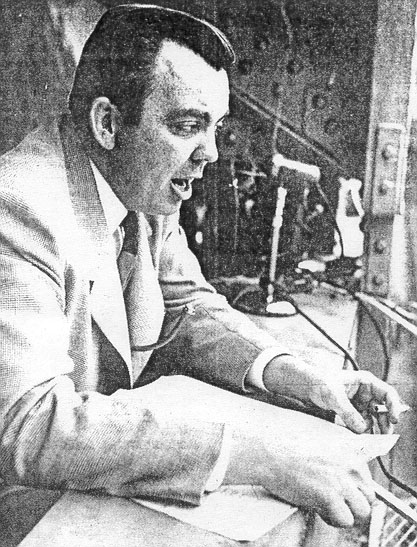
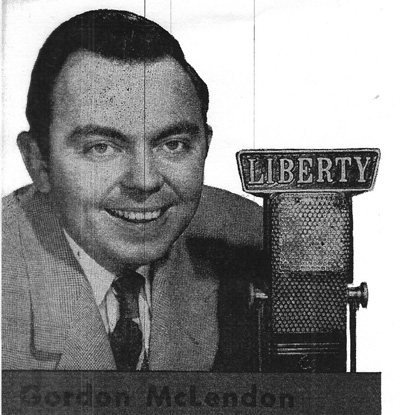
From 1947-1952, young Gordon McClendon, the “Old Scotchman,” mastered the art of baseball game recreations at his Liberty Broadcasting System studio in Dallas.

29-year old Gordon McLendon walked among us in the years following World War II as one of the shrewdest, most creative independent broadcasters ever  to come down the pike. Recognizing the appeal of baseball far beyond the narrow confines of the few eastern and midwestern cities of the big leagues, young McLendon pieced together the Liberty Broadcasting System in the Dallas suburb of Oak Cliff in 1947 and proceeded from there over the next three years to build a national audience for his studio-recreated games of major league baseball.

In competition with the powerful Mutual Broadcasting System and their live big league game coverage, Gordon McLendon understood that his battle was not against the money and talent that MBS could throw against his LBS for the national audience at stake. “G Mac” figured correctly that his challenge was in the “Theatre of the Mind.” The network that best captured the visual imagination of the fans through this strictly words and sounds medium would be the winner down the line.

G Mac guessed right. As a 12-year old in the summer of 1950, I can attest to his victory and I can relate exactly when and how it happened for me. Confined indoors during the so-called “heat of the day” (12-3PM). I struggled like most of my friends with a choice of the two networks for big league action during the daily time of confinement from the sandlot. We knew that LBS was giving us simulated broadcasts and, no matter how good we found G Mac to be, that fact alone often pushed us over to MBS and the mellow voice of Al Helfer and live action.

G Mac bought a parrot and confined him to a room all day that played his station call letters, “K-L-I-F” on a recorded loop for as long as it took the bird to learn to say those words. Then the bird went on the air with G Mac and said the call letters on cue at break time.

Then one day that all changed. Somehow, G Mac and LBS came up short on a big league game to broadcast and were forced to either cancel or go to musical “rain out” programming. G Mac chose to go another way. He went to the history books and pulled up a detailed account of Game Two from the 1916 World Series. All of a sudden, I’m listening to Babe Ruth warming up on the sidelines; the date is October 9, 1916; Ruth is getting ready to face off against Sherry Smith and the visiting Brooklyn Robins.

I was captivated by G Mac’s time-machine-invite to join him for a batter-by-batter trip back to that golden day in baseball history. And G Mac and LBS brought me everything from what happened each step of the way to changes in the wind that caused uniform sleeves to flap and trash and dust to blow across the infield – and, of course, all of the changes in light patterns brought about by cloud movements and the length of the game. 14 innings later, Ruth and the Red Sox had prevailed over Smith and the Robins by a 2-1 final score. This may have been the day that my lifelong romance with baseball history found its truckload of cement. I just remember being hooked on the trip through time.

Legendary LBS Broadcaster Gordon McLendon ~ The Old Scotchman – G Mac. He’s the reason that Houston Radio Station KILT first bore those call letters as an affiliate.

For a complexity of reasons, including the new era of franchise-shifting and MLB closing down harder on independent broadcasters who made an unregistered living off the labors of major league baseball, the LBS broadcasts began to fade. By 1952, the network was dead and McClendon had moved on to other things, like inventing “Top 40 Song Hits of the Week” programming – and producing  one mildly disastrous independent horror movie in which he also starred as a mad doctor in “The Killer Shrews” (1959). G Mac also served as Executive Producer of “The Giant Gila Monster” that same year. “Shrew” has since become something of a cult horror movie classic among fan circles that have nothing to do with baseball.

Gordon McLendon died in 1986 at the age of 65. He was posthumously inducted into the Radio Hall of Fame in 1994.

To me, G Mac will always be one of those people who made history come alive. He didn’t invent   simulated game broadcasting. He simply fine tuned it into a magic carpet ride into baseball history.

Thanks, Old Scotchman! A lot us out here shall remember you forever!

Who’s On First, Astros-Style

August 1, 2010

Abbott: "Who's on first." Costello: "Berkman." Abbott: "Not anymore, he's not."

The classic Bud Abbott and Lou Costello “Who’s on First?” routine lays the groundwork for our look at all the changes in the lineup of the 2010 Houston Astros on this first day of August. As best we can tell from the settling of all the trade dust that got kicked up these past 72 hours, here are the names of the current nine starters for the Astros as we head into the homestretch of this going-nowhere-for-now-but-tooling-up-fast-for-the-future season:

Pitcher: J.A. Happ (Too bad a certain Astros draft choice at catcher from recent years had to get get sick and fade as a prospect. We could have been getting ready to put a battery of Happ & Sapp on the field once every four days.)

Catcher: C. Astro

First Base: Who Dat Nguyen

Second Base: Dam F. Eyeno

Third Base: Oma Godd

Shortstop: L.O. Loudd

Left Field: Careless Lee

Center Field: Michael Bourn

Right Field: Hunter Pence

And in honor the wonderful routine perfected by Abbott and Costello, here’s a verbatim on the “Who’s On First?” routine that plays continuously during all the open visiting hours of the Baseball Hall of Fame and Museum in Cooperstown, New York. Enjoy and have a great Sunday, away from the triple digit heat that is predicted for Houston this afternoon:

Who’s On First? By Bud Abbott and Lou Costello

Abbott: Well Costello, I’m going to New York with you. You know Bucky Harris, the Yankee’s manager, gave me a job as coach for as long as you’re on the team.

Costello: Look Abbott, if you’re the coach, you must know all the players.

Abbott: I certainly do.

Costello: Well you know I’ve never met the guys. So you’ll have to tell me their names, and then I’ll know who’s playing on the team.

Abbott: Oh, I’ll tell you their names, but you know it seems to me they give these ball players now-a-days very peculiar names.

Costello: You mean funny names?

Abbott: Strange names, pet names…like Dizzy Dean

Costello: His brother Daffy.

Abbott: Daffy Dean

Costello: And their French cousin.

Abbott: French?

Costello: Goofè.

Abbott: Goofè Dean. Well, let’s see, we have on the bags, Who’s on first, What’s on second, I Don’t Know is on third…

Costello: That’s what I want to find out.

Abbott: I say Who’s on first, What’s on second, I Don’t Know’s on third.

Costello: Are you the manager?

Abbott: Yes.

Costello: You gonna be the coach too?

Abbott: Yes.

Costello: And you don’t know the fellows’ names?

Abbott: Well I should.

Costello: Well then who’s on first?

Abbott: Yes.

Costello: I mean the fellow’s name.

Abbott: Who.

Costello: The guy on first.

Abbott: Who.

Costello: The first baseman.

Abbott: Who.

Costello: The guy playing…

Abbott: Who is on first!

Costello: I’m asking YOU who’s on first.

Abbott: That’s the man’s name.

Costello: That’s who’s name?

Abbott: Yes.

Costello: Well go ahead and tell me.

Abbott: That’s it.

Costello: That’s who?

Abbott: Yes.

PAUSE

Costello: Look, you gotta first baseman?

Abbott: Certainly.

Costello: Who’s playing first?

Abbott: That’s right.

Costello: When you pay off the first baseman every month, who gets the money?

Abbott: Every dollar of it.

Costello: All I’m trying to find out is the fellow’s name on first base.

Abbott: Who.

Costello: The guy that gets…

Abbott: That’s it.

Costello: Who gets the money…

Abbott: He does, every dollar. Sometimes his wife comes down and collects it.

Costello: Whose wife?

Abbott: Yes.

PAUSE

Abbott: What’s wrong with that?

Costello: Look, all I wanna know is when you sign up the first baseman, how does he sign his name?

Abbott: Who.

Costello: The guy.

Abbott: Who.

Costello: How does he sign…

Abbott: That’s how he signs it.

Costello: Who?

Abbott: Yes.

PAUSE

Costello: All I’m trying to find out is what’s the guy’s name on first base.

Abbott: No. What is on second base.

Costello: I’m not asking you who’s on second.

Abbott: Who’s on first.

Costello: One base at a time!

Abbott: Well, don’t change the players around.

Costello: I’m not changing nobody!

Abbott: Take it easy, buddy.

Costello: I’m only asking you, who’s the guy on first base?

Abbott: That’s right.

Costello: Ok.

Abbott: All right.

PAUSE

Costello: What’s the guy’s name on first base?

Abbott: No. What is on second.

Costello: I’m not asking you who’s on second.

Abbott: Who’s on first.

Costello: I don’t know.

Abbott: He’s on third, we’re not talking about him.

Costello: Now how did I get on third base?

Abbott: Why you mentioned his name.

Costello: If I mentioned the third baseman’s name, who did I say is playing third?

Abbott: No. Who’s playing first.

Costello: What’s on first?

Abbott: What’s on second.

Costello: I don’t know.

Abbott: He’s on third.

Costello: There I go, back on third again!

PAUSE

Costello: Would you just stay on third base and don’t go off it.

Abbott: All right, what do you want to know?

Costello: Now who’s playing third base?

Abbott: Why do you insist on putting Who on third base?

Costello: What am I putting on third.

Abbott: No. What is on second.

Costello: You don’t want who on second?

Abbott: Who is on first.

Costello: I don’t know.

Abbott & Costello Together:Third base!

PAUSE

Costello: Look, you gotta outfield?

Abbott: Sure.

Costello: The left fielder’s name?

Abbott: Why.

Costello: I just thought I’d ask you.

Abbott: Well, I just thought I’d tell ya.

Costello: Then tell me who’s playing left field.

Abbott: Who’s playing first.

Costello: I’m not… stay out of the infield! I want to know what’s the guy’s name in left field?

Abbott: No, What is on second.

Costello: I’m not asking you who’s on second.

Abbott: Who’s on first!

Costello: I don’t know.

Abbott & Costello Together: Third base!

PAUSE

Costello: The left fielder’s name?

Abbott: Why.

Costello: Because!

Abbott: Oh, he’s centerfield.

PAUSE

Costello: Look, You gotta pitcher on this team?

Abbott: Sure.

Costello: The pitcher’s name?

Abbott: Tomorrow.

Costello: You don’t want to tell me today?

Abbott: I’m telling you now.

Costello: Then go ahead.

Abbott: Tomorrow!

Costello: What time?

Abbott: What time what?

Costello: What time tomorrow are you gonna tell me who’s pitching?

Abbott: Now listen. Who is not pitching.

Costello: I’ll break your arm, you say who’s on first! I want to know what’s the pitcher’s name?

Abbott: What’s on second.

Costello: I don’t know.

Abbott & Costello Together: Third base!

PAUSE

Costello: Gotta a catcher?

Abbott: Certainly.

Costello: The catcher’s name?

Abbott: Today.

Costello: Today, and tomorrow’s pitching.

Abbott: Now you’ve got it.

Costello: All we got is a couple of days on the team.

PAUSE

Costello: You know I’m a catcher too.

Abbott: So they tell me.

Costello: I get behind the plate to do some fancy catching, Tomorrow’s pitching on my team and a heavy hitter gets up. Now the heavy hitter bunts the ball. When he bunts the ball, me, being a good catcher, I’m gonna throw the guy out at first base. So I pick up the ball and throw it to who?

Abbott: Now that’s the first thing you’ve said right.

Costello: I don’t even know what I’m talking about!

PAUSE

Abbott: That’s all you have to do.

Costello: Is to throw the ball to first base.

Abbott: Yes!

Costello: Now who’s got it?

Abbott: Naturally.

PAUSE

Costello: Look, if I throw the ball to first base, somebody’s gotta get it. Now who has it?

Abbott: Naturally.

Costello: Who?

Abbott: Naturally.

Costello: Naturally?

Abbott: Naturally.

Costello: So I pick up the ball and I throw it to Naturally.

Abbott: No you don’t, you throw the ball to Who.

Costello: Naturally.

Abbott: That’s different.

Costello: That’s what I said.

Abbott: You’re not saying it…

Costello: I throw the ball to Naturally.

Abbott: You throw it to Who.

Costello: Naturally.

Abbott: That’s it.

Costello: That’s what I said!

Abbott: You ask me.

Costello: I throw the ball to who?

Abbott: Naturally.

Costello: Now you ask me.

Abbott: You throw the ball to Who?

Costello: Naturally.

Abbott: That’s it.

Costello: Same as you! Same as YOU! I throw the ball to who. Whoever it is drops the ball and the guy runs to second. Who picks up the ball and throws it to What. What throws it to I Don’t Know. I Don’t Know throws it back to Tomorrow, Triple play. Another guy gets up and hits a long fly ball to Because. Why? I don’t know! He’s on third and I don’t give a darn!

Abbott: What?

Costello: I said I don’t give a darn!

Abbott: Oh, that’s our shortstop.

Bill McKechnie: Manager for the Ages

July 31, 2010

Bill McKechnie: Only Manager to Take Three Different City Clubs to the World Series.

Hall of Fame baseball manager Bill McKechnie had a personality reputation that wore out all the most popular clichés on the subject. “Dull as dishwater” and “a man bearing all the excitement of watching paint dry” jump immediately to mind.

All the man did was quietly and quickly come in and take three different clubs to the World Series during the first half of the 20th century. He was never “the show” that a few of his more famous contemporaries were. Fiery guys like John McGraw and the umpire-baiting Leo Durocher may have been a lot more fun to watch. They just didn’t accomplish what Bill McKechnie did with three wholly different franchises.

As often happens, this great historical manager had not been a great player. Over an 11-season big league career played non-contiguously from 1907 to 1920, McKechnie the infielder batted .251 with only 8 home runs, but he went to school on all phases of baseball during that period and he impressed others with his quiet observations and suggestions for personal improvement. He apparently was one of those teachers who understood that a teacher has nothing to teach unless he has a student who is willing to listen. It became a characteristic of McKechnie’s that he surrounded himself with players with raw talent who would also listen to ways they could improve. Pitchers were the key to winning in McKechnie’s book and having pitchers who were willing to improve themselves and extend their innings of effective pitching were important to Manager Bill.

By the time that Bill McKechnie reached the Reds in 1938, the common wisdom in baseball had distilled to this simple straightforward advisory to pitching prospects joining his Reds clubs: “If you can’t pitch for McKechnie, you can’t pitch for anybody.”

Bill McKechnie managed the Pittsburgh Pirates for five seasons (1922-26), leading the club to the World Series championship in 1925 over the Washington Nationals. He next managed the St. Louis Cardinals for two seasons (1928-29). He quickly led the Cards to a National League pennant in 1928 before losing the World Series to the New York Yankees. McKechnie then spent eight seasons (1930-1937) managing the Boston Braves/Bees, a club that couldn’t win for anybody, before taking over for a final nine-year run (1938-46) as manager of the Cincinnati Reds. At Cincinnati, McKechnie would lead the Reds from the last place club they were in 1937 to the NL pennant in 1939 and then to another Series loss to the ’39 Yankees, a club that many consider as the greatest team of all time. McKechnie then returned  the Reds to the top in 1940 for a World Series victory over the Detroit Tigers, his second title in four tries at three spots.

McKechnie was a laid back, quiet fatherly type who quickly earned the trust of any player worth keeping. That trust was crucible to the art of him getting across his beliefs about the central role of pitching and what he expected from his staff. McKechnie had a simple philosophy about pitching: (1) No big league pitcher can get by with a fast ball alone. He believed that a pitcher has to develop a curve that he can control for strikes. (2) McKechnie forbade his pitchers from throwing sliders. He believed that all sliders did was hurt pitching arms and shorten pitching careers. (3) He wanted starters to build confidence and belief in their stuff – and their abilities to win. (4) He wanted his pitchers to develop the stamina to pitch a complete game, whenever possible. (5) McKechnie believed that pitching required constant intelligence to the job at hand and that anger in any form robbed a pitcher of his ability in that moment to work intelligently. No matter how well a pitcher was throwing, McKechnie would take his man out if he saw signs of anger on the mound. His pitchers understood that was going to happen too, if they had fits on the mound, and they adjusted to the idea of “don’t get mad; stay focused and give the next pitch your best shot.”

Pitchers on the Reds like Paul Derringer, Bucky Walters, and Johnny Vander Meer blossomed under McKechnie. Vander Meer, in fact, pitched his back-to-back no-no’s for the 1938 Reds. He also gave McKechnie credit for prolonging his career through the 1951 season due to changes he made in his pitching style under Bill’s guidance. The main change was that he gave up the more stressful sidearm delivery for a straight over the shoulder throw.

Bill McKechnie also managed the National League club in the 1940 and 1941 All Star Games.

Bill McKechnie’s record speaks for itself. Not counting a minor league starter job as a playing manager with Newark in 1915, he finished his major league managerial career with a mark of 1,842 wins and 1,678 losses.

“Deacon” Bill McKechnie received the nod into the Hall of Fame by the Veteran’s Committee in 1962. Three years later, on October 29, 1965, he passed away in Bradenton, Florida at the age of 79. He will be quietly missed and remembered forever by all people who choose to scratch the surface on the study of people who made the game of baseball the great national sport it became.

The baseball chain of cause and effect even reaches directly to Houston in the matter of Bill McKechnie. His Reds center fielder for five years (1938-42) was an eager-to-learn young fellow named Harry Craft, the same fatherly, good-listening first manager of the first ever major league club in Houston, the 1962 Houston Colt .45’s.  If there ever was a mystery as to who mentored Harry Craft into becoming the just- right-for-the-times manager he became for us in Houston back at the start, consider that question now resolved. And try to keep that very clear example in mind when you look around at what and who you are mentoring now in life by your own role model behavior. The chain of cause and effect is never-ending.

I’m just glad that Bill McKechnie and Harry Craft were part of our Houston baseball chain. And based upon what I’ve seen of him, so far, I kind of think that current Astros manager Brad Mills may be cut out of the same good quality spiritual cloth. Let’s just hope that Brad is now being provided with the kind of young talent that both needs to learn and knows how to listen to the wiser heads that are being made available to them.

Have a nice Saturday, everybody!

Oswalt for Happ, Et Al? Astros Have Done Worse

July 30, 2010

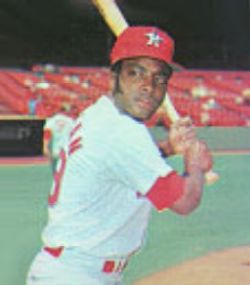
Joe Morgan: Little Joe was the key figure in the worst Astros trade of all time.

Count me among those who feel OK about the Roy Oswalt trade with the Phillies. When a player says he’s ready to move on, for whatever reason, you’ve already lost him. From there it’s just a matter of whether or not your club is going to find any takers on a deal – and if you are going to get any value for him in return. In my opinion, Astros General manager Ed Wade did as good a job as possible in working out both those ends, plus the other contingency in Oswalt’s case – gaining the support of owner Drayton McLane on the matter of eating a big part of Oswalt’s contract for the sake of making any move palatable to another club.

Oswalt was always a fast-working, even-steven guy on the mound, but I really didn’t see his heart or usual confidence working all that much in recent outings. With three chances to tie and break Joe Niekro’s all time franchise record of 144 wins before the July 31st trading deadline, Roy blew two of those “ops” and then left the third one dead-still on the table tonight. Instead, Roy will be in Washington this evening, going for his first win as a Phiilie, while J.A. Happ makes an attempt at his first Astros victory at Minute Maid park.

Two minor leaguers,  shortstop Jonathan Villar and Michael Bourn model outfielder Anthony Gose were the two decent prospects that came with Happ to Houston from the Phillies, but Wade quickly did a turnaround trade with Toronto, acquiring minor league hitting prospect Brett Wallace, a first baseman, from the Blue jays for the Michael Bourne-redundant Gose. That secondary move made good sense from the standpoint of meeting another potential position need down the road.

Happ looked good in his first outing back from a flexor stress injury this year, a no-decision outing against the Rockies and he says he feels fine now. Last year he pitched well enough to earn runner-up honors in the NL Rookie of the Year award. At 27, the lanky lefty who relies a lot on location pitches, could be a quality starter here for years, if he stays healthy.

The eleven million that the Astros have to kick in to help pay Oswalt’s salary commitment is just part of the cost of doing business in this case. They had to pay more than that amount, if Roy stayed, and his age and damaged motivation would hardly have seemed worth the price. With the trade, money, players, and all, at least, the club gets something of apparent good value in return that fits in with our plans for the future.

Good luck to Roy in Philadelphia! Even better luck to J.A. and company in Houston!

As for our worst Astros trades ever, it’s going to take an incredible GM someday to surpass the efforts of the Rembrandt of Incompetence, former Astros General Manager Spec Richardson. Singlehandedly, Spec cost us the losses of Joe Morgan, Rusty Staub, Mike Cuellar, and Jimmy Wynn  in four of the worst deals in Astros history.

Some of our other bad trades have cost us people like Kenny Lofton, Curt Schilling, Ken Caminiti, Steve Finley, and John Mayberry, but we did pick up Jeff Bagwell for Larry Andersen once upon a time. That one worked out pretty well, didn’t it?

Oswalt for Happ, Wallace, and Villar – younger talents with fresh energy, younger men who all want to be here? I’ll take my chances on this one.

Nice going, Ed Wade!