Archive for the ‘Uncategorized’ Category

No Choking Time in MLB Playoffs

October 11, 2010

The Major League baseball Playoffs are a good time to put up the “No Choking” signs in each clubhouse and then try to pay attention to them, but it apparently is a little too late for that advisory in 2010.

Cincinnati just left the playoffs Sunday night with their vaunted offense in total meltdown at the hands of their H20 (Halladay, Hamels, & Oswalt) rinse through Philadelphia’s powerful “Big Three” pitching order. It should be noted, however, that the Roy Oswalt member of that deadly pitching trio, along with some negative help from Phils second baseman Chase Utley,  did his own choke job  in Game Two of the series. Fortunately for the Phillies, many of the other Philadelphia players would have no part of a Reds comeback as they came back to defeat Cincy in the only game the Reds showed any familiarity with a bat.

The Minnesota Twins also melted fast in the competition company of the New York Yankees, going down for the count 3-o in games quicker than they could recall for the gazillionth time that they were playing the club that once served as home to Babe Ruth, Lou Gehrig, Joe DiMaggio, and Mickey Mantle.

That 50% pure choke finish in half the NLDS competition games leave the Yankees and Phillies free to rest and refresh as they wait for two other teams to finish their work in the first round, but here’s where choking gets to be something of a shared experience.

In the “we can’t stand the pressure of playing at home series,” the Tampa Bay Rays and Texas Rangers have both now experienced the horrors and joys of this particular phobia. The Rangers stuck the Rays where the sun never shines in those first two games at Tampa. It looked as though the Rangers were going home to a quick finish on their first playoff series in history, but I guess they thought about that sweet finish too much. Once back in Arlington, the Rangers went into their own meltdown, losing twice to Tampa Bay and sending the sunshine series back to Florida. Can the Rangers benefit from this move back to their former position as road warriors? We’ll find out tomorrow.

The fourth series is also an intriguing engagement with choking on both the team and individual player levels. After taking Game One behind the phenomenal pitching of ace starter Tim Lincecum, the Giants untied some late ending rope around the necks of the Atlanta Braves in Game Two and reattached it to themselves just in time to watch a Rick Ankiel home run into McCovey Cove send the series back to Atlanta with everything tied at 1-1 in games won.

Game Three in Atlanta Sunday produced the biggest sputum-producer of the playoff season, so far. Going into the top of the 9th, the Braves led 2-1 and seemed honed in on taking the series lead. Then the Giants started putting together a little base-hit rally that tied the game with two outs at 2-2. That’s when second baseman Brooks Conrad allowed a crisp ground ball to go straight through his legs into right field. Another Giants runs scored and SF now led 3-2, a tally that would hold up for the final score on Mr. Conrad’s (cough! cough!) third error of the day. You had to feel bad for the guy. There’s no place to hide in baseball when that sort of thing happens.

No Smiles on Sunday

Also, we have to be aware these days of HD close-ups of a player in the wake of such an embarrassing moment. Conrad could clearly be seen, shaking his head and uttering what sounded by lip-reading as that famous exclamation of self-frustration – the one that fits the “WTF” initials used by texters to express uncultured dismay or shock.

Better put up those no-choke signs in the clubhouses at Atlanta and Tampa pretty quick, folks. We “ain’t done yet.”

.

Alma Mater Fidelity

October 10, 2010


Freshman David Piland Gets "Baptism Under Fire" at QB for UH.


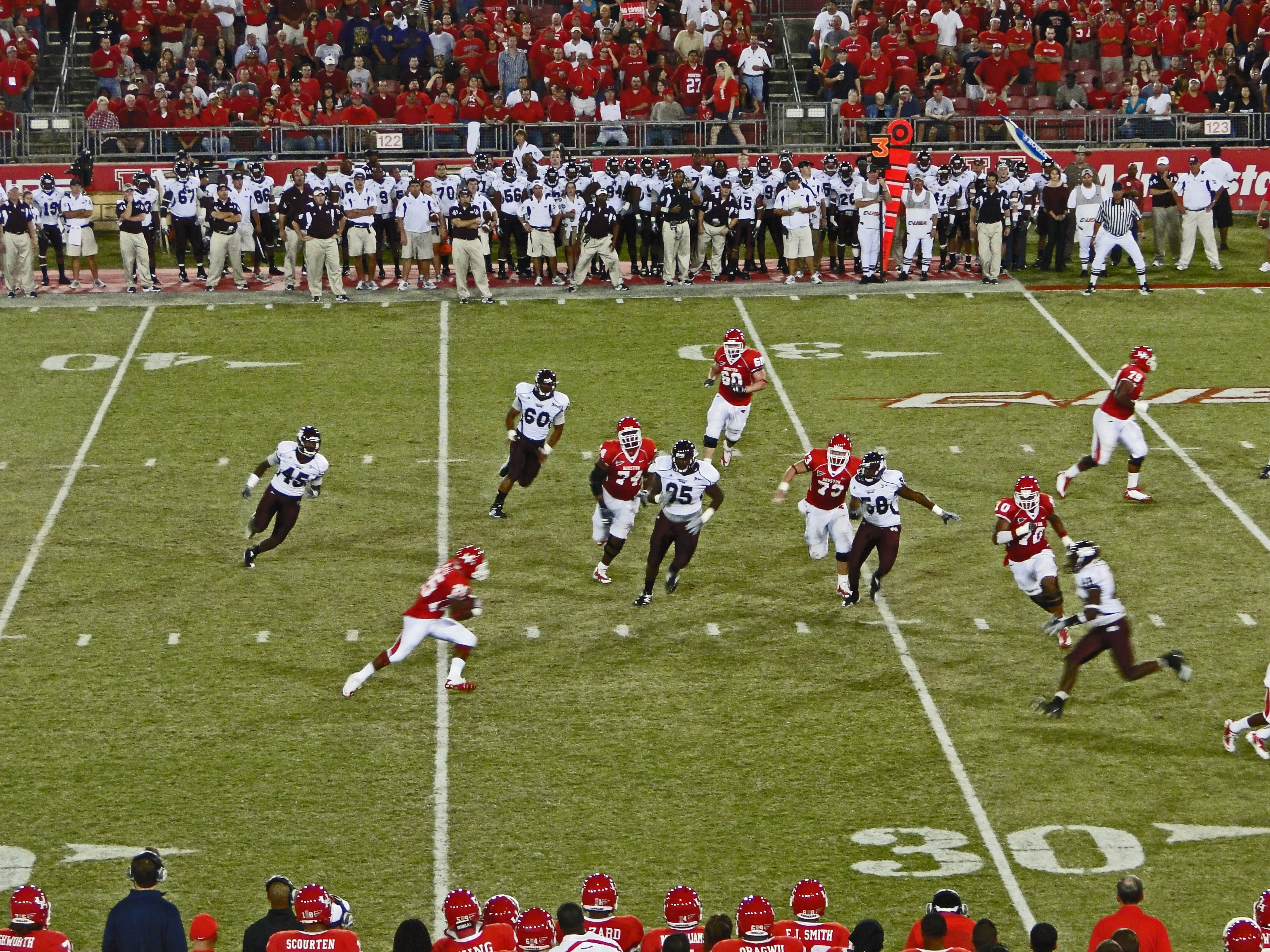
The Houston Cougars ended their 18-game home winning streak last night before 32,067 fans at Robertson Stadium by falling decisively to the bigger, faster, more experienced  and hungrier Mississippi State Bulldogs, 47-24.

UH Coach Kevin Sumlin continued his search for a successor to the ill-fated and career-finished hopes of former star Case Keenum by inserting his other true freshman QB prospect into the game in the form of young David Piland. Piland did OK, but his two TD passes were more than off-set by two interceptions, one of which led to a fatal touchdown run back near the halftime mark that left the Cougars in a 33-10 hole at the mid-game break.

The other freshman QB, Terrance Broadway, got in the game long enough near the end to throw a 17-yard TD pass to Isaiah Sweeney with 4:36 to go, preventing the game from become the most lopsided loss in Coach Sumlin’s three-year history at UH.

We Cougars took the disappointment in stride and moved on. After case Keenum went down forever as a UH Cougar in the UCLA game of Sept. 18th, none of us were really surprised by last night’s outcome. Few clubs at the college level are deep enough to survive the loss of their only superstar with any hopes of the season playing out as the final realization of their  once great expectations.And UH is no different from the rest in that regard.

For UH, major victory on the gridiron remains more of a hope and a distant memory than it is an actual realization. UH’s 37-7 win over Michigan State at East Lansing in 1967, that 30-0 shutout of UT at Austin in 1976, and the 17-14 thumping of Nebraska in the 1980 Cotton Bowl jump to mind, but none of those wins happened recently and all were against big name teams that aren’t likely hot to play the UH Cougars again anytime soon.


A few UH plays worked well early against MSU last night.


Today’s piece isn’t really about last night’s game, or even about becoming a team that is perfect enough to to win a national championship or stay in the hunt for one at any cost, every year, including especially the cost of young futures that sometimes get thrown into the fires of  ambition fanned by the universities and their wealthy alumni.

Today’s question is simply: Why be loyal at all to the universities that gave so many of us a good start in life? And, more complexly, why celebrate that loyalty by throwing so much of our support into paying for the athletic programs, especially the lucrative football and basketball programs?

From a money standpoint, the first question speaks for itself and the second virtually answers itself. We are indebted to the university as one of the great givers in our lives. We are loyal to our university’s sports teams because of the complex identity we share with the university and all others who gone there as we did and who have also come out into the world as Cougars, Longhorns, Aggies, Owls, and the like. We carry it even further by incorporating the colors, emblems, hand-signs, and slogans of our group into a ritual show of affiliation by our mode of dress and behavior.

Has anyone ever heard the guy whose luxury care horn plays “The Eyes of Texas?”

Look! I’m not going egghead on you this morning, but for me, it works something like this. I can’t really speak for anyone else: (1) I not only did my undergraduate work at UH, but I also grew up only two miles from the campus. UH always was, and always will be, part of who I think I am – a kid from the East End of Houston who caught an early  break and worked his way into a slightly larger world of possibility and opportunity through a door-opener on higher education. And that open-door, as long as I was willing to both work at my studies and also support myself by working at whatever honest student job I could find, was the University of Houston.

(2) My affiliation with UH’s athletic programs was an easy fit for me. Sports are a way of defining our successes and failures in measurable terms that often are blurred or simply expunged from everyday life matters due to certain politically correct factions that would prefer we behave as though “winning does not matter.” Of course, winning matters. If it didn’t matter, we wouldn’t have all these companies, including NASDAQ, manufacturing scoreboards and all the other kinds of scorekeeping equipment.

(3) I say the scoreboards are for measuring progress, not perfection. If they are merely measurements of perfection, than all college sports fans are doomed to the disappointment that Alabama suffered yesterday because of their 35-21 loss to South Carolina. Perfection says: “So what if you won the national championship last year? You didn’t win yesterday! And that makes you imperfect and, de facto, no good!”

By my standards, the UH loss to Mississippi State last night was simply a toll both on the road to progress, just part of the price of getting better as the team searches for somebody who has a chance of growing into Case Keenum’s shoes at Quarterback. Our UH goal is always, “in time” (our longtime university motto) to get better. – We show improvement by learning from everything that turns out painful on the road to progress – just as we hope to learn from our disappointments in everyday life.

(4) We watch college sports also because they are fun to watch. It’s not much fun watching researchers working on a new health care vaccine, or math theory., but I also believe that our dedication to pure progress includes financial donations to our universities and their academic programs to the extent that we can afford to do so.


"All Hail to Thee, Our Houston - University!"


(5) Alma Mater. Always Faithful. Everything hinges on the important ongoing relationship of fidelity and trust between a university and its alumni. Both should be conscious of the need to take care of each other by mutual effort – and not be turning the entire reciprocal act of mutual caring into another wasteful play of institutional entitlement.

The only entitlement here belongs to the students. Students are entitled to the best academic opportunity the university can provide them without any exploitation of the student’s funds or talent resources,

At any rate, that’s how I see my relationship to my alma mater, the University of Houston. Last night’s football loss to MSU was simply another painful toe-stumper on the road to progress with larger goals and accomplishments for us all in the wider, deeper scheme of things to come.

Have a happy 10-10-10, everybody!

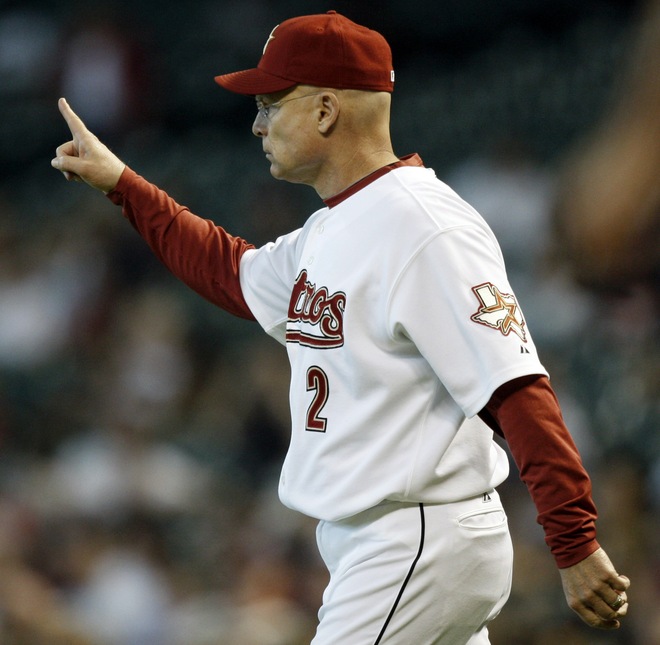
Congratulations, Brad Mills!

October 9, 2010


Brad Mills Gets Contract Extension.

Sometimes the good guys do win as baseball managers. When they do, it’s because they have more going for them than a simple reputation for being good guys. They prove by their performance on the field that (1) they know baseball and the array of choices facing every manager in all phases of the game; (2) they know their own strengths and limitations well enough to let need, rather than ego, determine the kinds of people they embrace as coaches to help them get the job done; (3) they have good people skills for dealing with all the various psychological stuff that comes up with the egos of ball players over the course of a season as managerial decisions get made that are bound to always displease somebody; and (4) in the end, they seem to get the most production that is possible out of the material that they been given to manage and direct.

When the 2010 season concluded, I cannot think of a single media reporter who wrote or said that Brad Mills should have gotten better than a 76-86 finish out of this year’s Astros club. Now this morning we read in the Houston Chronicle that the Astros were pleased enough with Brad Mills to have exercised their contractual option on his managerial services for 2012 and extended his contract for an additional year through 2013.

Nuf sed. His bosses like Brad Mills too. That counts for a lot, doesn’t it? When the man who owns the ink that signs your paycheck on a piece of paper that doesn’t include the phrase “another direction”, we have to be as assured as anyone can be in today’s marketplace that we are wanted. And Brad Mills is.

I personally liked Brad Mills’ constancy in dealing with players. He never seemed impulsive, but he did stay open to trying new approaches. He worked his available bullpen material well, but he also gave his starters a chance to pitch extended innings, when they seemed capable of doing so. He didn’t freeze on seeing people as starters, even if they weren’t performing – or as part-time utility guys, even if they seemed to be playing well enough to start. “Matsui out” and “Keppinger in” at second base probably are our best examples of this ability.

Although he may have had little to do in choosing Jeff Bagwell as Sean Berry’s late season replacement as hitting coach, Mills reaped the rewards of Baggie’s presence and influence upon improvement among players like Hunter Pence. Other less secure men might have been too threatened by Baggie as a potential job rival that they might have rendered him useless by the creation of a hostile reception to his joining the staff.

Not Mills. He benefitted from Baggie too. As did the club.

I could go on all day. From what I’ve seen, Brad Mills has the kind of fatherly aura that will allow him to work with the Astros’ younger talent in a teaching capacity. At the same time, he has the respect from his older players that allows him to make tough choices for the betterment of the team. He is not the kind of guy that will cast himself as either an authoritative tyrant nor a weak sister type who avoids conflict at all costs.

Brad Mills has the knowledge and the moxie to get this job done over the long haul. He’s not going to run over anybody to do it, but he will stand firm on what he wants and doesn’t want. All the Astros need to do is keep supplying Mills and his staff with the improved kind of young talent that has the potential for growing into the spiked shoes of a real championship club.

With Brad Mills at the helm, and with our increased attention upon young player development, I really believe that our long-time goal of reaching and winning the World Series is now on target as an accomplishable mission for the Houston Astros.

Former Astros Dot Playoff Rosters

October 8, 2010


Roy Oswalt Heads Former Astro Run in 2010 Playoffs.


The Houston Astros couldn’t get to the 2010 MLB Playoffs collectively, but they are having a pretty good run at it individually – or so it seems. If we allow for their different backgrounds with the club at various times we still may have to assume that some of this widely spread appearance in the playoffs is a matter of the cream rising to the top – and probably some it too is just coincidence and due to the fact that a lot of players from a lot of clubs move around a lot these days.

At any rate, it’s still kind of fun to point out the obvious. Except for Minnesota, every one of the eight playoff clubs has some kind of administrative, coaching, or player connection to previous employeea of the Houston Astros.

Here’s a team-by-team breakdown of what we can see with the naked eye, a little familiarity with the history of the Astros, and a simple website search of current playoff team rosters. Active former Astros on the club’s current roster are shown in parentheses after the club’s name::

Texas Rangers (1)

Darren Oliver, P *

The Rangers have only one former Astro on their roster, but they have a partial owner and club president named Nolan Ryan running their operations. That one rings the bell on The Ballad of the Lost Astro faster than Quasimodo ever chimed a gong. The Rangers also have another former employee named Mike Maddux working as their pitching coach and yet another, Jackie Moore, serving as their bench coach. No telling how many former Astros management people are also now working in Arlington. The list starts with former Astros veep Rob Matwick.

Tampa Bay Rays (2)

Chad Qualls, P

Dan Wheeler, P

Throw in pitching Coach Jim Hickey and former Astros minor league prospect Ben Zobrist who never survived a trade that blocked his opportunity for a cup of coffee with the Astros and the Rays gel into another merry former Houston player home. Oh, and one other little detail could use a beacon of light: Former Astros General Manager Gerry Hunsicker serves as a Vice President and special advisor to the Rays’ current GM.

Hmmm! The Rays are sure making a lot of post-season runs these days. Makes you wonder how helpful Mr. Hunsicker has been to that successful movement by the Rays up the AL standings.

New York Yankees (2)

Lance Berkman, DH

Andy Pettitte, P

Did the former Astros have any bearing on the Yankees’ Game Two win over the Twins? Check your morning newspaper for details. The old puma that the Yankee fans love to ride and taunt as “Fat Elvis” provided 2 runs and 2 RBI on a home run and double that provided all the difference the Yankees would need on the scoreboard while starter “Earnest Andy” held the Twins at bay for the most part and chalked up another post-season win.

Minnesota Twins (0)

The Twins are the most Astros-Free organization now involved in the 2010 MLB post-season play. They also seem to be among those who are feeling the hardest sting from former Astros on their now probable early departure from the World Series chase.

Philadelphia Phillies (2)

Roy Oswalt, P

Brad Lidge, P

Roy starts Game Two against the Reds today. When he joined the Phillies, he brought the oxygen that club needed to start the water (H2O) flowing on their pennant quest. How do you come up with H2O in Philly? Easy. Just add two parts Halladay and Hamels to one part Oswalt and shake, not stir. If hot water results and the ground starts to shake, you just throw in a little Lidge to bring everything back to the waters of peace and calm. (Most of the time, the “L” in Lidge stands for lithium. The rest of the time, it stands for that second value in the W/L column.

Former member of the 1986 Astros, Davy Lopes, serves as first base coach for the Phillies.

Cincinnati Reds (0)

No former Astros fill spots on the Reds’ roster, but another former member of the great 1986 Astros club, Billy Hatcher, is on hand as the first base coach for the Reds.

San Francisco Giants (1)

Aubrey Huff, IB

Giants manager Bruce Bochy also used to catch for the Astros during his playing days.

Atlanta Braves (1)

Billy Wagner, P

All the Braves have with them to commemorate former Astros is Billy Wagner, the greatest closer in the club’s history.

In general, every club in the playoffs, except for Minnesota, has some kind of historical connection to the Astros through former players, managers, coaches, owners, or administrators. If I got anything wrong or left anyone out, please post your corrections below as a comment on this column.

I’ll have to admit: As an Astros fan, I really enjoyed watching Lance Berkman have such a lights-out, difference-making game last night against the Twins. Maybe that will shut up hs Yankee fan critics for about 24 hours.

Today I look forward to seeing what Roy Oswalt can do in Game Two versus the Reds.

Go Roy! Go Lance! Go former Astros!

If the Astros can’t be there, at least, make us proud that you once played for the good guys down here in Houston.

* Thanks, Bill Gilbert, for the reminder that Darren Oliver once pitched for the 2004 Astros.

My Biggest Astros Homer, All Time

October 7, 2010

Chris Burke, 10/09/05:Erasing Agony, Embracing Ecstasy.

Of all the big home runs in major league history, every club has at least one that stands alone among all others. Although we could argue that fans of a team like the New York Yankees might have more trouble than most deciding which home run truly stands alone as their club’s finest long ball moment. After all, Babe Ruth to Bucky Dent to Aaron Boone covers a lot of arguable territory.

For this Astros fan, the pick was pretty simple. With no disrespect intended for my good friend Jimmy Wynn, or for Jeff Bagwell, Roman Mejiias, Billy Hatcher, Lance Berkman, Brad Ausmus, or others, I  had to go with the big home run by the little man who almost wasn’t there – and who wasn’t there for long while he was there, and who likely never will be there again – with the Astros or any other big league club.

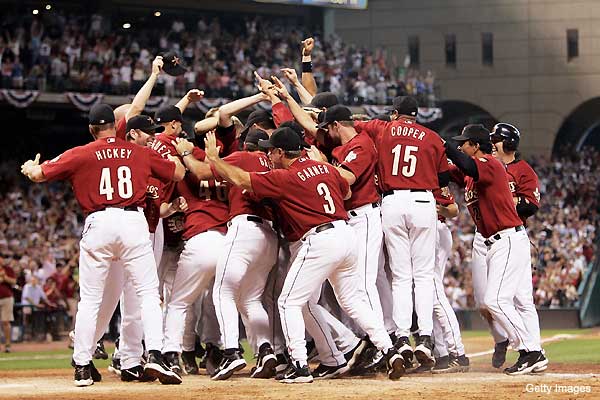
I’m talking about Chris Burke, the little 2005 second baseman for the Astros who hit that solo home run in the bottom of the 18th at Minute Maid Park to give Houston a 7-6 series-deciding win over Atlanta in the NLDS finale, a victory that ultimately propelled the club to its first and only World Series appearance.

When “Little Chris” Burke lifted that fly ball into the Crawford Boxes in left field, the emotionally and physically exhausted home crowd momentarily had to rally against the forces of incredulity that oh so briefly halted the roar of relief that then followed. It was simply hard for us Astros fans to believe that the day that once had seemed so lost had now been so decisively delivered in the name of victory.

But it happened. It really did. And the man whose name we shall always remember in association with that moment of joy is Burke – Chris Burke.

Five years later, Chris Burke is now little more than an after-thought among professional ball players. After a poor offensive season in 2007, the Astros dealt Burke to Arizona, where there, and then at San Diego, he continued to struggle and fall into minor league play. Burke signed a minor league contract with the Reds in the winter of 2009, but then broke a finger came along and took away the 2010 season.

We wish Chris Burke well in whatever he does from here with this thought in mind up front: Whatever happens next, Chris, Astros fans will never forget what you did for the club back on October 9, 2005.

For me, even if others care to argue differently, your bottom of the 18th home run to defeat the Atlanta Braves in the 2005 NLDS was the singularly biggest home run moment in the history of the Houston Astros MLB franchise.


Nominees for the Astros Hall of Honor

October 5, 2010

Who belongs in the Houston Astros Hall of Honor?

This past Friday night, Oct. 1st, the Houston Astros kicked off their celebration of the upcoming 50th anniversary of the franchise in 2012 by naming their five major players for each of the five involved decades. I’m not sure how they came about these choices, but they certainly didn’t miss the inclusion of five players whose names belong on any Astros Wall of Honor. Jimmy Wynn got the nod as the player of the 1960s; Jose Cruz represented the 1970s; Nolan Ryan carried the flag for the 1980s; Jeff Bagwell was the man named for the 1990s; and Craig Biggio and his march to 3,000 hits picked off the first decade of the 21st century for his work over the first seven years of it.

I have no trouble with these selections, but I acknowledge that there are others out there asking what happened to guys like Larry Dierker, Joe Niekro, and Mike Scott? What happened to each of them and others is that you can only pick a single name for player of the decade, unless you change it to players of the decade. With one pick, several get left out.

I’ll try to fix that here by going for two names per decade, but that will still leave room for some unhappy faces out there, I’m sure:

1960s: Jimmy Wynn & Larry Dierker

1970s: Jose Cruz & Joe Niekro

1980s: Nolan Ryan & Mike Scott

1990s: Jeff Bagwell & Craig Biggio

2000s: Roy Oswalt & Lance Berkman

There. That feels better to me. Does it feel any better to you?

The next thing I’d offer is a few off-the-top-of-my-head suggestions for membership as the original class of the Houston  Astros Hall of Honor, starting with the name of the place from the outset. I am no longer officially connected to the Texas Baseball Hall of Fame, but I left with the retirement title of “president emeritus” for my seven years total time served and a little practical experience with the travails of what accompanies the process of bestowing honor upon others for their achievements.

You run into a few egos that possess all the resilience of an unrefrigerated tomato. These types need to be handled with care or not touched at all. And that mindful advisory leads straight to the thought that the Astros are choosing well to name their planned special place as the Astros Hall of Honor, rather than their Hall of Fame.

Anyone may attain fame for the most notorious of reasons. Honor is something that only enfolds around those who earn and deserve it for their performances in a given field of action.

When I think of an Astros Hall of Honor, and the candidates for that first class of inductees, I think of these names without hesitation. Any names that evoke hesitation can wait until next year as the Astros thresh out their standards for what shall determine their selection process. I may miss someone along the way because this sort of thing can never be a one-person job. Please feel free to add the names of anyone else you feel, as a fan, has earned the right to be so honored by the Astros. The Astros will end up doing this thing their own way, but it doesn’t cost us anything but our time to make suggestions here, while the door is still open.

Here are my Colt .45/Astro nominees. Please note that, with the arguable exception of Nolan Ryan, I do not include players whose signature achievements occurred elsewhere:

Larry Dierker, Jimmy Wynn, Bob Aspromonte, Don Wilson, Jose Cruz, Joe Niekro, Glenn Davis, Billy Doran, Art Howe, Phil Garner, Bill Virdon, Billy Hatcher, Bob Knepper, J.R. Richard, Roger Metzger, Dave Smith, Nolan Ryan, Mike Scott, Alan Ashby, Terry Puhl, Cesar Cedeno, Craig Reynolds, Bob Watson, Kevin Bass, Enos Cabell, Doug Rader, Jeff Bagwell, Craig Biggio, Billy Wagner, Brad Ausmus, Lance Berkman, Roy Oswalt, and President Tal Smith.

If you care to eliminate any of my picks or add some of your own please leave a reply comment to this thread. The question is: Who should the Astros reward with “Hall of Honor” induction for their career or singular accomplishments as members of this franchise. I only selected one non-player for the honor, but I cannot imagine this hall even existing without him. Tal Smith has been a force within the franchise from 1962 almost continuously forward.

Now – let’s hear it from you too!

2010 Astros Baseball: A Glorious End

October 4, 2010

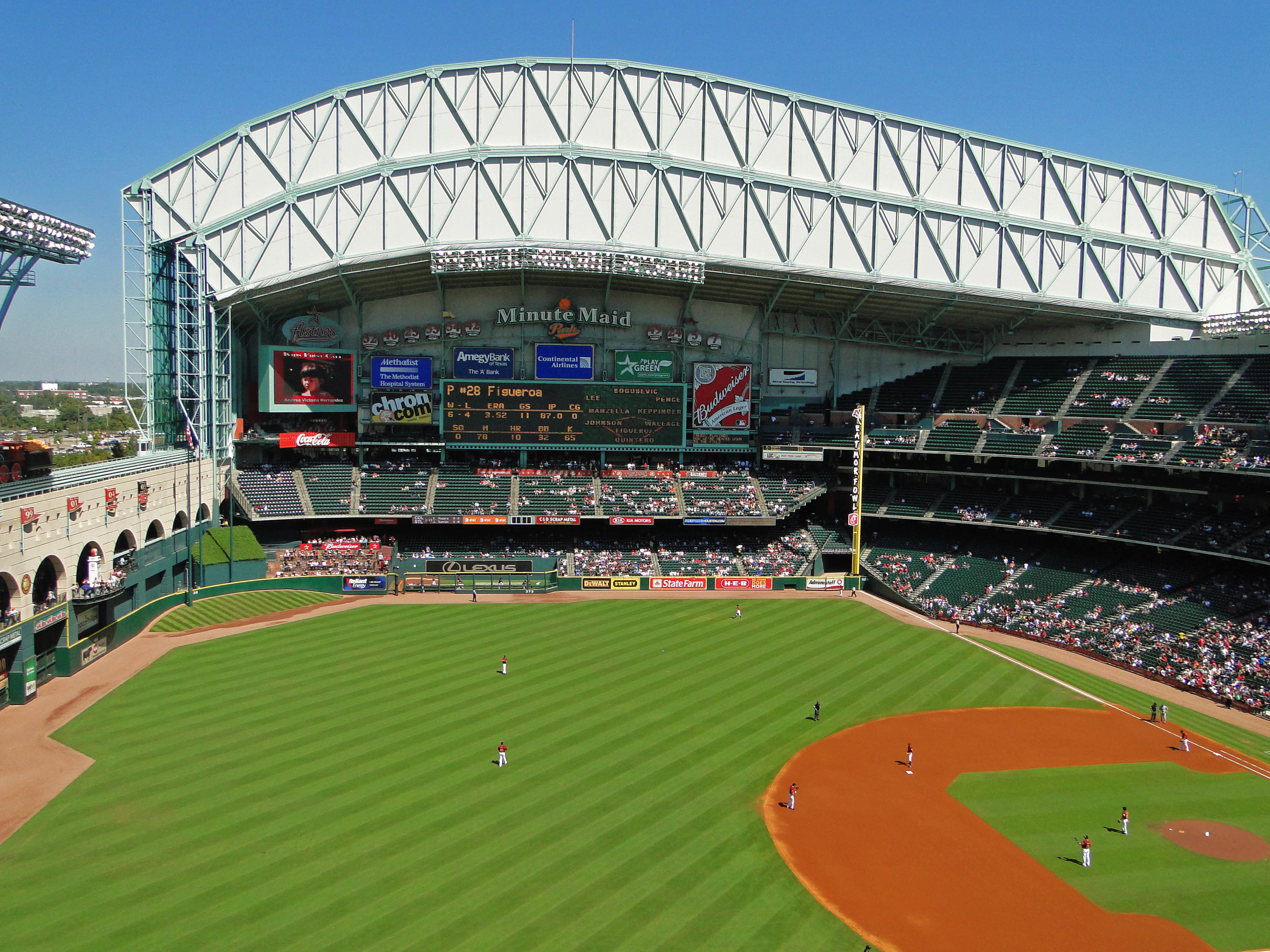
Minute Maid Park, Houston: Sunday, October 3, 2010.

The weather was nothing short of glorious. On a day in which the Astros and the Chicago Cubs had little left to play for beyond a fourth place finish in the NL Central and a quick-game getaway for tired players heading home, our Houston nine took the standings prize as the Junior Bears chalked up 102 for their latest tally in years on “how long it’s been” since the Windy City North Siders have won a World Series. (It should be 103 failures since their last World Series win, but the name of fairness dictates that even we cannot hold the Cubs responsible for what happened to baseball in 1994.)

Does the number “1908” even ring a bell? You bet it does. In Chicago’s northern environs, “1908” rings bells that gong louder and much longer than the ones Quasimodo once manned in Paris. There’s another number identified as “1945” that rings almost as loud and few others, like “1969” and “1984” that also ping out some painful sound vibrations as well.

It is finished. Eight teams live on to compete in the 2010 playoffs while everyone else, Cubs and Astros included, goes home. And who remains? Round up the usual suspects. Everyone but the Rangers, Reds, and Giants are fairly regular attendees at these annual shindigs. Meanwhile, our locals simply put the positive wraps on a lost season that also saw two icons, Roy Oswalt and Lance Berkman, move on to a couple of the playoff party clubs. Counting the blessings of 4th place over 5th, and placing considerable hope faith in youth, the future, and the assembly judgment of General Manager Ed Wade, the Astros now move on to the job of rebuilding, restructuring, reconstructing, redirecting, or reloading (pick a “re” word that’s acceptable to your tolerance palate for the truth) their roster to the challenges of returning to the winning side of major league baseball.

Several things came off neatly in the Astros’ 4-0 finale victory of the 2010 season over the Cubs. For one, the ancient Nelson Figueroa again pitched like a keeper, working six shutout innings while giving up only six hits while walking only two ad striking out eight. All of that production on 103 pitches raised Figgy’s final record to 7-4 and lowered his season ERA to 3.29. If that doesn’t help him qualify s a legitimate candidate for the number five slot in the starting rotation next spring, I don’t know what will.

Carlos Lee also went two for three, including a third-inning, cork-popping 24th home run deep into the Crawford Boxes. Carlos has another year, plus a club option on one additional season, with a buyout penalty on the team for a refusal. Finding a fielding/hitting left fielder for 2011 while letting Carlos play out his string at first with Brett Wallace as the intern may make even more sense in days to come, unless Wallace suddenly jumps up as a great hitter. We shall see.

Brett Wallace did finally get his first and only triple of the season to lead off the fourth inning. It took a weird bounce off the wall in left center and a safe call on Wallace’s slide to pick up what probably will be one of his rarest hitting experiences, but he got it for the books that last forever.

Brian Bogusevic didn’t exactly distinguish himself positively on the offensive side Sunday. Starting in center and finishing in left, “Bogie” picked this last showcasing day of the season to earn a “Golden Sombrero” by striking out in each of his four trips to the plate. Ouch! Maybe he was affected by that foot injury that he will now face through surgery. Who knows? I’m sure Brian would prefer any alternative answer to the “I can’t hit major league pitching” conclusion that often comes to rookies who earn that amber alienation of affection award for disastrous batting.

Tommy Manzella attempted to break out of his growing “almost as good a hitter and fielder as Adam Everett” comparisons by going two for two with two RBI and a walk and an error-free day in the field. I still prefer Angel Sanchez for his more consistent bat and steady fielding, even if his range is more limited.

The Astros finished at 76-86, a game ahead of the 5th place Cubs and a game behind the 3rd place Brewers. More importantly, the boys finished 15 games back of the 1st place Reds. That’s a lot of ground to make up in 2011, but for one thing: I’ll bet you almost any of us could go back over the 2010 season, game by game, and find 15 winnable game losses that would have put the Astros right there, had the outcomes been reversed. Such an exercise wouldn’t change the truth, but it could shed a little more light on what the 2010 Astros lacked in detail that ended up keeping the club from being a winner.

I believe this much about that sort of detailed research: Sometimes the details simply confirm the general impressions we are forming about a club’s hitting, fielding, team speed, pitching, and game decision- making. At other times, the closer game-by-game specific look at a season may show us some things we may be either missing or glossing over in our surface level evaluations.

The keys to this kind of research are these, I think: (1) Go into the exercise with a clear idea of what you are looking for; but (2) Be open to seeing what you weren’t looking for. History is always a teacher, even when it’s only available in this year’s game accounts and box scores.

Have a nice Monday, everybody, and remember: For Astros fans and others in our position, the Hot Stove League is now officially in session.

A First Hot Stove Squint at 2011

October 3, 2010

Happy Off-Season Greetings, Astro Fans!

So it’s come down to this. It’s the last day of the 2010 NL baseball season and the Astros are going head-to-head with the Cubs to see who takes 4th place in the NLC and avoids falling one murky step closer to Pittsburgh at the ancient deep bottom of the standings.

It will be nice if “Wonderful Wandy” Rodriguez shows up today, especially since I plan to be there to see him pitch. I always enjoy the games better when our Astros win, but you never know. All these years deep into his career, we fans are still wary that “Woeful Wandy” could show up long enough to spoil the day with a bad inning or two. It’s hard to enjoy the social company of any “Dr. Jekyll” when you have to worry about the next drink turning him into “Mr. Hyde.” And the same is true for good pitchers who lack consistency with their mound temperament and predictable control over and use us of their stuff. All that being said, it’s still hard to give up on a starter who can potentially win 12-15 games a season for you unless these wins come at the expense of a greater tally on losses. Last time I checked, a staff of sub-.500 win pitchers were not the stairway to the pennant.

Going into the next season, I’m concerned that first baseman Brett Wallace isn’t progressing all that well as a major league hitter. There’s still time, but next season is critical. If Wallace doesn’t pull her up to a better level and show that he’s capable of taking instruction where instruction is obviously needed, I’d say his transition will move rapidly from prospect to suspect. Some guys are too proud to ask for or accept help, but that mistake is fatal for young hitters who are having trouble with big league pitching. With six doubles and only two homers to show among his 31 MLB hits in 140 times at bat, Wallace has a lot of getting well ahead of him. His problems at the plate also helps make sense of the plan to play Carlos Lee at first base, more often or full-time, in 2011. Carlos can crunch the ball and we have to find a place for him for the balance of his unmoveable contract – and first place is about the only possibility.

First place is a better spot for Carlos because, God bless him, he’s no outfielder on defense, as it is. For better or worse, I’ve covered Carlos again in my note on two plays we don’t need to see again in 2011.

TWO ASTRO PLAYS WE DON’T WANT TO SEE IN 2011:

(1) Outfield. “There’s a curving drive into left center. Lee jogs in. Bourn speeds over. The ball is still heading toward the line. Lee gives up, but Bourne keeps charging. Bourne dives. And he miraculously catches the ball – just foul of the left field line. And Lee trudges over to help Bourne up, shake his hand, and thank him for a little help. One more time.”

(2) Infield. “Runners on 2nd and 3rd for the Cubs. Two outs in the top of the 9th. Cubs batting, trailing the Astros, 4-3, with Lyon trying to shut the door. Aramis Ramirez batting. – Ramirez slices a sharp two bouncer to Chris Johnson at 3rd. This should do it, but wait. – The ball rolls up Johnson’s left arm and now falls numbly over his right shoulder. There’s still time. All Chris has to do is pick it up and take aim. – He does, but he heaves the ball hard. – It’s sailing over Wallace’s head and bouncing down the right field line. – Two runners are going to score. – Ramirez will get all the way to 3rd on that one – as young Chris Johnson pounds his glove in disgust. – Cubs now lead 5-4 with the door open – and the possibility of defeat for the Astros now snatched again from the jaws of victory.”

In fairness to Carlos Lee, that Bourne play described here never happened, but I kept waiting for it. It just seemed that we are expecting extra range from three players, with Lee in left. The big demand was upon Bourne in center, but other “get back fast” weight fell upon short and third too. – And those extra steps came at the risk of another infielder having the Adam Everett season-ending experience should they suffer the casualty of running into Lee on the way back into shallow left.

If Lee can move to first, I say, give it your strong thought, Astros. Maybe it’s time to give Brian Bogusevic a shot at left and bring Wallace along a little more slowly. Besides, something may open up as a free agent possibility in left that we cannot even see today.

I like Angel Sanchez at short and Jeff Keppinger at second, plus Bourne in center, Pence in right, Johnson at third, and Castro at catcher are pretty much no-brainers for 2011,  think. I’m a little hard on Chris Johnson because I do think his fielding needs improvement, but his bat cannot be ignored. He’s earned his job with “put ’em up” runs on that side of the fence. Now it’s time to work on the elimination of “give away” runs on defense.

As for starters, unless something more real comes along, I like Rodriquez, Myers, Happ, Norris, and Figueroa at the gate – with room to reconsider on a strong Paulino winter and spring record. The relief corps looks pretty good, but I would hope we seek out a tighter solution at closer. I don’t think either Lyon or Lindstrom, the guys who filled that spot in 2010, performed well enough to be presumptive owners of the job in 2011.

I really like Wilton Lopez. He deserves a spot somewhere in the pen.

That’s about it for now. The long winter of the hot stove league is about to descend upon us before the sun even sets again in good old Houston – and it’s only October 3rd.

Forgive Us Our Press Passes, But Thank God for Mickey!

October 2, 2010

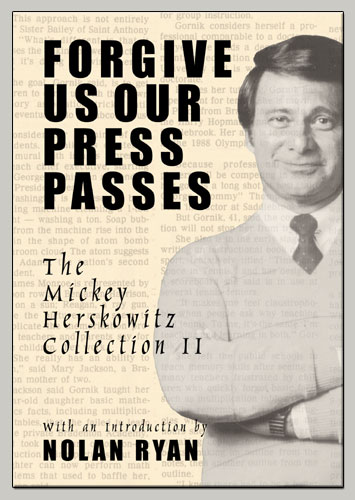
Published in 2008: Available at Amazon.Com.

Last night the Houston Media Wall of Honor took on another name in special pre-game ceremony at Minute Maid Park. Local members of the Fourth Estate inducted Houston’s iconic sportswriter, Mickey Herskowitz, into the fold of those who have done this community special service as communicators of news in all its many forms.

Mickey Herskowitz was, and still is, the best. When it comes to writing about sports, and as they alway said about James Bond for other talents, nobody does it better. Houston, indeed, should be proud of this native son and early life cub reporter on the Houston Buffs baseball and Southwest Conference football. He grew up to be the man whose late 1950s articles on this city’s deservedness for major league baseball played their own quiet role in Houston landing a National League franchise that we first knew as the Colt .45s back in 1962.

Mickey covered it all, becoming a nationally celebrated biographer for famous people as diverse as Mickey Mantle and Bette Davis. (Imagine the interview possibilities and problems Mickey might have encountered had he gotten those two figures in the same room for s a single interview back in the day. I would imagine that might have been one “opportunity” that even Mickey might have passed over, if at all possible.)

“Forgive s Our Press Passes: The Mickey Herskowitz Collection II” is a classic collection of Mickey’s work on sports stories from several different areas that will only bring you reading joy, should you choose to acquire a copy. It’s available through Amzon.Com.

Mickey Herskowitz’s daily work with the Houston Post and Chronicle is where most of us got to know him some fifty years ago, but don’t let the passage of time fool you into thinking we are simply talking about a past figure here. Mickey Herskowitz is now a full-time journalism professor at Sam Houston State University. He makes a weekly trek up to Huntsville from his home in the northern Houston hinterlands to teach and then returns home each weekend.

Those lucky SHSU kids! I just hope that some of them are wise enough to appreciate how they’ve been blessed!

Mickey Herskowitz is an inducted member of the Texas baseball Hall of Fame (1997) and he also received the TBHOF’s Jimmy Wynn Toy Cannon Award in 2006.

Speaking of Jimmy Wynn, congratulations to “The Toy Cannon” too for the honor he deservedly received from the Houston Astros, also prior to last night’s Cubs@Astros game. In naming their “Player of the Decade” winners over the half century of their existence, Houston picked Jimmy Wynn as their Player of the 1960s. Jose Cruz was named for the 1970s, Nolan Ryan for the 1980s, Jeff Bagwell for the 1990s, and Craig Biggio for the first decade of the 21st century.

Nice picking, Astros! None of us cold have done it any better!

Back to Mickey for a moment. In case you don’t know, the Baseball Hall of Fame makes an annual award to a single writer that has contributed much to baseball. It’s called the J. Taylor Spink Award in honor of the former publisher of the old Sporting News.

Mickey Herskowitz has never won this award, but a lot us think this omission is an unforgivable, but still correctible passover. If you are interested in supporting Mickey Herskowitz for this honor by the National Baseball Hall of Fame in Cooperstown, please get in touch with the man who is taking charge of the campaign in Mickey’s favor. His name is James Anderson and his e-mail address is jamesaa1946@yahoo.com> Mickey did not request this help, nor is he participating in lobbying for himself. The whole idea began and carries through from Mr. Anderson, an enormous Houston and Astros fan.

Publication Date is This Friday, Oct. 8th!

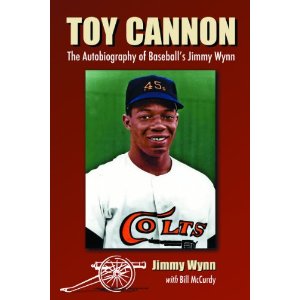
Speaking of books, here’s a reminder. “Toy Cannon” is available for purchase now through Amazon.Com too. This wonderful story of Jimmy Wynn’s life and baseball career is officially available this coming Friday, October 8th.

Have a great weekend, everybody. And let’s hope the Astros can turn back the Cubs in their titanic battle for fourth place in the national League Central.

Great Article on 1954 Dixie Series

October 1, 2010

The 1954 Texas League Champion Houston Buffs

If you belong to SABR, you’ve probably seen “The 1954 Dixie Series,” a fine article on that contest between the champions of the Texas League, the Houston Buffs, and the champions of the Southern Association, the Atlanta Crackers.

Kenneth R. Fenster researched and wrote the article for the 2010 edition of  “The National Pastime” as one of the featured stories for the collection entitled, “Baseball in the Peach State.” Fenster’s work and all the others beutifully shone the spotlight on the history of baseball in Georgia as part of SABR’s 40th anniversary convention and celebration in Atlanta this past summer.

For those of you who don’t know, SABR is an acronym for an organization that a number of his support as members because of its commitment to the accurate recording and preservation of baseball history. The letters stand for The Society for American Baseball Research. If you think you might like to join us, check out the website at http://www.sabr.org/

I won’t attempt to summarize Fenster’s fine work here. You need to read it for yourselves to fully appreciate the full rush of Atlanta’s great comeback and the gravity of Houston’s great fall in that Series.

All I will say is that the ’54 Buffs took my heart with them in that collapse. My three favorite players that year were an earlier version of the “Killer B’s” – 1st Baseman Bob Boyd (.321 BA, 7 HR, 63 RBI), 3rd Baseman Ken Boyer (.319 BA, 21 HR, 116 RBI), shortstop Don Blasingame (.315 BA, 5 HR, 53 RBI) and right fielder Willard Brown (.314 BA, 35 HR, 120 RBI). Brown got a lot of numbers with Dallas before coming over to Houston, but he proved to be the big difference-maker for Houston in the stretch. The best pitchers for the ’54 Buffs included WIllard Schmidt (18-5, 3.69 ERA), Hisel Patrick (10-3, 3.77 ERA), Luis Arroyo (8-3, 2.35 ERA), and Hugh Sooter (14-13, 3.28 ERA).

The Buffs had everything they need to go all the way. They just didn’t get there. Up 3 games to 1 over Atlanta in the 1954 Dixie Series, the Buffs crumbled. They lost three games in a row, allowing the Crackers to take the rush and the glory of the unbelievable comeback into their own treasure chest of great historical memories.

Have you figured out by now why I haven’t written about the 1954 Dixie Series through today? If not, then anything else I’ve written, am writing, or will write on Houston baseball isn’t likely to make any sense either.