Archive for the ‘Uncategorized’ Category

America in Color: 1939-1943

December 4, 2010

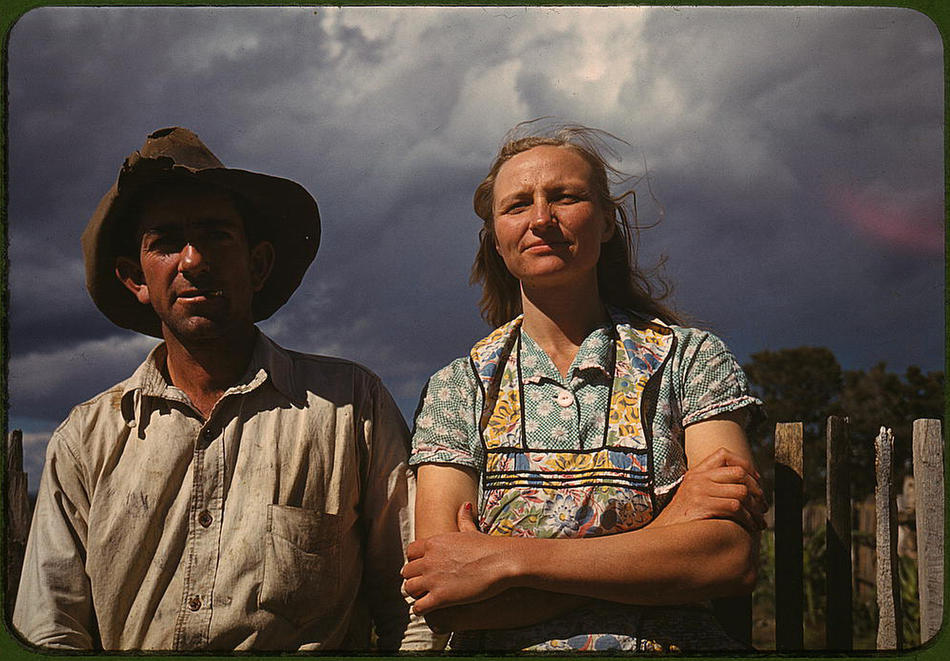
Faro and Doris Caudill, homesteaders. Pie Town, New Mexico, October 1940. Reproduction from color slide. Photo by Russell Lee. Prints & Photographs Division, Library of Congress

We have my old friend and St. Thomas High School classmate Pat Callahan to thank for these beautiful photographs making their appearance in The Pecan Park Eagle today. Patrick, my man, thank you for all of us.

Today’s column is a visual feast. Just click on the link below and be whisked away to the Denver Post collection of rare Library of Congress photos depicting everyday American life in color during the latter years of the Great Depression-Early World War II era, from 1939 into 1943. Their beauty is in their full color depiction of an America that used to be, but no longer is. In some ways, that’s good. Poverty and racism are never pretty – and both need to be fought commonly as depredations of the human spirit that they each are.

Poverty is not the absence of money. It is the absence of opportunity. Racism simply guarantees that the absence of opportunity for some people over time will not lead to a crying out for same, but as a calling out for entitlement and rescue with money, If granted as living subsistence relief only through publicly funded social programs, the suffering new political constituency group gets to keep the spiritual poverty that came with the racist limitations of their previous mental or legal slavery to a prejudicially suppressed life without any real opportunity. In other words, remove opportunity long enough – and people don’t stop being hungry – it’s just that many of them forget what they are really hungry for. They grow up settling for rescue and relief from the public soup kitchen because that’s all they ever known or been taught to know.

But there’s something else here too in these photos. – To me, it’s an America still bonding close to the ground on family, shared labor, and community connection to others – and not to selfish consumerism
or addiction to technological distractions, like texting devices, or this one I’m using now, the Internet. Even in color, the people are not living at the brim of frilly material things that surround most of us in 2010, but they are not impoverished either by the absence of money.
Check out the photos. Get lost in another world of America’s yesteryears. Enjoy. Reflect. Connect with what you see in the images that follow. Then, here’s a game you can play that may be both helpful and kind of fun: Pick out a photo that might help you with your own perspective on life in 2010, if you could magically go back and personally experience the 24 hours of that particular photo day with the subjects, scenery, or activity that unfolds in that particular picture. Have fun. Here’s the Library of Congress collection link now hosted by the Denver Post:

http://blogs.denverpost.com/captured/2010/07/26/captured-america-in-color-from-1939-1943/2363/

Starting Nine for the Houston Natives: A Work in Progress

December 3, 2010

Who should take the field for the Houston Natives?

Latest Change Now Updated Below, 12/04/2010: All one has to do to qualify for this club is be born in Houston. We forgot about Curt Flood, who was born her, but grew up in Oakland, CA. Thanks to the memory of Mike McCroskey, we have now added Flood to the outfield as a replacement for the now departing Steve Henderson, Left Field (11/18/1952) (Jack Yates HS) (.280 BA, 68 HR, 79 SB). I still don’t see even Curt Flood replacing Michael Bourn defensively in center field, but he definitely is an upgrade from Henderson.

============================================

Here’s a project for all of us, but thanks to early contributions of Dr. D. (Will Rhymes at 3B) and Shaun Bejani (Joel Youngblood at 3B) and the partial return of my own earlier absent memory (Craig Reyn0lds at SS), we, at least, now have all nine positions filled.

A lot of good ballplayers have come out of Houston over the years. Maybe it’s time we tried to put together our choices for the best starting lineup of native Houstonians that this city has ever produced. Off the top of my head, I came up with six players that would be my choices, but I had struck struck out on names for three positions until the names of Rhymes, Youngblood, and Reynolds came streaming back into the bright of day.

Can you think of anyone who might be better suited to play any of the nine positions with greater skill and production? It’s not always as easy as it looks – and sometimes we assume that a player is a Houston native when he really isn’t. Wayne Graham would have been a natural thought for 3rd base, but he wasn’t born in Houston. Neither were Roger Clemens or Andy Pettitte. Those famous Houstonians were born in Ohio and Louisiana, respectively.

Some players were either born nearby Houston – or else, they simply became so identified with Houston that we all mostly assumed that the were  born here too. Watty Watkins is a good example. He was a Houstonian, all right. He just wasn’t born here. Others include people like pitcher Josh Beckett, born in Spring, Texas, and fabled Houston high school pitching phenom David Clyde, born out of state,

I don’t have time to research every question that comes to mind to me here, so, I thought some of you might enjoy searching with me for the best lineup of native Houstonians we can put together, The guys I’ve listed are my choices for those spots, but some of you may have other nominees. I considered a few at pitcher, but I chose Red Munger over either Scott Kazmir or Woody Williams because I basically felt that good old Red Munger was better than both of those guys put together.

Send in your comments and let’s see what we can build together. Meanwhile, here’s what I’ve come up with for starters:

Incomplete Starting Lineup for the Houston Natives

(1) George “Red” Munger, Pitcher (10/04/1918) (Sam Houston HS) (77 W-56 L, 3.83 ERA)

(2) Frank Mancuso, Catcher (05/23/1918) (Milby HS) (.241 BA, 5 HR, 2 SB)

(3) James Loney, First Base (05/07/1984)  (Elkins HS) (.288 BA, 55 HR, 353 RBI)

(4) Will Rhymes, Second Base (04/01/1983) (Lamar HS) (.304, 1 HR, 19 RBI) *

(5) Joel Youngblood, Third Base (08/28/1951) (Austin HS) (.265 BA, 80 HR, 422 RBI)

(6) Craig Reynolds, Shortstop (12/27/1052) (Reagan HS) (.256 BA, 2 HR, 58 SB)

(7) Curt Flood, Left Field (01/18/1938) (Oakland Tech HS, Oakland, CA) (.293 BA, 85 HR, 88 SB)

(8) Michael Bourn, Center Field (12/27/1982) (Nimitz HS) (.263 BA, 11 HR, 173 SB)

(9) Carl Crawford, Right Field (08/05/1981) (Jeff Davis HS) (.296 BA, 104 HR, 409 SB)

Have a nice Friday, everybody – and Happy Houstonian Hunting too!

* Will Rhymes was suggested by Dr. D.

The Skeeters Are Coming to Sugar Land in 2012

December 2, 2010

Artist Rendering: The $40 million, 7,000 seat Sugar Land Stadium set to open in 2012 as the 70-home games per season base of the independent Atlantic League "Skeeters".

It’s official! The new independent league baseball club down in Sugar Land finally has a name that matches our area to a “T”. The Sugar Land Skeeters will begin play in the fairly-new-itself independent Atlantic League in 2012.

The Atlantic League started play in 1998 as direct result of a conflict that popped up within organized baseball. When the New York Mets objected to owner Frank Boulton’s decision in the late 1990s to move his Albany-Colonie Yankees to Long Island because of the former’s claim to their minor league territorial rights in that area, Boulton bolted from organized baseball to form his own small independent circuit and made the move anyway.

From the start, the new Atlantic League was modeled after the old Pacific Coast League. They played more games, they signed a large number of superior ability players, and they dedicated themselves to building small, but first class ballparks for their various clubs. The thirteen year result of this effort now finds the previously all eastern seaboard circuit expanding into the Houston area in 2012 with the start of the new Sugar Land Skeeters operation.

Here’s a brief look at the league membership as it stands with the 2012 inclusion of new clubs here and in Loudoun, Virginia. Each new club is preparing to play a 140-game home and road games schedule in 2012. Sugar Land is the first of four-to-six clubs that will be created to form a new Western Division of the league:

Current Atlantic League franchises

Team Names (Years Founded/Joined League)

Freedom Division

Lancaster (PA) Barnstormers (2003/2005)

Road (no home) Warriors (1998/1998)

Somerset (NJ) Patriots (1998/1998)

York (PA) Revolution (2006/2007)

Liberty Division

Bridgeport (CT) Bluefish (1997/1998)

Camden (NJ) Riversharks (1999/2001)

Long Island (NY) Ducks (1998/2000)

Southern Maryland (MD) Blue Crabs (2006/2008)

Future Teams

Loudoun (VA) Hounds (2010/2012)

Sugar Land (TX) Skeeters (2010/2012)

Sugar Land Stadium. The City of Sugar Land is building the 7,000 seat capacity venue that will house the new baseball club. With an estimated price tag of $40 million, the stadium will not be funded with general fund tax dollars, however, $30 million dollars will instead be paid for with a portion of sales tax revenues that may only be used for economic development purposes. The $10 million dollar balance will come from Opening Day Partners, a Lancaster, Pa.-based ballpark developer that owns and operates several minor league baseball teams, including the new operation in Sugar Land. The stadium will be located on a 21-26 acre tract, northeast of the Highway 6 and Highway 90A intersection.

Field Personnel. The club has yet to sign any players, but players with ig league and high league experience and potential will be in the signing sights of Skeeter scouts. The field manager could end up being someone with a recognizable local name too. Former Astros Terry Puhl and Norm Miller, plus former Astros manager Hal Lanier have all been mentioned as possible managerial candidates.

Astros & Skeeters. The Skeeters are not a threat to the Astros, but they are capable of stoking further interest in professional baseball among people who never drive downtown to see a more expensive major league game. In fact, some of these people may now be stimulated to go see a major league game for the first time as a result of their experience with the Skeeters. It will be up to the Astros to produce a club and and a plan that makes that marketing connection a harvest of attracted new interest in baseball.

The worst thing the Astros might do here would be to treat the new Skeeters club as though it didn’t exist. Who knows? Maybe the Astros will one day have a AAA or AA club operating in some near region like Sugar Land, Katy, or The Woodlands. – It sure would simplify certain player reassignments during the long season, would it not? And, if the Astros happened to own these particular clubs too, it would make for even more lucrative opportunities to treat the home base fan population with an ongoing look at coming attractions.

Those are just my thoughts. All I know for sure while we’re waiting to see if the Sugar Land operation can succeed in the Houston area is that I will be out there to see some games, if they actually do start playing. The lure of night baseball in the small ballpark under open skies is just irresistible – even in the heat of Houston summers – and even with Skeeters on the loose.

Will Jeff Bagwell Reach The Hall of Fame in 2011?

December 1, 2010

A bad shoulder stopped Jeff Bagwell at 449 HR through 2005.

I thought of five different ways to ask the question that needs to be asked about Jeff Bagwell’s chances for the Baseball Hall of Fame. All are important – and all will remain in play – even if we don’t get to them sufficiently in one column. I would also very much like to know what you guys think as comments upon this article and subject.

Here’s my fairly quick dance through the questions:

(1) Does Jeff Bagwell belong in the Hall of Fame? Based upon his hitting and slugging accomplishments, relative to others, plus his prowess in the field at first base,  he would get my vote, if I had one.

(2) Will Jeff Bagwell make it into the Hall of Fame on his first 2011 ballot listing as an eligible candidate? It’s hard to say. There are thirty-three candidates on that list and a couple of those names fell only a handful of votes short of the 75% support-level needed for election in 2010. Long-time candidate Bert Blyleven and second year man Roberto Alomar are expected by many, including yours truly, to have the best two shots of becoming the Class of 2011.

If no one fans the fires of “guilt by association” in the direction of Jeff Bagwell as a slugging member of the steroids era, Bagwell could make it into the Hall too on his first try as a third 2011 inductee choice above all the other candidates. I really don’t see any of the other candidates making it next year.

(3) How big is the steroids cloud over the Hall of Fame elections of this decade? From what I see, it’s pretty big for now and the foreseeable near years to come, whether it’s talked about or not. It’s already kept the late and reluctant steroid-use confessor Mark McGwire out of the Hall through 2010 when all of his HR-hitting accomplishments alone should have put him into the Hall on the first ballot; and, it isn’t likely that demonstrated steroids-use liar and first ballot candidate Rafael Palmiero is going to fare any better.

Jeff Bagwell has consistently denied any steroids use during his career, or ever, but he still happened to have bulked up his body during an era in which it turns out that many of his contemporaries were also doing so with considerable chemical assistance. Only yesterday I was talking with another writer from Boston who independently brought up that quiet suspicion about Baggy.

As one who trusts the word and character of Jeff Bagwell, I don’t believe, or want to believe, that he ever used steroids for purposes of healing or performance enhancement. He says he didn’t and I am willing to go with that statement as the truth.

The problem is – not everyone is gong to give Jeff Bagwell the benefit of trust in this matter and here’s why that’s important. A Hall of Fame candidate doesn’t have to admit to steroids use, or be caught lying about it, to  get hurt by the voters. All he has to do is to be splashed by the fall-out from that era. The 1990’s were also a decade in which a number of players started pushing iron in the gym for the main sake of becoming stronger hitters. It isn’t fair that those guys who accomplished that aim honestly should be lumped into the same cloud with the steroids abusers, but that’s the way life often goes. It isn’t always fair.

Please comment on Jeff Bagwell’s candidacy for the Baseball Hall of Fame – or any other issue raised by this column, or in your own mind, about the impact of the steroids era on Jeff’s chances.

The main question is: Do you think Jeff Bagwell belongs in the Baseball Hall of Fame?

For a list of all the candidates and a little more detail about the voting, check out this link:

http://www.canada.com/sports/newcomers+eligible+hall/3904485/story.html

.

Hoffman, Rivera: Faraway Leaders in Saves

November 30, 2010

Saves are an expression of Baseball's belief in Divine Intervention.

“Saves” have been around as a recognized statistic in organized baseball since 1969. The following description from Wikipedia explains them for what they are as well as any other I have read or could write:

In baseball statistics, the term save is used to indicate the successful maintenance of a lead by a relief pitcher, usually the closer, until the end of the game. A save is a statistic credited to a relief pitcher, as set forth in Rule 10.19 of the Official Rules of Major League Baseball. That rule states the official scorer shall credit a pitcher with a save when such pitcher meets all four of the following conditions[2]:

  1. He is the finishing pitcher in a game won by his team;
  2. He is not the winning pitcher;
  3. He is credited with at least ⅓ of an inning pitched; and
  4. He satisfies one of the following conditions:
    1. He enters the game with a lead of no more than three runs and pitches for at least one inning
    2. He enters the game, regardless of the count, with the potential tying run either on baseat bat or on deck
    3. He pitches for at least three innings

If the pitcher surrenders the lead at any point, he cannot get a save, but he may be credited as the winning pitcher if his team comes back to win. No more than one save may be credited in each game.

If a relief pitcher satisfies all of the criteria for a save, except he does not finish the game, he will often be credited with a hold (which is not an officially recognized statistic by Major League Baseball).

Save rules have changed over the years; the above rules are the current as defined in Section 10.19 of Major League Baseball‘s Official Rules. The statistic was formally introduced in 1969,[1] although research has identified saves earned prior to that point.

You may also find the other information about “saves” from this page equally helpful. Just click the following link to go there:

http://en.wikipedia.org/wiki/Save_(sport)

Trevor Hoffman and Mariano Rivera, both still active, are the pulling away leaders in career saves and the just retired former Astros saves leader, Billy Wagner, places high in fifth place on the list. All three of these men are prime candidates for the Baseball Hall of Fame once they have retired and become eligible for consideration beyond the five-year retirement waiting period.

Members from the Top Twenty-One Career Saves list already inducted into the Hall of Fame include # 6 Dennis Eckersley, #10 Rollie Fingers, # 18 Goose Gossage, and # 21 Bruce Sutter.

Why certain others, notably # 3 Lee Smith or # 4 John Franco, never made it into “The Hall” with comparable or superior save totals to the others is beyond my ability to explain or defend. I will say this much: Sometimes baseball achievement is denied recognition if a player takes “too long” to do whatever it is he’s doing. At other times, however, baseball rewards players who achieve certain cumulative records over time.

On the objective side, here’s how the current leadership list stacks up through the 2010 season:

Career Leaders in Major League Baseball Pitching Saves

Player↓ Saves↓ Years(s)↓
(1)Trevor Hoffman* 601 1993–present
(2) Mariano Rivera* 559 1995–present
(3) Lee Smith 478 1980–1997
(4) John FrancoL 424 1984–2005
(5) Billy Wagner*L 422 1995–2010
(6) Dennis Eckersley 390 1975–1998
(7) Jeff Reardon 367 1979–1994
(8) Troy Percival 358 1995–2005, 2007–09
(9) Randy MyersL 347 1985–1998
(10) Rollie Fingers 341 1968–1985
(11) John Wetteland 330 1989–2000
(12) Roberto Hernández 326 1991–2007
(13) José Mesa 321 1987, 1990–2007
(14) Todd Jones 319 1993–2008
(15) Rick Aguilera 318 1985–2000
(16) Robb Nen 314 1993–2002
(17) Tom Henke 311 1982–1995
(18) Goose Gossage 310 1972–1994
(19) Jeff Montgomery 304 1987–1999
(20) Doug Jones 303 1982, 1986–2000
(21) Bruce Sutter 300 1976-1986, 1988


Astros Farmhand Dedicated To Duke Baseball

November 28, 2010

Ryan McCurdy

Some of you will recall the column I wrote for The Pecan Park Eagle earlier this past summer, shortly after the Houston Astros signed a young catcher out of Duke University named Ryan McCurdy.

McCurdy left college play after his 2010 graduation with a record for athletic/academic excellence and a reputation for great playing dexterity and defensive accomplishment.  In four seasons as a starter at Duke, McCurdy  excelled at three positions.He started at second base man during his freshman season, then moved over to third base for his sophomore and junior years. Then, as a senior, McCurdy picked up the so-called “tools of ignorance” for the first time to play catcher for the very first time in his young life s an organized baseball player.

As a catcher, all McCurdy did was play error-free ball while throwing out 19 runners attempting to steal. These results made sense. During his four complete seasons at Duke, McCurdy committed only 19 errors in 865 career chances for a defensive success percentage of .978. All 19 of McCurdy’s errors occurred during his freshman and sophomore years. He made no errors in the field as a full-time starter again during his junior and senior seasons.

What else, you ask? The guy was tough for the hard-throwing “K” boys, striking out only 44 times in 820 college career plate appearances. He als posted a career on base percentage (OBP) of .397 and set a Duke and Atlantic Coast Conference (ACC) career record for HBP (hit by the pitcher) first base reaches with 69. As a throw in on his brains credit, McCurdy earned All-ACC Academic Baseball Team honors twice and also made the ACC Academic Honor Roll three times.

https://thepecanparkeagle.wordpress.com/2010/07/07/astros-sign-mccurdy/

After signing with the Astros, the Tampa, Florida native McCurdy played in only 20 games at the Rookie League and Class A levels, going 4 for 37 and .148 batting average in a handful of break-in season times at bat. The real test at the professional level for young Ryan McCurdy lays ahead of him. The book on his intelligence, character, and dedication to Duke University baseball is already in.

During this off-season, McCurdy has agreed to serve as a volunteer member of the coaching staff at Duke until its time to leaving for his own 2011 spring training obligations to the Houston Astros farm system.


Even if we didn’t share the same last name, I’m pulling for Ryan McCurdy to make it all the way to the starting job as catcher for the Houston Astros someday. Traits like character and intelligence don’t necessarily have to accompany athletic ability for a young guy to make it to the majors, but it sure doesn’t hurt to find them in the field general position of catcher, especially. The great Brad Ausmus and young Jason Castro of our current Astros roster are both good examples of those types as well. Come on, Ryan McCurdy, let’s get it going. There’s room in Houston for both you and Mr. Castro.

Ramblings of a Baseball Soul

November 27, 2010

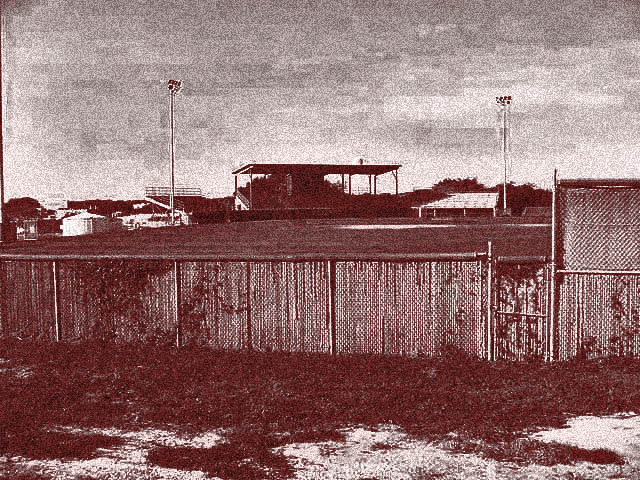
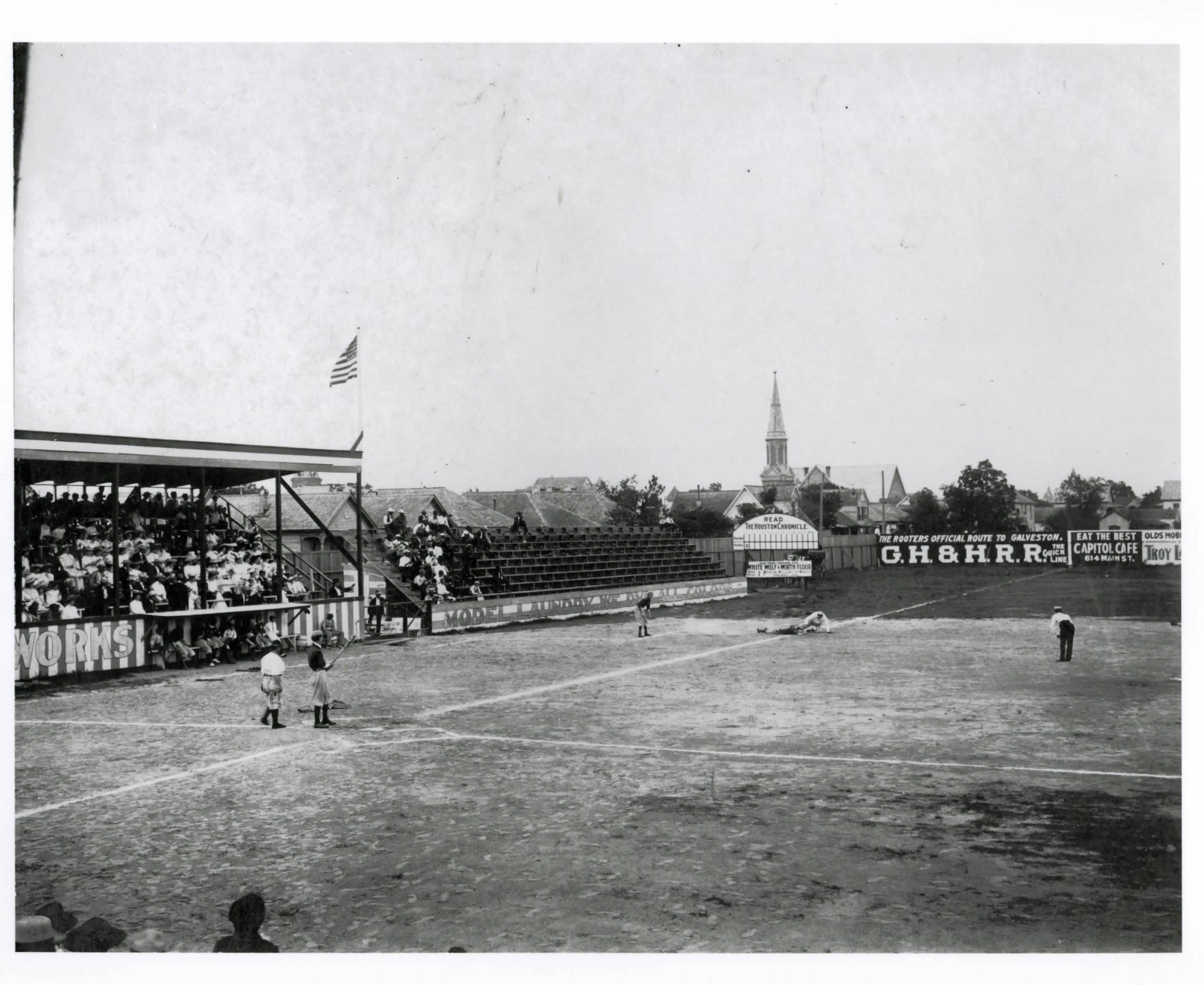
Joe Hunter Field, Coastal Bend College, Beeville, Texas

My two earliest memories feature my dad. The first dates all the way back to 1939, when, at tops,  I was maybe eighteen months old. It is quite brief. My uncle, who was only nine years older than me, had climbed a tree in the back yard of my grandparents’ house in San Antonio. Uncle Albert was my mom’s youngest of three brothers. He had slipped and was hanging by the neck from a limb fork and moaning loudly. I can still see and hear the frightening sight and sound of him dangling by his neck in the sky as my memory stands me again in the yard to only watch.

Even as I “recall’ these images for this written recollection, I am confronted again with the reality that I had no way of really assessing the full meaning of everything my toddler senses were taking in. I think I saw that my uncle was in trouble and that my dad had come to rescue him, but that may have just been the explanation my maturing mind added later to the visceral experience.

All I know for sure is, I can still see my dad tearing his shoes off as he races out the back door and up the tree to bring my uncle down. I have a brief picture of Dad carrying poor Uncle Albert across the yard and into the house. Then everything fades to black.

The second earliest clear memory is of baseball. With later help from Mom and Dad, I was able to pin this one down to the later spring or summer of 1940. That would have put me close to the 2 1/2 year old age.

Dad is playing right field for the Beeville town ball team. Retired major leaguer Curt Walker is playing center field. I don’t have any of those facts available to me at the time. All I know for sure  is that Mom and and I are sitting in the stands at the old Bee County (TX) Fairgrounds Park, and given what I now know about the game of baseball, we were situated down the rignt field side of things because there was Dad down there on the near field in front of us, wearing his gray Beeville uniform with the dark blue legging socks and dark cap.

This memory too is very brief. Mom is sitting. I am walking the wooden planks of the mainly empty seats. It is night. Bugs are flying all around the arc lights. The players make a lot of chatter on the field. Mom keeps calling my name. When she catches my eye, she points to Dad in the field, as if to say, “watch what’s going on.”

When I look at Dad, I don’t see much going on. Dad either has his hands on his hips or his knees. At times, he is sort of hunched over, leaning forward, looking in at something.

When Dad comes to bat, I hear another Beeville player yelling, “C’mon, Bill! You’re the baby, Bill! You can do it, Babe!” I have no idea what any of that encouragement means, but I do see Dad hit the ball and run to first base, where he stops. I don’t know at the time why he ran, or where he ended up, or whar it all meant, but I saw it happen. And I did like the fact that people in the stands were clapping because of something my dad did.

Later, a ball is hit to Dad in right field. He catches it on one bounce and throws it into second base. I have only the visual memory of what he did. Why he handled things in that way only made  sense as years passed and I learned more about baseball  from personal experience. At any rate, this memory also faded to black, just as soon as Dad threw the ball into the infield ahead of the runner. I never even knew who won the game and Dad couldn’t remember either – or, at least, said he didn’t.

The old photograph of Hunter Field just set me off on this track this morning. It reminded me of all those times my buddies and teammates at St. Christopher’s in Houston walked over to nearby Glenbrook Golf Course Field to practice and play our parochial school games in the springs of 1951 and 1952.

I got to be a Grade AAAA  skywatcher around that time, always looking out for dark clouds that  might threaten our ability to play. I can still feel the shuffle of shells under our feet as we crossed the little creek bridge and made our way off to the left and the short walk/jog down to the backstop for after school baseball. What an absolutely soul-soaring memory that is, even now.

To have played baseball at all as a kid grew into the great joy of my life, as it did for so many others of you. Sometimes, like last night, I even dream that I’m back there again, playing ball with all the ability I thought I had. That kind of dreaming makes waking up a bittersweet thing. At least, last night’s dream helped me to write this column for Saturday. I had a wonderful time back then, folks. Now, if only I can get back there tonight, I’ll take another ticket on the Dreamland Clipper for sure.

Those were the days, my friend. We thought they’d never end.

Three Great Future Managers from the 1937 Houston Buffs Roster

November 26, 2010

Over the years of their total existence in the 20th century as the Houston Buffaloes, or Buffs, our minor league baseball club produced some pretty fine baseball players, Tris Speaker and Dizzy Dean, most notably. come to mind. In 1920, Mr. Speaker also went on to become the first former Buff to win a World Series as a major league manage . He was followed by four other ex-Buff players who managed at least one big league club to a World Series crown. This total list of five former Buff World Series Winning Managers includes Tris Speaker, Eddie Dyer, Danny Murtaugh, Walt Alston and Johnny Keane – a quietly spoken testimony to Houston as baseball’s version of football’s “Cradle of Coaches,” or, more accurately in this case, a baseball “Cradle of Managers.”

Numerous other former Buffs, including men like Solly Hemus, have also done some quality time as big league field generals, but probably no year ever equalled what happened in the tough off-production year of 1937. That was the season that two future World Series winning managers and another pretty good one stumbled through a low finishing time as players for the low-performing 1937 Buffs.

John Watkins also returns to The Pecan Park Eagle as a guest columnist this morning to bring us that story. – Bill McCurdy:


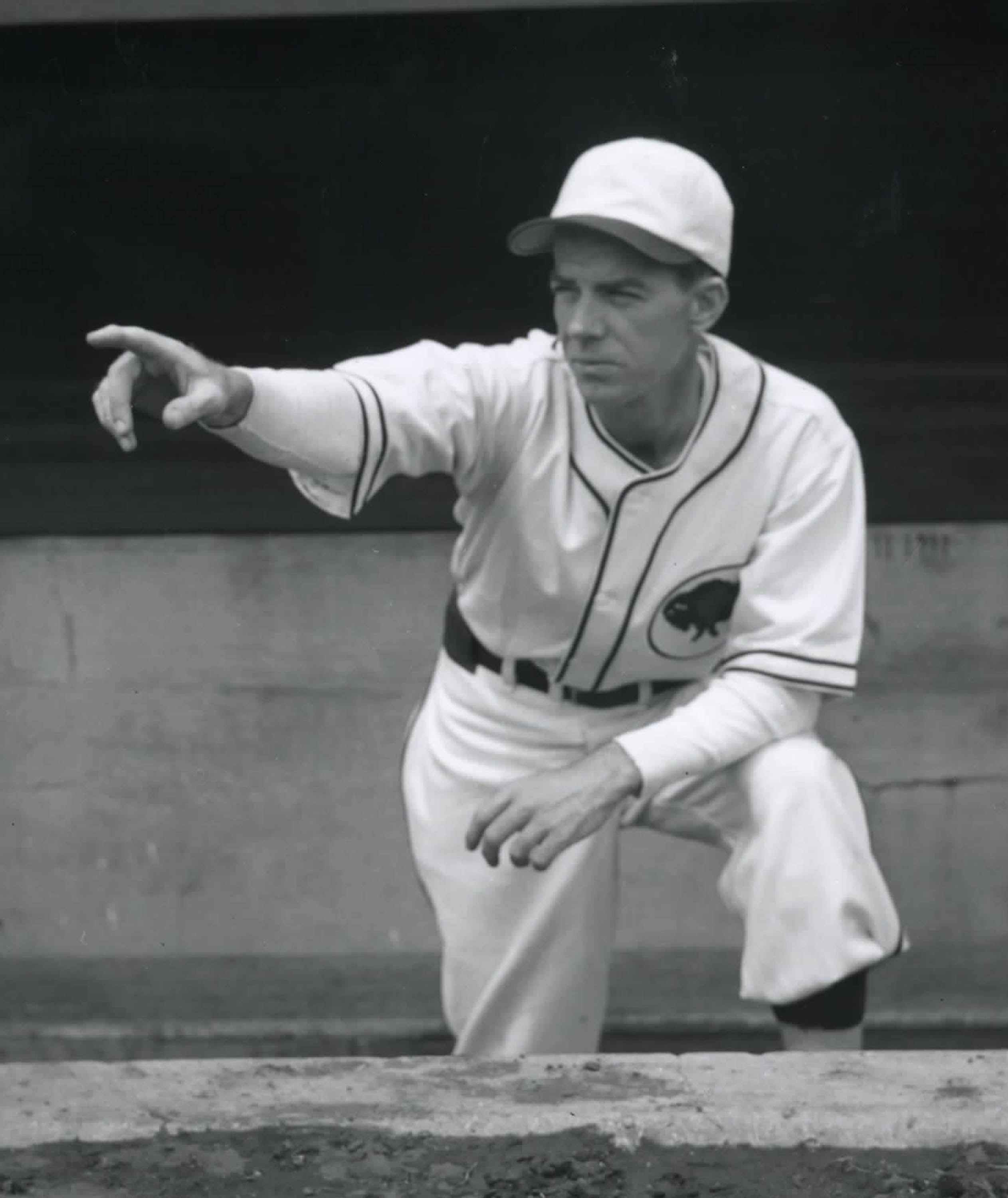
Houston Buffs: A Cradle of World Series Winning Managers.

Three Great Future Managers from the 1937 Houston Buffs

By John Watkins, Guest Columnist          jnowat@gmail.com

The 1937 season was not a memorable one for the Houston Buffs, who finished seventh in the Texas League with a 67-91 record, 33.5 game behind first-place Oklahoma City. Attendance dropped along with the Buffs’ winning percentage, avraging fewer than 1,000 fans per home game. One highlight of the dreary season was the league’s second all star game, played July 17 at Buff Stadium before a crows of more than 8.000.

The fans also caught a glimpse of three Houston players who would become major league managers: Johnny Keane (Cardinals, 1961-1964; Yankees, 1965-1966), Walter Alston (Dodgers, 1954-1976), and Herman Franks (Giants, 1965-1968; Cubs, 1977-1979).
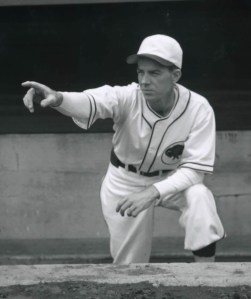
Johnny Keane

Johnny Keane was in his third season with the Buffs in 1937. At age 25, he was a veteran ballplayer with seven professional seasons under his belt. In 1935 and 1936, he was the Buffs’ regular shortstop, but in 1937 he played primarily at third base and hit .267 in 158 games. Thereafter, the Cardinals made him a player-manager in their organization, and that proved to be his path to the major leagues, where he was a coach and manager. The 1935 season was pivotal in this change in direction. That year, Keane was hit by a pitch and suffered a skull fracture that left him near death for two weeks.

After managing in the low minors, Keane returned to the Buffs in 1946 for what became a three-year stint as manager. In 1947, the team finished first with a 96-58 record, nosing out the Fort Worth Cats by a half-game. While the Buffs swept Tulsa in the first round of playoffs, however, the Cats lost to Dallas in seven games. Houston then dispatched Dallas, four games to two, to win the championship and went on to defeat Mobile in the Dixie Series. Keane moved up to Rochester, the Cardinals’ farm team in the Class AAA International League in 1949 and led the Red Wings to a first-place finish the next season. After another year in Rochester, he served seven seasons in the Triple A American Association before joining the Cardinals in 1959 as a coach under manager Solly Hemus, his second baseman on the 1947 Buffs.

When the Cardinals dismissed Hemus in July 1961, Keane was given the top job. In the tumultuous 1964 season, his Redbirds overtook the faltering Philadelphia Phillies to win the pennant by one game and then defeated the New York Yankees in the World Series. St. Louis owner Gussie Busch had fired general manager Bing Devine when it appeared that the Cardinals had no chance to catch the Phillies, and at that time he was reportedly planning to fire Keane at the end of the season. After the World Series, however, Busch was prepared to offer Keane a multi-year contract. In a stunning development, Keane resigned to take over the Yankees from Yogi Berra, who had just lost his job.

In New York, Keane inherited a team in decline. With several players benched by injuries in 1965, the Yankees fell to sixth place with a 77-85 record. The next season was worse. Through the first ten 10 games, New York’s record stood at 1-9; through 20, it was 4-16. At that point, the Yankees fired Keane and replaced him with Ralph Houk. The team was then last in the American League, and that is where it finished the season. On January 6, 1967, Keane died of a heart attack at age 55 in Houston, where he had made his home since 1935. He is buried at Memorial Oaks Cemetery.
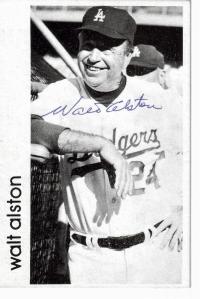
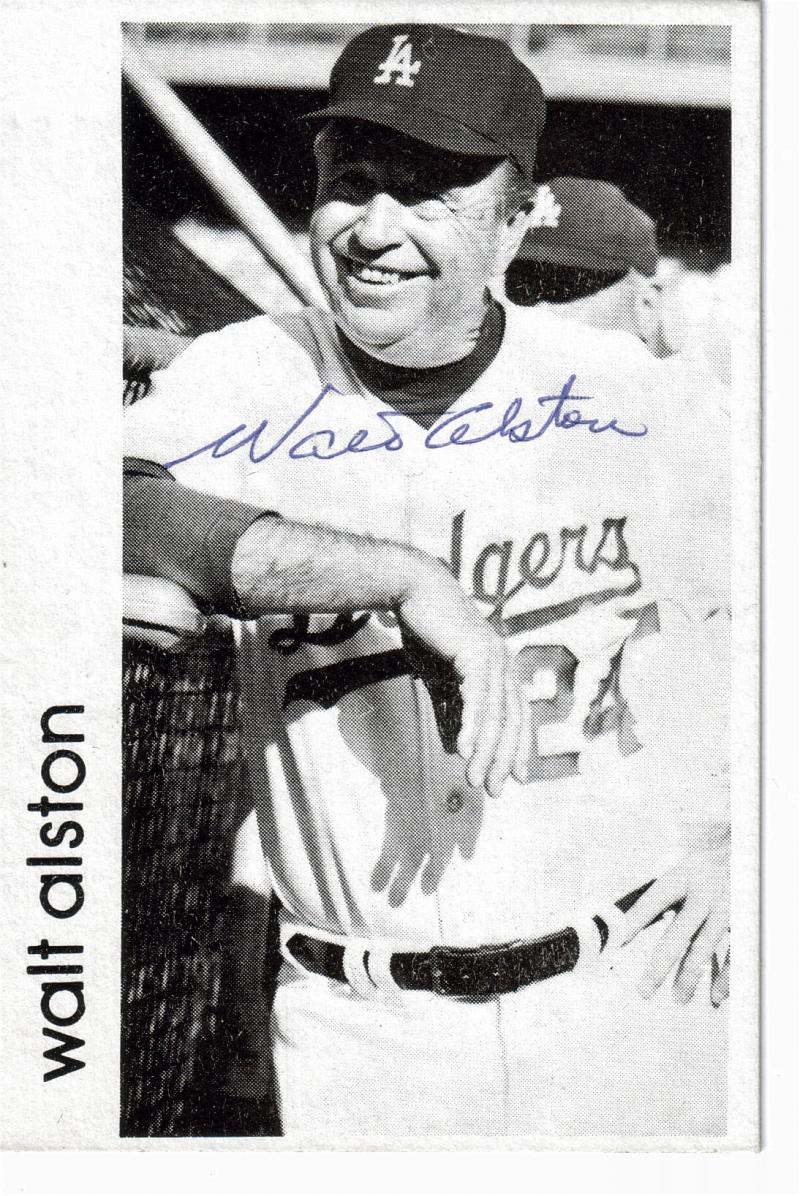
Walt Alston

Walter Alston was 25 years old in 1937 but only in his third year as a professional player, having graduated from Miami University in his native Ohio before joining the St. Louis “chain gang.” A first baseman, he split the season almost equally between Houston and Rochester, the Cardinals’ Class AA farm club in the International League. For the Buffs, Alston hit only .212 in 65 games. He fared better in Rochester, batting .246 in 66 games.

The year before,  he was called up to St. Louis at the end of the 1936 season and got into the final game, against the Cubs at Sportsman’s Park. It turned out to be his only appearance in the major leagues, and it came about when Cardinals first baseman Johnny Mize was ejected arguing with the umpire over a called strike. Alston made one error in two chances and struck out in his sole at-bat.

The Cardinals made Alston a player-manager in 1940 when he took over their farm team in the Class C Middle Atlantic League. He was there for three seasons and then had back to Triple A as a player for Rochester in 1943, but the Cardinals released him before the season ended. By that time, former St. Louis executive Branch Rickey had moved to the Dodgers, and he hired Alston as a minor-league manager. Starting in the Class B Interstate League in 1944, Alston steadily moved up in the Dodgers’ organization, reaching Triple A Montreal of the International League in 1950.

After four seasons in Montreal, Alston took over the Brooklyn club in 1954. He managed the Dodgers for 23 years, leading them to four World Series titles (the first in Brooklyn in 1955, the others in Los Angeles) and seven National League pennants. He was known for his studious approach to the game and for signing only one-year contracts with the Dodgers even as multi-year contracts became common. His 2,040 wins as a manager rank ninth on the all-time list. He was inducted into the Hall of Fame in 1983 and died at age 72 on October 1, 1984, in Oxford, Ohio.
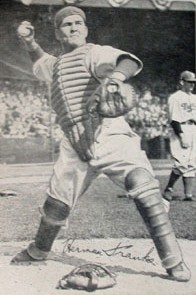
Herman Franks

Herman Franks appeared in only 10 games for the Buffs in 1937 and hit just .130 in 23 at-bats. A 23-year-old catcher, he had begun his pro career five years earlier. Franks spent most of the 1937 season at Sacramento, the St. Louis affiliate in the Class AA Pacific Coast League, where he hit .265. He eventually made it to the Cardinals for 17 games and 21 plate appearances in 1939, but the club sold his contract to Brooklyn in early 1940. Franks was the Dodgers backup catcher in 1940 and 1941 under manager Leo Durocher, who became a mentor. After Franks was discharged from the Navy after World War II, he played alongside Jackie Robinson on the Dodgers’ Montreal farm team that won the 1946 International League pennant.

In 1947, Branch Rickey named Franks as player-manager of the St. Paul Saints, the Dodgers’ Double A affiliate in the American Association. In August, however, Connie Mack told Rickey that the A’s needed a backup catcher, and Franks was sent to Philadelphia. He also played for the A’s in 1948. The next season, Durocher, by then the Giants’ manager, hired Franks as bullpen coach. Franks also made his final appearance as a player that season, going 2-for-3 in one game.

According to Joshua Prager’s book, The Echoing Green (Pantheon 2006), Franks played a crucial role in Bobby Thomson’s “Shot Heard Round The World,” the home run off Brooklyn’s Ralph Branca in the 1951 National League playoffs that won the pennant for the Giants. On Durocher’s orders, Prager says, Franks was stationed in the team’s center-field clubhouse at the Polo Grounds, where he used a telescope to steal the Brooklyn catcher’s signs and relay them to the Giants’ coaches and hitters.

As a manager, Franks had very good teams in San Francisco but finished second four consecutive seasons despite winning more than 90 games three times. (In 1965 and 1966, the arch-rival Dodgers won the National League, and in 1967 and 1968, the Cardinals captured the pennant.) Franks was not as successful in his three years with the Cubs, who finished no higher than third and never won more than 81 games. Franks died at age 95 on March 30, 2009, in Salt Lake City.
Famous Last Words …

November 25, 2010

"and then I helped 'em figure out their next move when I said ..."

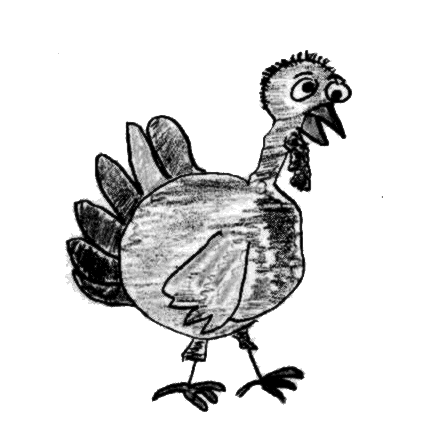
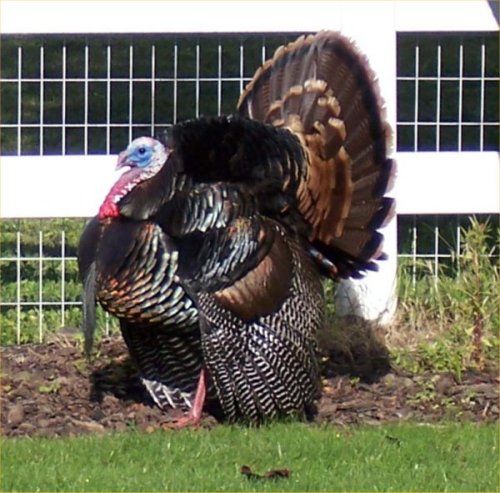
Once upon a time, a fellow named Tom Turkey was the richest, most productive entrepreneur in town. If there was a way to make money, he saw the opportunity first and then did it better than anyone who saw what he was doing next and tried to keep up with him. Other citizens did OK; they just weren’t as fast on their feet or quite as creative as old Tom.

There was another major difference between Tom and the others. You see, Tom was the only turkey in town. Everyone else was human. As a result, his ability to do so much better than anyone else galled a lot of people. Some gave him credit and held him up in admiration. For others, however, old Tom became their excuse for failure. For these latter type, two-faced people, their smiles of congratulations to Tom when they saw him face-to-face were always followed by the silent munblings of their envy as they walked away.

“That turkey!” was their quiet cry.

Tom’s other strong trait was his total dedication to that old adage, “to those blessed with special gifts for living, much is expected in return.”  Tom Turkey donated to every legitimate charity in town and he was right there, standing tall, front and center among the first responders, anytime a local crisis or serious community disaster hit the people of the town. In fact, Tom showed up so predictably that a lot of other well-heeled citizens who also could have helped out in times of great unexpected need, simply didn’t.

“Let Tom do it,” became the not always totally silent cry of the miserly inclined. Others of that group did not bother to rationalize, even with the handy availability of Tom as a model. These wonderful folks simply turned their backs on the needs of others in times of community crisis with a rationale that pretty much traveled along these lines: “I didn’t invite the storm to hit. It’s not up to me to help those who got hurt by it. Let ’em pick themselves up by their own bootstraps. It will be a good test of whether or not they deserve to survive. And if they don’t, we’ll all be better off without them.”

Tom Turkey’s heart was not so cold. He always did all he could to help others until one year when so many bad things happened that his philanthropy pretty much used up all of his assets. For the first time in his life, Tom Turkey began to experience the curious human emotions of resentment and regret. It must have been the company he was keeping. Tom started to resent the people who needed him – and he regretted going broke in the name of helping out.

“What do they expect of me?” Tom asked himself. “I’m not Bill Gates or the federal government. I can’t just go print more money when I run out of the bucks I have now!”

Tom Turkey resolved to turn off the tap on charity until he ran into a situation on Thanksgiving Day that turned the last crank-notch on his giving heart. He accidentally walked into a large noon meal gathering of the 60% unemployed folks who had gathered there at a large community hall for the traditional meal.

The problem he saw was simple. The people had nothing to eat. Oh, they had dressing, and yams, and corn, and fruits, and pies of all kind, but they had no honey-baked ham – or meat of any kind. Their sad plight again moved Tom into action.

Tom jangled the last few remaining coins in his pocket as he considered how he would manage his own needs today without the money until he could make it back. If he used these limited funds to complete the meal for his needy friends and neighbors, he was going to be broke himself, at least, for the rest of the day.

Once decided, Tom offered his help, but he could have chosen his words more carefully on this morning of his last day on earth. It also would have helped Tom had he remembered the fact that, no matter how hard he had worked to fit in with the humans, in the end, he was not really one of them.

“OK, folks,” Tom Turkey said, “I’m here to make certain your meal plan is complete, but just be sure of one thing: This is the last time I’m sticking my neck out for you. … Any questions?”

A Thanksgiving Eve Day Wish

November 24, 2010

Our little family isn’t doing much this year because of holiday work obligations that are tying up the time of my wife and son tomorrow, but we will all meet at the end of the day to break bread together and be thankful for all the right reasons.

Thank God for the riches of health, for the kind of love that reaches out as concern for others, for friendship with those who share our bond to life as the opportunity for creative experience, and for a wide open, full-throttle passion for living in peace, with no resentments or regrets. Those elements are all vital to spiritual peace, in my book, along with an acceptance of our need to battle back forever against any new or ancient adversity that attacks any of those essential facets of a full life.

My best wishes to all of you and yours for a most happy and peaceful Thanksgiving holiday. Take it – and make it beautiful.

Warm regards,

Bill McCurdy