Archive for the ‘Uncategorized’ Category

Eight Men In: Baseball Movie Managers

March 6, 2011

Manager William Frawley (R) with Pitcher Joe E. Brown in the 1935 film, "Alibi Ike.".
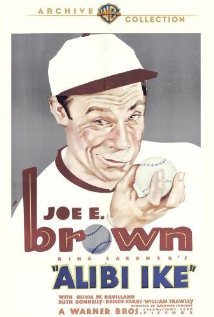
Ike was a Prima Donna before baseball paid big money.

Bill Frawley will always be Fred Mertz on “I Love Lucy” and Uncle Bub O’Casey on “My Three Sons,” but those roles will never come close to his true identity. In reality, he was a first tier baseball man, and one who also enjoyed bending the old elbow in the fashion of drinkers from those earlier times. Frawley and the Babe, or manager Joe McCarthy, would have gotten along just fine an their plans for the evenings that followed all those endless days game f the 1920s and early 1930s. He also may have fit into the managerial role as well as any actor from Hollywood ever did – had he ver been given the chance.

Today’s focus for me is upon the eight men I’ve ruled in as realistic type-casting for baseball movie managers. Bill Frawley is only my first choice of eight for this job, and in no particular order. Anytime any of these guys chose to portray managers in a film, I was, as I still am, ready to accept them as guys who came prepared to deal with all the hassles and flack of the challenge, even if one of them would have to deal with an arguably totaled group of six to eight players who were trying to throw the World Series back in the sweet bye-and-bye.

Here are a few words about each:

William Frawley

(1) William Frawley. The guy had the scornful look of the biggest old cranky man the world had ever known. He was blustery, yet sentimental and understanding, the kind of guy who most probably could have given a young players what he needed, whether it was a pat on the back or a kick in the pants. In 1935’s “Alibi Ike,” Frawley played “Cap,” the manager of the Chicago Cubs who had to deal with the talented, but arrogant rookie pitcher Joe E. Brown on the club’s way to a world championship. That’s right. The Cubs won it all, but not because of Frawley’s credible managerial demeanor. The Cubs won it all here because it was only a movie script fantasy of some writer with Cub ties.
Wilfred Brumley

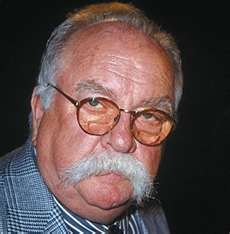
(2) Wilford Brimley. Once was enough. Brimley’s performance as Pop Fisher, amanger of the struggling New York Knights in 1984’s “The Natural” was a tour de force effort in character portrayal. The droning, honest, and laconic style of old Pop Fisher has a hard time snapping to what he has on his hands when the magical Roy Hobbs shows up to play for the team, but he holds on like  snapping turtle to this incredible talent once he finally see the man literally knock the cover off the ball. You get the feeling from Brimley that serving as his bench coach would mean going to supper every night with the manager and watching him order the same thing every night from the same cafe booth, if it were open.
Danny Glover

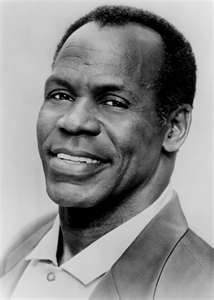
(3) Danny Glover. In the 1994 re-make of “Angels in the Outfield,” Danny Glover plays the stressed-out manager of the California Angels, George Knox. Know plays every hand in fear that his crummy club is about to cost him his job at any moment. When he meets the kid fan who seems to have the ability to lure helpful angels to the games, Knox’s desire to win, no matter what, easily wins out over any fear that the media is going to portray him as a nut job. His last concession is admitting to himself that he finally had reached a point in life in which he had come to believe in a power greater than his own will. Whoa, Danny! You came close to finding a philosophy that would have allowed you to set up a rehab program for stressed out baseball managers who became obsessed with winning beyond health and family considerations.
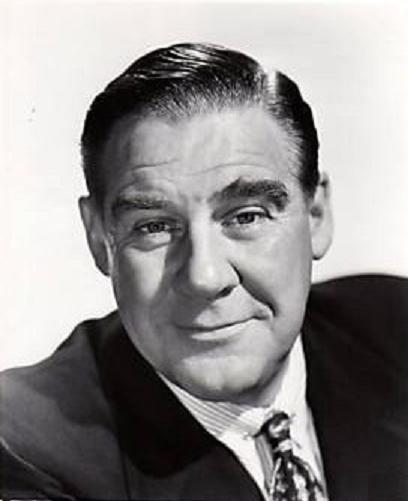
Paul Douglas

(4) Paul Douglas. He played manager Guffy McGovern in the 1951 original version of “Angels in the Outfield,” but unlike Glover’s anxious portrayal, Douglas’s character was lost in hard drinking, unrepentant anger, and surly treatment of others, particularly umpires. You have to cut him some break for his drinking, foul language, and lack of courtesy to one an all.  After all, they cast McGovern as manager of the early 1950s Pittsburgh Pirates – and without a Ralph Kiner onboard. Things work out with the help of angels and the faith of a little orphan girl fan and the loving support of Janet Leigh, who plays an early 1950s female  sports writer. In the end, the Pirates win the pennant. The manager and the sports writer fall in live. And we are left to believe that they marry and then adopt the kid who led the angels to the ballpark in the first place. The movie was too short on time and perspective in 1951. They leave out the part where Guffy’s girl friend has to find out after marriage that winning a pennant doesn’t always  guarantee a life of “happily ever after” with a manager who is hooked on alcohol, unless, of course, he has the blood of a tiger to protect him from the afflictions that down ordinary mortals.
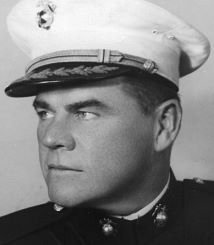
Pat Flaherty

(5) Pat Flaherty. This wonderful old character actor from the 1930s and 1940s usually played cops or drill sargents, but he fit in easily as Bill Carrigan, the manager of the Boston Red Sox in 1948’s “The Babe Ruth Story.” Flaherty could have played any Irishman who managed in the big leagues around the turn and early years of the 20th century because he was that guy. He came across as compassionate, but driving; aware of the Babe’s talent, but equally aware of the great star’s potential for self-destruction. Flaherty represents the face of pragmatism in my book of eight men in. Some of the best managers in history being those who don’t get lost trying to fix what’s beyond their control. Carrigan was a pragmatist. He played Babe Ruth for what he could get out of him while he was still the manager at Boston, even if his overall relationship with the club’s front office apparently was breaking down. Result? The Red Sox took the 1916 pennant and World Series. And then Carrigan was gone. Replaced in 1917 by Jack Barry. Flaherty played the role of Carrigan well, even if all this other stuff never saw the light of day in the movie.
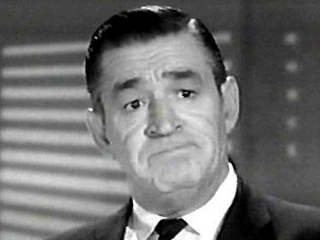
Ted deCorsia

(6) Ted de Corsia. 1949’s “It Happens Every Spring” is the only film I recall ever seeing character Ted de Corsia playing anything for comedy in film, but did a great job here as manager Jimmy Dolan of the St. Louis (don’t say Cardinals) National League club. Usually cast as a gangster of western bad guy. de Corsia plays the hard-nosed manager of a club that needs “one more good arm” to win the pennant. It is an implicit prayer that is answered by a nutty professor/Cardinal fan who accidentally invents a substance that makes anything its rubbed upon repellant to wood. (“Say, how about rubbing it on baseballs, taking a sabbatical from teaching and becoming an unhittable pitcher for your favorite St. Luis team?”) Ray Milland plays the nutty professor/unhittable pitcher Mike Kelly, who grates on de Corsia’s nerves from the start, but that quickly changes when Kelly goes in and strikes batters out in droves. De Corsia’s great comedy scene comes about when he gets hold of a small bottle of Milland’s special wood repellant fluid and, thinking it’s hair tonic, pourd some on his wooden comb and attempts to comb his hair. – Your imagination can handle the rest.
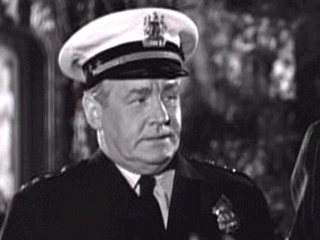
Joseph Crehan

(7) Joseph Crehan. Joe Crehan served more movie time as police commissioner than Rick Parry has put in as Governor of Texas. He was the perfect choice for the role as Tom Dugan, a manager and buddy to William Bendix in the 1950 film, “Kill the Umpire.” Crehan was just another of the wonderful old Irish-American character actors that were as natural a mix as corn beef and cabbage when it came to baseball movies. You really believed that Crehan’s players were going to listen to what he had to say.
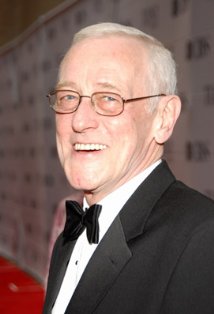
John Mahoney

(8) John Mahoney. My eighth man in starred in 1988’s “Eight Men Out” as Chicago White Sox manager Kid Gleason of the more commonly know 1919 Black Sox, the club that threw the World Series to the Cincinnati Reds through gambler Arnold Rothstein and the arguable complicity of six to eight White Sox players. Mahoney comes across as the honest manager who may have been guilty, with several others, of simply looking the other way when some serious shenanigans were taking place between a few 1919 White Sox players and some very serious gamblers. I don’t know what real manager Gleason knew or didn’t know, but I do think actor John Mahoney did a most credible job of portraying his look-away stance in the movie. All of the innocent inside bystanders to the fix in the White Sox Scandal are remindful of Claude Rains as Captain Renault in “Casablanca,” when he shuts down Rick’s Cafe American on a trumped up charge after receiving his own winnings. “I am shocked to find that gambling is going on here,” Renault exclaims. – John Mahoney will always be best remembered as Kelsey Grammer’s dad on “Frazier,” but he will always be my “eighth man in” too when it comes to picking actors who play well as baseball managers.

At any rate, these are my choices. Do you have any favorite movie actor/managers? I did leave Tom Hanks out there, for one, but there others who rate a vote too. Or maybe even give some consideration to actors who never have, but could play managers on the big or little screens. I’d love to hear your thoughts on all the fine thought of my “eight men in,” plus the others I left out..

More Plays on Words

March 5, 2011

Loss of Magnet Schools Makes H.I.S.D. Less Attractive.

In this case, the play on words for lexiphilic (new word) satisfaction only sounds funny. The loss of our magnet schools to  help balance the local budget on public spending for education is arguably a tough bad choice. To help balance things out for all of you true lexiphiles (lovers of language and the art of crisp idea expression), here are some wonderful new phrase turns I received yesterday from Larry Joe Miggins. Many of you know Larry better as either a re-enactor of the Battle of San Jacinto or as the hard-swinging first baseman of our Houston Babies vintage baseball team. Thanks, Larry, for a nice prosaic slide into the weekend.

Here they are:

To write with a broken pencil is pointless.

When fish are in schools they sometimes take debate.

A thief who stole a calendar got twelve months.

When the smog lifts in Los Angeles, U.C.L.A.

The professor discovered that her theory of earthquakes was on shaky ground.

The batteries were given out free of charge.

A dentist and a manicurist married. They fought tooth and nail.

A will is a dead giveaway.

If you don’t pay your exorcist you can get repossessed.

With her marriage, she got a new name and a dress.

Show me a piano falling down a mineshaft and I’ll show you A-flat miner.

You are stuck with your debt if you can’t budge it.

Local Area Network in Australia: The LAN down under.

A boiled egg is hard to beat.

When you’ve seen one shopping center you’ve seen a mall.

Police were called to a day care where a three-year-old was resisting a rest.

Did you hear about the fellow whose whole left side was cut off? He’s all right now.

If you take a laptop computer for a run you could jog your memory.

A bicycle can’t stand alone; it is two tired.

In a democracy it’s your vote that counts; in feudalism, it’s your Count that votes.

When a clock is hungry it goes back four seconds.

The guy who fell onto an upholstery machine was fully recovered.

He had a photographic memory which was never developed.

Those who get too big for their britches will be exposed in the end.

When she saw her first strands of gray hair, she thought she’d dye.

Acupuncture: a jab well done.


Another Great Photo

March 4, 2011

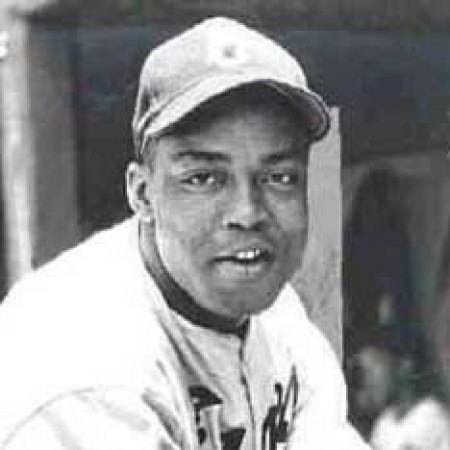
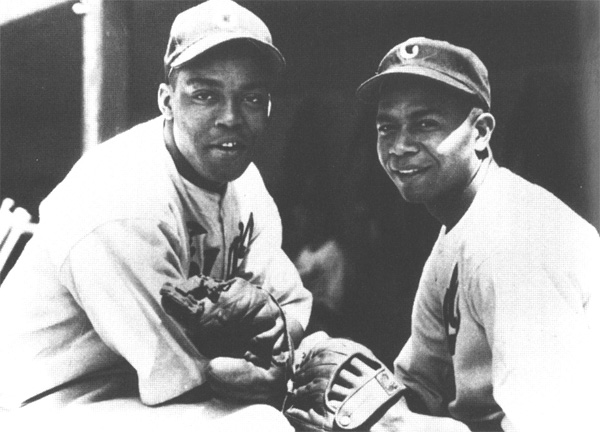
Monte Irvin (left) and Larry Doby handled shortstop and 2nd base for the 1946 Negro League champion Newark Eagles before their big roles in the integration of Major League Baseball.

I just love this photo of Monte Irvin and Larry Doby as teammates on the 1946 Newark Eagles, when they played as middle infielders, no less, on a championship team. Both went on to major roles in the early days of Major League Baseball integration – and both eventually won enshrinement in the Ball of Fame at Cooperstown as outfielders, not infielders.

Larry Doby played for the Cleveland Indians, Chicago White Sox, and Detroit Tigers. He became  the first black player in the American League by breaking in with the Cleveland Indians on July 5, 1947, about three  months after Jackie Robinson broke the color line in the National League as a Brooklyn Dodger. Irvin, who previously had been the primary candidate for the groundbreaking role that eventually passed to Jackie Robinson, played his first game for the New York Giants on July 8, 1949, arriving in time to be a major cog in the incredible wheel version of the Giants that came from way back in AUgust to nip the Brooklyn Dodgers for the 1951 NL pennant with Bobby Thomson’s “shot heard round the world.”

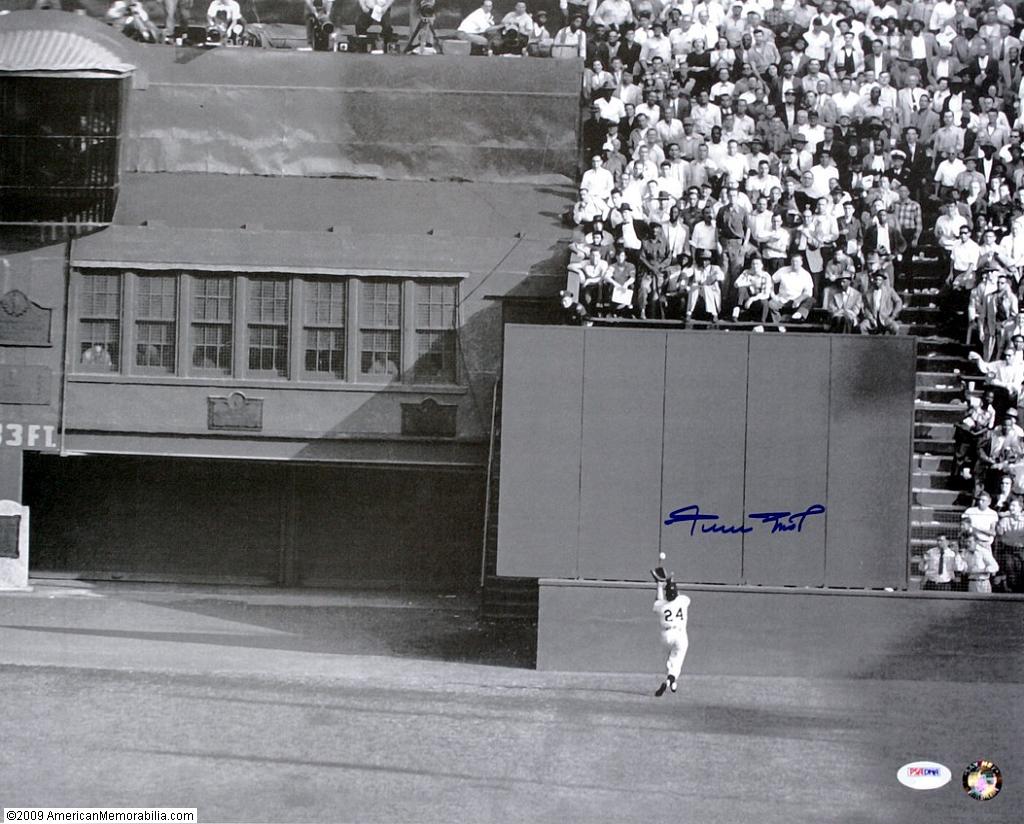
Monte Irvin batted .293 lifetime and was inducted into the Hall of Fame in 1973. Larry Doby hit .283 and was inducted into the Hall of Fame in 1998. There is no question in my mind that both men received deserved credit also for their earlier successes in the Negro Leagues. The two Eagle buddies also would later face off against each other when their New York Giants and Cleveland Indians met in one of the most surprising outcomes in championship series history. The 1954 Indians set all kinds of records for winning that year, but their resume didn’t help them against the heart-tenacious Giants, who swept the Series in four games. This was the year of the famous “catch” by Willie Mays in deepest center field at the Polo Grounds.

Speaking of iconic photos, “The Catch” by Mays gave us one of the most famous plays in baseball history.

The Catch, 1954.

Remember? …. I thought you would.

Best Baseball Player Born on Your Birthday

March 3, 2011

Monte Irvin, Hall of Fame. His WAR stat says he's not even among the top 5 players born on February 25th. No wonder many fans are turned off by the stat heads. These scientific people inevitably fail to measure the one quality that combines with ability to produce greatness - and that's the heart that flowed through Monte's game like the blood of life..

At a site called Wezen Ball.Com, a fellow named Larry Granillo has written a fun little piece called “The Best Player Born on Your Birthday.” As an exercise in personal amusement, Granillo has listed the top five MLB baseball players born on each day of the year, based on players with the highest “WAR” ratings who were born on that date.

“WAR” stands for “wins above replacement.” It is a statistic that attempts to measure a player’s contributions to his team’s wins in comparison with how a mythical replacement player from AAA might have performed under the same circumstances. (Ouch! It almost hurt to explain even that much of a stat that I neither fully understand or believe in. All I know is – any stat that leaves Monte Irvin off the list of top 5 players born on February 25th relative to guys who made it there is suspect in my book.)

If you really want to learn more about “WAR” – here’s a link to Baseball Reference.Com and an explanation:

http://www.baseball-reference.com/bullpen/Wins_Above_Replacement_Player

If you simply want to check out who “WAR” says are the five best ball players born on your birthday, here’s a link to the Granillo article. If you are an Astros fan, make a note of all the Astros listed as the best players on certain dates in history. The next Astro up on that scale is our own Jimmy Wynn, who has his next birthday coming up on March 12th. According to his “WAR” rating, our Mr. Wynn is the best player born on that date in history.

http://www.wezen-ball.com/other/other/the-best-player-born-on-your-birthday.html

Have fun. That’s what this exercise is supposed to be about.

And thanks to Bill Rogers of the St. Louis Browns Historical Society for sending this material to me.

Oldest Ex-Big Leaguer Looks the Part

March 2, 2011

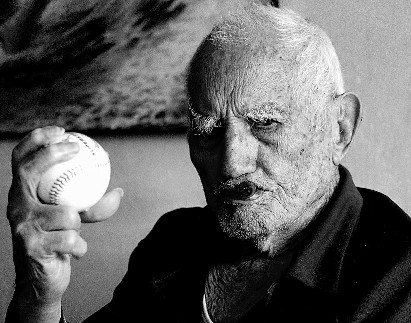
Pitcher Connie Marrero, 99, now Oldest Former Big Leaguer!

At last, we have a “World’s Oldest Living Former Big Leaguer” who looks like he might be open to a comeback trial. If he makes it to his August 11, 2011 birthday anniversary number 100, maybe some club in the pennant race will give the fiesty Cuban hurler Connie Marrero  a second try.

There remains some controversy over Marrero’s actual birthdate. Baseball Almanac and Baseball Reference, our two major online encyclopedic sources, both still list the old Cuban’s birthday as April 25, 1911.  Some more recent sources, including Wichipedia and Biographican, claim that newer studies have confirmed the birthdate from Cuban birth records as August 11, 1911. Either way, Connie Marrero remains the oldest living former big leaguer. The next man, Ace Parker, 98, wasn’t born until May 17, 1912.

Connie Marrero posted a 39-40 record with a 3.67 ERA in a five-year stint of work for the Washington Senators from 1950 to 1954. He was a little guy at only 5’7″ and 158 pounds, but he fought both fiercely and deceptively. He threw and batted from the right side.

Marrero’ style was colorful and his moves on the mound were designed to aid deception. On writer described him as more closely resembling an a dumpy-looking little Hispanic grocer in a baseball “costume.” Another wrote that his delivery reminded them of an orangutan delivering a 16-pound shot put to the plate. Forget the ridicule, scribes. The great Ted Williams said this of him: “Let Marrero get that first pitch over for a strike and you’re in big trouble.” I’ll go with Teddy Ballgame as a better judge of how the little Cuban looked to batters.

After his Senators career, Marrero returned to his native Cuba, where he remained active in Cuban baseball for the remainder of his playing and coaching days. He is still honored as something of a national hero in Cuba, but he has no pension or great reserve of money to support him into these olympian leaps into old, old age. Today he lives in a simple room in the home of a cousin, but he still gets around town some and, as the lead photo suggests, he has retained his fire and his sense of humor.

Here’s a list of the ten oldest former big leaguers by age and birthdate:

1. Connie Marrero, 99 (8/11/1911 0r 4/25/1911, take your pick).

2. Ace Parker, 98 (5/17/1912).

3. Alex Pitko, 96 (11/22/1914).

4. Ralph Hodgin, 96 (2/10/1915).

5. Nick Strincevich, 95 (3/01/1915).

6. Mike Sandlock, 95 (10/17/1915).

7. Benny McCoy, 95 (11/09/1915).

8. Freddy Schmidt, 95 (2/09/1916).

9. Art Kenney, 94 (4/25/1916).

10. Eddie Joost, 94 (6/05/1916).

Interestingly,  of the 61 oldest living former big leaguers, all are 90 years of age and older.

For the record, here’s a baseball card look at Connie Marrero as the old right hander appeared during his five-year year career as a Washington Senator in the early 1950s.

Hang in there, Senor Marrero. Some riches aren’t measured at the bank. If you are happy being nearly 100 and can walk the streets of your town with the love and respect of others, and still feel the music of your youth juicing through your system, you are richer than a lot of people much younger with a whole wad of cold hard cash alone.

Thanks for giving baseball your all too. Everything I’ve read and tried to learn about you says that you were one of those men who made baseball proud internationally by the way you played the game with your whole heart, soul, and self.

And early 100th Happy Birthday, too! – Whenever that actually may be!

Spook Jacobs, Dead at 85

March 1, 2011

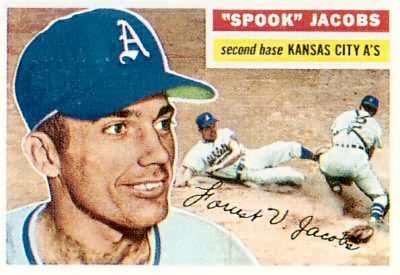
At 5'8", 155 lbs., Spook Jacobs needed paper weights in his shoes to hold down 2nd base on windy days.

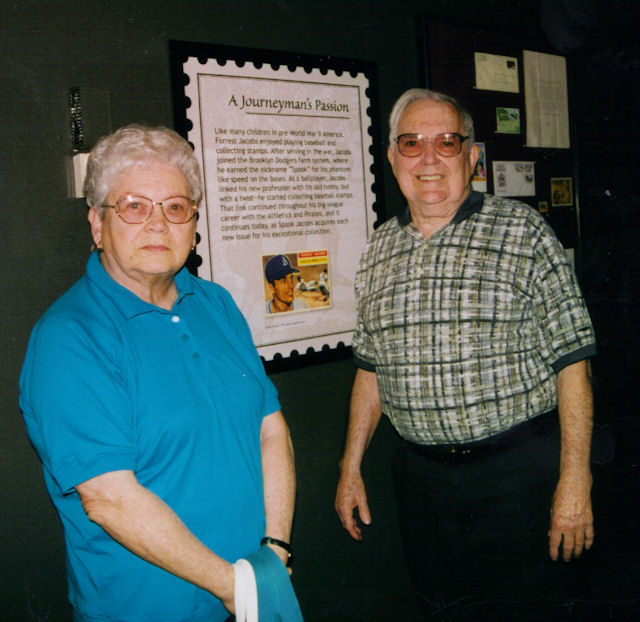
Former MLB second baseman Forest Vandergrift “Spook” Jacobs is dead at age 85. Spook passed away at the Delaware Hospice Center in Milford, Delaware on February 18, 2011 following a period of failing health. Spook had lost his wife, Bobbi, at the same facility last summer after fifty-five years of marriage and had been in decline since her death. The couple is survived by their two sons and grandchildren.

The former infielder for the Kansas City Athletics and Pittsburgh Pirates (1954-1956) had been a favorite of mine since his playing days with the Fort Worth Cats in 1953 – and in spite of the fact that he represented the opposition to my hometown Houston Buffs. Spook was the kind of guy I always hoped my Buffs would find a way to acquire because of his scrappy, hustling, never-say-die attitude on the field. In that regard, Jacobs stood as tall as anyone on the field.

It just didn’t happen. Jacobs moved up to the big leagues for a brief three-year spin in 1954, but it wasn’t with the  parents Dodgers. They dealt over to the Philadelphia Athletics of the American League in 1954, who then moved to Kansas City in 1955 as the next step in their gradual move to Oakland and the West Coast.

Jacobs got his nickname “Spook” for his uncanny ability to bop a few weak balls over the heads of infielders for Texas League singles. I can only tell you where I think the “spook” aspect comes into this description from what I saw as a fan at Buff Stadium. Our fan reaction from the stands was bad enough. I can only imagine as an old outfielder myself how it looked from the field.

Sometimes Jacobs could unload a sound on a batted ball that made it seem that he had just taken one over the fence. You could even see the fielders flinch back in first reaction before the visual reality of the ball’s arc became apparent: Infielders held their ground and turned to watch the ball in play; outfielders headed back on the side where they first thought the ball was hit.

Then came the visual reality: The ball was going to do well to even clear the infield. Suddenly, infielders had to peddle back fast to try to make the play. Outfielders in play, if they even had the chance, had to hustle forward in the hope that their first moves back not made them look too silly. Then, more often than not, the ball would drop in for a bloop hit, just out of reach from the “spooked” fielders.

It was a good enough act to get Spook Jacobs to the big time for a short while. He had no power, but plenty  of game. Jacobs broke into the majors for the first time at age 28 on April 13, 1954. In that first game, Jacobs did something no other major leaguer had done before him. He reached base on hits in the first four times he came to bat as a big leaguer. The performance would not be repeated until years later, when Delino DeShields broke into the big leagues and did the same act. Amazingly, DeShields was also a Delaware native.

Bobbi and Spook Jacobs

After three seasons with the Athletics and Pirates, Jacobs left the majors with a .247 career MLB batting average that included no home runs. He continued playing minor league ball through 1960, ending a 14-season minor league career (1946-1953, 1957-1960) with an impressive .300 batting average. His 6,537 minor league at bats included only 9 home runs. The man just wasn’t born to be a banger.

About 2003, I finally had a chance to meet Spook Jacobs at a baseball dinner in St. Louis. We spent a pleasant evening in conversation about many things, including his ability to “spook” that ball over the infield. “I have no explanation for it,” Jacobs said. “It was just one of those things that I did.”

Oh well. It was good enough to buy Spook Jacobs a ticket to the majors. It was good enough, also, to get Spook selected for the Delaware Sports Hall of Fame in 1991. Jacobs was born in Cheswold, Delaware on November 11, 1925.

I’m just glad I got to spend an evening with the man. Forest “Spook’ Jacobs was a very nice guy to spend time with – and he never seemed to run out of either breath or baseball stories.

Rest in peace, Spook Jacobs. Amidst all the big names of 1950s baseball that are now passing, we shall miss you too.

Adieu to the Duke

February 28, 2011

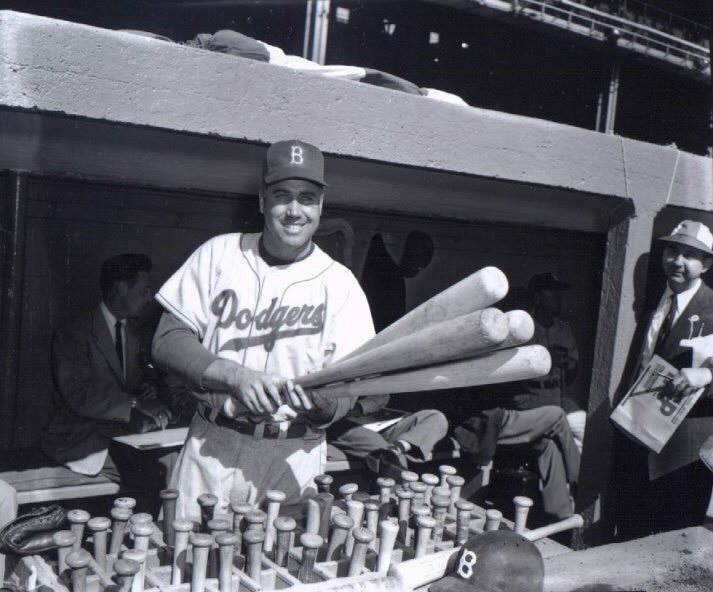
The Duke of Flatbush.

As you’ve probably heard by now, Duke Snider died Sunday, Feb. 27, 2011, at a convalescent hospital in Escondido, California. He was 84 and his cause of death was announced by family as due to “natural causes.” Snider’s health apparently had been in a state of quiet decline for some time.

The loss of the Duke inspires all the expected reminiscence about his major role among Brooklyn’s “Boys of Summer” and New York City’s “Big Three” center fielders of baseball during the 1950s. Mantle, May, and Snider – who was the best? Once the writers started coming at that angle from places other than Brooklyn, Duke Snider most often came out on the short side of highest praise, but he was still a great one, and many held onto him as their choice over Mays and Mantle in spite of all arguments to the contrary.

Why so? How could old #4 of the Dodgers have won the votes of any writer other than the biggest of homers? Duke wasn’t as fast as either Mays or Mantle. And, as a pure lefty batter, he certainly could not hit left-handed pitching as well as either the right-handed  Mays or the switch hitting Mantle. And, as a middle class kid from Los Angeles, he was never the stuff of lyrical fiction that Mays of Alabama and Mantle of Oklahoma always were as kids playing their way out of poverty with strong natural talent and that good old “love of the game.” In fact, at one point in the 50’s, Snider even sank his sympathy card further by telling a writer that he would not even be playing baseball were it not for the “big money.”

In the end, Snider ranked high by having great defensive skills, including one of the best arms in baseball, an ability to stay out of the army and off the disabled list, and a clear and elevated presence, year in and year out, among the statistical hitting leaders of the National League. In 1955, for example, and at the heart of the Mantle-Mays-Snider years in New York, The Sporting News named Duke Snider as the Major League Player of the Year as a tribute to his complete game. In 1955, Duke finished among the top three in the National League in batting average, slugging average, hits, runs, runs batted in, doubles, triples, home runs, total bases, and stolen bases. Wow!

Duke Snider may have lacked all the full athleticism of his two big center pasture rivals, but he could still cover the ground and execute most of the same sensational “out” plays with far more grace and style than either Mays or Mantle. And when the Dodgers left Brooklyn for LA after the 1957 season, Snider almost singlehandedly became the face of hero abandonment for the entire Burrough of Brooklyn. The Noble KIngdom of Flatbush had lost its Duke!

Snider’s 18-season career included 11 years as a Brooklyn Dodger (1947-1957), 5 years as a Los Angeles Dodger (1958-1962), 1 year as a New York Met (1963), and 1 final ironic year as a San Francisco Giant (1964).

For his career, Snider batted .295 with a slugging average of .540 and 407 home runs. The Dodgers retired his uniform #4 after his retirement and he was inducted into the Baseball Hall of Fame in 1980. Duke scouted for the Padres and Dodgers after his playing days were done before settling into a long career as a broadcaster for the Montreal Expos.

Center field is a little less graceful this Monday morning. The Duke is dead.

God bless you, Duke. Wherever you are now, we know you will make the catch on whatever comes your way.

What’s in a Team Nickname?

February 27, 2011

Which of these team nicknames scares you the most? The Spud Bakers? The Celery Eaters? Or the Carrot Stalkers?

As far as I know, the Celery Eaters were the only on of the depicted veggies to be so named by a professional baseball team, but I would not be surprised if a little deeper research turned up some moniker twist on potatoes or carrots somewhere. The Celery Eaters, on the other hand, are already in the documentable bin. The City of Kalamazoo, Michigan picked that foreboding image for their little baseball club a few years ago.

SABR buddy Mike McCroskey put me on to this link to a brief story by a fellow named Timothy Sexton on the subject of unusual team names.

http://www.associatedcontent.com/article/1101965/the_strangest_baseball_team_names_in_pg2.html?cat=37

As Sexton shows, team nicknames are not always that fearsome, but they usually have something to do with the community’s identity, major economic investments, or the relative presence or absence of imagination in the nickname decision-making group. The linked article contains a prime example of the latter point on creativity: Was it just a long tiresome afternoon meeting when the Cities of Saginaw-Bay City, Michigan decided to dub their new club the “Hyphens?”

The “Hyphens?” – C’mon, Michigan people! – Is that all you got?

I always liked the Saginaw (again, Michigan) Krazy Kats. As a kid, I always imagined them to be guys who wore “zoot suits” and long gold watch chains when they weren’t dressed out for baseball, although, since I grew up in Houston, I never got to see them play. They simply had the kind of name that stirred imagination.

Imaginative Digression. “I’m a kool krazy kat, dressed in Michigan blue, and I got a sweet gal named Saginaw Sue, and she ain’t like the gals in Kalamazoo, whose days are all done, and they can’t undo, with a ‘hey, bob a ree bop, and a fast tootle loo, all the stuff they could’ve saved for their one love true, but you just never know, who’s thinking of you, till you get dressed up, and you hit a spot or two.”

My least favorite nicknames are the too-long ones that invite abbreviation from the git-go. When the Arizona Diamondbacks and the Tampa Bay Devil Rays came into the big leagues a few years ago, I wondered exactly how long from the very first moment I heard of these choices how long it would take for the media to convert each to “D Backs” and “D Rays?” The answer came back almost immediately as “no time at all.” All we needed was an article headline that wasn’t going to use the mouthful of letters the official names each contained.

Fortunately, over the years, the “Rays” wised to the issue and kept the only part of their name that really mattered, but the “D Backs” simply morphed into the “D Backs and that’s too bad. The Arizona capitol already had the greatest name they could’ve ever put out there from their minor league history. The Phoenix Firebirds would have fitted the major league club perfectly.

Houston’s early professional baseball history was loaded with nickname ambiguity and change, and probably some informal mutation too. We think the first 1888 club started out as the “Babies” because they were the last of eight Texas cities to sign an agreement that made Houston a member of the brand new Texas League. In that same year, word and some documentation has it that player unrest with the “Babies” identity led to the team being renamed during that same first season as the “Red Stockings,” a fairly common nickname of those times, inspired here by the color of the Houston team uniform socks the players already wore more than any affinity for the great Cincinnati bearers of that lofty tag.

The following season, Houston apparently hit the 1889 fields as the Mud Cats. Over the near seasons that followed, Houston carded itself also as the Magnolias too before hitting the field for the first time as the Buffalos in 1903. Without a regular place to play in 1904, the Houstonians called themselves the Wanderers for a season, but the next season, 1905,  the club moved into the new West End Park and renamed itself the Buffaloes. The club would stay the Buffaloes/Buffalos/Buffs for the rest of their minor league playing days (1905-1942, 1946-1961).

Many of us hoped that Houston’s new 1962 MLB club would retain its identity as the Buffaloes, but our wishes were no match for the ego and power of Judge Roy Hofheinz, the managing partner of Houston’s big step up to the big leagues. A last acrimonious purchase of the minor league territorial rights from Marty Marion and his Buffs ownership group was all Hofheinz needed to close the door on Houston minor league history and transfer all of the city’s attention to the new domed stadium “he” was building on OST at Fannin.

Houston spent its first three MLB seasons celebrating the city’s past as the “Colt .45s” (1962-1964). Upon its move into the Astrodome through today (1965-2011), the celebration has shifted for what has been the city’s space-line future as the “Astros.” With the recent budget clamp-down on NASA, the words “Astros” also is now taking on the patina of history. At least, it’s our history too.

As for fitting nicknames, I like the choice made by the bustling little city south of Houston for its new independent league club. Once they get their open air stadium built and start playing ball in 2013, the Sugar Land Skeeters should feel right home down there on Oyster Creek .

Unidentified Brownwood TX Baseball Photo

February 26, 2011

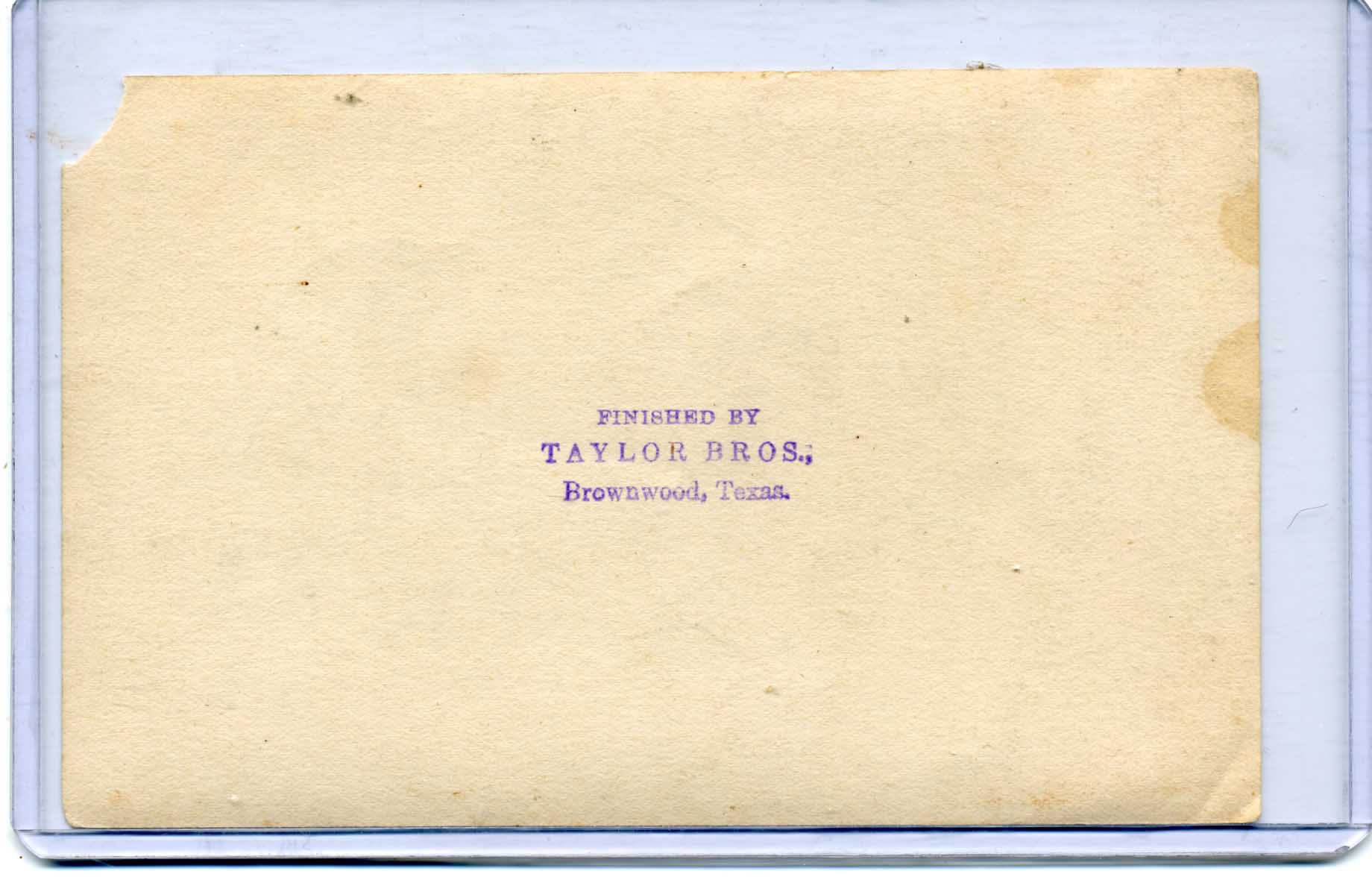
Who were these guys? The seated fellow on the far right end seems to be wearing a light cap with the letter "B" in the crown. Could the "B" easily stand for Brownwood, the Texas town where the photo was finished?

According to this marking on its back, this photo was this photo was finished by Taylor Brothers in Brownwood, Tex

This photo is a gift that arrived yesterday from my friend Sumner Hunnewell of Arnold Missouri in the St. Louis area.Sumner knows that I love anything pictorial on the early days of baseball, especially if it has anything to do with early baseball teams in the State of Texas.

We don’t know anything about the photo beyond what’s written on the back that it was “finished” by Taylor Brothers of Brownwood, Texas and that one of the players (front row, far right) appears to be wearing a lighter-colored cap with a “B” on the front crown quadrant. “Brownwood appears to be the obvious locale of the team, but this was real cowboy country back in the day, and still is. The “B” could have stood for the team’s nickname, Something like “Broncos” or “Bulls” would have worked fine, except that most town teams preferred to identify most closely with their places of origin.

A fellow named Ted Kapnick gave the photo to Sumner Hunnewell. Kapnick owned a college wood bat club known as the Farmington Browns of the KIT collegiate summer league program last year. Kapnick had also received the photo as a gift from yet another friend in New Jersey. I’ve also now heard from Ted Kapnick and he has promised to see what the NJ friend knows about the photo too. Who knows? This may be a mystery that’s been passing from hand to hand for something close to a century of time now, but that’s OK. The added mystery simply amplifies the photo’s “orphan in the storm of baseball history” status with me. As for me, the bond with this picture hit instantly. The photo now has a permanent home will give it the best perpetual care I am able to provide – and I also will do what I am able to establish and confirm its identity with the your help of all you out there who also care about and misplaced artifacts.

Is there anyone out there who is familiar with the Brownwood, Texas area? I plan to contact their library and local schools, but any special information you may have too could be very useful here. Feel free to contact me through the comment feature on this article or simply drop me an e-mail message at houston_buff@hotmail.com .

Now that I’ve set forth the straightforward research question at hand, here’s what I came with as my fictional account of who each of these twelve Texas cowboy types are by name, age, position, and local employment as members of the “Brownwood Broncos” (also fictional). As I said earlier to Sumner Hunnewell, these guys look tough enough to have played a triple header on Sunday and then headed out at Monday dawn on a one thousand head of cattle drive from Brownwood, Texas to Dodge City, Kansas. (Sunday blue laws prohibiting the sale of alcohol or the playing of baseball or the general pursuit of pleasure on the Sabbath did not rule all Texas communities.) Naturally, I could only get there by way of a minor digression into lyrical verse.

The Brownwood Broncos: A Fictional Account of the Players in the Photo:

Brownwood

Boys of Brownwood,

Eased away for the day,

From the cattle ranges,

Downtown grain stores and pool halls,

From Sam’s Barber Shop and Jeb Hooker’s Saloon.

Today they each ride a different horse,

Today they mount the diamond range,

Today they are the twelve men of game-heart,

Today they play ball as the Brownwood Broncos.

In fantasy, they ride as follows,

From left to right, back row first:

Back Row, Left to Right ~

Clinton Farley, 24, CF-SS, cowboy, Johnson Ranch;

Shorty Mazar, 29, 2B-LF, barber, Sam’s Barber Shop;

Tillman Stoker, 32, 1B, range foreman, Johnson Ranch;

Harvey Kellogg, 48. Manager-P, Mayor, Brownwood, Texas;

Bitsy Cole, 27, SS-CF, Western Union Telegrapher, Brownwood;

Henry Veselka, 38, OF-P, Smejkal’s Seed & Feed, Brownwood;

Front Row, Left to Right ~

Corky Collins, 31, RF-P, chuck wagon cook, Johnson Ranch;

Billy Bob Johnson, 22, C-3B, rancher’s son, Johnson Ranch;

Theo Hydecker, 26, LF-2B, blacksmith, Brownwood;

Oscar Gruber, 27, 3B-C, clerk, Wells Fargo Bank, Brownwood;

Ashley Taylor, 26, P-1B, photographer, Taylor Bros, Brownwood;

Albert Taylor, 26. P-OF, photographer, Taylor Bros, Brownwood.

Bottom Line: Now let’s find out who these guys really were.

Super Fan To The Nth Degree

February 25, 2011
 

Super Fan Andy Strasberg & Roger Maris, 1966

One thesaurus describes “nth degree” as “the last or greatest digital assignment in a series of increasingly higher numbers.”  If there’s a better way to explain Andy Strasberg’s lifelong fandom relationship with former great ballplayer Roger Maris and now, his ghost, I cannot find it outside my copy of the Psychiatric and Statistical Manual of Mental Disorders.

The difference between Andy Strasberg and the multitude of “over-the-top” hero stalkers is that Andy never lost that last important sense of boundary that kept telling him, “no matter how much Roger Maris meant to me as a young kid baseball fan from the Bronx, the man has a life and a family of his own, and I have no right to intrude upon their space, if I am not asked. For good measure too, throw in the facts that Andy also had a loving supportive original family, a normal trek through a college degree from Akron University, a 22-year career as an employee of the San Diego Padres, and a long, apparently happy marriage of his own before he even went out to establish and run a successful consulting company.

The guy just touched too many healthy bases to be written off as a nut job. On the other hand, on the magical side of things, Andy Strasberg has had one incredible life as “the” super-fan of former Yankee great Roger Maris – and, last night, Andy Strasberg of SABR and San Diego was in Houston to speak to our Houston SABR chapter about his amazing personal experience at a meeting held in the activities room at Cort Furniture on Richmond at Bering. Forty-two local SABR members and guests were in attendance.

Andy Strasberg of the Bronx was 12 years old when Roger Maris came over to the Yankees in a trade with Kansas City in 1960. Andy soon picked up on a news story from spring training that described Maris as having a “rejuvenating” effect on the Yankees, a club that had lost the 1959 pennant to the White Sox, of all teams. “I didn’t even know what ‘rejuvenating’ meant at the time, but I was prepared to accept Roger Maris as my hero by the time he got to New York.

For whatever reason, Andy had never been a Mickey Mantle fan. Roger Maris was destined to become his one and only baseball hero.

As he could get there, Andy started going to more and more Yankee games, and congregating with other kids to greet the Yankees before and after games. Andy used the time to send signed written notes of support and opinion to Roger Maris. Over time, Roger Maris came to recognize the persistent young man for who he was and their ongoing friendship grew from there. Over time, Andy worked up the courage to ask for a souvenir baseball, and then a bat, and even the joint photo featured here, taken in 1966, when Andy was 16.

When the Yankees dealt Maris to the Cardinals in 1967, Andy hit his all time low. In so many words, he said it felt like the end of the world, but he never lost his perspective. He had high school to finish and college to reach – and his own life to live.

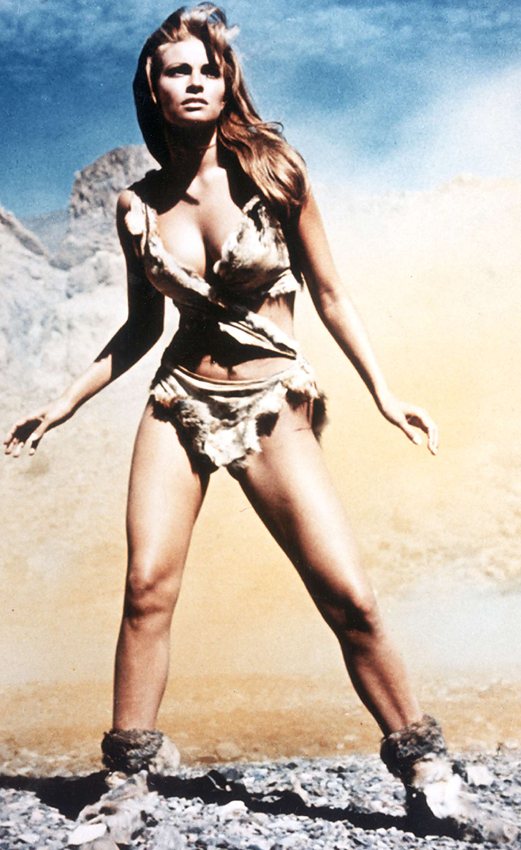
Raquel Welch, 1968

Andy went off to Akron University and shared a dorm room with a guy who put up a giant poster of Raquel Welch from the movie “One Million BC,” the view of Raquel standing triumphantly on the mountainside at the dawn of civilization.

Andy had a poster of Roger Maris on his wall of the dorm room. He now says, tongue-in-cheek, “I can’t imagine to this day what my roomie got out of having that picture of Raquel Welch on the wall!”

Strasberg’s poster became the cornerstone on his freshman brag stories about his “good friend,” Roger Maris. By the 1968 season, Andy says that his college friends were ready to put those words to a test. With the Cardinals coming to Pittsburgh for a weekend series with the Pirates, the friends suggested they make the under two hours trip there from Akron to see a game – and give Andy a chance to introduce them to his “good friend.” Any gulped, a little, but he agreed to the challenge.

The short of it is that Roger Maris did remember Andy Strasberg. “Andy,” Roger called out from the field in response to a grandstand shout from Strasberg, “what are you doing in Pittsburgh?”

Andy regaled in the moment of introducing his friends, but before the day was done, he would own even more magic to take home with him from that day. During the game, Roger Maris hit a home run – and Andy Strasberg was the fan in the stands who caught it. What are the odds on that one?

The years rolled on and the relationship grew. Andy and his wife began to socialize with Roger and Pat Maris. Then the worst came hard. Roger Maris died of cancer while he was under treatment here in Houston at MD Anderson on December 14, 1985.

Andy Strasberg flew from San Diego to Fargo, South Dakota for the funeral. He has since become an almost ex officio member of the Maris family and now enjoys close ties also with Roger’s adult children.

When Bill Crystal started production for the 2001 movie 61* n the late 1990s, Andy Strasberg was retained as a technical advisor, even ending up with a small acting part as the only fan who runs on the field to shake Roger Maris’s hand after his 61st home run broke Babe Rut;s single season mark in 1961.

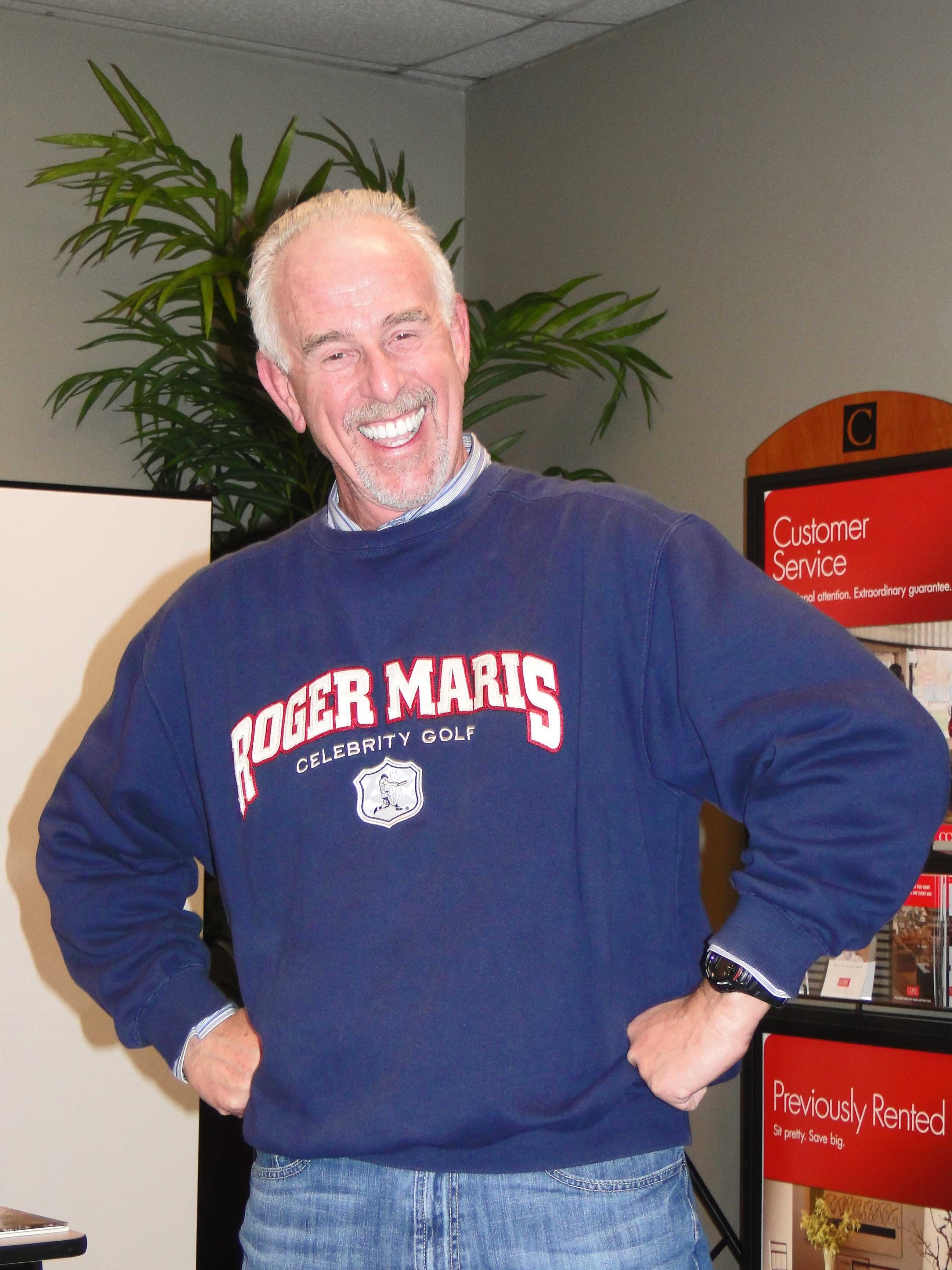
Andy Strasberg, Houston SABR Meeting, 2011

You do not meet people like Andy Strasberg every day. Well, maybe you do and they’re just not talking about it so much. It’s still unlikely you will meet many who have converted a fan brush with fame into the overriding factor in their lives, as has Andy Strasberg. Today Andy is also busy in support of charity events sponsored in Roger Maris’s memory for the support of cancer research and treatment.

I caught the above picture of Andy Strasberg at the end of the evening. I simply asked him to give us his best Raquel Welch pose. Those of you who couldn’t make it missed a fine and most entertaining evening, one that also came with some DVD clips that Andy used to help dramatize the wonderful story of his love and appreciation for Roger Maris.

Thanks to fellow SABR member Mike McCroskey, here’s a website link that pretty well covers the same ground Andy Strasberg traveled in his fascinating talk to our Larry Dierker Houston Chapter last night:

http://www.fanfiction.net/s/3624008/1/Roger_Maris_and_Me

As for other meeting activity from last night, the trivia quiz prepared by Mark Wernick was a nettlesome mind-twister, but it was won by Scott Barzilla and Greg Lucas.

Other meeting notes: (1) SABR needs volunteers to help with our research project: “Houston Baseball, the First 100 Years, 1861-1961;”  (2) Our next monthly SABR meeting will be held on Tuesday, March 29th, and our speaker will be Astros broadcaster and fellow SABR member Bill Brown.