Archive for the ‘Uncategorized’ Category

The Streets of Downtown Houston

April 16, 2011

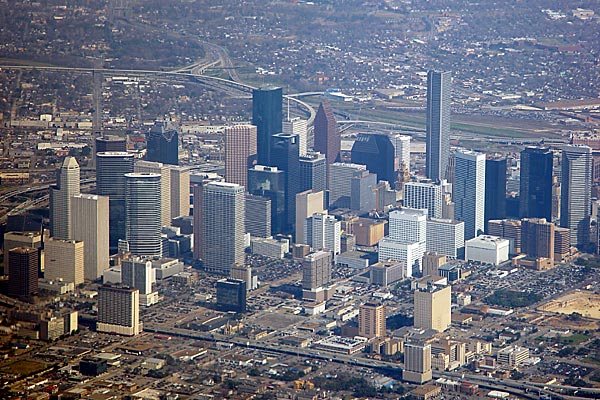
Downtown Houston

Do you have all the one-way streets of downtown Houston memorized? Or do you simply wait for the arrows to tell you left or right? If you are lke most of us, you may know some to all the names, but you’d have to wait and see the arrow before you could tell a visitor which street goes left/right, north/south, east/west.

To be technical about it, Houston’s downtown doesn’t exactly run north/south in a way that’s solidly true to the magnetic north compass. Our north/south streets run more northeast/southwest – and our east/west avenues run more southeast/northwest. I choose to stay NSEW here for purposes of simplicity.

Looking at downtown area  strictly as the concentrated business district with all the skyscrapers that is bordered on the north by Buffalo Bayou, on the east by Chartres,  and at the south and west points of the compass points by the US 45 South and North freeway elevated bend around downtown, here is a  listing of the north/south, east/west major streets in the order of their appearance and with an easy to follow notation of the direction their traffics are set up to travel. Only two of the streets, Bagby and Main, are bi-directional.

The North/South Streets of Downtown Houston By Their Direction of Traffic (starting west and moving east)

Bagby (bi-d)

Smith (S)

Louisiana (N)

Milam (S)

Travis (N)

Main (bi-d)

Fannin (S)

San Jacinto (N)

Caroline (S)

Austin (N)

LaBranch (S)

Crawford (N)

Jackson (S)

Chenevert (N)

Hamilton (S)

(US 59 Freeway)

Chartres (N)

The East/West Streets of Downtown Houston By Their Direction of Traffic (starting north and moving south)

Commerce (W)

Franklin (E)

Congress (W)

Preston (E)

Prairie (W)

Texas (E)

Capitol (W)

Rusk (E)

Walker (W)

McKinney (E)

Lamar (W)

Dallas (E)

Polk (W)

Clay (E)

Bell (W)

Leeland (E)

Pease (W)

Jefferson (E)

St. Joseph Parkway (W)

Pierce (E)

Most of the streets are named for early Texas heroes, but how we missed out on prominent downtown streets named for Davy Crockett and James Bowie is beyond me. Even Allen Parkway, a late after-thought renaming of “Buffalo Drive” in favor of the Allen Brothers as Houston Founders loses its identity once it reaches the downtown area.

At any rate, these are the ones we have, along with the directions they travel. If you would like further information and more ongoing data on street construction effecting downtown travel, check out this website for further ongoing advisories. You know you’re not in downtown Houston unless you encounter some section of road way that’s been torn asunder for your travel inconvenience – and this place is designed to help you get advance word on routes to most avoid.

http://www.downtownstreets.com/

SAN JACINTO DAY CELEBRATION IS TODAY, SATURDAY, APRIL 16TH! Have a nice weekend, everybody. If you read this article early enough, don’t forget the big San Jacinto Day celebration at the San Jacinto Battlegrounds this Saturday, April 16th. April 21st is the actual 175th anniversary date in 2011 of the battle that won Texas its independence from Mexico, but that historic 18-minute  battle will be reenacted today ay the battlegrounds at 3:00 PM.

Long Live Texas!


Union Station Revisited

April 15, 2011

Opening in 1911 with additional floors added in 1912.

Entering Minute Maid Park from the Union Station “Great Hall” door on Opening Day of the 2011 baseball season, an old friend of deep orange attachment to the ball club’s early history stopped to ask me which way the tracks ran when this historic place lived its life as a train station. He didn’t ask it quite that way, but that is the way I heard his question. I told him the answer, but in so doing, it also told me that it was time again to do a little Pecan Park Eagle spotlight on the history of this hallowed ground.

First, let me say this much. There are numerous article sites on the history of Union Station available over the Internet. Just do a search with the words “Union Station Houston” and watch what happens. The output from there is absolutely delicious.

Union Stationed opened in 1911. A year later, a 1912 continuation of the work added several stories to the structure. The building was designed by architects Warren & Wetmore at a cost of five million dollars. Upon completion, Union Station became the largest passenger rail terminal in the Southwest. In addition to rail connection to all parts of the country, Union Station served for years as Houston’s base for electric interurban rail service to various mass transit points in Houston and to Galveston. In 1928, with the opening of Buff Stadium four miles  east of downtown, Union Station was a primary departure pint for baseball fans heading for games after work from downtown on the Galveston Interurban line that ran by the new venue.

Tracks ran east-west from the Great Hall of Union Station.

From a point of view that basically corresponds to looking at the ballpark today from across the street on Texas Avenue from the Home Plate restaurant of 2011, the street-side tracks coming into Union Station are quite obvious. I can neither remember exactly how many there were, nor can I find the information online quickly, but I think there were about four to six parallel track sets, stretching parallel on the entire north-south width of the building as you see it here, and extending about as deep as the current third base line for the deepest interior set of incoming rails.

All I recall as a little kid was going there to pick up “Papa” (my grandfather) on his trips to Houston for visits from San Antonio – and looking around at what then seemed like an endless run of railroad tracks and trains coming and going from the station. It was a loud, bell-clanging place too.

For those who have never seen it, this 1999 article by Tom Marsh on the rediscovery of Union Station’s Great Hall is worth the read and photo review.

http://www.kingswayrc.com/gcst/union/union.htm

The thought that never leaves me is the juxtaposition of time and space effect generated by the conversion of Union Station from its grave as Houston’s once early 20th century center of transportation into the city’s hub of 21st century major league baseball. Think about it for a moment or two or more. – Forget the time differential for now:

Babe Ruth, Lou Gehrig, Dizzy Dean, Ducky Medwick, Craig Biggio, Jeff Bagwell, Lance Berkman, and Roy Oswalt, at first one time and then another, now and then, all traveled this same ground with fairly identical goals in mind – to play baseball in the City of Houston – and that’s to say nothing of the fact that FDR, Judy Garland, and Ronald Reagan also all could have been there too – just to watch the game – were it not for the fact that most were not traveling by the same ticks on the clock.

Enough said. Union Station is hallowed ground in a Houston history that has now been both preserved and extended by the ongoing presence of Minute Maid Park and the Houston Astros. Think about that one the next time you go downtown to see a game. It makes the trip even more fun and worthwhile.

Our Very Own Jekyll and Hyde

April 14, 2011

Dr Jekyll and Mr. Hyde.

It’s not a new analogy, but it plugged in again on fatal levels last night at Minute Maid Park. The Chicago Cubs jumped on Astros No. 2 starter Wandy Rodriquez for five runs after two were out in the top of the first inning to start the evening baseball feast by turning the table back on top of their Houston hosts from the very start. Mr. Hyde has made his appearance a one-inning shot at the top.

The Cubs already had scored two runs with two outs when Jeff Baker of the Cubs lashed a two-out, opposite field double to right to score runners from first and second. Catcher Geovanny Soto then walked to bring up left fielder Alfonso Soriano, who was only 2 for 26 in his previous tries against Wandy with no homers.

After whipping his way to an 0-2 count on Soriano, Wandy decided to challenge his man with a fast one and it was quickly bye-bye baseball. A towering home run to left now put the Cubs on top to stay at 5-0.

Wandy then settled into his Dr. Jekyll goodness mode by shutting out the Cubs in innings 2 through 5, but, by then, the damage was done to the then still goose-egged Astros as they flailed away at the hard-to-hit offerings of their Cubs nemesis pitching foe, Carlos Zambrano. Zambrano was aiming for his 14th career win over the Astros in the rubber game of the three-date series in Houston and he would get it before this long and monstrous performance was completed.

Zambrano also advanced his own cause further by blasting his MLB-pitcher best 22nd career home run in the top of the 6th off Astros reliever Fernando Abad to extend the Cubs lead to 6-0. For his sake, it was good he did. In the bottom of the 6th, Zambrano gave up 5 runs to the Astros before he was lifted with one away and spared further damage.

5-6 would be as high as the vine went for the Astros on this monster night. Wilton Lopez came in to defend in the top of the 9th and promptly gave up three more runs, enough to seal a 9-5 Astros victory.

Once again, the Astros lose because of failed pitching. And look, I’m sorry to pile on Wandy so hard. I think we all know he did not want to have that first inning, but we ought to be free to look at what it means beyond “every good pitcher has a bad night once in a while.”

I’m no pitching coach, but I have been watching baseball for a very long time, long enough to see certain trends with some pitchers that may help to say something about why “Mr. Hyde” shows up sometimes – and, maybe, just long enough to cause the loss of  a game.

Wandy seems to be one of those good pitchers who comes close to being confounding to batters and almost impossible to hit when his focus and ability are working together. Unfortunately, he also seems to be one of those good pitchers who momentarily loses his concentration on what he’s doing every now and then. (Maybe all pitchers do, but with less disastrous results.) That 0-2 pitch to Soriano in the 1st is a good example of inattention leading to disaster. Instead of playing with Soriano to go for an unhittable pitch out of the zone, Wandy grooves one and it results in a hole that runs too deep for full recovery, even with nine innings of batting to go for the Astros.

I’d be very interested in your own observations on Wandy’s “letdown” problem. It’s not as though the club has a better choice at this time, but, my gosh, it’s very hard to improve a club’s standing with one or more Mr. Hydes taking the mound every fifth day. These guys don’t have to be bad for a whole game to cause a loss. They just have to have an inning like Wandy’s first in the final game of the now lost Cubs series.


A Buff Stadium Pictorial

April 13, 2011

Houston Sports Museum (on site of old Buff Stadium)

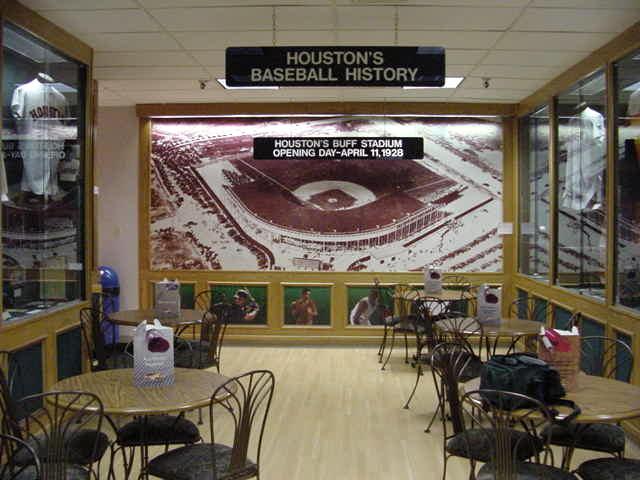
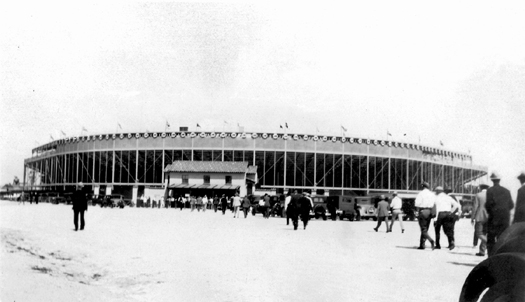
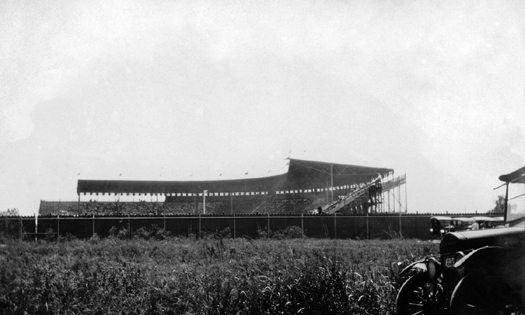
Buffalo/Buff Stadium was located on what is now the site of Finger Furniture Store on the Gulf Freeway at Cullen Boulevard. This ballpark was the home of the minor league Houston Buffs from 1928 through 1961. Technically, it was renamed by Cardinals/Buff owner August Busch in his own family image in 1953, but few of us old-time Buff fans ever made the emotional change to the full acceptance of its new identity as Busch Stadium from 1953 through 1961.

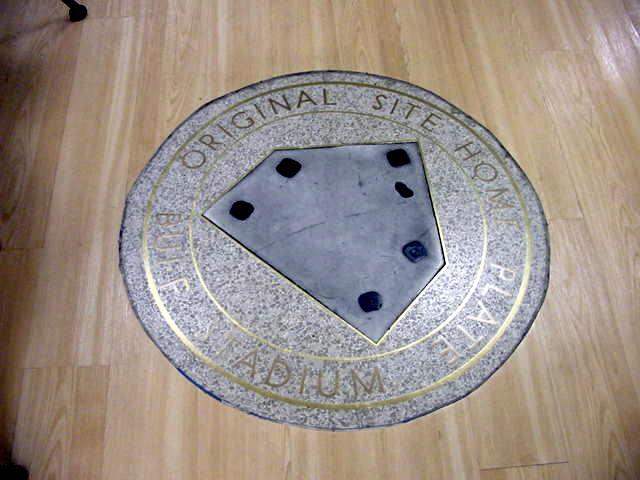
The mural featured above, plus a nice display of memorabilia from the era of the Buffs is on display at the Houston Sports Museum located in the Finger store. In fact, the original site of home plate is commemorated in place on the floor there. Drop inside sometime and take a look at the place and its collection of materials on Houston’s professional sports history.

Buff Stadium Home Plate Site at Houston Sports Museum.

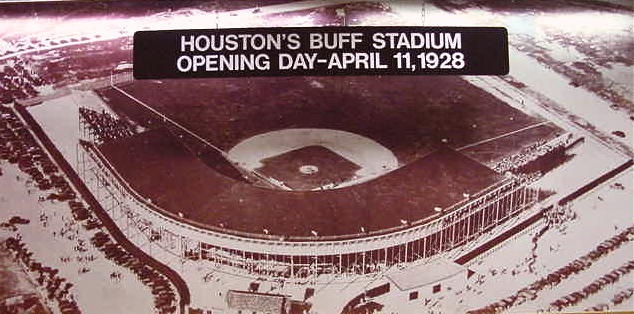
First Opening Day, Buff Stadium, April 11, 1928.

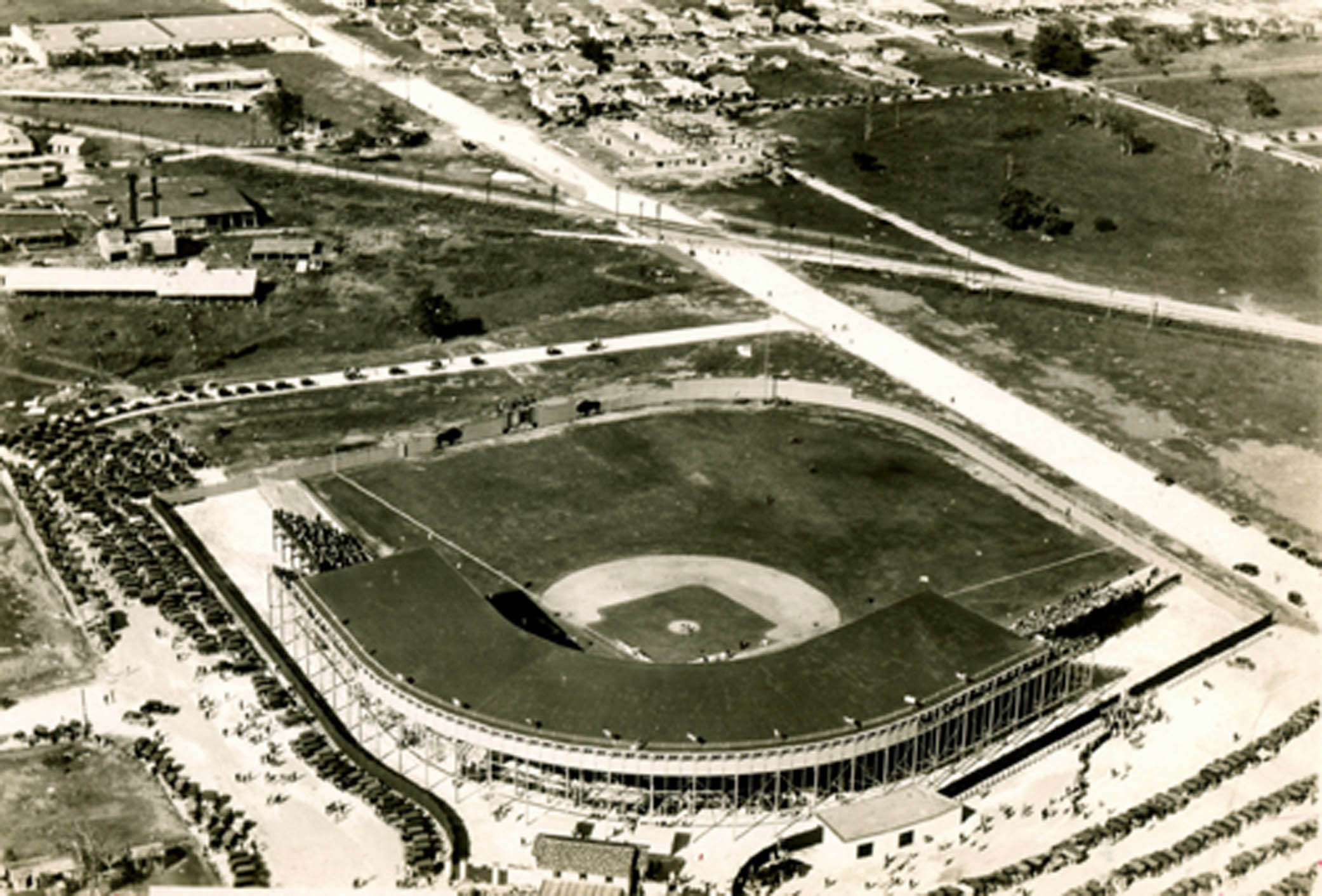
Buff Stadium, 1928: Check out the buffalos on the left field wall.

Game Day, 1930s & 1940s.

Field of Dreams, From Early On.

Night Ball Lighted Buff Stadium through the Great Depression.

Lights Awakened Summer Nights of the 1950s too.

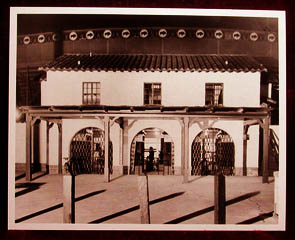
Note the circles above the front entrance to Buff Stadium.

Those eighty 36″ metal circles were medallions that each featured a buffalo silhouette. There were a total of eighty spread along the exterior walls of the ballpark and, when they tore old Buff Stadium down in 1963, they fell like a clanging steel rain upon the concrete surface below. Those that survived were sold for four dollars a piece to the few persons who showed up to watch Houston go through an everyday act of work for that era. It was called “tearing down the past to make room for the future.”

One of the survivors. Close to all my memories. Close to all in my heart.

Houston has changed. We still aren’t perfect and never will be, but we now live a more invested idea of preserving and restoring the past. If we were not that way, many of us would not be so upset today that Houston has been denied the opportunity of keeping one of the space shuttles as an artifact of our deep history with NASA and the space program. Those forces of community outrage weren’t so strong on the day they tore Buff Stadium down and threw out the Buffs as our historic baseball identity.

Sometimes our best energies are spent on researching and discerning the truth about our various local histories, whether its our legacy from baseball or space exploration. Good research and reporting live  at the heart of historic restoration and preservation – and each serves the end of any honest museum and hall of historic commemoration that is ever built on any deserving subject.

That statement will either mean everything to you or it won’t matter at all. Find your category and move on from there.

Astros Lineup: Where’s the Future?

April 12, 2011

By current age, where are the 2011 Astros prospects?

The 2-8 start of the 2011 Houston Astros is little more than an early bite into the new season, but it sure does accelerate the questions we all have about our prospects for the future. I haven’t talked with or read anyone lately who disagrees with the club’s intent upon rebuilding the farm system and getting younger on the major league field too. It seems to be the way to go.

The real question is: What does getting younger really mean?

To me, it means reaching a point where you have a minimum of at least five of the eight regular position starters and at least three of the five starting pitchers on board with the prospect of five quality seasons ahead of them. Hey! You would always like more, but the way natural decline in ability sometimes just falls off the table at age 32, you can’t count on it.

If we use age 32 as our arbitrary early end of the road measuring stick, this means that a safe prospect needs to be age 27 or younger. Everyone else on a club can be a prospect backup guy, a veteran star, or a journeyman regular position player or relief pitching specialist, along with two veteran or starting pitchers.

How do the current eight regulars and five starting pitchers stack up as prospects by their birthdate ages in 2011? Let’s take a look, using bold type to qualify those that fit our 27 and below general age standard for prospects. In the case of catcher, I’ll go with Jason Castro as our regular man, even though he’s on the DL until late in this season.

Catcher: Jason Castro (06/18/87) age 24

First Base: Brett Wallace (08/26/86) age 25

Second Base: Bill Hall (12/28/79) age 32

Third Base: Chris Johnson (10/01/84) age 27

Shortstop: Clint Barnes (12/06/79) age 32

Left Field: Carlos Lee (06/20/76) age 35

Center Field: Michael Bourn (12/27/82) age 29

Right Field: Hunter Pence (04/13/83) age 28

Starting Pitcher # 1: Brett Myers (08/17/80) age 31

Starting Pitcher # 2: Wandy Rodriguez (01/18/79) age 32

Starting Pitcher # 3: J.A. Happ (10/19/82) age 29

Starting Pitcher # 4: Bud Norris (03/02/85) age 26

Starting Pitcher # 5: Nelson Figueroa (05/18/74) age 37

Based on our standard for the 8 field positions and 5 starting pitcher slots, the Astros currently use only 4 age critical players who might be considered prospects for the future. There other prospects on the roster and some ripening ones at AAA, so, hopefully the ratio will improve as this “tune up” season continues.

While we were busy making plans over the last two to three seasons, Michael Bourn and Hunter Pence grew too old to be considered prospects any longer. In fact, along with Carlos Lee, Bill Hall, and Clint Barnes, Bourn and Pence are now members of our seasoned veterans group.

If it becomes even more obvious that the Astros aren’t going anywhere in 2011, and if Hall and Barnes cannot provide the extra punch that GM Ed Wade was hoping to see from the keystone bag crew, I would have no problem seeing those jobs turned over to prospects too. Also, this is Chris Johnson’s last year as a legitimate prospect. He needs to show that last year’s hitting was no fluke and also improve his fielding.

We also need to see good hitting from Mr. Wallace at first – and I think we will.  I was very impressed with his time at bat against closer Marmol of the Cubs Monday night. Brett has a good eye and some quick wrists. He’s also looking cool under pressure. I like what I see.

I also wouldn’t mind seeing the speedy Jason Bourgeois get more playing time. Bourn’s age creep and his new agent Scott Boras almost make Bourn seem like a double-edged sword. If he hits .250 this year, the Astros cannot afford to keep him in center field in 2012, even with his gold glove. If he hits .300, agent Boras may make it so expensive to re-sign him for 2012 that the club will need to have someone in the wings to take his place.

Bottom Line: Bring on the prospects. We need to see more of the future. And we need to play the past as little as possible.

Minute Maid Park: Open or Closed?

April 11, 2011

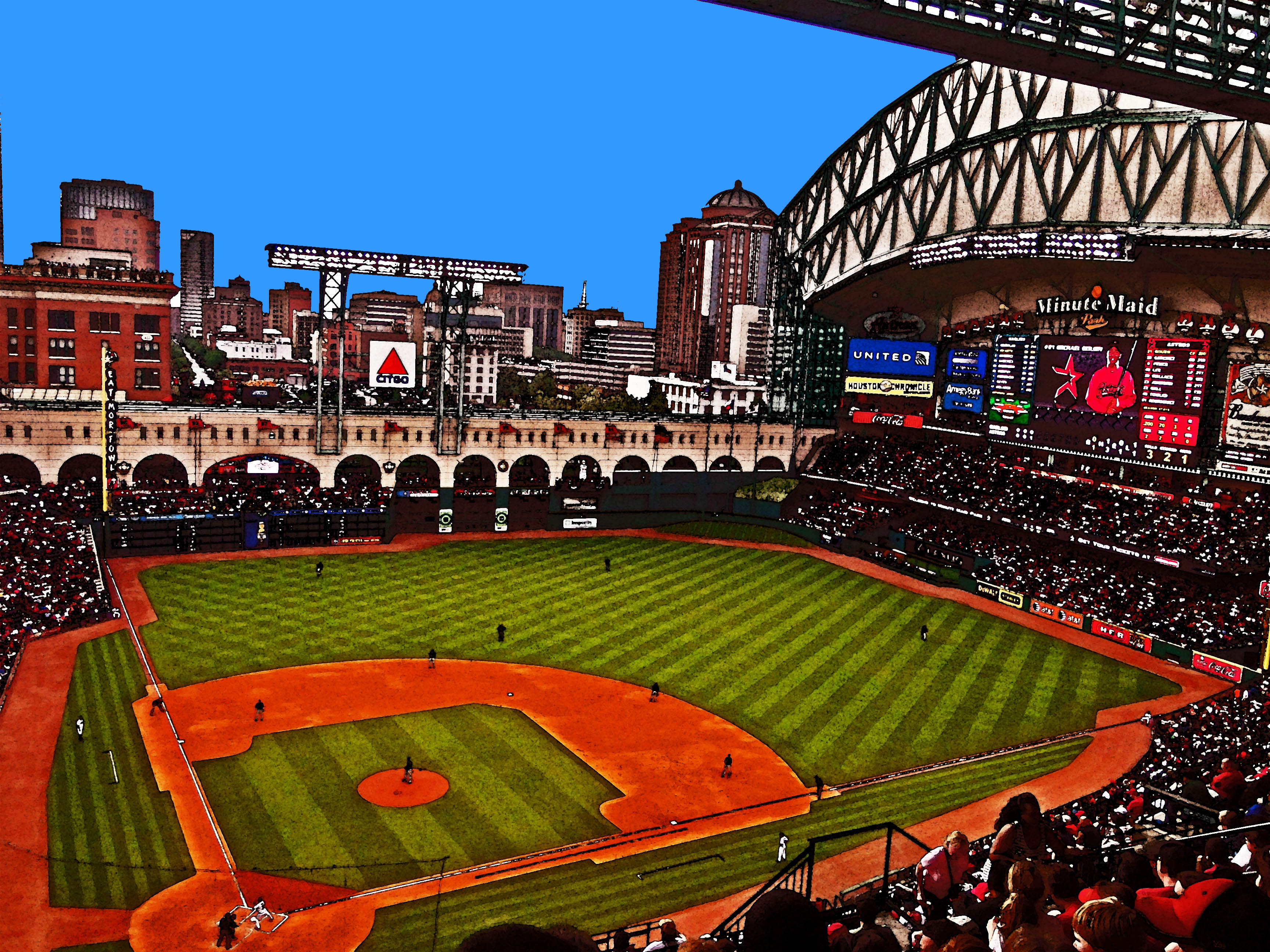
Minute Maid Park, Home Opening Day, April 8, 2011.

When the Astrodome opened in 1965, it was the first time in baseball history that we had any kind of answer to the cancellation of games from bad weather on the outside and, even more ordinarily, it was the first time that an enclosed ballpark could be air-conditioned for every day joy and comfort.

That was all well and good, but somewhere over the years of “acclimation” to the everyday sameness of the  Astrodome’s everyday indoor game feel and look, a lot of people got bored with the varied positive effects from nature that were now missing from the game experience. Forget the rain, humidity, and heat for a minute. We all get it on that score. That’s what sold the domed stadium in the first place as a good idea. A venue that was virtually bulletproof from rain checks, one that could provide constant shade, comfort, and coolness was everything we thought we wanted back in the early 1960s.

And it’s what we got too. Except for that game in the late 1970s that was wiped out by flooding rains in the Dome area, everything else that has ever been scheduled for the Eighth Wonder of the World has come off as planned, I think.

What we didn’t count on at the start was the dull sameness that came from watching every indoor game under the enclosed artificial light tones of an inside day that never varied. Over time, we began to miss the periwinkle blue skies that occasionally visit us in the springtime. We missed the always impressive sight of those churning white cotton candy clouds of summer. We missed the scent and taste of breezes blowing in from the gulf on an early June evening. We missed the nip of a late season norther as it brought its forecast to us of the impending autumn season that was coming. We sometimes, if not often, even missed the old Buff Stadium feel of what it was like to sit at the ballpark and down a hot dog and beer under the normal conditions of hot and humid. In short, those of us who were old enough to have known an earlier normal ballpark experience simply missed the variety of everyday life that had now been taken from us by the sterile presence of the Astrodome’s unyielding, invariably predictable sameness.

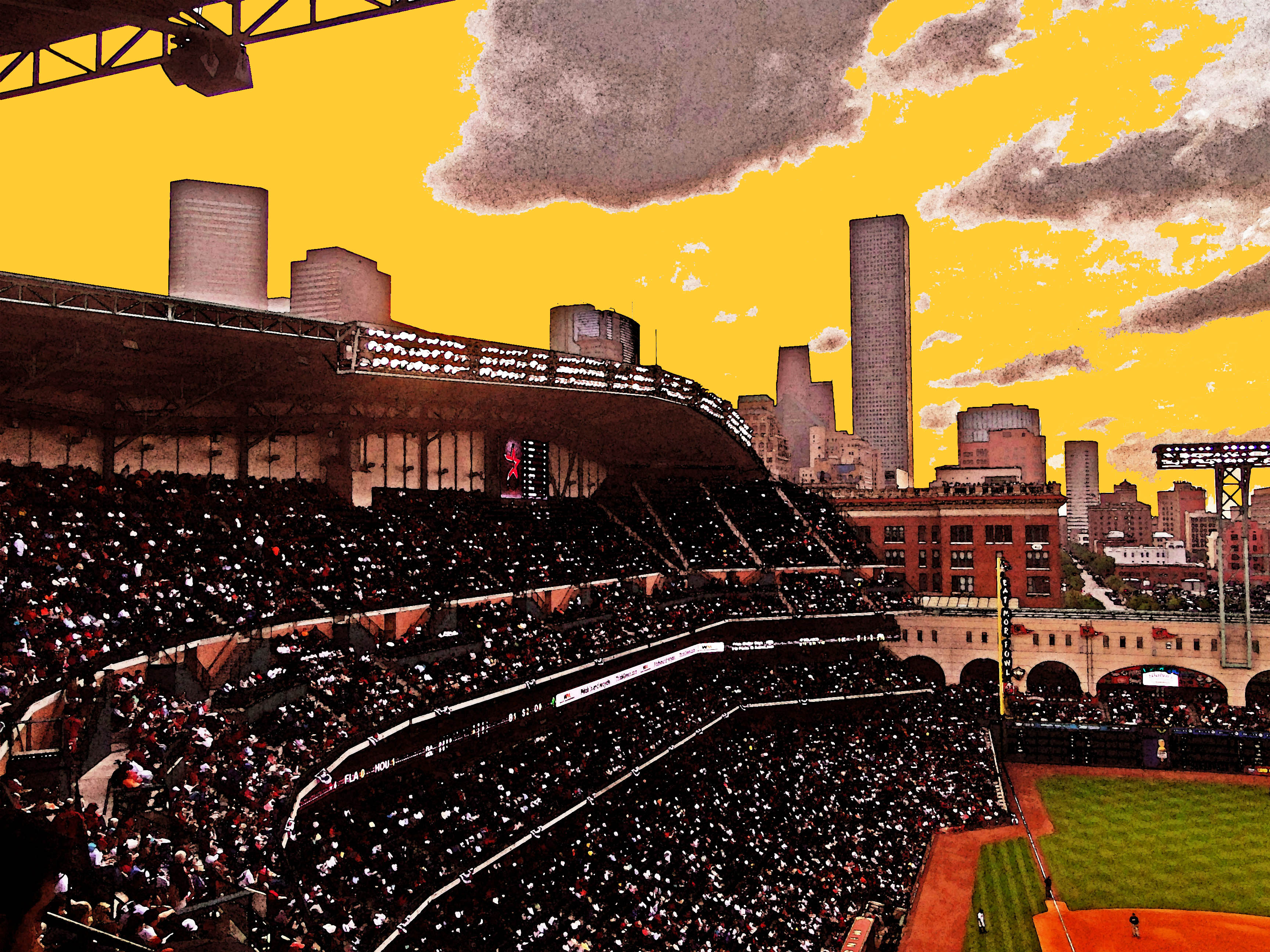
Minute Maid Park, also April 8, 2011. Same day. Different look at twilight.

The “Ballpark at Union Station,” Enron Field, as we knew it in 2001, and Minute Maid Park, as we know it now, came with a retractable roof. That fact was a direct response to our thirty-five year experience in the Astrodome. When that new ballpark was planned, it came to life with a statement. We Houstonians wanted to keep our air-conditioning, but we also wanted the option of keeping the roof open as weather permitted. In practice, even though the pre-game option always remains with the Astros to open or close the roof, it seems to happen most often in early spring and early fall, when there is less hue and cry from some for the AC to be on with the roof closed at all times.

If I remember correctly, the Astros wanted to open roof for Game Three of the 2005 World Series against the White Sox, but I think they were over-ruled by Commissioner Bud Selig, in response to those who protested that the Houston club was trying to gain an unfair advantage over their opponents from Chicago.

I found that argument to be spurious and with no basis in truth. If you’ve ever spent any time in Chicago during the summertime, you know that the place doesn’t exactly feel like the North Pole at that time of the year. Opening the roof for an evening World Series Game in October seemed like no big game-breaker advantage for the Astros to me. In retrospect, who knows? Maybe leaving the roof open in 2005 could have helped the Astros win the two games in Houston they quickly lost.

Ten years and counting into the Minute Maid Park era, we still have one of the most beautiful and unique ballparks in the majors serving us in Houston. The sliding roof is an important feature. By keeping the roof open during pleasant weather days, and by opening it up at fair times in the late innings, the variation helps to keep the everyday experience of a day at the park from taking on the same look as all others.

My Favorite Western Ever: Shane

April 10, 2011

Westerns. They don’t make ’em like they used to, but last year’s remake of “True Grit” came close.

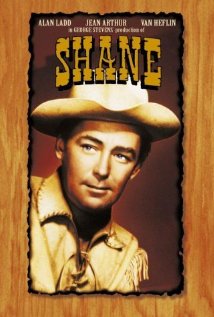
I can count my favorite movies from this genre on the fingers of one hand. That movie-digital palm would include Gregory Peck, Charlton Heston, Burl Ives, Chuck Connors, Jean Simmons, and Charles Bickford in “The Big Country” from 1958; John Wayne, Jeffery Hunter, Ward Bond, and Natalie Wood in “The Searchers” from 1956; Burt Lancaster, Kirk Douglas, and Walter Brennan in “Gunfight at the OK Corral” from 1958; John Wayne (again), Montgomery Clift, Joanne Dru, and Walter Brennan (again) in “Red River” from 1948; and lastly, my all-time, by-a-landslide -favorite-for-its-narrative-theme-and-dialogue-detail, I pick Alan Ladd, Jean Arthur, Van Heflin, Brandon de Wilde, Jack Palance, Ben Johnson, and all the others who made 1953’s “Shane” my greatest western of all time.

The narrative themes were all present and accounted for – and clear as day: (1) the west is big; (2) cowboys and farmers can’t always be friends when it comes to their different ideas on how all this big land should be used; (3) farmers aren’t always the greatest conversationalist; (2) farmer’s wives get bored out there on the plains; (4) straggling ex-gunfighters who suddenly drift into the farm as temporary workers can look pretty good to a bored housewife; (5) even the ten-year old son of the stoic farmer sees the drifter worker as an intriguing role model, based on his demonstrated ability for shooting a gun; (6) now run all these little intrigues smack dab into the side of the fact that the area’s main cattle baron is aiming to run this farmer and all other “sod-busters” off the plains just as soon as possible by whatever means it takes.

An old gunfighter is sort like baseball’s modern designated hitter. Even though he’s aging, and wants to quit, sure as fire, people keep coming up with money and reasons for him to step up to the plate one more time and take a few final whacks. It doesn’t take long for Alan Ladd as “Shane” to find himself in that spot. In the old west, “DH” stood for “designated hero. or hellion,” depending on your point of view.

Wouldn’t you just know it? The farmers have to do their Saturday shopping for supplies at the same little combination store and saloon where the cowboys also like to drink the weekend away. Talk about a setup for a gunfight. You’d almost think the scriptwriter had some “this can’t be good” outcomes in mind when they designed the little combo market and joy juice joint they named “Grafton’s.”

Sure enough. The first time in the store, and all dressed up in a sodbuster blue jean outfit, Shane goes through the swinging door that separates the store from the bar, but not to buy a drink of alcohol. Shane is going in there to buy a “sody pop” to go for the kid they call “Joey.”

Big mistake. Cowboy Ben Johnson leads a big several round laugh track worthy belittlement of Shane for walking into a man’s saloon and ordering a soft drink. Man! It’s a good thing Shane didn’t ask the bartender at Grafton’s if he had any Coke Zero! Ordering plain old root beer was bad enough.

Still, not wanting to start a war, Shane keeps himself in check, leaving the impression with one and all, including little Joey, that the big mouth of Ben Johnson was wide enough to “put the run on another sodbuster.”

While Shane sits on his bruised ego for a week, a lot happens. Ranch King Ryker takes the Shane backdown as a sign that he is safe to make things worse for the sodbusters, He accelerates the random destruction of their crops and property. A different Shane goes to market with the farmers the next Saturday. He’s still dressed in work jeans, but his mind is all guns-and-fists guy.

Returning to the bar, Ben Johnson walks over to resume his round of insults. “What are you doing here, Shane?” Johnson asks. “Did you think we was going to let you come in here and drink with the men?”

Shane is cool.

“I came in here to buy you a drink,” Shane answers, as he takes a drink and throws it on Johnson’s shirt, right before he punches him to the floor with a hard right cross.  A big fight breaks out between the farmers and the cowboys, with the sod-busters getting the best of the bout at fist’s end.

Farmers are fickle. The previous Saturday, they left Grafton’s in fear that they had not done enough. This time they left fearing that they had done too much. And they were probably right, if you want to measure things by the short-term reaction from rancher Ryker.

Ryker first reacts as though he were the George Steinbrenner of the Plains. Sensing Shane as new competitive trouble, he tries to buy him,, but the old old DH turns him down. As a first result of rejection, the burning of sodbuster crops and homes picks up.

Then Ryker gets serious.

He hires another still active DH, the serpentine gunfighter known as “Jack Wilson,” played so beautifully evil in his ways by a young Jack Palance. Well, sir, I got to tell you. Old Jack Wilson promptly goes out of his way to kill a blow-hard Alabama farmer named “Stonewall,” played by Elisha Cook, Jr., after the poor misguided farmer had the nerve to go to town alone, except for one buddy, to shop for supplies during the week. Wilson baits Stonewall into drawing his gun and then shoots the fear-frozen farmer to death in the muddy soil of a rainy day on the only street in town.

The news of Stonewall’s death is all that Shane needs to release the soul of his inner killer. He first has to knock out dull farmer Heflin to earn the title shot, but he then rides back to town in the dark wearing his own DH buckskins and his trusty Colt .45. Little Joey and his dog follow Shane to town on foot and they get there just in time to hear this encounter between their hero and Mr. Wilson.

Shane is standing at the bar, but he turns around to speak to the man sitting alone at a table by the far wall.

“So you’re Jack Wilson,” Shane says, “I’ve heard about you.”

“What have you heard, Shane?” asks a smiling sinister Wilson, as he stands and drops his hands by his sides.”

“I’ve heard that you’re a no-good, low down,  rotten Yankee liar!” Shane answers.

“Prove it!” Wilson demands, as he prepares to draw fire.

‘KER-BLOOEY!” answers the Colt .45 of DH Shane – and its out of the park!

Jack Wilson is blown away for good.

Unfortunately, Shane also has to shoot Ryker and his little brother before he can escape Grafton’s Saloon with his own life, but he is also hit by a cheap shot from above by the brother that would likely have been fatal too, had it not been for a “look out, Shane” warning yell from little Joey.

Injured, but restored, it is time for Shane to go, and he knows it. Ignoring the pleas of little Joey to stay because “mama’s got things for you to do,” Shane advises Joey to mind his parents and “grow up straight and strong.” Then Shane rides off into the high country, with little Joey still calling, “Come back Shane,” until the hero disappears.

Whatever Mama needed, it now will have to be provided by the sodbuster she married. Shane has taken his DH/gunfighter mystique powers and vanished over the mountain.

If they ever made a finer western than “Shane,” I just never saw it.
Home Opener 2011: Morning After

April 9, 2011

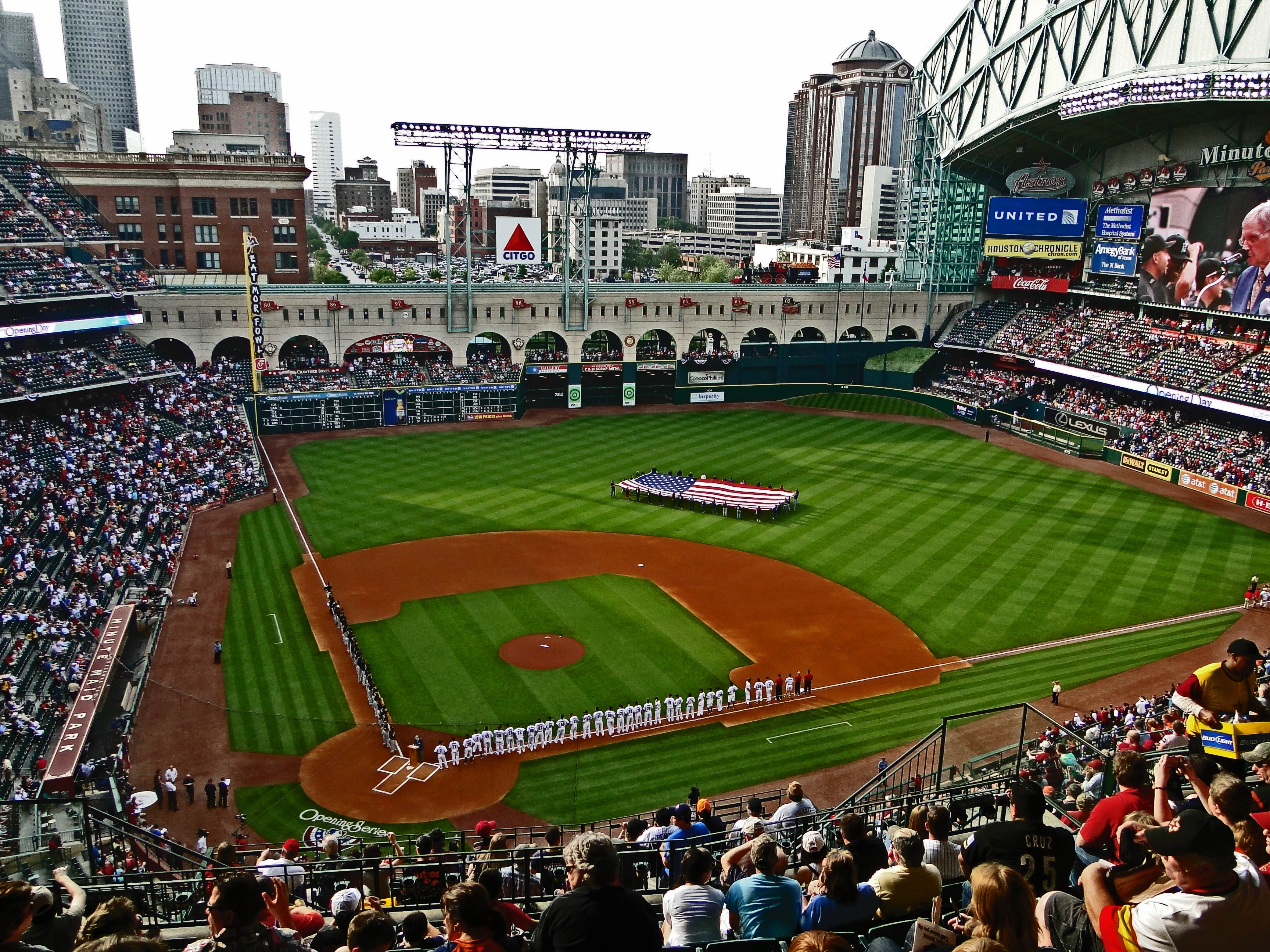
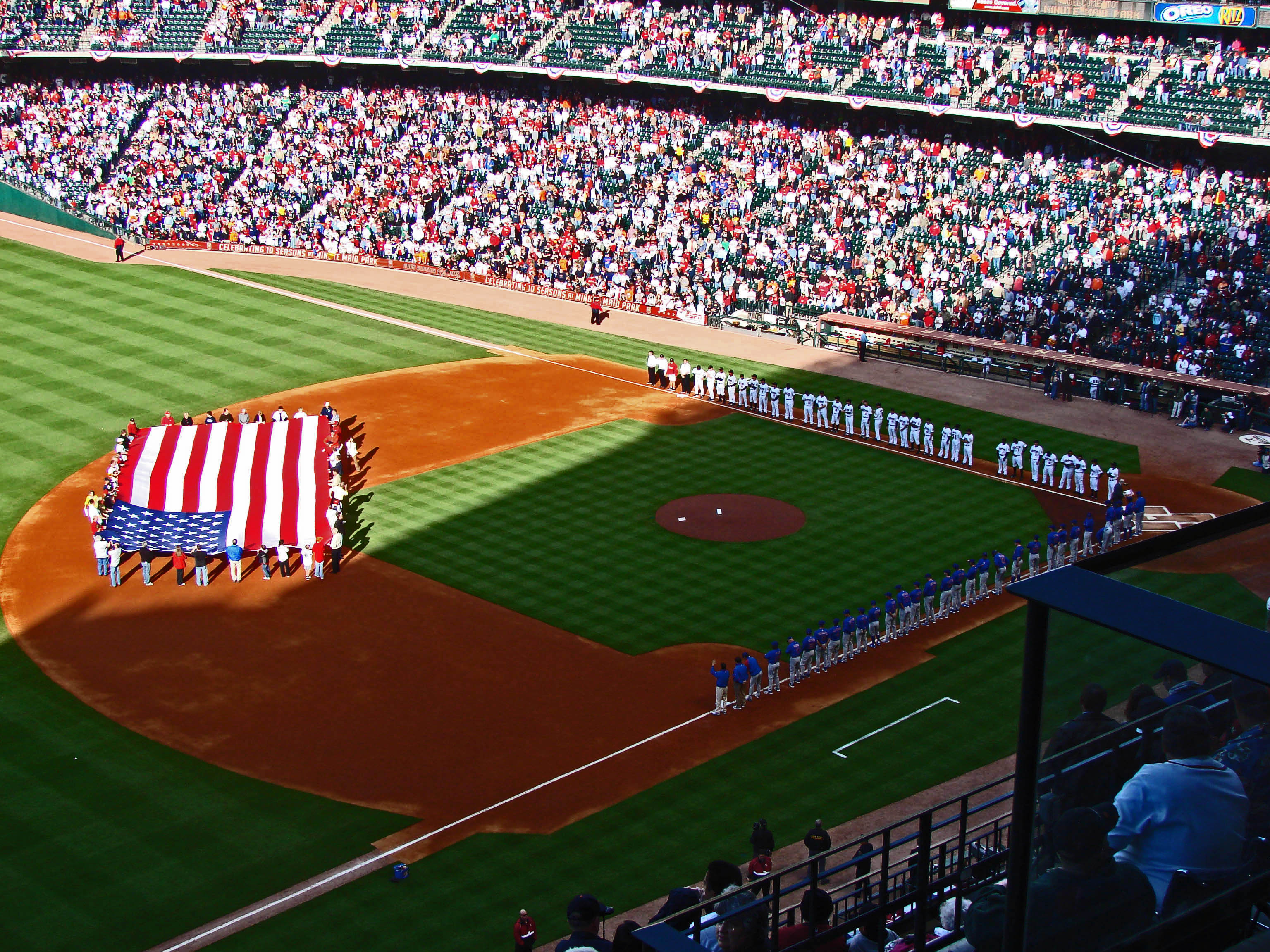
Home Opening Day, Minute Maid Park, Houston, April 8, 2011

The place was packed. The weather was nice. The company was friendly. The food was ballpark. The new giant HD scoreboard was beautiful. And the home season was underway.

But we lost, 4-3. The Florida Marlins spoiled a beautiful seven-inning outing by Astros starter Wandy Rodriquez with two solo-shot homers off relievers Wilton Lopez and Jeff Fulchino in the eighth and ninth innings and the deed was done.

Michel Bourn: Stranded in the Jungle of Failed Clutch.

With the Astros trailing, 3-2, going into the bottom of the eighth, Michael Bourn led off with a single to left to fire home hope. Bourn then moved to second base on a sacrifice bunt by Angel Sanchez and next stole third with Hunter Pence at bat.


Unfortunately, Pence then fanned on a 3-2 slider in the dirt and Carlos Lee popped to first on the first pitch his way to end the inning.

The Marlins expanded their lead to 4-2 with a two-out  solo homer by Chris Coghlan off Jeff Fulchino in the top of the ninth. Brett Wallace then pulled Houston back to a 4-3 deficit by homering to left as the lead-0ff man to face new Marlins hurler Leo Nunez in the last of the ninth. Two outs later, J.R. Towles kept things going with a single to left, Earlier in the game, Towles had given the Astros a 1-0 lead with a solo shot homer of his own. This time he would be replaced with a speedier pinch runner in the form of Jason Bourgeois. With lefty Jeff Inglett next pinch-hitting for pitcher Fulchino and down to his last strike, the Astros sent Bourgeois in an attempted steal. A Florida pitch out diagnosed the move and gunned down the play to end the game.

Florida had won the game, 4-3. The Astros now hang at 1-6 with the long season still mostly in front of us. To me, the critical point in this game was the eighth inning failure of the club to get Bourn home from third base with only one out. A Bourn homecoming at that point would have tied the game at 3-3 and changed the face of everything that remained out there to happen next.

Who knows? All we know now is – there’s another game to be played later today. Maybe Game Two of the series will turn in our favor.

The new screen is awesome, but I can no longer read the batting averages next to each name in the lineup.

The new HD video screen is awesome, indeed, but I had a very hard squinting time reading the batting averages next to each name in the lineup as they appear in the photo shown here. Maybe it’s just me and my need for a new prescription, but I still wish the numbers could have shown up bigger – even if it were just on the full stat display that appears for the man at bat.

Of course, I don’t really expect the Astros, or anyone else, to account for all the issues facing those of us with age appropriate mobility needs and failing  sensory function problems. If I did, I would have expected the club to provide me with helicopter service to my Opening Day seats and a loaner oxygen mask and air tank for my use while I was there.

I enjoyed Opening Day. I simply would have enjoyed it more, had we won. Maybe today will turn out a different story ending.

Home Opening Day 2011

April 8, 2011

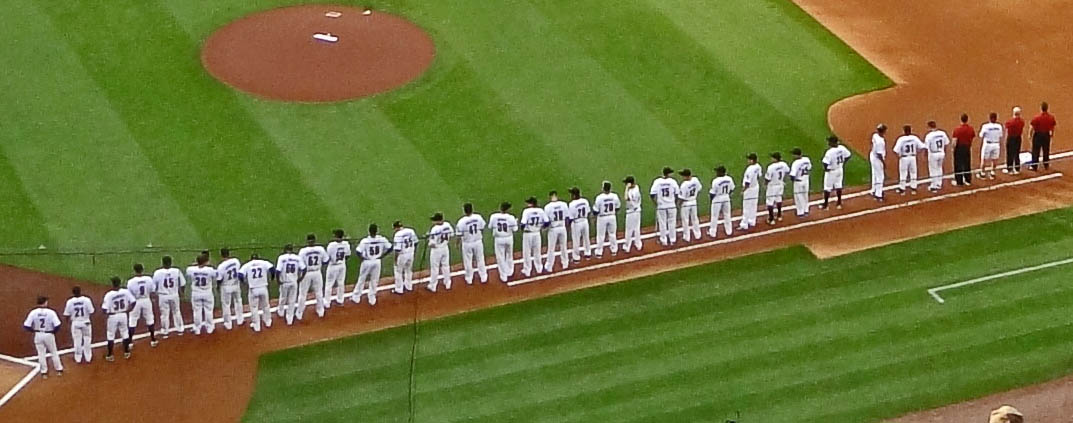
Opening Day, Minute Maid Park, Houston, 2010.

As Dolly Parton used to energetically sing, “Here We Go Again!” Baseball season is back, full blast.

It’s Friday, April 8, 2011, finally time for the home opening game of the Houston Astros in their fiftieth (YES, 50th) season of major league baseball. Astros broadcaster and SABR (Society for American Baseball Research) member Bill Brown has now written what we are all sure will be a wonderful book on Houston’s time as a major league baseball city. That work will not be released until next year, 2012, the actual 50th anniversary date of the club’s first 1962 season in the National League.

Opening Day at home after actually starting the season on the road against the arguably two best clubs in the National League kind of stains the snow of pure unadulterated hope and the Astros have the 1-5 record to back up that assault on dreams from reality, but so what? It’s early. Baseball is the sport of the long season. The important thing now for us baseball fans is simply the fact that its back, as are we who will be going to the game later today. Nobody could have guaranteed the next coming of this season’s new joy when the 2010 run ended, but here we are, those of us who survived the off-season wait. We are ready to give it a go one more time.

Speaking only for me, I’m not going to allow a lot of high expectations for the outcome of this 2011 Astros club spoil the joy of the season itself. We obviously have some problems that include pitching, hitting, fielding, and roster health, but I really believe we have a good everyday force going for us in the form of Manager Brad Mills and a great long-range plan for rebuilding the farm system and roster strength in the presence of General Manager Ed Wade. Back both those spots with the everyday presence of Astros Baseball President Tal Smith, the almost a half century icon of our entire major experience in Houston, and I would say that things are in the best hands available.

Here are some interest points in 2011 for me: (1) I will be watching to see if our two corner infielders (Johnson and Wallace) can show some strength as big league hitters. Both have to either hit for high average or long ball pop to justify their futures in the lineup; (2) We need to stop thinking of Michael Bourn as the future of the club. I like the guy, love him as a fielder, but he’s 29 years old, too up in years to be the future in a double-binded kind of way: (a) if he doesn’t hit far above .250 this year, the Astros cannot justify keeping him in center, but (b) if Bourn hits close to .300, they have to negotiate his 2012 contract with new agent Scott Boras. Where’s the upside on Bourn? (3) Starter J.A. Happ has good stuff, but awful control. That needs to improve;  (4) waiting and watching to see what happens with Jordan Lyles at Oklahoma City; and (5) to just chill out and watch for surprises.

Baseball games can run on for hours. just as the season itself spills all the way into next fall. To that, I say, “Thank God for both conditions. I just love getting trapped in the ballpark and by the season itself.

Play Ball, Astros! Give us your best shot!

“Seems Like Yesterday” Goes Beyond Nostalgia

April 7, 2011


Weiner’s: They used to be all over town.


Weiner’s Department Stores used to be as ubiquitous in Houston as bluebonnets in a Texas spring. As a cheap place for family clothing back in the 1950s, they were only beaten by the Robert Hall Clothing line as an economical choice for Houstonians living on a tight budget. And speaking of such, I found this YouTube preservation of some popular Robert Hall commercial jingles as I was researching this subject. To my own state of complete unsurprise, I remembered the lines of most advertising lyrics you will hear at this site from a half century go. It was clear through the brainwashed minds of brains like my own that the “Mad Men” of early media advertising learned that they could play and condition our buying patterns like that well-known drum.

Here’s the link for a mental “jangle” into the radio past.

http://www.youtube.com/watch?v=R2bOwuhAGpU

.Mading’s Drug Stores were another business you found everywhere too. Back in the day that people bought groceries at a grocery store, and drugs at a drug store, and clothing at a clothing store, Mading’s seemed prosperous enough in the Houston economy. It’s enclosed telephone booth (the kind that Superman once used to change clothes from his Clark Kent disguise) also was the nearest place from home for a private phone call to my girl friend. It cost me a nickel, but that was a coin that rolled a long way for a good cause.

As younger kids, we used to pull that oldest telephone “joke” in the world on Mading’s, which sold cigars.  cigarettes, and pipe tobacco, of course. After all, it was a drug store and it sold these items back in the time that those then everyday household items were not counted as addictive substances. And, of course, our calls had nothing to do with the promulgation of public health. We were just being “wiseacres,” as my dad dubbed us, once he disapprovingly discovered what we were doing.

What we were doing was this simple and this stupid: We would call up Mading’s Drugs and ask for the tobacco department. From there, this exchange would take place:

Mading’s: “Tobacco here.”

Wiseacres: “Do you have Prince Albert in cans?”

Mading’s: “Yes we do.”

Wiseacres: “Well, you’d better let him out before he smothers.”

(Hang up.)

How stupid could we get? How about this one: “Hello, Mrs. Stalin. Is Joe home?”

Fortunately, the cure for some forms of stupidity is maturity. It’s just not always guaranteed for everyone in every instance. And all the while we were growing up, even in this seemingly permanent world of predictable brand names and stores, and safe, clean telephone humor, the world even then was changing all around us.

Today I’m just grateful for every new day that comes along. I no longer count on any brand name or service being around forever, but I am amazed that not a single new Internet company has yet picked up on the business response that could make them bigger than Twitter or Facebook ever dreamed of becoming. And it was something that brick and mortar stores of the 1950s did pretty darn well. Now, in 2011, it’s almost totally slipped out of sight – and especially in Internet business.

That’s simply this: paying close and concerned attention to customer needs after you’ve taken their money. Today’s Internet services do a hawkish job of getting people to sign up for this and that; then they take their money by credit card; then they leave them flat on questions of delivery, honesty in advertising, and technical support. Based on my own experience, very few Internet customer support programs include a genuinely workable phone option on customer questions and many of these even seem designed to discourage customers from ever asking for customer support more than once.

If it’s ever going to “seem like yesterday” again on the business trust side, America needs more businesses that care about the quality and value of their goods and services as they remain dedicated to preserving a good relationship with customers beyond the point of sale. If those business conditions cannot be restored, then I predict we are wasting our time trying to restore our national manufacturing economy to its former might.

Seems like yesterday? Prove it. Bring back the human response to customer support.