Archive for the ‘Uncategorized’ Category

Astros 1st Round Draft History

June 7, 2011

"Biggio" (Prints Available from artist Opie Otterstad) was the most successful 1st round choice in franchise history (1987), but J.R. Richard (1969), Billy Wagner (1993), Lance Berkman (1997), and Brad Lidge (1998) weren't too shabby either.)

Astros 1st Round Draft Picks: 1965-2010

Year↓ Name↓ Position↓ School (Location) Pick↓ Ref
1965 Alex Barrett Shortstop Atwater High School
(Atwater, California)
4 [10]
1966 Wayne Twitchell Right-handed pitcher Wilson High School
(Portland, Oregon)
3 [11]
1967 John Mayberry First baseman Northwestern High School
(Detroit, Michigan)
6 [12]
1968 Martin Cott Catcher Hutchinson Technical High School
(Buffalo, New York)
3 [13]
1969 J. R. Richard Right-handed pitcher Lincoln High School
(Ruston, Louisiana)
2 [14]
1970 Randy Scarbery* Right-handed pitcher Roosevelt High School
(Fresno, California)
7 [15]
1971 Neil Rasmussen Shortstop Arcadia High School
(Arcadia, California)
12 [16]
1972 Steve Englishbey Outfielder South Houston High School
(South Houston, Texas)
9 [17]
1973 Calvin Portley Shortstop Longview High School
(Longview, Texas)
20 [18]
1974 Kevin Drake Outfielder Cabrillo High School
(Lompoc, California)
15 [19]
1975 Bo McLaughlin Right-handed pitcher Lipscomb University
(Nashville, Tennessee)
14 [20]
1976 Floyd Bannister Left-handed pitcher Arizona State University
(Tempe, Arizona)
1 [21]
1977 Ricky Adams Shortstop Montclair High School
(Montclair, California)
14 [22]
1978 Rod Boxberger Right-handed pitcher University of Southern California
(Los Angeles, California)
11 [23]
1979 John Mizerock Catcher Punxsutawney High School
(Punxsutawney, Pennsylvania)
8 [24]
1980 no first-round pick[a] [3]
1981 no first-round pick[b] [3]
1982 Steve Swain Outfielder Grossmont High School
(El Cajon, California)
15 [25]
1983 Robbie Wine Catcher Oklahoma State University–Stillwater
(Stillwater, Oklahoma)
8 [26]
1984 Don August Right-handed pitcher Chapman University
(Orange, California)
17 [27]
1985 Cameron Drew Outfielder University of New Haven
(West Haven, Connecticut)
12 [28]
1986 Ryan Bowen Right-handed pitcher Hanford High School
(Hanford, California)
13 [29]
1987 Craig Biggio Catcher Seton Hall University
(South Orange, New Jersey)
22 [30]
1988 Willie Ansley Outfielder Plainview High School
(Plainview, Texas)
7 [31]
1989 Jeff Juden Right-handed pitcher Salem High School
(Salem, Massachusetts)
12 [32]
1989 Todd Jones Right-handed pitcher Jacksonville State University
(Jacksonville, Alabama)
27§[c] [32]
1990 Tom Nevers Shortstop Edina High School
(Edina, Minnesota)
21[d] [33]
1990 Brian Williams Right-handed pitcher University of South Carolina
(Columbia, South Carolina)
31§[e] [33]
1991 John Burke* Right-handed pitcher University of Florida
(Gainesville, Florida)
6 [34]
1991 Shawn Livsey Shortstop Simeon Career Academy
(Chicago, Illinois)
29§[f] [34]
1991 Jim Gonzalez Catcher East Hartford High School
(East Hartford, Connecticut)
40§[g] [34]
1991 Mike Groppuso Third baseman Seton Hall University
(South Orange, New Jersey)
44§[h] [34]
1992 Phil Nevin Third baseman California State University, Fullerton
(Fullerton, California)
1 [35]
1992 Kendall Rhine Right-handed pitcher University of Georgia
(Athens, Georgia)
37§[i] [35]
1993 Billy Wagner Left-handed pitcher Ferrum College
(Ferrum, Virginia)
12 [36]
1994 Ramón Castro Catcher Lino Padron Rivera High School
(Vega BaiaPuerto Rico)
17 [37]
1994 Scott Elarton Right-handed pitcher Lamar High School
(Lamar, Colorado)
25[j] [37]
1994 Russ Johnson Shortstop Louisiana State University
(Baton Rouge, Louisiana)
30§[k] [37]
1995 Tony McKnight Right-handed pitcher Arkansas High School
(Texarkana, Arkansas)
22 [38]
1996 Mark Johnson Right-handed pitcher University of Hawaiʻi at Mānoa
(Honolulu, Hawaii)
19 [39]
1997 Lance Berkman First baseman Rice University
(Houston, Texas)
16 [40]
1998 Brad Lidge Right-handed pitcher University of Notre Dame
(Notre Dame, Indiana)
17[l] [41]
1998 Mike Nannini Right-handed pitcher Green Valley High School
(Henderson, Nevada)
37§[m] [41]
1999 Mike Rosamond Outfielder University of Mississippi
(Oxford, Mississippi)
42§[m] [42]
2000 Robert Stiehl Right-handed pitcher El Camino College
(Torrance, California)
27 [43]
2001 Chris Burke Second baseman University of Tennessee
(Knoxville, Tennessee)
10 [44]
2002 Derick Grigsby Right-handed pitcher Northeast Texas Community College
(Mount Pleasant, Texas)
29 [45]
2003 no first-round pick[n] [3]
2004 no first-round pick[o] [3]
2005 Brian Bogusevic Left-handed pitcher Tulane University
(New Orleans, Louisiana)
24 [46]
2005 Eli Iorg Outfielder University of Tennessee
(Knoxville, Tennessee)
38§[p] [46]
2006 Maxwell Sapp Catcher Bishop Moore High School
(Orlando, Florida)
23 [47]
2007 no first-round pick[r] [3]
2008 Jason Castro Catcher Stanford University
(Stanford, California)
10 [48]
2008 Jordan Lyles Right-handed pitcher Hartsville High School
(Hartsville, South Carolina)
38§[s] [48]
2009 Jiovanni Mier Shortstop Bonita High School
(La Verne, California)
21 [49]
2010 Delino DeShields, Jr. Outfielder Woodward Academy
(College Park, Georgia)
8 [50]
2010 Mike Foltynewicz Right-handed pitcher Minooka High School
(Minooka, Illinois)
19[t] [50]
2010 Michael Kvasnicka Catcher University of Minnesota
(Minneapolis, Minnesota)
33§[u] [50] 

We will have to wait and see how some recent picks like Jason Castro (2008), Jordan Lyles (2008), Delino DeShields, Jr. (2010), and brand new pick George Springer (2011) turn out in the long run, but there is some evidence on the board that the club, indeed, has successfully picked some pretty nice nuggets from the always larger larger pile of Fool’s Gold choices every now and then over time.

The list of actual Astros picks itself hardly reads like the walls of the Hall of Fame, but I’m guessing something similar would be the same pattern we saw with just about any major league club. With all the weight we place today on scouts with strong player evaluation skills, experts remain fallible, and the draft remains governed by many factors other than accurate talent assessment.

Signability of the individual player, a player’s failure to develop and mature, poor instruction and guidance by the club, the random occurrence of career altering or ending injuries, and “luck” all seem to get into the act in one form or another. I have a personal hunch that one big influence upon the development of a successful major leaguer is the presence of a significant positive mentor in the young player’s developmental years. He may be a  manager, a coach, a special instructor, or maybe even a veteran teammate, – but he’s somebody who helps the younger player develop a skill, correct a problem, or simply be the fellow who somehow guides the youngster into believing in himself and taking responsibility for his own behavior. He’s the impact guy, the mentor, the gatekeeper/teacher/big brother who turns out to be the difference-maker in a young draftee’s future.

Maybe I’m making too much of the mentor factor, but I don’t think so. These young kids are going to learn something from several somebodies along the way – and what they learn is going to shape their careers, for better or worse.

Back to the breakdown on Astros picks: The club has chosen 55 players in the first round through 2011. This year’s 2011 choice, outfielder George Springer, is not shown on the chart. Of the total #1 picks, 24 have been pitchers, the highest number for any position; 21 of these pitchers were right-handed; 3 were left-handed. Nine catchers have been selected, while eight shortstops, nine outfielders, two first basemen, and two third basemen were taken also. The Astros also have selected one player at second base. Thirteen of the players came from high schools or universities in the state of California, while Texas with five players and Tennessee with three players, follow in second and third place. Houston also has drafted one player from outside the United States: Ramon Castro from Puerto Rico was chosen in 1994.

Why Bother with Historical Preservation?

June 6, 2011

A clear map of the past road is our best guide to the future.

I want to thank Bob Blair for a comment he made on my column of this past Saturday about the demolition of the Avalon Theatre building on 75th and Lawndale in the Houston East End. That building years ago had boosted my earliest childhood dreams for hope over despair through their Saturday kid feature movies and adventure serials.

My sorrow in first column etched in the personal grief I felt over the disappearance of another significant artifact from my personal childhood, but Bob Blair picked up on the tail of the longer story in history that new and younger people come along and form their own attachments to the very places that were later erected on the sites of our own now vanished special places. – “The beat goes on,” opined Blair, and you know what, he’s right – but so am I. –  I simply failed to make my whole point.

Saturday, June 4th, I wrote: “You don’t kill a culture by burying the dead. You kill a culture by burying the living. And life goes on in those old physical places that remind us of our earliest roots and fondest hopes for the future. Some are creatures of universal beauty. Others exist only as beautiful in the eyes of the bonded beholder, but they are all living things. And that’s the point that seems to elude many people.”

The narrative of life always contains some sense of past, present, and future. In that sense, life is like a book. It contains a beginning, a middle, and an end for all of us. It also is a book with a life span that began before we each arrived on the scene and it most probably will contain an ending that will only happen for the whole world at a date far beyond our personal existence on this planet.

In brief, we study and attempt to preserve an accurate record of the past for reasons that far exceed our needs for gratuitous scratches of personal nostalgia. We really do honor the past as the beginning of the story about how we found ourselves on any particular road at the time of our births.

Remember this old wisdom saw? “The past is prologue to the future.” Well, it’s really true. If we were born to disadvantaged circumstances, the question isn’t “who is going to get me out of this mess?” The real questions are: (1) How did this all come about in the first place? and (2) What am I able to do, that I am also willing to do, to get myself out of it? Ask those questions first. Then, and only then, will you be ready to ask others for any help you may need. And knowing the history that predated your appearance on earth with this condition, fairly or not earned, is essential to any intelligent plan for overcoming any life obstacles. Education is the key here. Without a good basic education, most people don’t grow up asking the right questions.

Without a good, always building knowledge of history, we are like a bunch of readers who think the story begins with our ability to speak and hear in some language and then form opinions on Chapter One based solely upon our personal experience with our immediate environment. We are like most of those people who Jay Leno parades out for public ridicule in his Jay-Walking interview segments. We cannot name the large body of water that rests just west of California – let alone explain what that fellow they called “George Washington” ever did.

We live out our lives within a larger dynamic, changing narrative script called “life.” As much as we talk about past, present, and future, and their exponential connections to each other, the only time zone we really own for making any difference in anything is now – in the present – acting upon what we have the power to do alone, or with the assistance of others. We use the lessons of the past to hopefully help us make our best choices now on how we shall live or lives and expend our energies- and these together shall shape the future.

“Too Late Now” is only the anthem for those who fail to see that the consequence for never taking a positive step in life is a thing called eternal regret. By risking effort for something we believe is worthwhile, we either get the job done, or we learn from what happened. When we learn from past failures, these events were not failures. They were learning experiences.

Of course, we don’t have to learn anything from the past. We may continue to ignore it, along with the Pacific Ocean and George Washington, and just keep doing what thousands or millions before us have done about a past whose knowledge and wisdom is now overlooked.  What’s the worst that can happen? As far as I’m concerned, it’s making a recognized redundant error – and still thinking we were the originators of this “mistake.”

Sometimes we build statues or save buildings to commemorate people, places, and whole eras of our community history. These things serve to also remind us on a daily collective basis that something was going on around here prior to our births – and that maybe these artifacts will even inspire us to read more – and to embark upon our personal searches for Chapter One in the Great Book of History.

Thanks for bearing with me today. Class dismissed.

Some Texas League Longs and Shorts

June 5, 2011

The Texas League also has served as home to clubs from several surrounding states.

Over the long sometimes interrupted history of the Texas League of Professional Baseball Clubs, a number of records stand alone for their association with famous people. Others are remarkable for their deviant defiance of the norms for achievement in any average baseball season or individual game. That team record 21 homers that Corsicana hit against Texarkana on June 15, 1902 is a prime example of that challenge to the norm. Almost needless to add the eight straight homers that Nig Clarke hit in that famous game, or his record 16 runs batted in that same day are hardly marks to ignore as impossible challenges in the Texas League record book.

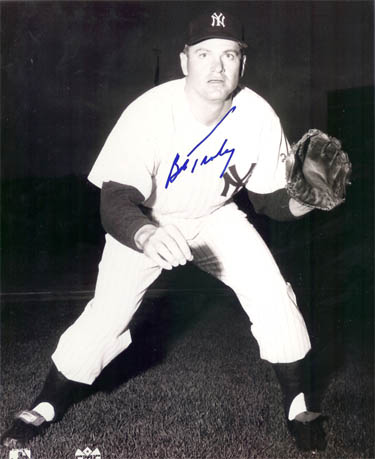
Bob Turley, San Antonio, 1951

Bob Turley of the 1951 San Antonio Missions holds the Texas League record for most strikeouts by a pitcher in a single game, He pulled off that feat with 22 K’s on August 11, 1951. Dave Righetti of the Tulsa Oilers is second on that list. He fanned 21 on July 16, 1978.

The longest Texas League by innings and time unsurprisingly was the Jackson at San Antonio game that was played over the course of three dates, from July 14 to 16, 1978,  The 26-inning contest finally went to San Antonio by a score of 1-0, as it also consumed a record 7 hours and 23 minutes of actual play.

The shortest regular season Texas League occurred on te last day of the season, September 7, 1913, when San Antonio met Galveston on the Island City in a contest of no consequence to anything but our ancient need to eat everything on our plate. In awareness of that consideration, the game umpire told both clubs prior to the first pitch that he was ready to go home. Each club was advised to swing at anything because every pitch was going to be called a strike.

The short of it is: The boys took the ump to heart. They were ready for a quick getaway too. Galveston took the game, 4-0, in only 49 minutes for a full nine-inning contest.

The game became something of a benchmark on the development of ethics and rules against making a farce of any baseball game. Had baseball not acted to discourage this kind of chicanery, we would have needed to change the lyrics of our anthem to “Take me out to the ball game, but keep the meter running.”

Have a nice Sunday, everybody, but try not to hurry things up too much.

Avalon Theatre Building Demolished

June 4, 2011

Weekly serials at the Avalon fried our imaginations to the ongoing cliffhanger struggle between good and evil. We knew. It's why some of us had the patience to wait ten years for the final chapter on Osama bin Laden. We knew. The bad guys always get what's coming to them in the end.

The old Avalon Theatre itself died a thousand years ago. Way back in 1957, ownership closed the small, but venerable east end of Houston Grade b movie house and converted it to an unfortunately short-lived career as a house for live theater productions. I saw the late Wally Cox of TV’s “Mr. Peepers” fame starring there at the Avalon in 1958 in the featured lead role in “Will Success Spoil Rock Hunter?” It was fun. I was 20 years old and now  dressing up in  coat and tie to take a date to “the theatre” in the same physical building where I grew up going barefoot on summer Saturdays to watch Roy Rogers, Bowery Boys, and Charlie Chan movies.

Sadly, the Houston East End was not ready in the late 1950s (or at any other time to this day) to support businesses based on a Broadway show model. The Avalon closed its doors by 1960 and stood dark for a while. It reopened after a while as “The Capri” and made its degrading way to doom as a porn movie house before again changing its identity to match the changes going on in the culture of the east end neighborhood. It again changed its name to “The Fiesta” and started showing Spanish language movies that the owners hoped would prove attractive to the new East End of the late 20th century. That move failed too and the old “Avalon” closed forever as a movie house.

Like many of these small neighborhood suburban theaters from the 1930s and 1940s, the Avalon survived as home to a fundamentalist/revivalist independent religious sect that appealed to new residents of the nearby geographical area. That’s what I thought it still was doing until I passed nearby on Lawndale yesterday.

I was just explaining the story of the Avalon to a traveling companion friend as we drove across the 75th Street intersection, traveling west on Lawndale only yesterday. Then I looked out the window to my right and saw that the old Avalon Theatre building was now gone. Some time in the last two years, the church that had been there went “vamanos” and left the old structure to the demolishing people.

No longer of any use to the imaginations of kids, sinners, or saints, the Avalon had met the wrecking ball – and the latter had left us not a stone-upon-a-stone remembrance of the former.

In its better days, the Avalon Theatre at 743 75th in Houston had a beautifully vertical red name banner and a dazzling (to us kids) electrically lighted movie display board.

Goodbye, old Avalon. Thanks for the memories and the early life fun we had together.

Even though your true life has been gone for years, I felt a spiritual hole in my heart yesterday when I unexpectedly saw your physical presence missing from among the ruins of those ancient East End artifacts and places that still remind me of earlier times. It’s too bad that none of us who cared about you could not have been present in time to do something that might have saved you for a gentler renewed purpose and delivered you entirely from the same impersonal fate that awaits so much of Houston’s physical cultural heritage.

You don’t kill a culture by burying the dead. You kill a culture by burying the living. And life goes on in those old physical places that remind us of our earliest roots and fondest hopes for the future. Some are creatures of universal beauty. Others exist only as beautiful in the eyes of the bonded beholder, but they are all living things. And that’s the point that seems to elude many people.

Goodbye, Avalon, but in this knowledge: The early part of you that lives on in my heart, still driving my trust in hope over despair, lives forever within people like me – and we were the Houston kids who knew you way back when.

Godspeed, Avalon. Your job here was done – a long, long time ago.

The Incredible Home Run Game of 1902

June 3, 2011

Nig Clarke

Like all of baseball in 1902, the Texas League played with a “dead” baseball. It contained no cork center or tightly wound cord around all points of circumference and, to put it plainly, a batted ball simply did not travel all that far when struck. At least, not by today’s standards. It sure didn’t travel like an out-of-time-and-place bottle rocket.

All of that changed for one singularly incredible long ago afternoon in Ennis, Texas. The date was June 15, 1902.

The high-flying Corsican Indians/Oil Citys (depending upon whom you believe) had a Sunday game scheduled against the lowly and appropriately named Texarkana Casketmakers. To avoid breaking the Sunday Blue Laws that prohibited the playing of baseball on the Lord’s Day, the game was moved to nearby Ennis, Texas, where folks took a more liberal attitude about doing or watching anything fun on the Sabbath.

Unfortunately, we do not have, nor has there been, a thorough decisive study of what this field in Ennis looked like and what it contained. It may have contained very short fences or no fences at all. We simply don’t have the clear information, but it would be nice if we did because of what happened there on that site in one afternoon. Excerpt for an invasion on that one day of time traveling steroids dealers, the events of that game are hardly explainable in a credible way. True. Very good teams may slaughter very bad teams on any given day, but hardly in the way, and to the extent, that this one took place – in a contest between human beings, using the ball, bats, and other equipment available in 1902.

The thing that day created was a long-living monster of enigma on baseball’s ever floating island of perpetual curiosity. What happened to make it all possible?

In brief, the brutally favored Corsicana nine won the game, 51-3, stroking twenty-one (21) home runs along the way to their bug-smashing victory over the hapless Casketmakers from Texarkana. 19-year old catcher and future major league catcher Justin Jay “Nig” Clarke took all the individual cake that day offered by stroking eight (8) home runs in eight (8) consecutive times at bat.

Holy Orange Crush! Eight home runs in eight straight times at the plated in one game? Is that even possible? Yeah. Sure it is. It happens in slow pitch softball probably every Friday night in the beer leagues. But – in the hard-heaving dead ball era of the real game? I never thought so – until I learned about this game.

Corsicana was good, all right. Their 1902 club once won twenty-seven (27) straight. They ended up winning the Texas League that year by 28.5 games over their nearest opponent. Also, Texarkana was both bad and poorly supported as the expected result. By July 1902, the ironically named Casketmakers would  open the door on their handiwork and climb in for their burial as just another team that didn’t make it.

None of the usual suspect factors account for one of the great anomaly games in baseball history. Maybe it was what they were drinking – or not drinking – on that particular day.

In his nine-season MLB career (1905-1911, 1919-1920), Nig Clarke hit a total of six (6) career home runs. That being noted, please explain how Clarke once bashed eight (8) home runs in eight consecutive times at bat in one little 1902 Texas League game. People must have asked Clarke a question to that same point over the course of his entire life. (Nig Clarke died in 1949 at the age of 66.) Until we find Clarke’s answer reported somewhere, we shall just have to wonder what light his personal view may shed upon what was certainly one of the most curious and suspect days in baseball history.

Have a nice Friday and great weekend, everybody! – And watch out for all those elusive enigmas along the trail of life’s adventure.

Morris Frank: A Friend’s Tribute

June 2, 2011

Morris Frank

To most or none of you younger Houstonians, the name of Morris Frank won’t mean a thing. To those us who are old enough to remember the end of World War II, the name Morris Frank shall remain unforgettable. For all the years I haunted the turnstiles of old Buff Stadium in the late 40s and early 50s, Houston Post sportswriter was the public address system’s Voice of the Houston Buffaloes and Buff Stadium. Hailing from his boyhood home of Lufkin, Texas, and speaking with an East Texas accent  that once dominated the few other variations on English that once thrived in this part of the country, Frank’s announcements for the lineups and next batter at each Buffs game were unmistakable.  I can still hear them reverberating down the corridors of my personal memory.

“Now hitting for your Houston Buffaloes …. number 11 …. the first basemen ….. Witte ….. Jerry Witte …. now hitting for the Buffs!”

Nothing like it. And we fans loved him. No one else would have sounded right to our ears. WIth upbeat notes of Miss Lou Mahan’s ballpark organ following the flight and bounce of the ball during pre-game practices, nothing changed until right before game time. Then came the twangy voice of Morris Frank and we all knew that the game was now on.

“Good evening, ladies and gentlemen, and welcome to Buffalo Stadium, the home of your very own Houston Buffaloes!”

I was going to write an article about Morris Frank until I discovered the following post-mortem tribute to him that had been written back in 2005 by one of his old East Texas friends, a fellow named Bob Bowman. Once I read it, I needed no convincing that the better informed Bowman had a closer take on Frank than any other I had ever dreamed, written, or conceived. So, since he wrote the piece as an inclusion to their local hall of history up in Lufkin, I didn’t think he would mind me passing the same on to you here in this more wide-awake-today forum of the Internet.

Enjoy!

My Fried Morris by Bob Bowman

Thirty years ago this month, East Texas lost one of its greatest champions–the son of a Jewish merchant whose legacy of love and humor still endures.

Morris Frank, who gained fame for his newspaper columns in the Houston Chronicle and his speeches throughout America, was born in Perth Amboy, New Jersey, the son of a merchant who moved his family to Lufkin and expected his son to follow in his footsteps.

Instead, Morris started writing sports for his hometown newspaper, the Lufkin Daily News, joined the Houston Post as a feature writer in 1937, and later signed up with the Chronicle as a columnist. With his broad smile, boisterous laugh and ever-present cowboy hat, Morris soon became one of America’s foremost masters of ceremonies.

“He had a following of countless friends, colleagues, famous people and just plain folks who came to know him by reading his stories and columns…or laughed at his harmless barbs that spared no one–not celebrities, not Supreme Court justices, stars of sports, not those in the high places of government and business,” wrote a long-time friend, John Murphy, a former executive vice-president of the Texas Daily Newspaper Association.

Morris seldom made a speech without mentioning his roots as a sportswriter in Lufkin or his love of East Texas.

But it was his kindness that endeared him to people.

He scrawled thousands of letters in his big, sprawling handwriting, thanking people for acts of kindness, showing sympathy for the lost of family members, congratulating someone for a promotion, getting married, or anything else that he thought was important.

When I was a young newspaperman in Lufkin, and the Chronicle decided to establish a bureau in East Texas, Morris suggested to the Chronicle’s editor, Clayte Binion, who also came from Lufkin, that I would make a good bureau chief.

I still have Morris’ handwritten note congratulating me on the job and I cherish my visits with him in the Chronicle’s city room, where he had a desk with everyone else. If he ever had a private office, he didn’t use it much. He didn’t like to be too removed from crowds, and he always found one in the city room.

Morris was also modest to the core. He once said: “I wouldn’t mind being broke if I were just broke even.”

When someone suggested that he write a book, he said; Well, I have thought about it. And I have a couple of titles in mind: Some of My Best Friends Are Gentiles and Self-Made Failure.”

Once, he was chided for eating ham at a luncheon even though he was Jewish. His retort was: “Listen, my daddy told me it was a worse sin to pass up a free meal than it was to eat ham.”

Morris was always paid for his speeches, but he invariably left a tip for his waiter that was larger than the check he was given. And when he agreed to make speeches in Lufkin, he refused to accept any check. “I don’t want the people of Lufkin thinking they had to pay for any of those sorry sports stories I wrote for their paper,” he quipped.

On July 16, 1975, the day after Morris passed away, the Chronicle published an editorial praising him for his qualities. The editorial concluded with these words: “Will Rogers has often been quoted as saying he never met a man he didn’t like. That was the way it was with Morris Frank, but there was more. With Morris, there never was a person he didn’t love.”

All Things Historical 
July 11, 2005 Column
(Provided as a public service by the East Texas Historical Association. Bob Bowman is a past president of the Asssociation and the author of more than 30 East Texas books.)

Kid Lyles off to Flying Start

June 1, 2011

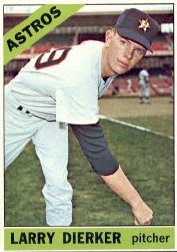
 The debut of 20-year old Jordan Lyles as a right-handed pitcher for the Houston Astros against the Chicago Cubs at Wrigley Field reminded many of us of the time 18-year old Larry Dierker made his first big league start against the San Francisco Giants at the Astrodome on September 22, 1964., back when the club was still known as the Colt .45s. It just happened to have been young Mr. Dierker’s 18th birthday. His Houston teammates even brought a  birthday cake to help the kid celebrate the occasion.

Like Mr. Lyles, Dierker failed to pick up a win in his first start. In fact, he was gone after only two and two-third innings of work after giving up four runs (two earned) on five hits and three walks. On the bright side, Larry fanned three Giant batters, most notably, striking out future Hall of Fame great Willie Mays in the first inning. On the much brighter side, you could see from his size, athletic posturing, and performance the hope for much better days ahead in his baseball pitching career. Like Mr. Lyles long after him, Larry Dierker instantly became the club’s best fan reply in Houston’s search for a baseball tomorrow.

Let’s hope that Jordan Lyles brings at least as much to the Houston baseball table as Larry Dierker once did. Short of a breakthrough to a Hall of Fame level of accomplishment, and an avoidance of injuries that, as with Dierker before him,  also put an early end to his career, we could hardly ask for more.

Jordan Lyles

The kid seems to have it – and a mature head on his shoulders too. At least, that’s the demeanor-image that comes through loud and clear and calmly over the HD television screen. The kid’s a cucumber. He didn’t fall apart after his costly throwing error in the eighth inning – and he didn’t cry or throw a double-jointed hissy-fit in the dugout when manager Brad Mills pulled him with nobody out in the eighth. He took his place, waited, and watched. And he was rewarded for his personal temperance in the top of the ninth when his new Astros teammates bombed the Cubs for a six-run spot that also spared him from the jaws of a major league defeat in his first rattle out of the box. Afterward, Lyles was even able to express his happiness to FOX Sports Houston interviewer Greg Lucas that teammate Fernando Rodriguez was able to pick up his first major league win in relief. Everything that happened last night pointed to the early opinion that Jordan Lyles, like Larry Dierker long before him, just might be a great new member of the Houston Astros family.

As with all things, time will tell. In the meanwhile, we shall close with the Baseball Almanac version of the box score from Larry Dierker’s first game on September 22, 1964. Have a nice day in the knowledge that the Astros now are only three and one-half games away from escaping the cellar in the National League Central,

Baseball Almanac Box Scores:

San Francisco Giants 7, Houston Colt .45s 1. – Game played on Tuesday, September 22, 1964 at Colt Stadium in Houston.

San Francisco Giants ab  r   h rbi

Kuenn lf 4 0 3 1
Lanier 2b 6 1 2 0
Alou rf 5 1 2 0
Hart 3b 4 1 1 0
  Pagan ss 0 0 0 0
Mays cf 4 1 1 1
Cepeda 1b 4 1 2 3
Haller c 4 1 2 0
Davenport ss,3b 5 1 1 0
Estelle p 4 0 0 0
  Murakami p 0 0 0 0
Totals 40 7 14 5
Houston Colt .45s ab  r   h rbi

Kasko ss,3b 5 0 2 0
Morgan 2b 1 0 0 0
Aspromonte 3b 4 0 3 0
  Jackson pr,ss 1 0 0 0
Bond 1b 5 0 0 0
Wynn cf 3 0 0 0
Staub rf 4 0 0 0
Beauchamp lf 4 0 0 0
Grote c 3 1 1 0
  Bateman c 1 0 0 0
Dierker p 1 0 0 0
  Yellen p 0 0 0 0
  Giusti p 2 0 1 0
  Gaines ph 1 0 0 0
  Jones p 0 0 0 0
Totals 35 1 7 0
San Francisco 0 3 1 3 0 0 0 0 0 7 14 2
Houston 0 0 0 1 0 0 0 0 0 1 7 3

San Francisco Giants IP H R ER BB SO  Houston Colt .45s IP H R ER BB SO

Estelle  W (1-1) 8.0 7 1 1 6 4
  Murakami  SV (1) 1.0 0 0 0 0 0
Totals
9.0
7
1
1
6
4
Dierker  L (0-1) 2.2 5 4 2 3 3
  Yellen 1.0 2 3 3 2 0
  Giusti 4.1 5 0 0 0 3
  Jones 1.0 2 0 0 0 2
Totals
9.0
14
7
5
5
8

E–Pagan (20), Mays (5), Kasko (14), Bond (12), Wynn (7).  3B–Houston Grote (3,off Estelle).  HR–San Francisco Cepeda (31,2nd inning off Dierker 0 on, 0 out).  SH–Estelle (1,off Jones).  SF–Kuenn (2,off Dierker).  Team LOB–13.  Team–13.  WP–Dierker 2 (2).  U-HP–Lee Weyer, 1B–Jocko Conlan, 2B–Doug Harvey, 3B–Tony Venzon.  T–3:02.  A–5,608.

Baseball Almanac Box Score

Defining Summer

May 31, 2011

1945-1952: "summertime .... and the livin' was easy"

When our adult son Neal was about six, he asked me a question which should not have been surprising, due to the fact that he only came along as an only biological child after his father already was old enough to have been his grandfather. Neal’s dad didn’t know or care much about music groups like Duran Duran, but he could talk all day about the significance of Chuck Berry and Chet Baker and Louis Armstrong to contemporary music. In a way, Neal missed out on a first hand pop cultural education of the 1980s from a young normally age appropriate father of those times, but he got one that could put him directly in touch with the birth era of rock and roll and the earlier eons of modern and traditional jazz – and the big band era. Plus, Neal’s dad had grown up as an old sandlotter during the golden baseball era of the Post World War II era. – As the old song asks, “who could ask for anything more?”

All that being said, young kids often form a very different mental picture of what was included in the older parent’s “good old days.” Neal’s out-of=the-blue question one morning on the drive to school put the whole distortion into clear perspective.

“Daddy,” Neal asked, “when you were my age, was it scary dodging dinosaurs on the way to school?”

I felt like answering: “Only the Raptors,” but that statement would have fallen short of the whole truth. I also feared the T Rex and the Pterodactyl flying species. (Come on. I’m just kidding. I told him the truth – that the dinosaurs disappeared at least a month or two prior to my birth – and that we were too busy when I was a kid, getting ready for summer all year, to worry much about wild creatures on the loose here in Houston back in the day.

Today’s date, May 31st, always reminds me of how blocked and clearly we used to view summertime when I was growing up here in the Houston East End during the post-WWII era. Summer was all of June, July, and August. It began on the last day of school and it ended on the first day of our return to school in the fall – and it usually included a few end-of-month dates from May and early dates in September that were included in our clear Catholic school boundaries on what dates started and finished each school term.

School used to unfailingly begin on the first Tuesday following Labor Day and it ended on the last Friday prior to Memorial Day. how clear and easy was that? It was easy, all right, but it still wore us out. The end of school simply could not get here fast enough. By the time we got past Easter each spring, we were ready to pack it in. There was no spring break in our era, We had to live for the end of the school year.

Knowing when it was time to check it on learning for the year was fairly easy to gauge in Houston back in the pre-air conditioning days. No one I knew had yet been spoiled by AC through 1952. We lived in sweat at home – and we lived to sweat at school. Both were conditions that told us that it was sleepy time down South and time to put the books away and have some fun. If we were going to do any sweating, we guys, at least, preferred to do it on our own terms, playing sandlot baseball.

In school, the Houston humidity caused note-book paper to stick to our arms as were trying to write. That served as sweat-sign number one that it was time for the school year to end. The windows are wide open and we still can’t buy a breeze into this classroom. – Sweat sign number two was all over the faces of our Dominican nun teachers. They wore these long full-body length white dresses with the black penguin-like veils. Only the skin of their faces and hands showed openly – and their faces rolled in riveting beads of perspiration as another clear sign that summer was coming and that it was time for school to end.

The last day of school was an event of mixed tension for some – and final elation for most. I always looked forward to the day with no concern, but, even then, I felt the system was a little brutal upon the students who had trouble keeping up academically. The way it worked  was more like a public jury sentencing in a capital crimes trial than anything else.

The school principal came into each room with the final report cards for the whole class. Than she went down each row and aisle, reading all of our names aloud, one by one, as we each took turns standing and receiving the results of our academic years. As each student stood, we heard one of two statements:

(a) “John/Jane Doe, having successfully completed the work of the fifth grade, you are hereby promoted to the sixth grade;” or,

(b) “John/Jane Doe, having failed to satisfactorily complete the work of the fifth grade, you are hereby retained in the fifth grade for another full year school term.”

Most of the time, the rest of us would then have to sit there and awkwardly watch the next person get their results as our “failed” classmates sat back down in tears or head down quiet desperation. How cruel was that? All I can say for that system is this much: It sure put the fear of God in many of us about making sure that we were never that failed person at year’s end. Can you imagine a school getting away with that kind of format in 2011?

On the brighter side, summer was on from the moment we fled the halls of Judgment Day, Off came the shoes, except for Mass on Sundays. For guys like me, it was sandlot play and Houston Buffs baseball time. And summer was a long green lawn of freshly cut grass that went on forever. A time for sweet watermelon, June Bugs flying mindlessly into the front screen door at home, and then falling helplessly on their backs on our front porch, Houston toads hopping all over the place at sundown, and lightning bugs twinkling their fire-flying way across the darkened sandlot.

If only we could’ve figured out a way to get all the fire flies, or lightning bugs, of Pecan Park to gather at the sandlot at one time. We could have played a night game. – And why shouldn’t we have entertained that thought? . It was summer. And summer seemed endless. And all good things seemed possible on June 1st.

Once upon a time.

Memorial Day 2011

May 30, 2011

It’s Memorial Day. A fellow named Gary Bedingfield has developed a nice little site of tribute to all people of baseball, professional and amateur,  who gave up their lives in military service to this country during World War II.

Here’s the link. Like crosses on a foreign battleground cemetery lawn, the list speaks loudly enough for itself – and for the people of baseball. It is also important to remember that the total weight of supreme service to the United States always has fallen upon the shoulders of all our American families and not upon any one group alone. The site is simply a tribute to the particular supreme service contributions of the baseball community. The contributions and sacrifices of baseball to the significance of Memorial Day are merely parts of the whole, but it is from all our parts as a whole nation, standing together in times of greatest adversity, that makes us strong.

http://www.baseballinwartime.com/in_memoriam/in_memoriam.htm

Yogi

May 29, 2011

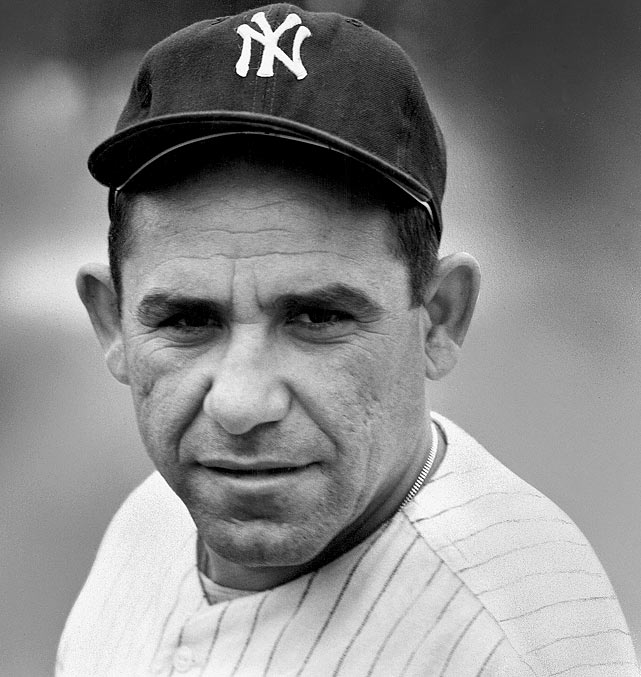
Most of you deep blue baseball fans already know the story of how Lawrence Berra came to be known as “Yogi.”

The Real Yogi Berra (c) John G. Zimmerman

The Real Yogi Berra
(c) John G. Zimmerman

Supposedly, he and best friend Joe Garagiola and some of their other buddies from “The Hill” Italian neighborhood in St. Louis went to a movie together back in the 1930s, as was their usual Saturday pattern when the change was available for tickets. . While they were there on this particular day, they saw one of those travelogue features that used be so popular back in the day – the kind of one-reeler narrated by John Nesbitt for a series they called “The Passing Parade.” It was a short subject serial on travel and historic events that ran from 1938 to 1949 and it was was tailor-made for the movie going public back in the pre-home TV days. – I only suggest that guess because I watched enough of these little shows myself down here in Houston during the post-WWII period of that era, I think I even saw the Indian yogi feature that altered Mr. Larry Berra’s identity forever too.

Berra and company apparently saw that one about mystics in India too. It showed a few examples of yogic teachers in India and gave the boys a “blue bayou” (blew-by-you) introduction to yoga and yogi teachers. I can just hear the walking-out-of-the-movie conversation now. It was just kids doing what kids do, but it was an interaction of ideas and words that would set in place the name of a future American icon.

Not knowing the actual names of the Berra buddies involved, I’ll simply have to give two of them fictional Italian first names and report how the conversation among friends plays out in my head. – Just one more note: Until this moment, Berra wa known as “Lawdy” to his friends. They called him “Lawdy’ because that’s the way his name sounded when expressed aloud by his Italian mother Paulina. She could not say “Larry,” the Americanized nickname for males hung with the “Lawrence” formal first name. When she tried to say “Larry,” it simply came out “Lawdy,” so that’s what the buddies chose to call him too. That is, until this date came along.

Here’s the way I hear it coming down. – Four Italian-American boys from The Hill in St. Louis are walking out into the bright July snlight from a  neighborhood movie house in St. Louis, Missouri.  It is 1938. The boys are all about 13-14 years old:

Luigi: “The movie was OK. – I like them Charlie Chan films.”

Lawdy: “Yeah, me too. I like the way they taped back that actor’s eyes to make him look Chinese.”

Joe: (tongue-in-cheek) “You mean to tell me that Charlie Chan ain’t no real Chinese detective, Lawdy? – Well, shoot! You could-a’ fooled me. I guess they got no Chinese actors out there in Hollywood.”

Mario: “I liked the short feature about India best. I liked the way them yogis just sat there, all still-like, just rolling their eyes back into all white cotton-looking balls.”

Luigi: “Yeah, I liked that too – but did you guys see what  I saw? – That one yogi looked just like old Lawdy here!”

Joe: “Oh, my Cardinal crab cakes be damned, Luigi Tomato Face! – You just nailed t! – That Indian yogi guy did – he looked just like our own little bashful Lawdy here! – From now on, let’s get off this hopeless “Lawdy” name and call our man by a word  that really fits him. Come on! Get with me on this one, guys! He’s “Yogi” from now on! – OK? – Yogi Berra!”

Lawdy: “OK by me, you guys,  but, Joe, first you gotta tell me something.- What the heck is a “Cardinal crab cake?”