Archive for the ‘Uncategorized’ Category

The Psychology of Losing

July 27, 2011

A Not-So Funny Thing Happened on the Way to the Future.

If you are member of the Astros baseball community, and I’m talking about everyone from players to serious fans here, you almost have to go through a disastrous season like 2011 to get a full handle on how much we all, even sportswriters, know about the psychology of losing. For example, how much have you heard lately from certain  pundits that, just as winning teams always find a way to win, losing teams always find a way to lose?

Makes brilliant good sense, right? All you have to do to fully appreciate the truth of that little axiom is to find your favorite club resting under the pointed end of the game outcome stick, game after game, day after day, night after night. It grows clearer and clearer. Yep! There’s Rule No. One in The Psychology of Losing Baseball Manual: (1) Losing clubs find a way to lose.

The next thing that happens with losing clubs sometimes gets set in motion a year earlier than their wins and losses demise. Once management sees that their club is overripe with age and expensive player contracts, they start trying to move these burdens away from the roster, if possible. The goal is to get something younger of value by way of trade before the heavy talent is simply lost to free agency or retirement – and to bite the bullet of acceptance that rebuilding means that losing may increase for a while with younger talent. Here comes the Bill Veeck Law that becomes our second rule of losing Baseball: (2) Get rid of the older players that your club can finish last without.

The next factor we all have to deal with in losing baseball is the double-edged sword of our sport’s long season. It is both our blessing and our curse. The long season in baseball gives a struggling team a lot of time and opportunity to come back (See New York Giants, 1951). The long season also gives a truly bad team a lot of time and opportunity to stink it up on the field.  (Look no further than our 2011 Houston Astros).

Jokes abound, Did we really need to give up rain and winning baseball during the same blistering hot summer?

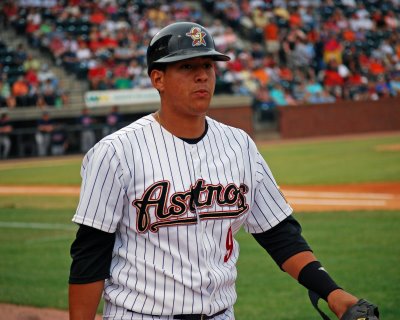
It’s the long season that leads to Rule No. Three: (3) Finding the face(s) of tomorrow’s hope and put him, or them, on the roster now. Can you spell Jose Altuve?  I can – and I also like what I see. Had he come up as a shortstop, rather than a second baseman, he would have reminded many of us even more of the reincarnation of  Phil Rizzuto – another symbol of winning during the long summer angst-night of our wailing discontent.

Rule Number Four is easy enough: (4) The worse we finish this year, the easier it gets to show improvement next year.  At this writing, the Astros are nursing a five-game losing streak, sitting on a won-loss record of 33-70, .320 winning percentage record. At this rate, the Astros are on track to finish at 52-110 and a record loss total in club history for a single season that includes their first dip into the century total for losses.

Rule Number Five only works if this season turns out to be an anomaly to our more usual experience of winning more than losing: (5) Grin and Bear It (for now).  The club has 59 games left to play in 2011. Because this kind of losing is abnormal for Houston, we are free to kid over the fact that the Astros would have to win 48 of their remaining 59 games to finish at .500 for the 2011 season.

If we are still in this same position this same time next year, none of us will be kidding. The continuation of losing at this level into a second year, without significant signs of improvement, will invite Houston baseball people into the sixth rule of losing baseball psychology: (6) Recurrently losing baseball clubs play to empty ballparks.

Except for aberrant places like Wrigley Field, most baseball fans in most other cities, including Houston, will not continue to support teams that show they are committed to losing baseball as a way of life.

Take heed, Mr. Jim Crane. What happens next is on your watch.
2005: "Where you ever as bad as these guys?" ~ 1998: "Never!"
Sandlot Memories Revisited

July 26, 2011

Tattered friend, I found you again, laying flat in a field of yesterday’s hope …

… Excerpt, The Pecan Park Eagle, 1993.

Today I had one of those once-in-a-blue-moon experiences that was unlike any other I can remember. I had call from 75-year old Cecil Holder.We had never spoken to each other before in our lives, even though we both grew up in the eastern part of the city and county. I’m from Pecan Park; Cecil is from Galena Park. he’s only two years older than me, but it was almost like receiving a phone call from myself to hear from him.

Cecil had called me after reading that Chronicle article about our SABR early Houston Baseball research project and simply wanted to share some of his own childhood experiences with baseball. It was almost like listening to someone who had lived out the alternate universe version of my own life. We both had had become hooked on the Houston Buffs and St. Louis Cardinals from an early age. Solly Hemus was our shared first hero in the game. Both of us hung out in Buff Stadium a whole lot. We just never met or talked until today.

The deja vu yes-it’s-me-again experience unfolded when Cecil tried to tell me about the trip he made to see the New York Yankees play the Houston Buffs at Buff Stadium in the spring of 1951. I was there too.

Cecil watched the Yankee-Buffs game from behind the roped-off fan section in left center field. So did I. We both are members of the rare surviving group 0f fans who got to see a game up close and in person that featured the great Joe DiMaggio in center field and the wonder boy kid named Mickey Mantle in right field. Cecil Holder and I witnessed the whole magical game a mere feet away from each other – but without ever meeting – just two Houston kids who would not make contact or talk with each other for another sixty years from that golden day in both our memories.

It made my day.- I even pointed out the irony. “Cecil,” I said, “if we had just grown up in the same neighborhood, we would have met and competed on the same sandlot a very long time ago – and probably have become lifelong friends.” Cecil just chuckled in agreement. “There’s no doubt about it,” he said.

Isn’t life weird?

Post Time by Clark Nealon: Duke Duquesnay

July 25, 2011

Sometimes it’s better to let those you wish to honor speak for themselves through a sample of their own work. Today I find that one past article from the Sunday, November 7, 1965 pages of the Houston Post speaks volumes for two men: It screams loudly for the time-and-energy-generous man it’s about – and it calls equivalent attention to the genuine sincerity and Houston-heart of man who wrote it.

Their names were Duke Duquesnay, Houston Youth Baseball organizer, and Clark Nealon, Houston Post sports writer supreme. Both men had great impact upon my generation of post World War II Houston kids and our attachment to the game of baseball – more than I could ever hope to cram into a single column by way of explanation. I’ll be content today to simply allow Mr. Nealon to tell the story for us.

Thank you, Mark Duquesnay, for sending me this column and other items about your late grandfather to me. He was a great man, as was the felllow who wrote this version of his story. Houston is the lesser today for both their absences.

Perhaps Houston;s most significant baseball career came to an end Wednesday night. P.E> (Duke) Duquesnay died in Saint Joseph’s Hospital after a long, game fight following a stroke on Oct. 8, and old and new friends paid final respects at services Friday to a 78 year-old energy, dedication to baseball and organizational ability who may have touched more male lives in Houston than any other.

For almsot 60 of his 78 years, Duke Duquesnay was a firm force at the grass roots of baseball in Houston. No, his wasn’t a Hall of Fame career as a pro. He didn’t get the acclaim of a major or minor leaue manager, the newspaper space in big headlines, and certainly never the complete honor due his untiring efforts.

Duke Duquesnay: 1907-1965; H for Houston; H for Heart; H for a Man at Home in Baseball.

 YOU SEE Duke didn’t operate at the top, glamorous level. Ol’ Duke worked at the greass roots, the, the amateur and kid baseball foundation of a game to which he gave a lifetime of day-by-day devotion.

From the time he came to Houston in 1909, mind you, until the last few months, Ol’ Duke worked with baseball and kids. Through at least three generations, over more than five decades, this kindly onetime railroad clerk devoted himself, and most of those around him, to keeping kids playing baseball.

Yes, from days when baseball was the only game – and it never was anything else to Duke – through yers when the hardest things for a baseball struck young fellow to get was a glove, a bat, a ball, and a place to play and and organized team. Duke used amazing promotional ability to provided these facets. Through wartime and finally into the the time of pplenty with Little League and the abundance of youth baseball, Duke was a big man at the small fry level.

PERHAPS THE POPULARITY of Little League and all other youth baseball of recent years was a fitting reward to Duke. We’ve always thought that if there was such a thing as a Baseball Hall of Fame to be constructed on a vacant lot on a Saturday morning, then such a shrine be most fitting to the lifetime crusade of Duke Duquesnay.

That was where Duke operated longest and best, a ball bag in oe hand, a few bats in the other and a string of small fry chattering behind him.

Ankenman, Moers and Guggenheim

In a hundred offices, conservatively among thousands of Houstonians, Friday, there was a keen, intimate memory of DUke and his passing. A large percentage of those men either got their start in baseball or athletics under Duke, or knew him well from competing against his teams.

Duke, for instance, was on the Houston baseball scene a year before Fred Ankenman, the longtime president of the Houston Buffs. And Fred paid Ol’ Duke one of the highest of tributes.

“DUKE DUQUESNAY MEANT more to youngsters and parents of this city than any other man I know of,” said Fred. “He worked unceasingly for baseball and kids in the same proportion. And he had so many ideas about ways and means to keep a youngster program going. He was doing so many things that are popular now when he was practically the only one had thought of them.”

Then there’s Bobby Moers, now a prominent Houston physician and surgeon., but back there in the 30s a kid looking for a game of ball in the Heights.

“Duke started me,” Bobby said Thursday. “We used to walk across a trestle over the bayou to get to a diamond he had out there. Duke provided the the bats and the balls, the team and found a place to play when all of them were hard to find. Duke did as much as anyone for Houston kid and amateur baseball.”

MOERS, OF COURSE, WAS ONE of Houston’s finest all-around athletes, easily could have gone on to major league status as a baseball players but for World War II and his choice of medicine as a career. But Bobby is only typical. Duke had so many (of) Houston’s standout ball players at a tender age – Marion Asbell, Bobby Runnels, Mike Schroeder, Emmett Fore, on and on, back through the years. So many, many. So many years and teams.

And right on through the tough years into the plenty of the post World War II seasons.

Alvin Guggenheim, past president of Rotary Club Activities, Inc. described Duke and his work:

‘I DON’T KNOW OF ANY three men who did as much for youth baseball in Houston as did Duke Duquesnay. The man’s dedicaiton, his organizational and promotional ability, his energy were amazing.”

‘What You Want Me To Do, Duke?’

Roger Jeffery and Duke worked together on PeeWee baseball for the smaller small fry, played against his kid teams at an early age. “I’ve know Duke forever,” said Roger, “as a worker for kid baseball. When he called, I got so I had a stock answer: ‘What do you want me to do, Duke?’ You knew he wanted you to do something for for kid baseball and you did it if you could because you knew DUke.”

PERHAPS THAT WAS DUKE’S top secret, besides dedication. He had an organization of the generations of kids he had started, given that memorable first chance..

And Duke, through his baseball, was a social worker before that term was invented as we now know it. A man of limited means himself, he specialized in areas where it was harder for kids to get a chance to play. And he specialized in benefits, too, including a ovel one with Ankenman one time when the goal shoes for needy kids, and they provided truck loads of them, new and used.

DUKE GOT SOME honors for his efforts. He was an Honorary Rotarian of the North Side Club in appreciation for his efforts when  Rotary International entered sponsorship of Little League. A Little League field is named for him. He was an assistant manager of Houston’s Little League National Champs in 1950, and he was presented (with0 the keys to the City of Houston in a ceremony in appreciation of his long work.

Reward Was in the Doing

In our experience, Duke was unique for dedication and length of that dedication, and for the fact that, to him, there was only one season, baseball, 12 months of the year. For no other have we witnessed as many baseball notices. In the spring, baseball notices for Duke filled a letter-size page for every week end — teams in all divisions, supporting organizations, etc. He once had the Dukettes, a pep squad for girls of Little League age. ANother time time he had a complete team of lefthanders. Name it. Duje had it. For baseball.

DUKE, IN THE 30 YEARS we knew him, never asked for anything for his own benefit, on any angle. He never used a ball player nor his baseball prgrams for personal reward tp our intimate knowledge. Duke’s reward was in the doing.

In the past few weeks, as the years took their toll, you missed the almost daily calls and the greeting:

“Duke, talking.”

There won’t be any more calls now, but the memory of the man won’t e forgotten. By thousands of Houstonians whose lives he touched. From Saturday morning on the vacant lot until right now.

Where Are The Young Blacks in Baseball?

July 24, 2011

Rube Foster, Founder of the Negro National League in 1920.- How many people remember who he was and all he did for baseball? It got him into the Hall of Fame.

In an article entitled, “Relief Pitch,” Didier Morais does an outstanding job of looking at local attempts by the Houston Astros and black community baseball coaches and leaders to revive interest among young people of the inner city. I could not find a link to the same piece at ChronCom online, but the story simply jumps out at you from the front page of the Sports Section in today’s Sunday, July 24, 2011, Houston, Chronicle. For those who care anything about the future of baseball and the opportunities that exist in the sport for gifted young athletes who give themselves a chance at the game, the article alone is worth the price of today’s newspaper.

Morais talks with black coaches, community leaders, and successful players like Michael Bourn – and he comes back with some pretty chilling conclusions. Before the current effort of clubs like the Astros to revitalize inner city playing fields, young people were turned off by the poor condition of baseball fields and the general disinterest in the game among those who comprise the inner city community.

How did we go in a single half century from a nation that celebrated Jackie Robinson breaking the color line to one in which growing numbers of young people hardly, if at all, remember Jackie Robinson, what he did, what segregation was about, and how the Negro Leagues once rose up as a defense against racial hatred and spite. Young blacks once wanted to play baseball in great numbers, but they were ignorantly barred from organized baseball since the 1880s because of their skin color. So, people like Rube Foster and others got behind a movement to build the Negro Leagues – a place where qualified black athletes who loved the game could also play the sport on a professional basis.

When Jackie Robinson stepped on the turf at Ebbets Field in 1947, he opened the door for all young blacks with the skills and fighting desire for baseball success to do the same. And for a while, `young blacks responded accordingly.  Their appearance on major league rosters was only held back by the white owner belief that they could control the flow of talent as though it were water from a faucet.

Cream rises. It will not be held down by artificial boundaries or quotas. Within five to ten years of the 1947 Robinson Year, the Negro Leagues were effectively dead. No longer tied to segregated baseball, any black player worth his professional salt was now playing in the formerly all-white ranks of organize baseball.

Then things changed.

Somewhere in the late 1960s and early 1970s, professional football took over as the favorite media sport of American sports fans. Right the success of the NFL came the appeal of the NBA to inner city fans. In effect, football and basketball were both embraced as faster, more exciting, modern, and not boring. Baseball was pretty much written off as too long, too boring, and too complicated for people with short attention spans.

Houston produced a couple of fine young black prospects for the 21st century in Carl Crawford and Michael Bourn, but not much else since that time – as has been the case in most urban areas.

The Astros are doing a wonderful job through their Astros in Action Foundation of building or refurbishing a field per off-season that will then be out in service the following year in inner city neighborhoods. They are also working with governmental and community groups to provide qualified mentors and teachers and equipment to the effort. The June 2011 of the Jimmy Wynn Baseball Training Center at Sylvester Park on Victory Lane in the near north side is a shining example of that effort. The rest is up to the coaches, parents, and caretakers of the Jackie Robinson message to support and try to get across the full message of the Civil Rights Movement and what it means to be free and equal members of this place we call America.

Baseball is not just a great sport. It is a torch of all those old times, for better and worse. When baseball was denied to some of the people because of racism, like water finding its own level, baseball found a way in to the basin of every open heart and community. And it didn’t simply show up as a “right” that we got with no further service to effort. We played the game with a “responsibility” to make the most of every play on our hopeful ways to becoming all we could be.

If I were a black grandfather today, and my sweet little grandchildren had never felt the direct sting of outright racial hatred, I might want to leave that old bone buried in the backyard too, except for one thing. A larger part of me would hope to pass on some awareness to my grandchildren of how fragile things are in this crazy world. We need to trust others, but we need to trust ourselves too. And trusting ourselves hinges upon an open and honest memory of where we each came from – and a commitment of action to where we are going in life on our own steam.

Baseball is a game that teaches both trust in others and trust in yourself. If you don’t trust others, you cannot win the long haul of the long season that baseball requires. And, if you cannot trust yourself, you cannot hope to ever become all the player you might otherwise grow to be.

There’s another Willie Mays, Hank Aaron, Satchel Paige, or Josh Gibson out there somewhere, but we’ll never know it unless more young blacks become motivated enough to see the advantages of  baseball over football or basketball. Unlike football or basketball, there are few places to hide your mistakes in baseball. They are right out there for the whole world to see.

Let’s hope that efforts like the Houston program will make some dent of progress on the national level of attracting more young black athletes to the game of baseball.

Chick Hafey: Rifle Arm of the ’24 Buffs

July 23, 2011

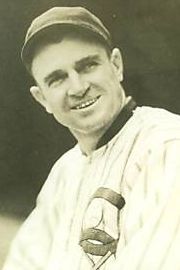
Chick Hafey

21-year old Chick Hafey (BR/TR) shined as a line-drive slashing, rifle-armed outfielder for the 1924 Houston Buffs, hitting .360 in his single season in our town. He was edged out for the Texas League batting championship that year, but he still was well on his way to becoming the first shining example of Cardinal GM Branch Rickey’s genius for the general farm system way of player development. – Because he saw the greater potential in his bat, Rickey had shifted Hafey from an amateur level pitcher to a professional level outfielder in 1923, his first season in the game. Hafey’s .360 full season mark with the ’24 Buffs just made the case for Rickey’s aspirations.

Other than another partial season in 1925 at Syracuse, Chick Hafey was on his way to a very successful major league career with the St. Louis Cardinals (1924-31) and the Cincinnati Reds (1932-35, 1937). Hafey was a member of two World Series Champion Cardinals teams in 1926 and 1931.

From 1928 to 1930, Hafey averaged 27 home runs and 114 RBI per season. In 1931, he won one of the tightest NL batting title races of all time, His .349 BA in 1931 edged out Bill Terry of the Giants by .0002 points and Cardinal teammate Jim Bottomley (also a former Buff) by .0007 percentage marks. – How close was it? – Hafey had to get a hit on his last time at bat of the season to win it all. And he did.

Hafey developed as the kind of line-drive hitting slugger that Rickey hoped he would become, leading the National League in slugging during the 1927 season with a .590 mark. Even then, however, he was starting to have visual problems from all the beanings he had taken in 1926 from pitchers who perhaps saw the closer-than-brushback pitch as their answer to the quiet young man who dug in against them.

Hafey started wearing glasses as a result of the changes inflicted upon his eyesight. He was only the second big leaguer to wear glasses on the field on a regular basis (Specs Toporcer was the first.) and only the first of two future Hall of Famers (Reggie Jackson would be the second.) to wear glasses as a player.

Chick had some memorable moments. In July 1929, Hafey tied a National League record by racking up ten hits in ten consecutive times at bat. In August 1930, he hit for the cycle. In 1933, after being traded to a last place Cincinnati club in 1932 as a punishment for giving Branch Rickey so much trouble in annual salary negotiations, Hafey was chosen for the first All Star Game and then went out and delivered the first All Star Game hit in history.

Hafey batted .344 in an 83-game partial season for the 1932 Reds, but vision issues and serious sinus problems were starting to seriously limit his playing time and his effectiveness. fifteen games deep into the 1935 season, Hafey retired. He laid out the 1936 season before making one weak attempt to come back in 1937. That last hurrah of 89 games resulted in a .261 final mark and a permanent goodbye as an active player.

At 34, Chick Hafey was done, retiring from the major leagues with a career BA of .317 and a career SA of .526 BA.Hafey had 164 career HR and 833 RBI to go with his 1.466 career hits.

In 1971, former Houston Buff outfielder Chick Hafey was inducted into the Baseball Hall of Fame.


Carey Selph: A Great Houston Buff in His Time

July 22, 2011

Carey Selph: 1929.

           Carey Selph was an exceptional minor league ballplayer, He also was one of the guys who often falls in the cracks of our collective memory and history of the old minor league Houston Buffs. As both a player and then a playing manager, little infielder Selph just did his job with little flair, a long time ago, away from the brighter lights of the major leagues, and prior to the era of an all-consuming media presence that was thirsty for a 24/7 storyline.
            The 5’9″ 3rd baseman/2nd baseman from Donaldson, Arkansas broke into professional baseball in 1926 at the age of 24, signing as a free agent with the Fort Smith Twins of the Class C Western Association.                After spanking the pitchers of that league for a .368 BA in 141 games, Selph’s contract was sold to the St. Louis Cardinals, who immediately shipped him up to the Syracuse Chiefs of the International League, where Carey finished off the 1926 season by hitting .292 in 18 games.
               Selph batted .309 in 129 games for the 1927 AA Syracuse club. The Cardinals were riding high in World Series talent in those days and Selph quickly became of those loaded guns in the minor league talent pipeline. Instead of bringing him up the following year, the Cards assigned Carey Selph to the roster of their 1928 Houston Buffs farm club in the Class A Texas League. Selph got there in time to help open the brand new Buff Stadium as the 2nd baseman and to work for a Houston pennant winner that also played in and won the city’s first Dixie Series championship. Carey Selph batted .312 with 6 HR in 153 games in 1928. This time, his performance was enough to get him a call to the roster of the 1929 MLB Cardinals.
               Too bad. Playing behind Frankie Frisch at 2nd base in 1929, Carey Selph got into only 25 games and didn’t fare well at the plate as a seldom used big leaguer. He hit only .235 with no homers on the year and was sent back to Houston for the 1930 season.
                Back at 2nd base as an everyday player, Carey Selph hit .342 with 6 HR for the 1930 Buffs. Back again as the keystone baseman for the 1931 Buffs of Dizzy Dean-Joe Medwick fame, Selph agin hit well, batting .322 with 3 HR for a club that won the Texas League pennant before surprising the world of Texas League fans by losing the Dixie Series to the Birmingham Barons.
                Selph’s work at Houston got him drafted off the Cardinals’ minor league roster by the Chicago White Sox, providing the hustling Arkansan with a chance to play everyday in the big leagues for the first and only time. Playing mostly at 3rd base for the 1932 Pale Hose, Selph batted .283 with no homers and 51 RBI. All it got him was a deal that sent his contract back to the Cardinals, who promptly sent Selph back to Houston in 1933 as the playing manager of the Houston Buffs.
                 Selph did more than OK in his new 1933 role. He played regularly as the 2nd baseman, hitting .310 with 6 HR, while also managing the Buffs to a first place record of 94 wins against only 57 losses. Unfortunately, the ’33 Buffs hit a pothole in the first round of the Texas League playoffs, losing a 3-game sweep to the San Antonio Missions, the eventual Texas League pennant winners.
Carey came back as a playing manager for the 1934 Buffs. Again playing regularly, Selph batted .323 with 2 homers, but the club slipped into a malaise of mediocrity, fishing in 6th place with a 76-78 won-loss record.
                  For reasons that are neither clear to me nor immediately available for explanation, 1934 was the end of the road for the baseball playing career of Carey Selph, but he continued to live in Houston until his death in January 1976 and was quite active in the various activities of the former big leaguers who claim our city as their adopted home.
                   Carey Selph’s minor career batting average, from age 24 in 1926 through age 32 in 1934 was .327 with 49 career homers. His productivity was not totally forgotten. In 2007, the Texas League elected Carey Selph into the Texas League Hall of Fame.
                    Congratulations, Carey Selph! Thank goodness a man’s record over time often grows loud enough to almost speak for itself  – as long as  a few good historians are also out there paying attention to who may have fallen through the cracks of proper recognition on the wall of the ages. The Texas League obviously had some people looking out for the memory of Carey Selph. Thank you too for making sure that Carey Selph got his just due as one of the great Houston Buffs in Texas League history.

Thank You, Houston Chronicle!

July 21, 2011

SABR Project Nicely Covered in July 20th Houston Chronicle

The SABR sponsored Early Houston Baseball History, The First 100 Years, 1861-1961 Project received a very nice full coverage in the July 20, 2011 edition of the Houston Chronicle yesterday. The article by Todd Hveem, with photo, appeared on Page 8 of the July Senior Living section of the paper and did an excellent job of describing this work as “a legacy project … something we (the researchers) want Houston’s children to own as part of their local heritage.”

There were a couple of factual errors reported that we hope to correct as quickly and as much as possible:

(1) The Houston Buffs did not become a minor league farm club of the St. Louis Cardinals on April 11, 1928. That was the date that the Buffs played their first Opening Day game in the shiny new Buff Stadium that had been built for them by the same major league club that already had owned them for several years, the St. Louis Cardinals; and,

(2) The first black player to break the color line and play for any previously all-white professional sports team in Houston was Bob Boyd – and not Bob White, as somehow reported in the Chronicle piece. It happened at Buff Stadium in May 1954.

Honest errors. Standing in need of further correction. This mention is my contribution to that end.

This morning, I heard from Mark Duquesnay, the grandson of Duke Duquesnay, one of the 1950 founders of Houston’s Little League program. Mark will be sending us some photos and material about his grandfather and that early effort. He had to find me through a Google search with some of the clues about my identity that were included in the Chronicle article, but not spelled out with a phone number or e-mail address.

The irony is this: I’ve never met any of the Duquesnays, but I remembered Mark’s grandfather as clearly as if it were yesterday. I was one of the five hundred kids who showed up at Canada Dry Park on the Gulf Freeway to try out for one of those few precious spots on the eight first year teams that had been set up to serve all of Houston, which even in 1950 was a city of over 500,000 people. I didn’t make it onto one of the teams, but I did remember Duke Duquesnay as the man who broke the news to us gently that we were going home without an assignment, but he left us with a strong word of encouragement to try again the following season.

None of my neighborhood pals made it either, but we didn’t wait until next year to try again. We went straight home to formalize the name of our sandlot club as the “Pecan Park Eagles.” We then recruited the 25-year old college age son of a neighbor to be our coach and then lined up three other Pecan Park groups to play against us in a league of our own kid-driven creation. Even though several of us melted into more adult-organized leagues by 1951, the 1950 Year of the Pecan Park Eagles remains my favorite childhood baseball season.

But I digress.

Those of us in the Early Houston Baseball Project would like to hear from you too. Duke Duchesnay may have been the most important figure in Houston’s early Little League history, but he may have missed him completely had it not been for the passion and persistence of his grandson reaching out to find me.

Now, I hope you hear me screaming at you here! – If you too have an ancient Houston baseball connection to Little League, Amateur or Semi-Pro Ball, Women’s Baseball, High School, College, or local Black Baseball history, even if it’s just an old photo or scrapbook, please get in touch with us through me and I will ask one of our research team members to contact you.

I’m Bill McCurdy, the project director for SABR (Society for American Baseball Research) in this matter, and I can be reached through my cell phone (713.823.4864) or through my e-mail address (houston-buff@hotmail.com).

And in conclusion, for now,  as Elvis would say: – “Thank you. – Thank you very much.”

Astros 2012 Opening Day Lineup?

July 20, 2011

Corpus Call Up of Jose Altuve May Image Opening Day 2012 Lineup.

I have to admit to some renewed interest in seeing another 2011 Astros game with the call up of second baseman Jose Altuve from Corpus Christi yesterday. I felt really good about the trade of Jeff Keppinger for a couple of pitchers from the San Francisco Giants that may may do us some good in the near future. “Kep” was a good player, but he had no future with a club that is only now really getting started on the long road to competitive recovery. General Manager Ed Wade’s move also opened the door for little 5’7″ Jose Altuve, the “hittingest fool” in minor league baseball, to join the Astros and play out this otherwise dead season showing and learning what he can do as a major league second baseman.

I like that strategy., Mr. Wade. I like it a lot. Besides, what’s the alternative? Playing out this losing hand with expensive veterans and no chance for recovery? I don’t think so. When you wake up one morning and see that a 30-game win streak won’t even get you to .500 ball in late July, it’s time to do something else..

Based upon a limited continuing application of this same formula, the following is a potential 2012 Opening Day lineup we may see next year:

2012 Houston Astros, Opening Day

Michael Bourn, cf

Jose Altuve, 2b

Jason Bourgeois, lf

Hunter Pence, rf

Brett Wallace, 1b

Koby Clemens, 3b

Jason Castro, c

Jiovanni Mier, ss

Jordan Lyles, p

The problem is – we don’t really know how far Masseurs. Jim Crane, Tal Smith, and Ed Wade are prepared to go with this pare down on age and payroll for the sake of rebuilding around affordable, gifted youth. “Gifted” is an important component to that strategy. The club cannot afford to simply put young guys out there. Houston fans assess quickly “who’s got talent and who does not” and they won’t come watch for long in numbers if the young guys don’t fairly quickly show that they can cut it.

The second factor is the club’s unmovable veteran payroll – and we all know we are talking Carlos Lee here. Lee is a good guy, but a deficit to any real plan for change. Wish we could find a 2011 playoff competitor who grew desperate enough to deal for him now and take something of the 2012 portion of his salary off the Astros hands too. I say, if the opportunity arises, deal him if you can find another club to take on any part of his salary on the balance of this year and next. If we have to pay him, anyway, let’s pay him to be somewhere he least hurts the youth movement.

The next question is: Are Hunter Pence and Michael Bourn also available for trade? We are getting a lot of rumor-writing about Pence out here. If it were me, Hunter Pence is the one veteran I would work like crazy to avoid training. Hunter Pence is the best player we’ve got, the embodiment of the new Houston Astros, and a guy whom the fans love. We would have to get two or three can’t miss prospects to make trading him worthwhile, but his loss would still reverberate in immeasurable ways to all areas of the franchise. I’d prefer to see the Astros rebuild around Hunter Pence rather watch them try to do it without him.

Michael Bourn is another matter. Second to Pence, our gold glove center fielder is a keeper, but, at what cost? He signed with agent Scott Boras prior to 2011, posing the obvious question: What’s it going to cost to re-sign Michael next time? Michael isn’t worth a franchise hold up on the level that Scott Boras likes to play things. If we lose Bourn, we’ve always got Jason Bourgeois.

I like the rest of that youthful lineup – and I like it with Pence and Bourn even better as the “veteran” anchors, if possible. I replaced Chris Johnson at 3rd base with Koby Clemens because I haven’t been very impressed with Johnson’s adjustments as a hitter to the adjustments that big league pitchers have made to him – nor am I fond of  Johnson’s defensive skills. The other thing is – I think it’s time to give Koby Clemens a shot at showing what he can do as a major league bopper – and you have to play him somewhere to make that audition possible.

Jiovanni Mier is my only dubious pick. I don’t know if the guy is ready, but, if not him, we need to put some young shortstop prospect out there who’s got a chance at being a superior fielder, but a much better hitter than Adam Everett or Tommy Manzella.It would be nice if could stumble upon the next Derek Jeter, if there is one.

At any rate, this is my first throw rug take on 2012.

What do the rest of you think?

Top All Time MLB Clubs by Season Record

July 19, 2011

1906 Chicago Cubs: Best. Record. All Time.

The Top All Time Major League Clubs by Season Record

Rank Franchise League W L Percentage Finish
1. 1906 Chicago Cubs NL 116 36 .763 Lost 1906 World Series
2. 1902 Pittsburgh Pirates NL 103 36 .741 National League Champions
3. 1886 Chicago White Stockings NL 90 34 .726 Lost 1886 World Series
4. 1909 Pittsburgh Pirates NL 110 42 .724 Won 1909 World Series
5. 1954 Cleveland Indians AL 111 43 .721 Lost 1954 World Series
6. 2001 Seattle Mariners AL 116 46 .716 Lost 2001 ALCS
7. 1927 New York Yankees AL 110 44 .714 Won 1927 World Series
8. 1886 Detroit Wolverines NL 87 36 .707 2nd place in National League
9. 1897 Boston Beaneaters NL 93 39 .705 Lost 1897 Temple Cup
10t. 1907 Chicago Cubs NL 107 45 .7039 Won 1907 World Series
10t. Philadelphia Athletics AL 107 45 .7039 Lost 1931 World Series
12t. 1887 St. Louis Browns AA 95 40 .7037 Lost 1887 World Series
12t. 1998 New York Yankees AL 114 48 .7037 Won 1998 World Series
14. 1939 New York Yankees AL 106 45 .702 Won 1939 World Series

In a season that finds us Houston baseball fans looking at our 2011 Astros joining the ranks of the worst baseball clubs of all time, it helps to divert some attention to the clubs that have historically done the best in our sport’s history. Even a cursory look at the top fourteen clubs of all time is quite interesting.

The first fact that jumps out at me is the fact that most of these leading record clubs played a long time ago, when there apparently was far less team parity in the long ago player-buried era of the reserve clause. Eleven of the clubs on our list played prior to 1940 – and only two clubs, the 2001 Seattle Mariners and the 1998 New York Yankees, performed during the current era of free agency.

The Chicago Cubs also standout for all of their early success in the game. Three of their clubs make the list at rank positions number 1, 3, and a tie for spot 10. Those 1887 Chicago White Stockings were not the American League White Sox of today. The 19th century NL Pale Hose were simply an earlier identity of the current Cubs organization.The 1908 Cubs didn’t make the list, but they followed the World Series losing ’06 Cubs and ’07 winning Cubs with another victory in the 1908 World Series – and the last World Series title in Chicago Cubs history.

The arguably greatest club in baseball history, the 1927 New York Yankees, ranked only 7th on the all time best season record list, but many say that the 1939 Yankees, ranked 14th on the all time best  season record list, were really the best quality ball club ever. both of these clubs waltzed to victory in their respective World Series ventures – nd the other Yankee club shown here from 1998 also won theirs.

That best result at season’s end wasn’t true for most of the best record clubs. Eight of the fourteen best record clubs ended up losing their chance for universal dominance in the years they played by coming up short in either the modern World Series or the championship series that passed for same in the 19th century. The 1902 NL champion Pittsburgh Pirates stand among the winners in a year that offered no further opportunity to play broader championship acclaim. The current World Series system did not start until the following year. The 1903 Pirates would get there, but they would lose that first one to Boston of the American League.

Interesting to note too that the year 1886 produced two of the clubs on our greatest records team list. The 1886 Chicago club and the 1886 Detroit Wolverines, both of the National League, made the list at positions 3 and 8. Altogether, four of the fourteen clubs on our list are from the 19th century.

The club I remember best from this list is the one that played so well into the adolescence of my personal history as a baseball fan. I remember thinking of the 1954 Cleveland Indians as one of the greatest clubs I ever watched (on television). They had that incredible pitching staff of Early Wynn, Bob Lemon, Mike Garcia, Art Houtteman, Hal Newhouser, and Bob Feller – plus sluggers like Al Rosen, and Vic Wertz, and great hitters like Bobby Avila, Larry Doby, Al Smith, and Dale Mitchell, plus a brilliant defensive catcher named Jim Hegan and a wise old manager named Al Lopez. And still – they lost the World Series.

The 1954 Cleveland Indians went out there and got swept in the World Series by the New York Giants. Slugger Vic Wertz even kicked in one of baseball’s biggest photographic moments by crushing that long blow to deepest center field in the Polo Grounds that Willie Mays turned into “The Catch.”

I have to give the 1954 Cleveland Indians credit for teaching me one of life’s most valuable lessons. It was so clearly stated that even this buried-in-the-boondocks-of-minor-league-Houston teenage fan could get it – or, at least, some of it – the part that applies to baseball:

Life’s short. Learn quick.

There’s no such animal as a sure thing.

Never take anything for granted.

Baseball Today, If There Had Been No Expansion.

July 18, 2011

Major League Baseball in 2011 includes 30 teams. 16 of these clubs play in the National League and 14 play in the American League. Back in 1953, MLB consisted of only 16 original franchises in both leagues altogether and had not changed since 1902, when the original Milwaukee Brewers moved to the midwest and became the St. Louis Browns,

The years following World War II produced ” a new ballgame” for the sport. With increased prosperity, expanding leisure hours, migration of the population west and south, competition from new commercial diversions, and the increased mobility that came from new highway construction and commercial jet plane travel, baseball began to cast off the skin of sameness that it had worn for over a half century.

By 1953, change in the basic order of Major League Baseball had become desirable, practical, and necessary. Just weeks prior to the start of the 1953 season, the Boston Braves of the National League moved to the midwest to become the Milwaukee Braves. The following season, the St. Louis Browns of the American League moved east to become the Baltimore Orioles.

MLB franchise owners were just getting warmed up.

In 1955, the Philadelphia A’s of the American League moved to the midwest to become the Kansas City Athletics.

Heels cooled for two seasons, but the big thrombosis to original site stability was coming hard and fast. In 1958, in the boldest, first ever dual franchise shift in MLB history, Brooklyn Dodgers and the New York Giants of the National League moved to the west coast to become the Los Angeles Dodgers and San Francisco Giants, respectively.

The next original franchise shift came with a twist. In 1961, the Washington Senators of the American League moved to the midwest to become the Minnesota Twins, but they dared not abandon our national capital to a cold bed. The American League remedied the potential for backlash from Congress by creating a new expansion franchise club, also now called the new Washington Senators. Plus, to keep things even and to build their own beach head in the west, the American League created a tenth franchise called the Los Angeles Angels for play in 1961.

In 1962, the National League evened the numbers score by fielding two new franchises of their own: The Houston Colt .45’s and The New York Mets.

Several other shifts and changes have occurred since 1962, including the Braves moving on from Milwaukee to Atlanta – and the Athletics moving on from Kansas City to Oakland, plus various other expansion changes that have almost doubled the original long-term number pf major league baseball teams from 16 to 30.

In a playful mood this morning, one that frequently visits me, I thought it might be interesting to see what the two leagues would look like if they had been allowed to shift, but not expand their memberships from the original eight clubs that made up the major leagues through 1952.

Here’s what they would look like today:

AMERICAN LEAGUE

Baltimore Orioles

Boston Red Sox

Chicago White Sox

Cleveland Indians

Detroit Tigers

Minnesota Twins

New York Yankees

Oakland Athletics

NATIONAL LEAGUE

Atlanta Braves

Chicago Cubs

Cincinnati Reds

Los Angeles Dodgers

Philadelphia Phillies

Pittsburgh Pirates

Saint Louis Cardinals

San Francisco Giants

It doesn’t take long to see that franchise relocation alone would have fallen far short of baseball’s need to keep up with the growth and shift of the nation’s population. Oakland would have been the only AL club on the west coast – and that would have been an economic disaster for the league.  Atlanta would have been the only southern city in either big league – and would have been uncool as well.

No, it took adding our Houston Astros and all those places that dribbled big league ball into the desert, mountain, and southern hinterlands to make this thing work as well as it does. Let’s just keep it up.

And on another frivolous note, but one that rankles me nonetheless: The next time MLB adds a franchise team, can we get someone to coach the innocent new owners away from these wrap-around nicknames like “Diamondbacks” and “Devil Rays”? Those also get shortened in the media to wheezy nicknames Like “D Back” and “D Rays”. At least, the Tampa Bay club had the sense over time to shorten their monikers to simply “Rays”.

While they are at it, also get MLB to discourage the adoption of regional or state identities as their formal franchise names. Four of our current clubs could be building a much truer identity today as the Denver Bears, Phoenix Firebirds, Miami Marlins, and the Anaheim Angels – had the game insisted they be themselves from the start.