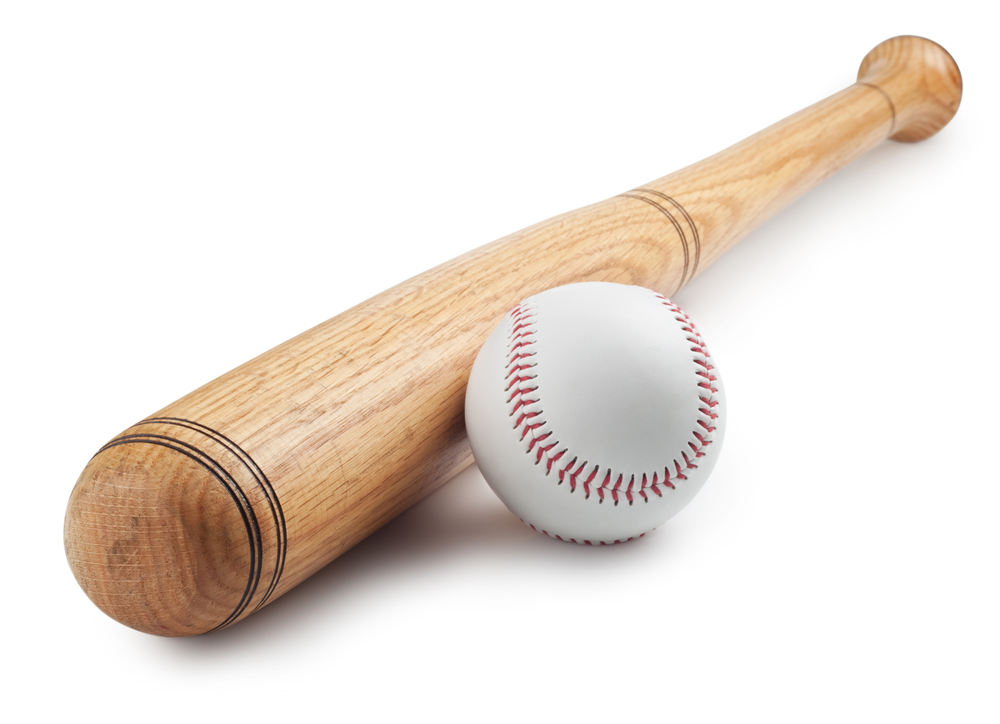
When bat meets ball, so many things may then happen. Over the years, we have never run out of words to describe all the very different results that are potential to that simple fulcrum point of all baseball games.
The Forever Unfinished Lexicon of Baseball Hits
Baltimore Chop: Originated by the turn of the 20th century Baltimore Orioles, it was a ball that a batter intentionally hit down upon at the plate for the purpose of creating a bounce that was high enough to get him to first before the ball came down and could be thrown to first base in time to beat him out of a single, while advancing all runners. It was a popular strategy when the Orioles had a runner on third base. – Mark Wernick, 7/03/15.
Blue Darter: a streaking fast, freaking hard, almost invisible-to-human sight line drive that usually is only catchable by luck or reflex, especially by pitchers, who see more than their share of these motoring missiles up the middle.
Board Rattler: a hard crashing double or triple that rattles the boards of the outfield fence from the force of its blow.
Can of Corn: just as it metaphorically suggests, it is a lazy fly ball to the outfield that should be as easy to catch as opening a can of corn for the dinner table.
[also] “The phrase [Can of Corn] is said to have originated in the nineteenth century and relates to an old time grocer’s method of getting canned goods down from a high shelf. Using a stick with a hook at the end, the grocer could tip a can so that it would fall for an easy catch in his apron.” –Glossary of Baseball.- Tom Hunter, 7/02/15.
Dribbler: a ball that rolls down the baseline like the last drop of water from your garage apartment kitchen faucet after service at your graduate school pad has just been cut off due to a delinquent utility bill.
Infield Fly: [primary] an infield pop fly with 0 or 1 outs with a runner or runners in force-able position in which the batter is declared out to prevent the infielders from allowing the ball to drop for the sake of starting an easy double play to end the evening. [secondary] When the Astrodome first installed AstroTurf in its infield by sections that zipped into connected contact with each other, Mickey Herskowitz of The Houston Post gave this term its forever much funnier secondary definition. Mickey wrote that “now Houston’s Astrodome has the only built-in, infield fly in professional baseball.”
Infield Fly Rule Clarification: “Bill, that is a nice glossary. Thank you for compiling. I do think the infield fly definition needs additional clarification. As you, and most of your readers know, the infield fly rule applies with less than two out and multiple runners in a force situation – i.e. with runners on first and second or with the bases loaded. It does not apply if there is only a runner on first because it is presumed the batter will reach first base safely if the ball is not caught and therefore no double play will result.” – Tal Smith, 7/02/15.
Line Drive: a hard hit ball, hit on a line, but without the power to reach the wall or leave the park. It may result in either a catchable fly ball or a hit of some kind, dependent upon where it travels, relative to where the defense was playing the batter.
Moon Shot: [primary] a ball hit so high that it often evokes broadcasters into saying something like “this should be an out, if it ever comes down.” [secondary] any home run by former major leaguer Wally Moon.
Pop Fly: the infielder’s version of an outfielder’s can of corn.
Pujols: another variation of the Ruthian Rainbow Drive. This one is hit by an opposing player in the ninth inning and has the effect of crushing the hopes and dreams of the home crowd (though sometimes that effect can be temporary). – Rick B. 7/02/15.
Punch and Judy Hitter: (also a description of the kind of base hit struck by such a batter, i.e., a “punch and judy single”) the term describes a hitter that slaps the ball to all fields with no power. – Mike Mulvihill, 7/02/15.
Rainbow Drive: a Ruthian rainbow arching home run shot that everyone, with the probable exception of Ty Cobb, has enjoyed since Babe Ruth himself made them popular back in the 1920s.
Rammycackled: as when a ball is crushed, usually for long distance or at a great speed. “He rammycackled that ball to deep left field.” Can also be used to describe savagely hit line drives, whether caught or not. – Greg Lucas, 7/02/15.
Rope: a hard hit line drive that leaves the bat on a low, but gradiently ascending trajectory that clears the up-stretched glove of an infielder the size of Jose Altuve before it rapidly reaches and rises over the outfield wall before climbing to its landing spot in the second level deck of the bleachers as a home run. The difference between a rope and an ordinary line drive is easy to describe: Line drives are catchable. Ropes are not.
[also] Dizzy Dean referred to Ropes as “Frozen Ropes”. – Tom Hunter, 7/02/15.
Seeing Eye Single: a ground ball base hit through the infield that seems to happen as the result of this baseball’s power of sight and acute peripheral vision for the sake of avoiding capture on its roll to safety between two crossing infielders.
“Stick a fork in him, he’s done”: bad if you hear that from your opponents dugout while pitching. – Mike Mulvihill, 7/02/15.
Texas Leaguer: a softly hit parabolic fly ball that lands just beyond the reach of a retreating infielder and just short of a catchable reach by a charging in outfielder, and as a result, kissing the grass safely in descent for a base hit.
Toy Cannon Shot: pretty much the same as the Ruthian Rainbow Drive, but former Houston favorite Jimmy Wynn holds the trademark on this one.
Worm Burner: a hard hit ground ball that singes the grass and dirt on its lickety-split g-force journey through the infield to the outfield, and in the process, sizzling all the near surface worms on its heated path.
Wush Pitch: one a pitcher threw up there and wush he hadn’t. – Tom Hunter, 7/02/15.
____________________
The above list will do for starters. There are many others, of course. If you care to add any, please leave your favorites by name and definition as comments on this column and, unless they are duplicates of names already on the list, we shall add them to the above Lexicon with credit to you as the contributor. – Just keep it clean and complete with a definition. We will not use bad taste words or descriptive phrases without a coherent definition of what it means.

 The Pecan Park Eagle
July 2, 2015 at 12:11 pm |
Pujols: Another variation of the Ruthian Line Drive. This one is hit by an opposing player in the ninth inning and has the effect of crushing the hopes and dreams of the home crowd (though sometimes that effect can be temporary).
July 2, 2015 at 12:14 pm |
Sorry, I meant Ruthian Rainbow Drive, of course. I believe Pujols’ shot off Lidge is still in orbit, occasionally banging into various satellites.
July 2, 2015 at 12:54 pm |
I’ll never forget that moment. Deafening pandemonium turned into a soundless vacuum in a nanosecond . From my seat in the stands you could hear Pujols’ feet padding on the baseline dirt as he trotted into home plate. It was extremely eerie to hear tens of thousands of people go from a roaring din to utter silence so suddenly.
July 2, 2015 at 1:38 pm |
Rammycackled: As when a ball is crushed usually for long distance or at a great speed. “He rammycackled that ball to deep left field.” Can also be used to describe savagely hit line drive whether caught or not.
July 2, 2015 at 1:57 pm |
Have a couple to add.
” stick a fork in him, he’s done.” Bad if you hear that from opponents dugout while pitching.
“punch and judy hitter. ” describes hitter that slaps ball to all fields with no power.
I have another that goes with “worm burner,” but would not pass censors.
July 2, 2015 at 2:33 pm |
“The phrase [Can of Corn] is said to have originated in the nineteenth century and relates to an old time grocer’s method of getting canned goods down from a high shelf. Using a stick with a hook at the end, the grocer could tip a can so that it would fall for an easy catch in his apron.” –Glossary of Baseball.
I remember seeing this when I was a kid, and the cans of corn were short, generally the size though not the shape of a baseball.
And Dizzy Dean said “Frozen Rope” as well as “Wush Pitch,” one a pitcher threw up there and wush he hadn’t.
July 2, 2015 at 5:27 pm |
Bill, that is a nice glossary. Thank you for compiling. I do think the infield fly definition needs additional clarification. As you, and most of your readers know, the infield fly rule applies with less than two out and multiple runners in a force situation – i.e. with runners on first and second or with the bases loaded. It does not apply if there is only a runner on first because it is presumed the batter will reach first base safely if the ball is not caught and therefore no double play will result.
July 3, 2015 at 2:00 pm |
I haven’t heard “Baltimore Chop” in a long time. Likely a reference that traces back to the days of the fair-foul hit.