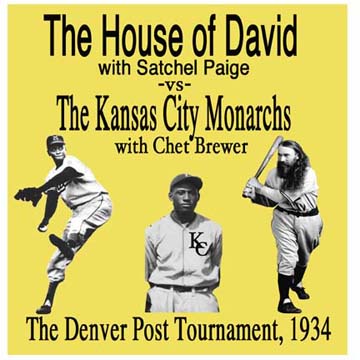
In the first half of the 20th Century, baseball dominated the American sports scene as it likely never will again, given the fact that the roots of other professional games, like football and basketball, as games that took germination in the new hunger of American television for an all-year presence of team competition on TV in prime time for the entire year, also took their own holds on the appetite of American fans for 24/7 sports in the late 1950’s.
Prior to the late 1950’s and the Johnny Unitas-Frank Gifford TV clash in the NFL’s pre-Super Bowl days playoff drama on the home TV screen, baseball pretty much had the whole show to themselves, but they failed to seize the day and grab the opportunity for making their game plentiful to the networks for prime time play, although some of that timidity may have been matched by the media’s initial slowness to envision how much prime time programing they could fill with sports. The media would have to wake up to the “wider world” of sports beyond baseball for that to happen – and they probably had to wait for the invention of a little something called “ESPN” in the 1980’s to see the fulfillment of the envisioned sports program glut that was yet to come, but bound to get here, over time.
Back in the 1920’s and 1930’s, in the hay-day of the all white big leagues and the very successful Negro leagues, there was a little flourishing event out in Colorado that took full advantage of the conditions of those times by presenting an annual championship competition among ten amateur teams in a famous popular activity they called The Denver Post Tournament. Players could not have played for any professional teams over the course of the previous twelve months to qualify as participants and, very importantly, the tourney allowed mixed racial play, welcoming one race and mixed race clubs with open arms. By that policy, the Denver Post Tournament became the largest rare activity in all of baseball to allow mixed racial play and make some of the best baseball available to all fans in one place on an annual basis.
Here’s how Baseball Reference.Com describes the organizational structure of the Denver set-up and how it lists some of the more famous names it attracted as players:
—————————————-
The Denver Post Tournament was organized in the 1920s as a top semipro competition, akin to the National Baseball Congress World Series. Sponsored by the Denver Post, it featured ten teams playing over ten days. Players could not have appeared in Organized Baseball for over a year. In the late 1930s, Negro League players came to raise the level of the competition. Unlike the National Baseball Congress event, the Denver Post tournament is long gone, having peaked in the late 1930s and early 1940s.
Performers in the event included Josh Gibson, Satchel Paige, Rogers Hornsby, Buck Leonard, Cool Papa Bell, Sammy T. Hughes, Leroy Matlock, Schoolboy Griffith, Sammy Bankhead, Pat Patterson, Sammy Hale, Sammy Baugh, Vic Harris, Wild Bill Wright, Ray Brown, Lonnie Goldstein, John Pickett, George Jefferson, Jack Marshall, Felton Snow, Bill Perkins and Buster Haywood.
—————————————-
The Denver Post Tournament is often credited as being the baseball stage that gave large crowds of white fans their first good luck at the legendary Negro League pitcher Satchel Paige. – Old Satch made his Denver event debut in 1934 with the House of David.
Look at that list above. Look at the names of the great players we could see perform, if we could just find that worm hole that leads to the golden light of the good and bad old days.
Have a nice weekend, everybody, and watch out for the icy streets, Houstonians. With eternity waiting for each of us out there as our default arrival spot, there aren’t many places we need to be today that are worth the risk of driving on frozen streets in a town where people don’t drive all that great under normal conditions, anyway.
It’s a better day to stay home and search for time travel worm holes.
 The Pecan Park Eagle
January 24, 2014 at 5:31 pm |
The Denver Post Tournament was held at old Merchants Park on South Broadway, where years earlier the Bustin’ Babes and Larrapin’ Lous (Ruth & Gehrig) played exhibition games. The Denver Bears played their games there until 1948, when they moved into Bear Stadium (renamed Mile High Stadium in 1968). Satchel Paige, who broke into the major leagues as a “rookie” in 1948 at age 42, was once asked his age. He said, “How old would you be, if you didn’t know how old you was?”
January 24, 2014 at 9:41 pm |
Growing up in Denver, I remember the Denver Post Tournament as a big deal before minor league came to the city in 1947. Unfortunately, I was too young to see Satchel Paige and others play in the tournament.
Bill Gilbert