Archive for 2013

Bo Knows the Power of the Moment

January 16, 2013


Bo Knows the Power of the Moment.

Bo Knows the Power of the Moment.

Winning. – Bo Porter referred to it in so many words as the business of taking care of what’s on your plate each day on the road to becoming the best ballplayer you can be. It’s not dreaming of championships in the future. It’s doing each day what needs to be done for the sake of making a championship possible when the so-called future eventually slides your way as the day to be seized.

In so many well expressed words off the quick mind and clear-speaking tongue of the bright and fiery new Houston Astros manager Bo Porter, that is the cauldron where the power of action in the present eventually boils over into the only future dream that ever comes true. – Bo called it “the process.”

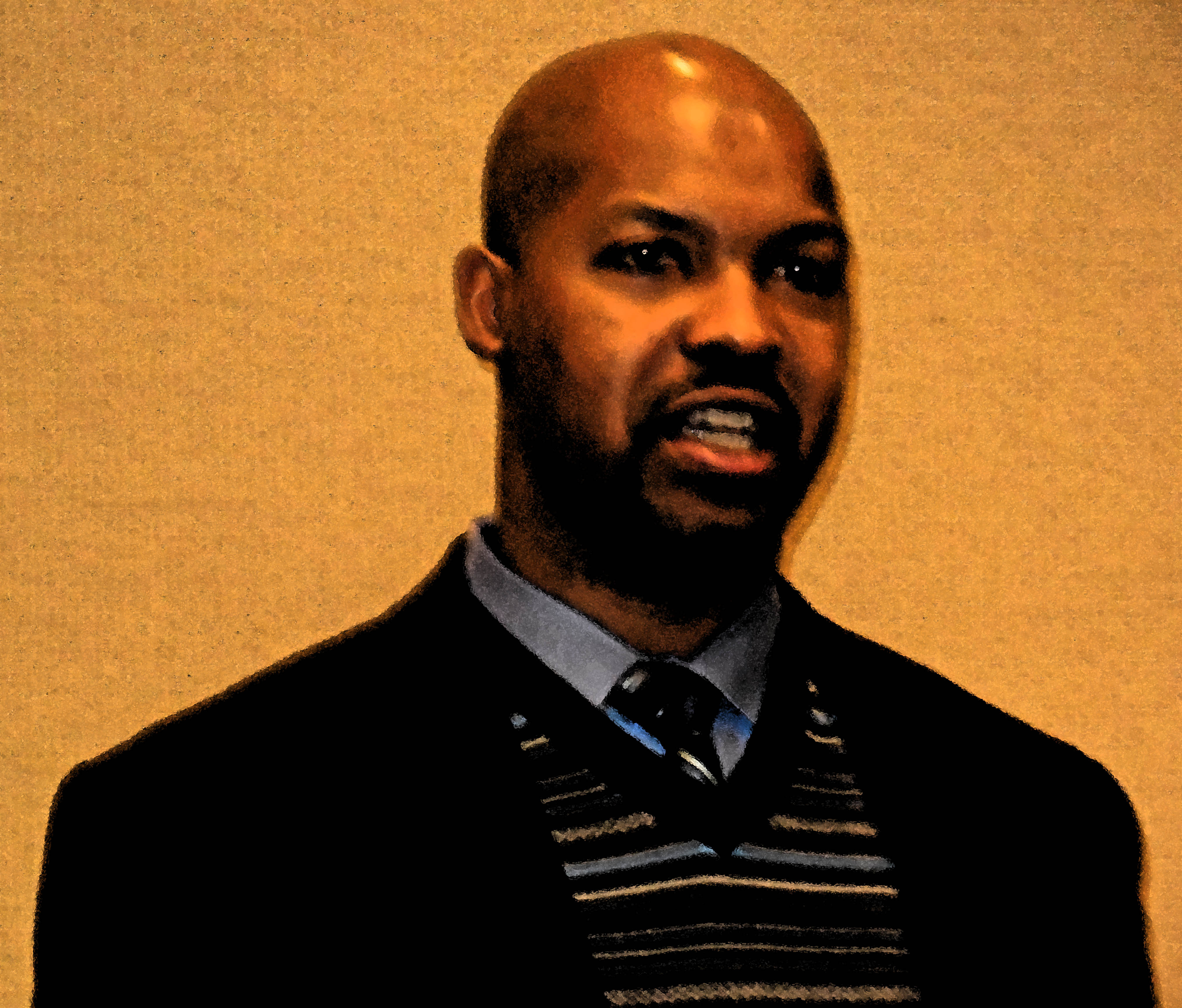
Speaking before a standing room only crowd at the January 14, 2013 monthly meeting of SABR’s Larry Dierker Chapter at the downtown Houston Inn at the Ballpark on Monday evening, new Astros skipper Bo Porter gave all with minds to see, and that seemed to include just about everyone there, that this city has a new kind of leader in town. You could literally feel the energy in the room rising as the ideas from Bo Porter brimmed to the surface and overflowed the cup in crystal clear delivery.

Quality Starts. Bo calls them the most outrageous statistic in baseball. The “QS” goal and the fear of blame teaches minor league staff to mollycoddle big investment pitchers in the minors. Then, when those who learn to pitch in the minors under little pressure, they arrive in the big leagues either prepared to wilt under big pressure, or else, they ruin their arms under great major league exposure to high expectations. – In this baseball culture, look for Bo to rely a lot on relief pitchers who can handle the 7th, 8th, and 9th innings while he continues looking for starters who are retrainable going deeper into the game.

According to Bo, The “QS” stat has become the favorite child of negotiating agents, further noting that agents will quote in bold type a pitcher’s 26 quality starts at contract time and totally downplay the fact that the same pitcher went 12 and 12 the previous year.

Going from 1st to 3rd. Asked by someone of what we might expect from his Astros, Bo answered without hesitation: “Watch they way we run the bases, especially, the way we go from 1st to 3rd.” He then proceeded to point out that runners who reach 3rd with none or one out have a much greater chance of scoring than those who stop at 2nd on a fair ball single to right – and the risk of getting thrown out on these plays is only about 4%. Dick & Jane Reader Translation? – “Run, Astros, Run!”

Fundamentals of Running for Outfielders and Base runners. Bo Porter was a standout football player for the University of Iowa Hawkeyes who might have chosen to try the NFL before he signed to sign with the Chicago Cubs to give his all to major league baseball. He’s a baseball man who still thinks like an aggressive football mind. With the Washington Nationals, for example, Porter noticed that a number of the outfielders had this flopping bird habit of flailing their arms from side to side in the long run pursuit of deep fly balls. The effect of same undermined their abilities to steady themselves for the catch, even if they did manage to reach the ball in descent on the fly.

Bo also remembered the steady downfield running he did at Iowa with the football tucked under one arm while the other pumped in tight tuck on the side like a locomotive power carriage wheel. So, as a result, Coach Bo had some of these guys in spring training out there chasing flies with a football under their throwing arms strictly as a method of searching for a steadier gait. – And, guess what? Many were helped by the exercise, Bo says.

Bo’s base runners on the Nationals ran hard out of the batter’s box, even on apparently dead-for-sure easy out plays. Bo wants to make the opposition’s defense forced to think on every play about all the options available to his own club’s runners, if they go to sleep. – “Relentless pressure” is the name of the game.

Implicit Greater Pitching Change Responsibility as a Result of the DH. Mike Vance, Bob Dorrill, and I were privileged to have dined with Bo Porter prior to his SABR talk. It was there that he revealed his implicit take on how the American League’s DH rule places more responsibility on the manager for deciding how long to go with a tiring or struggling pitcher. In paraphrase, it boils down to this: A manager will always want to get a guy out of there before things go south or get worse, of course, but he isn’t able to use a pinch-hitting chance to cover that concern because that’s a game situation that doesn’t arise in the AL. At times, the AL manager may want to help a pitcher learn to stretch his longevity, and again, with the DH rule in place, he cannot avoid the opportunity of extending a guy’s mound time because of an expected need to pinch hit for him. In the AL, the pitcher stays until the manager pulls him. There is no built-in customary “take out time.”

Too much else to share in one column. – The man Bo Porter is the real deal. I cannot remember ever being more excited than I am at this moment about the coming of a new Astros manager – one whose every word speaks volumes for his wisdom that life only works well when we are able to travel it from moment to moment with all the passion, creativity, ability, and life that’s been given to each of us for living full force.

Bo Porter gets it because Bo Porter obviously lives it.

Now we could only wish that the “The Bo Porter Story” really were a baseball movie script. Then we could watch Astros scoring from second base next season with a football tucked under one arm to both enhance speed and amplify their crunch upon the catcher on close plays.

Thanks for coming to Houston, Bo! We need you!
A Baseball Analysis of the Texans’ NFL Loss

January 14, 2013
Yesterday, the Houston Texans surrendered their 2014 Super Bowl dreams via the 41-28 final score whipping they took in the Divisional Round of the AFC/NFL Playoffs in Foxborough, Massachusetts at the hands of the eternally pesky and vastly superior New England Patriots. Since I'm a baseball guy, football only gets my full attention gets my center field attention this time of year, but here's what I think happened, in baseball terms.

Yesterday, the Houston Texans surrendered their 2014 Super Bowl dreams via the 41-28 final score whipping they took in the Divisional Round of the AFC/NFL Playoffs in Foxboro, Massachusetts at the hands of the eternally pesky and vastly superior New England Patriots. Since I’m a baseball guy, football only grabs my “center field attention” this time of year, but having read and listened to all the football pundits. I have learned by their examples that ignorance should not deter anyone from speaking out on why football teams win and lose. What follows briefly is what I think happened to the Texans, anyway, … in baseball terms.

Why the Texans Lost (in baseball terms) …

1) The E.R.A. Factor. To be a successful quarterback in the NFL, a guy has to have what we call in baseball an E.R.A. Only in football, E.R.A. doesn’t stand for “earned run average.” It stands for “earnest running ability.” QB Matt Schaub of the Texans has an E.R.A. of 1.00. On a scale of 1 to 10, with “10” being best, young Colin Kaepernick of the San Francisco 49ers has a football QB E.R.A. of something close to 9.00.

2) The Branch Rickey Factor. Baseball wise man Branch Rickey used to say that the best time to change out a good player was not the season after he’s had his best year, but the year before he reaches his peak. It’s too late for the Texans to apply that baseball philosophy to QB Matt Schaub. The Texans need to either give Taxi Squad QB Case Keenum a shot next year, or else, trade or draft for a younger QB prospect with a high football E.R.A. It’s too late to think that the aging, immobile Mr. Schaub is going to get better over time. Surrounding Schaub with better talent next year, as some local TV pundits suggested Sunday night, is the equivalent of saying “since Matt can’t win with good players around him, we need to surround him with great players.”

How about acquiring or using a great QB prospect and then work to surrounding him with other great players?

3) The Superstition Mountain Snake-Killing Formula. Developed by the esteemed Dr. Richard Farrell at the Apache Junction, Arizona baseball spring training camp of the Houston Colt .45s over half a century ago, this formula has proved effective in baseball for the literal and figurative elimination of snakes in the grass, clubhouse, or boardroom in 99.99 per cent of every case studied since 1962. It should work equally well in football as it has in baseball.

The Texans first need to find the body of the snake that stands in their way of getting to the Super Bowl. The trick is to make sure that they have identified the real snake in the first place. Once identified, it is important to then locate the head of the snake and to figuratively cut it off before the team, the fans, and the City of Houston are bitten again by the “wait until next year (again)” smiling-while-sighing syndrome.

Take your time in the off-season, Texans, but proceed in the search for your snake in rigorous due diligence. My football-ignorant, but intuitive guess is that the head of this snake is most probably located higher up and even physically away from the literal body and neck of Mr. Matt Schaub.

The snake may not even be a specific person. Sometimes the snake is an attitude that clouds objective player evaluation – or a way of doing business that fails to bring out the best in everyone. Rule everything out, but then find the rascal and kill it. The City of Houston needs to recover from the more general disappointment it has experienced way too many times over the years with it’s snake-bitten sports teams – and that old rascal found all our backsides again on Sunday.

Those are my three strikes. – I’m out.

Murderers’ Row Revisited

January 12, 2013
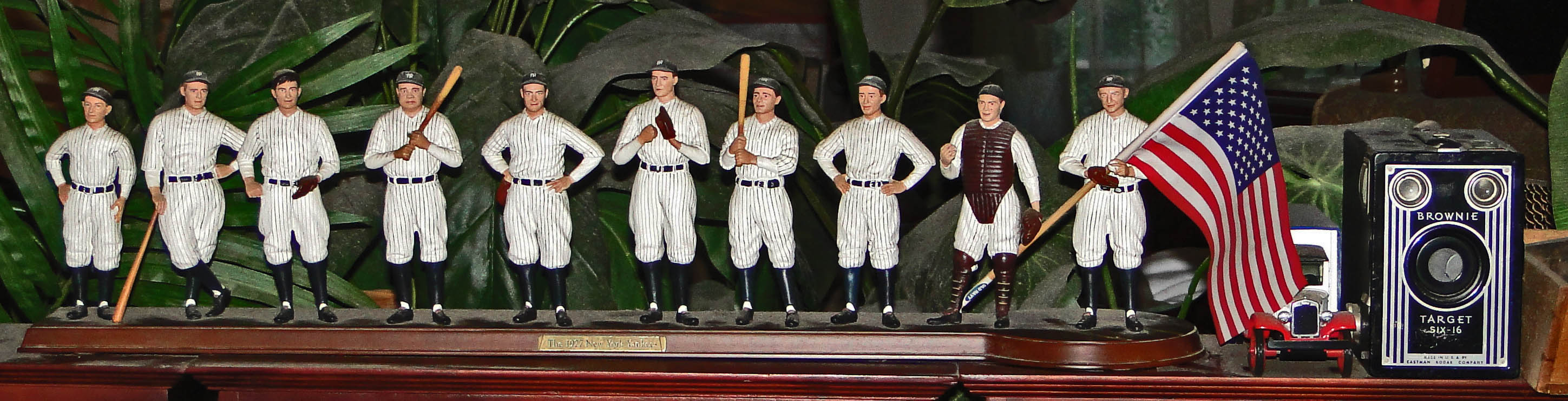
The 1927 New York Yankees

The 1927 New York Yankees

We remember them indelibly, even though none of us were alive or old enough in 1927 to have seen them play and retained, as ancient survivors along a ridiculously long life span, any visage of the power that befell our eyes back in the halcyon days of jazz and baseball. They were collectively revered as the killers of the baseball, the slaughter kings of the game. They were, and still are, Murderers’ Row.

Playing in their 25th year of life, and from their fifth season of residency in the original Yankee Stadium, the ’27 Yankees rolled to their fifth American League pennant with a record of 110 wins, 44 defeats, and a winning percentage of .714 that was good enough for a 19 game final finish over the 2nd place Philadelphia Athletics.

Their 110 Yankee wins in 1927 broke the 105 American League wins record established by the Boston Red Sox in 1912. The ’27 Yankee AL wins mark stood until the 1954 Cleveland Indians broke it with a 111 final wins tab.

The ’27 Yankees went on to crush the Pittsburgh Pirates in the World Series in a four-game sweep. Since then, the Pirates community has been forced to live with the writers’ tale that their Pittsburgh quest for a 1927 World Series title was lost from the time they watched Ruth and Gehrig take batting practice prior to Game One.

The 1927 Yankees and Babe Ruth forever have been a touchstone of sanity for me about all the good things that swept my heart and soul into the game of baseball as a kid. Whenever I’ve had a week of disenchantment with the peripheral egos that control the game today, I heal with some refocus on the players and teams that built my sandlot dream in the first place. For me, those visions always began with the 1947 Houston Buffs and the 1927 New York Yankees. Today I’m taking the Yankee cure.

Left to right among the Murderers’ Row figures you see above you in the sculpture model photo, here is the manager and starting lineup for the 1927 New York Yankees, including their ages that season. All data here is derived from that great fountain of baseball numbers, Baseball Reference.Com:

Miller Huggins, Manager, Age 49.  Miller Huggins posted a .265 BA over the course of his 12-season (1904-1916) career as an MLB 2nd baseman. He began his managerial stint with a 5-year run as mentor of the St. Louis Cardinals (1913-1917) before moving to the helm of the New York Yankees and a 12-season (1918-1929) tenure in which his clubs won 6 pennants and 3 World Series titles. – Miller Huggins died early from pyaemia, a blood abscessing disease, complicated by the flu, on September 25, 1929. It was a devastating loss to his club and the entire baseball world.

Hall of Fame: Miller Huggins was inducted into the HOF by the Veterans Committee in 1964.

1927 Salary for Miller Huggins = Not reported at Baseball Reference.Com

1) Earle Combs, CF (BL/TR), Age 28. As a lead off man, Combs led the AL in 1927 with 725 plate appearances and 648 official times at bat. He also lead the AL with 231 total hits and his triples were the most for any player in the league. He also batted .356 and racked up a .414 OBP. With a 12-season (1924-1935) all Yankee career BA of .325.

Hall of Fame: Earle Combs was inducted into the HOF by the Veterans’ Committee in 1970.

1927 Salary of Earle Combs = $ 10,500 (Michael Haupert research of HOF contracts)

2) Mark Koenig, SS (BB/TR), Age 22. A reliable defensive guy with good abilities at moving runners along at the plate, Koenig batted .285 in 1927, just a tad above his 12 season (1925-1936) career BA of .279. Koenig had 150 hits and an OBP of .320.

Hall of Fame: Mark Koenig is not a member of the HOF.

1927 Salary of Mark Koenig = $ 7,000 (Michael Haupert research of HOF contracts)

3) Babe Ruth, RF (BL/TL), Age 32. 1927 was the signature season for the arguably greatest player in the history of baseball. That was the year that the Babe broke his own 1921 record of 59 HR in a single season by blasting the number 60 into the iconic walls of the games greatest remembered digits. Babe Ruth didn’t simply break home run records. He hit more home runs than some whole teams did in a single season. The number 60 hung as the benchmark for greatness in power hitting through my entire childhood, and it only fell with that ascendantly rising 61* that Roger Maris would later blast in the first longer season of 1961. – In 1927, Ruth also led the AL with 158 runs scored, 137 walks, 89 strikeouts, a .486 OBP, a .772 slugging average, 1.258 OPS, and an OPS + of 225. – Also, thanks to his teammate, Lou Gehrig, Ruth had 192 hits and 164 RBI in 1927, but had to bow to the other Yankee super star for team leadership in those categories. – Speaking of iconic numbers, Babe’s 714 career homers stood as the most for a single career until Hank Aaron passed them in 1974. – With a lifetime BA of .342 also, the 22-year career of Babe Ruth (1914-1935) wrapped with his election to the HOF in 1936 among the first class inductees of the new hall of honor that would not formally open until 1939. Amazingly, 11 of the 226 voting writers in 1936 did not vote for Babe Ruth. This fact only reinforces the recognition that ignorance and arrogance are not an invention of the current generation. – Long live Babe Ruth and the blood lust bats of Murderers’ Row!

Hall of Fame: Babe Ruth was elected to the new Hall of Fame’s first induction class in 1936 when 215 of the 226 voting BBWAA members selected him.

1927 Salary of Babe Ruth = $ 52,000 (Michael Haupert research of HOF contracts)

4) Lou Gehrig, 1B (BL/TL), Age 24. The iron horse led the AL in 1927 by playing in 155 games, hitting 52 doubles, 175 RBI, and adding a .467 OBP. His .374 BA placed him high among the leaders and his 47 HR trailed only the other man who was even close, Babe Ruth. Gehrig closed his 17 year career (1923-39) a deathly ill man, but not before he had established the longest streak of consecutive games played at 2,130 and a total career record of 493 HR and a .340 BA. – When news of Lou’s illness got around, a special vote was convened and Lou Gehrig was inducted into the HOF.

Hall of Fame: Lou Gehrig was elected to the Hall of Fame in 1939.

1927 Salary of Lou Gehrig = $ 8,000 (Michael Haupert research of HOF contracts)

5) Bob Meusel, LF (BR/TR), AGE 30. The 6’3″ Bob Meusel is the guy who hit behind Ruth and Gehrig and still managed to pick up 103 RBI on the year. He batted .337 and registered a .393 OBP and a .510 SA. Over the course of his 11 season career (1930-1930), Meusel hit .309 with 1,067 career RBI. Bob’s best season for HR power was 1925 when banging out 33 was exceptional work for all but one man. The mere mortal Meusel still managed to hang ’em up with credit for 156 HR by retirement day.

Hall of Fame: Bob Meusel is not a member of the HOF.

1927 Salary of Bob Meusel = $ 13,000 (Michael Haupert research of HOF contracts)

6) Tony Lazzeri, 2B (BR/TR), Age 23. “Poosh ‘Em Up, Tony” batted .308 with 18 HR in his second season as a young Yankee in 1927 and he hit .292 over the course of his 14 year (1926-1938) career. He also had a banner year in a non championship season for the 1929 Yankees when he batted .354 and again hit 18 HR on the year. Tony had four seasons in which he hit 18 homers, but he never got any higher. His 178 career HR were still a warning to foes that relief did not exist in the bottom half of the ’27 Yankees lineup.

Hall of Fame: Tony Lazzeri was inducted into the HOF by the Veterans’ Committee in 1991.

1927 Salary of Tony Lazzeri = $ 8,000 (Michael Haupert research of HOF contracts)

7) Joe Dugan, 3B (BR/TR), Age 30. “Jumpin’ Joe” Dugan was the 7th man in the order and even he hit .269 with an OPS of .683. For his 14 year career (1917-1931), Dugan hit .280 with a career OPS of .689 and he was an excellent fielder and probably the biggest character in residence among the 1927 titans of baseball. His best season at the plate came earlier when he hit .322 for the 1920 Philadelphia Athletics.

Hall of Fame: Joe Dugan is not a member of the HOF.

1927 Salary of Joe Dugan = $ 12,000 (Michael Haupert research of HOF contracts)

8) Pat Collins, C (BR/TR). Age 30. Pat Collins hit .275 with an OPS of .825 in 1927. His better days with the stick occurred earlier in his career when he caught for the great St. Louis Browns contenders of the early ’20s. Collins hit .307 for the great 1922 Browns that came within one game of beating the Yankees out of a pennant and he followed that with a .315 BA mark for the 1924 Browns. – Collins and Brownie pitcher Urban Shocker were so good for the Browns, in fact, that you might get what happened to them for aggravating the Yankees. The Yankees acquired them from the cash-starved Browns to herald a pattern of dealmaking that we haven’t seen the end of to this day. – As for Pat Collins, he did quite well for himself as a member of the Bronx crew. He retired with a .254 career BA from a 10-season career (1919-24, 1926-29).

Hall of Fame: Pat Collins is not a member of the HOF.

1927 Salary of Pat Collins = $ 7,000 (Michael Haupert research of HOF contracts)

9) Herb Pennock , P (BB/TL), Age 33. Herb Pennock was 19-8 with a 3.00 ERA as only one of several fine pitchers for the 1927 Yankees. For his 22-season career (1912-17, 1919-34), Pennock won 241 games and lost 162, good enough for a lifetime ERA of 3.60.

Hall of Fame: Herb Pennock was inducted into the Hall of Fame by the BBWAA in 1948 with approval on 94 of the 121 votes cast that year.

1927 Salary of Herb Pennock = $ 17,500 (Michael Haupert research of HOF contracts)

That’s it for now, except to add the obvious: You have to be good to play or stay with the Yankees, but if you do play there, and you also do well, as in World Series well, it won’t hurt you later when you are up for the Hall of Fame.

1927 also was the season that helped the reticently inclined Lou Gehrig learn that he had to do a better job in 1928 of negotiating his new contract.

Bud Thomas: One MLB Shot and Gone

January 11, 2013
test

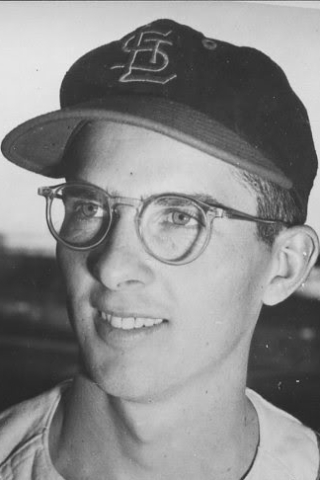
Bud Thomas, SS
BR/TR, 6′ 0″, 180 ilbs
1951 St. Louis Browns

Right behind the curious list of MLB players who retired with one hit in their only big league times at bat is another fun group. Those are the guys who stuck long enough for a cup of coffee, did well, and then disappeared forever with no further shots at the show. Many of these fellows were late season call-ups in September who did well in a handful of games and then, for one reason or another, never made another big league roster appearance during the regular season.

Sometimes the reason for the missing second chance is clear. A guy gets injured in the off-season and is never able to play again. Another fellow only got his first chance as an older ballplayer and simply decides to retire before another try comes open. And, of course, back in the reserve clause era, some players just got stacked in talent-deep farm systems and were never given another opportunity.

22-year-old Bud Thomas of the 1951 St. Louis Browns was one of those One-Month-Wonders. He didn’t exactly set the woods on fire in his short big league run, but a .350 batting average in 14 games over 27 days time is still nothing to dismiss lightly. Between September 2nd and 29th of 1951, Thomas collected 7 hits, including one home run as his only extra base hit in 20 times at bat. He scored 3 runs and registered the one RBI that came with his solo shot homer off Alex Kellner of the Philadelphia Athletics on September 16, 1951. Bud never drew a big league walk and he struck out three times.

Bud Thomas went into the spring of 1952 hoping for another shot in the majors, but instead found himself back in the minors with no further explanation from the big club. As was his style, he gave it his all with acceptance, but the hole just got deeper.

In 1952, Bud Thomas continued his fine defensive work, but he began to slip on offense, batting close to the .200 Mendoza Line at three Brownie farm team stops. There was no September call-up in 1952. He batted .193 in 77 games for Double A San Antonio in 1953 and then retired to begin his long career as a teacher, counselor, principal, and school superintendent.

I was privileged to meet Bud Thomas and his charming wife at a 2003 dinner in St. Louis honoring all former members of the St. Louis Browns. In conversation that day, I found him to be a great guy and a really fine at-peace-with-himself, down-to-earth decent human being. “Walking Integrity” is a good way to describe the man.

Bud now looks back on the fact he never got another big league chance in the healthiest of philosophical ways. In the Fall 2012 edition of Pop Flies, the official magazine of the St. Louis Browns Historical Society, Bud cleared the air on his feelings about that second shot that never came. They evolved as good feelings about what he did have to keep forever from that one shining September in 1951.

82-year-old Bud Thomas, a native of Sedalia Missouri, answered plainly and straight out: “I was around long enough to make one complete circuit around the league during the golden years. It was a dream come true.”

Bud Thomas got a bigger bite of the baseball dream than most of us who love the game will ever know. As did the rest of us who gathered together in St. Louis that fine day in 2003, Bud Thomas treated Stan Musial as the grand icon of the game that he truly is when “The Man” showed up like  a drop-in guest neighbor to visit with his ancient St. Louis Brown contemporaries and the rest of us long ago Brownie and Cardinal fans. Bud didn’t once stop to remind Musial in a teasing way that his own career BA of .350 was .019 points higher than Stan’s .331 career MLB mark. It was a beautiful afternoon and evening, one in which everybody just chilled out and enjoyed a day and night of talking baseball, the game we all love.

God bless you for being a big part of that memory, John Tillman “Bud” Thomas. Hope our paths cross again someday.

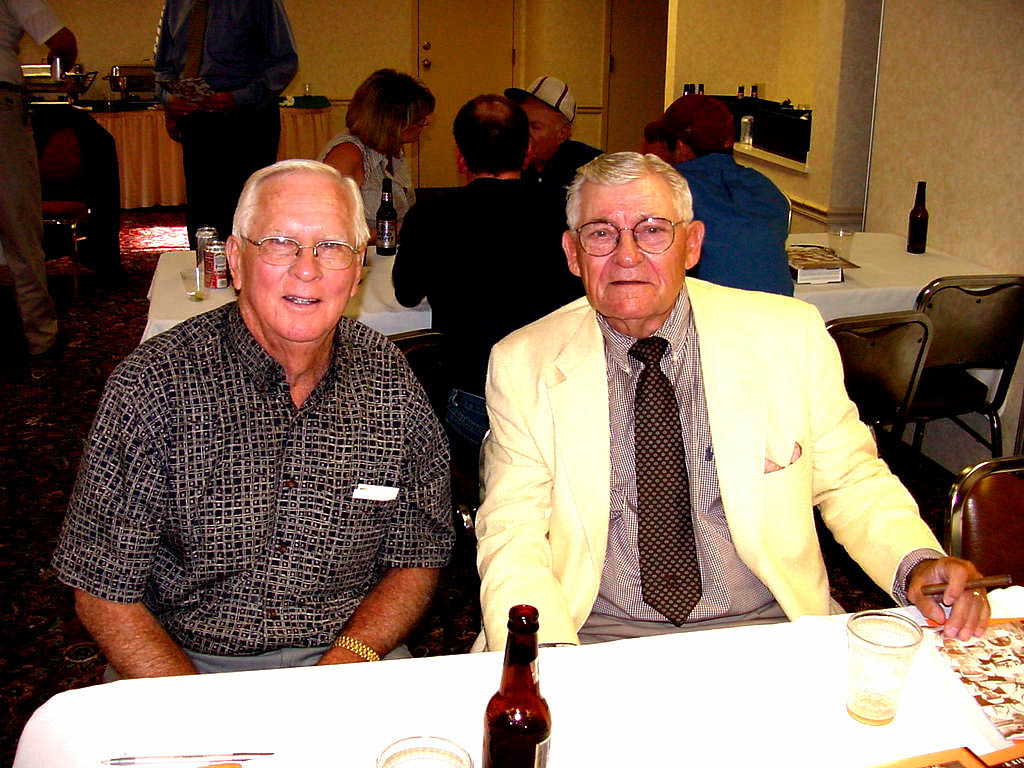
Bud Thomas Photo from the 2003 St. Louis Browns Reunion …

Bud Thomas (L) & a Former Browns Bat Boy (Name Unknown) Renew Old Acquaintance in 2003.

Bud Thomas (L) & a Former Browns Bat Boy (Name Unknown) Renew Old Acquaintance in 2003.

HOF Vote: Macy’s-Like Parade of MLB Hypocrisy

January 10, 2013
Baseball Needs to Balance the Scales.

Baseball Needs to Balance the Scales.

It was a Macy’s-like parade, all right, complete with hot air balloon excuses for the process of righteously turning away, one more time, but in larger and newer numbers, some of the greatest players in the history of baseball from the residence they each deserve on the basis of their field performances in the so-called Baseball Hall of Fame.

The day of January 9, 2013 unfolded as a prescription for home-made/ho-made (take your pick) hypocrisy among most of the same writers who could not praise Mark McGwire and Sammy Sosa enough back in 1998 for saving baseball from the stink of 1994 with their magical, somewhat mystical displays of record-breaking power. Time Magazine featured a glowing cover of Big Mac and Sammy. Sports Illustrated went so far as to dress out the same two players in Roman togas and laurel wreath head-dresses before spilling out their broadly smiling images on their cover as the saviors of the game.

It didn’t matter to the writers and the owners in 1998 that many of the “big boys” were getting there through the open use of steroids. I don’t recall anyone in 1998 writing about steroids as “performance enhancing drugs.” In fact, I don’t recall anyone writing or expressing their concerns about steroids in 1998. The performances of Big Mac and Sammy that year were rattling the soul and brain of baseball on a recording-breaking pace. Like real life action heroes, those two men almost single-handedly together, were spinning the big league park turnstiles far into the black and driving away the bad memories of that horribly lost season of 1994.

Memories are short.

Once Barry Bonds took things to a wholly higher level of achievement, breaking the HR record of the revered Hank Aaron, and once a proven liar accused Roger Clemens of PED use and the latter “mis-remembered” his actual experience into a case for branding him a liar to Congress on the Rafael Palmeiro-level, requiring a trial for Clemens to find legal exoneration, the witch hunt was on. Now players like Jeff Bagwell were falling under the shadow of suspicion for having developed “Popeye” biceps during the same era.

Now all you had to do was pander to the suspicions of the suddenly self-righteous members of BBWAA to lose any later support for the HOF. – And this has been how it’s been for the past 7-10 years.

So what actually happens when the big 2013 class of major suspects comes up for HOF consideration? The writer boys arrogantly turn their backs on all, explaining that it’s all part of the process of sorting out what needs to be done over time.

Oh really? Does that same “process” include not voting for the squeaky clean and sure-fire Hall of Famer Craig Biggio – just because it’s his first time on the ballot?

What arrogance!

I could not agree more with writer Jerome Solomon than I do this morning. In his Houston Chronicle criticism of the BBWAA today, he touches all the bases on why this vote, this year, stunk to high heavens. If you are a voting writer, and you think a man is good enough to go in “sometime,” he’s good enough to go in “now.” Any further delay for the sake of pro forma compliance with the historic rules of the good old boys’ and girls’ club is unacceptable.

Those players whose numbers speak for themselves should be inducted into the Hall of Fame, regardless of how much anyone thinks these players alone should be punished for the steroids era by banishment. We have to be vigilant here. There is no clear class of convicts in this matter. Some people used and some people lied in an attempt to cover up. Others just stood there like deer in the headlights and got smeared with the mud that got slung their way. The result is that we have allowed social network television to hawk the witch hunt and to smear guilt-by-suspicion to all who could not defend themselves from character assassination.

Meanwhile, the Commissioner, the owners, many of the writers and fans, and all of the sports print and broadcasting publishers sit back in the glow of bystander sanctimony and go about the business of making the players alone pay for the game of baseball’s embrace of steroids at our most recent turn of the century.

Yesterday’s HOF vote by the BBWAA was nothing more than a ritual exercise of the baseball culture’s hypocrisy. It’s time we all took responsibility for the fact it happened and move on with clear and severe consequences embraced and set forth about what shall happen to future abusers.

Then let’s get those field-deserving nominee people into the HOF from the era that were punished for being members of the fall guy group in this whole past, but still ongoing sad affair and make things right. Roger Clemens, Barry Bonds, Mark McGwire, Sammy Sosa, Rafael Palmeiro, and Mike Piazza, among others, all belong in the Hall of Fame. So do Craig Biggio and Jeff Bagwell, by the way.

It’s time to make it right by the next vote.

The fall guy group has taken the whole rap and suffered long enough for a sin that belongs to the whole baseball world. If our baseball world cannot see that much, then we all deserve whatever happens next.

The witch hunts of Salem never stopped the advent of new evil in Massachusetts.

A Brief Look at Baseball’s One Game Wonders

January 9, 2013
Joe Cleary189.00 ERA

Joe Cleary
189.00 ERA

Pitcher Joe Cleary of the Washington Senators established an MLB record back on August 4, 1945 that could be on the books for a very long time. Cleary came into a game from the bullpen to pitch one-third of inning against the Boston Red Sox and gave up seven earned runs before leaving. He never appeared again in another big league game, but his performance in that single contest career was statistically bad enough to leave him technically in possession of an ERA of 189.00, the highest ERA for any pitcher in MLB history. It remains too high for most second chance prospects, even for serious 2013 pitching candidates of the Houston Astros.

Writer David Margolick of the New York Time wrote an entertaining article back in 1999 on Joe Cleary and a few other one-game wonders in baseball history. They were players who all had only one game shots at the big time and they each celebrated the occasion in the best and worst ways.

Here’s a link that will take you that nice little contact with the Moonlight Graham Club:

http://www.nytimes.com/1999/04/04/sports/new-season-for-stars-and-one-game-wonders.html?pagewanted=all&src=pm

Remember Moonlight Graham? He was the guy characterized by Burt Lancaster in the movie, “Field of Dreams.” Graham got into one game with the 1905 New York Giants, but never got to bat. He supposedly spent the rest of his life mourning the fact that he had failed to reach the batter’s box at least once.

As for Joe Cleary, he died in 2004 at the age of 85. No chance now to search for any change in the rotten feelings Cleary expressed five years earlier to writer Margolick. According to Cleary, he and his manager, Ossie Bluege, almost came to blows after he returned to the dugout from his one-third inning of disaster delivered. “The short, unhappy life of Joe Cleary in the big leagues” was over, according to the battered 27-year old native of Cork, Ireland, Joe Cleary.

Think about it: the young man has one bad day, but like Bill Buckner much later, it becomes the only thing that’s remembered by most people about his baseball career. The difference here is obvious. Buckner actually had a career and, those who follow it haven’t forgotten that he was normally a good hitter and a slick fielder.

Joe Cleary, on the other hand, like all others who played only one game, had only a technical career. On day does not a career make. If it does, many of us are prepared to put in similar claims. i.e., As a young teenager, I once had a one-day career as a door-to-door advertising circular distributor. My only job instructions were to keep working until I had placed all 500 circulars given me on the doors of the houses in the neighborhood where the boss dropped me off. I finished in half the time expected by placing two circulars at each front door I approached. At the end of the day, the boss didn’t think much of my methodology so he cut my expected pay in half and fired me on the spot.

End of career. Start of a valuable work lesson: In honest work situations, do what the boss pays you to do. If you don’t like the work, do something else, but always take responsibility for clearly understanding what the boss wants – and just do it.

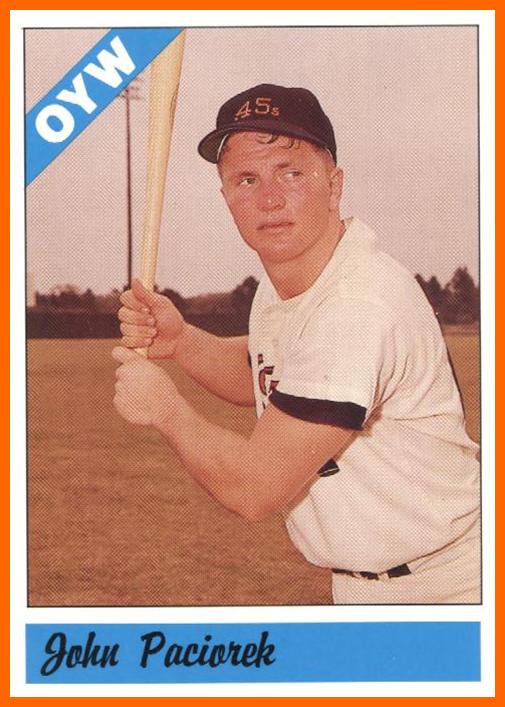
john paciorek card Back to baseball’s one-game wonders.  As David Margolick notes, over sixty one-for-one 1.000 BA hitters exist on the books, but only John Paciorek of the 1963 Houston Colt .45’s ever celebrated a perfect 3-for-3 day in his only game as a big leaguer. For Paciorek, it happened on the last day of the season, September 29, 1963, in a game against the hapless New York Mets. Paciorek collected three singles and two walks in that game, but he never played again because of a severe back problem he developed prior to the next season. It’s nice to know that someone from Houston once achieved perfection, if only for a day.


Awaiting Tomorrow’s Biggio Decision

January 8, 2013
Just a tribute reminder on another day of saluting Mr. Biggio: Do you remember what MMP looked like before the Astros hung all the sponsorship signs?

Just a tribute reminder on another day of saluting Mr. Biggio: Do you remember what MMP looked like before the Astros hung all the sponsorship signs? This is how the park appeared on the day that Craig Biggio collected his 3,000th hit in 2007.

With 24 hours to go before the 2013 Hall of Fame induction results are announced, some polls of “talking voters” show Craig Biggio leading, but in the “close, but no cigar” range near the required 75% approval. If that holds, we may be looking at a rare year in which there are no recently active inductees. If it works out that way, I will hold to the position I took of two days ago – to be among those who are disappointed, but not surprised.

In the meanwhile, those of us fans who care about the HOF vote are left to think about all the things that our man Biggio did to carve his name into the company of the greatest ball players in baseball history.

I’m speaking of one category today. Just look at his career doubles tally. Friend and SABR colleague Mark Wernick reminded me of it in his comment upon the first Biggio article I wrote two days ago. That is, to state, the position of Craig Biggio on the most career doubles list. Pay attention to this current list from Baseball Almanac and where Craig Biggio is located on the list of the 100 Greatest MLB Doubles Hitters of All Time. – And please note the identities of those keeping company with Mr. Biggio near the top of the chart.

Some Brief Notes:

Of the seven players at the top of the list who have garnered a minimum of 650 career doubles, Craig Biggio is 5th from the top of the list with 668.

Craig Biggio had more career doubles than any other man who played primarily as a second baseman. WIth 746 doubles in 2nd place, Pete Rose had more career doubles than Biggio, but Pete played far fewer games at second base than he did in the outfield and elsewhere.

Look at the bold-type names of active players on the list. There isn’t anyone there now that’s a “probable” on catching and passing Craig Biggio any time soon, if ever.

Look who else lives in this rarefied company. Former Astro Carlos Lee is No. 81 on the list with 469 doubles.

It’s probably no accident that Biggio was thrown out on his 3,000th hit trying to stretch a single into a double. How appropriately sweet  the safe-sign would have been under those circumstances on that special night at Minute Maid Park in 2007.

Enjoy perusing the list. And one more time: Good Luck, Tomorrow, Craig Biggio!

Doubles
All Time Leaders’Top 100′ – Baseball Almanac
Name Doubles Rank
Tris Speaker 792 1
Pete Rose 746 2
Stan Musial 725 3
Ty Cobb 724 4
Craig Biggio 668 5
George Brett 665 6
Nap Lajoie 657 7
Carl Yastrzemski 646 8
Honus Wagner 640 9
Hank Aaron 624 10
Paul Molitor 605 11
Paul Waner 605
Cal Ripken, Jr. 603 13
Barry Bonds 601 14
Luis Gonzalez 596 15
Rafael Palmeiro 585 16
Robin Yount 583 17
Wade Boggs 578 18
Charlie Gehringer 574 19
Ivan Rodriguez 572 20
Todd Helton 570 21
Bobby Abreu 565 22
Jeff Kent 560 23
Eddie Murray 560
Chipper Jones 549 25
Manny Ramirez 547 26
Tony Gwynn 543 27
Harry Heilmann 542 28
Rogers Hornsby 541 29
Joe Medwick 540 30
Dave Winfield 540
Al Simmons 539 32
Lou Gehrig 534 33
Al Oliver 529 34
Cap Anson 528 35
Frank Robinson 528
Dave Parker 526 37
Ted Williams 525 38
Derek Jeter 524 39
Ken Griffey, Jr. 523 40
Willie Mays 523
Garret Anderson 522 42
Johnny Damon 522
Ed Delahanty 522
Scott Rolen 517 45
Joe Cronin 515 46
Edgar Martinez 514 47
Alex Rodriguez 512 48
Mark Grace 511 49
Rickey Henderson 510 50
Babe Ruth 506 51
Tony Perez 505 52
Albert Pujols 505
Roberto Alomar 504 54
Andre Dawson 503 55
Goose Goslin 500 56
John Olerud 500
Rusty Staub 499 58
Bill Buckner 498 59
Al Kaline 498
Sam Rice 498
Frank Thomas 495 62
Heinie Manush 491 63
Mickey Vernon 490 64
Jeff Bagwell 488 65
Harold Baines 488
Mel Ott 488
Lou Brock 486 68
Billy Herman 486
Vada Pinson 485 70
Hal McRae 484 71
Carlos Delgado 483 72
Dwight Evans 483
Ted Simmons 483
David Ortiz 482 75
Brooks Robinson 482
Vladimir Guerrero 477 77
Zack Wheat 476 78
Jake Beckley 473 79
Larry Walker 471 80
Carlos Lee 469 81
Gary Sheffield 467 82
Frankie Frisch 466 83
Jim Bottomley 465 84
Adrian Beltre 463 85
Reggie Jackson 463
Miguel Tejada 463
Dan Brouthers 460 88
Orlando Cabrera 459 89
Sam Crawford 458 90
Jimmie Foxx 458
Omar Vizquel 456 92
Jimmy Dykes 453 93
George Davis 451 94
Paul O’Neill 451
Jimmy Ryan 451
Jim Thome 451
Steve Finley 449 98
Joe Morgan 449
Bernie Williams 449

Musical Musings on this Moment in Astros History

January 7, 2013
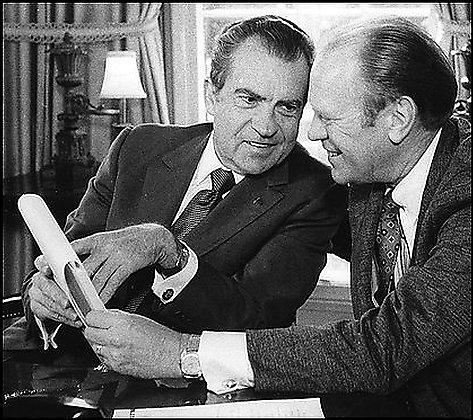
"Pardon me, Ford! Let's have a chat and choose your new shoes!" (from "A Day at The Oval Office" sung to the tune of "Chattanooga Cho Choo")

“Pardon me, Ford! Let’s have a chat and choose your new shoes!” (from a musical play idea I called “A Day at The Oval Office” and sung to the tune of “Chattanooga Cho Choo”)

For better, and mostly worse, I’ve been writing song parodies since I was a freshman at St. Thomas High School. They just seem to pop into my head at random moments, always pulling together something from my rather lengthy play list of songs from the 1920s, 1930s, 1940s, and 1950s with some event or strong interest in my life.

I don’t really write them. They just show up. And I write them down as I hear them.

Once I wrote a whole musical song and dance number to dramatize the resignation plan of Richard Nixon to appoint Gerald Ford as his vice-president in exchange for an agreement from Ford that he would pardon Mr. Nixon for any wrongdoing in the Watergate affair after the former had assumed the powers of office to do so. The whole thing parodied on the words and music from the song, “Chattanooga Choo Choo” and it went like this, with Nixon first singing to Ford in the oval office before the former leads the latter on a lively jitterbug out the oval office door as if it were stage exit right:

“Pardon me, Ford! ~ Let’s have a chat and choose your new shoes! – I will resign! ~ Then everything will be fine! ~ There’s gonna be ~ a Watergate investigation! ~ But it won’t be fair ~ ’cause Johnny Dean will be there! ~ They’ll have the votes for my impeachment ~ so I might as well go! ~ Then you can be the president ~ and they’ll never know – if I have conceded – (expletive deleted) ~ if I knew or didn’t know ~ they just can’t read it! ~ I’ll never roam ~ away from my own ~ tax-free ~ San Clemente Home! ~ And you can wear the new shoes ~ that go along with the throne! ~ Pardon me, Ford! ~ Pardon me, Ford! ~ Get on board, Ford! ~ Get on board! ~ And you can wear the new shoes ~ (da-da-da-dum) ~ that go along with the thro00000000ne!!!”

Today it happened with the Astros rebuilding program. Here are the first six parodies to break loose as a playlist of songs that fit the meter and tune to the original songs, but now match up with the subject of this great change moment in Houston Astros history. Except where indicated, most are simply written to fellow Astros fans:

Feel free to read, endure or delete. Or submit your own as comments. It’s a wonderfully cathartic experience.

Prisoners of Love

“Alone from year to year, you’ll find us; ~ Too weak to break the ties that bind us; ~ We cannot pitch, ~ no bats behind us;  ~ We’re just the prisoners of our love!”

It’s Gonna Be A Great Day

“When you’re down and out, ~ Lift up your head and shout: ~ Root. Root. Root.”

Pick Yourself Up

“Nothing’s impossible, we have found, ~ for when our “Stros – are on the ground, ~ we trade ’em all off, ~ sign some kids up, ~ and start all over again.”

What’s New?

(as sung to the 2013 Astros roster)

“What’s new? ~ How is the world treating you? ~ You haven’t changed a bit! ~ To tell the truth, ~ you still look like spit!”

So Young

(as sung to Astros GM, Jeff Luhnow)

“You made the team so young! ~ And now they play like ~ dung that’s been slung! ~ Bells must be rung ~ So a flag can be hung ~ one fine day! ~ We’re hangin’ with you, Jeff ~ hoping for that really ~ one fine day, but ~ this team still plays ~ like ~ dung! – Like Frankie says, mister! ~ Yeah! ~ This team still plays ~ like ~ dung!”

 A Kiss To Build A Dream On

(ibid, Jeff Luhnow – to help us get through the pine green dung years)

“Give us ~ a star to build a dream on ~ and our imagination ~ will make that moment live! ~ Astros, ~ we ask no more than this ~ a star to build a dream on!”

Craig Biggio and The Hall of Fame

January 6, 2013
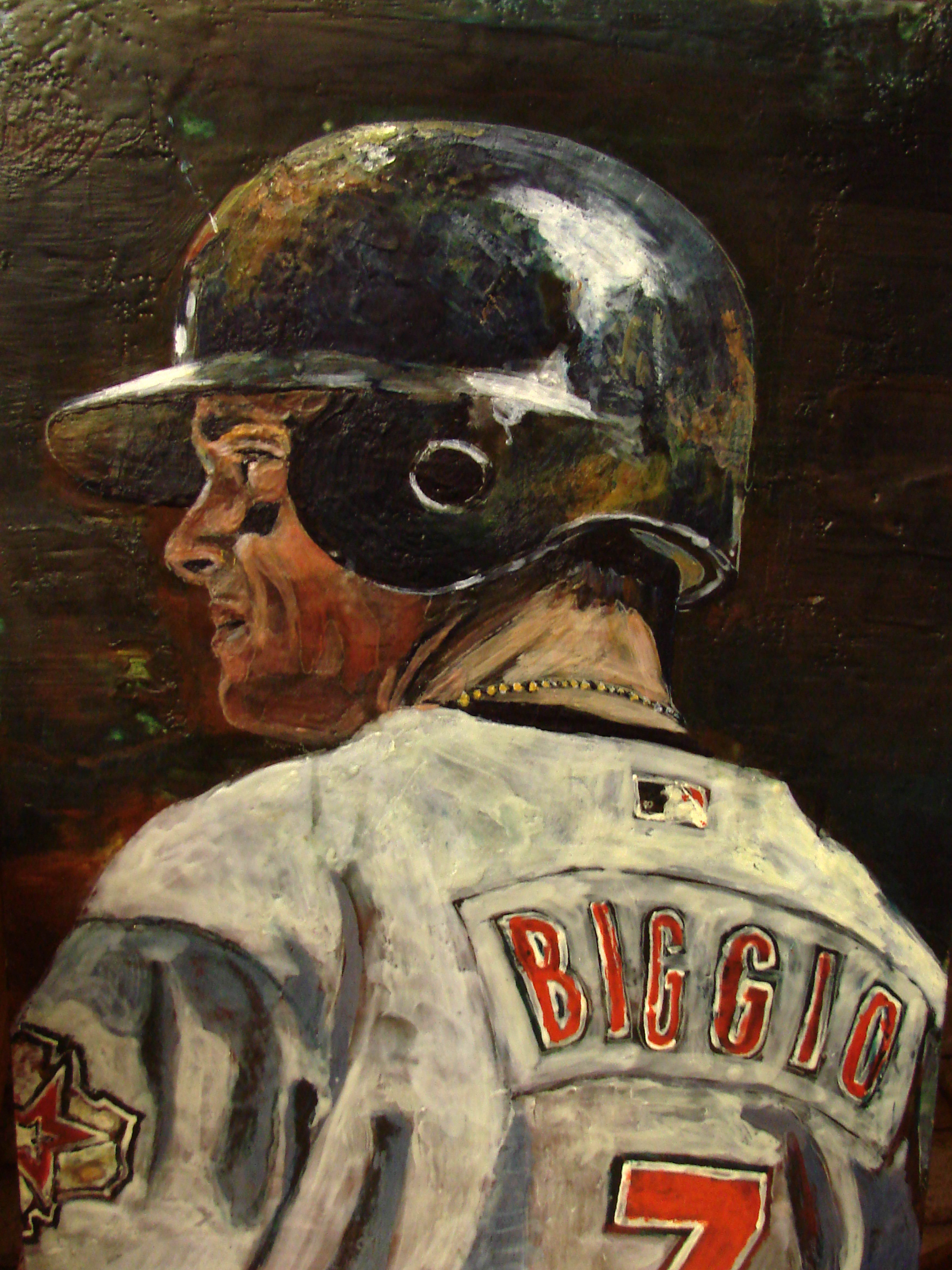
Craig Biggio: Work of Art by                Opie Otterstad

Craig Biggio:
Work of Art by Opie Otterstad

If it were up to the people like me who watched him play for twenty years, Craig Biggio would be going into the Baseball Hall of Fame on the first ballot opportunity when the 2013 class results of the Baseball Writers Association of America (BBWAA) poll are announced on January 9, 2013.

But it isn’t up to everyday lifelong fans like you and me. It’s up to a national group of sportswriters who may or may not have seen Craig Biggio play, people who have achieved their right to decide based on their choice of professions and, hopefully, some considerable study of the game and its history. I would hope too that they each voter has had some experience playing the game, even if it was only kid ball or sandlot, so that they may, at least, possibly own a deeper personal appreciation for how hard baseball is to play brilliantly at any level.

What I’m saying is that history tells us the voters are governed by factors that are far more subjective than the stats generated by the HOF candidates during their careers. Selection here is not as easy as the everyday test for “is the sun hot?” The BBWAA is filled with some arrogant human beings who wouldn’t vote for the sun on the first ballot if the question was “what is the cause of sunburn?”

No one, no matter how obviously great he was as a player, has been voted into the HOF with 100% of the votes on the first ballot and few have gotten the 75% they need to be elected their first rattle out of the box.

Craig Biggio is not the kind of candidate who would be expected to be everyone’s choice for a number of good reasons. For example, some voters who never really saw him play over some of his best stretches may look only at the bottom line to see that he collected 3,060 hits, but hit only .281 over twenty years. These will conclude that his hit totals are simply a product of his playing durability over time and that he doesn’t deserve the HOF, at least, not on the first ballot, because he didn’t post a plus .300 batting average for his career. Others will take the “nobody gets in on the first ballot” approach and not even waste time on something as frivolously simplistic as the previously offered consideration.

As Brian T. Smith noted in his article in today’s Sunday Houston Chronicle article of 1/06/13, Jackie Robinson and Joe Morgan are the only two primarily second basemen to be inducted into the HOF on the first ballot, but that Robinson’s case was boosted by his role in breaking down the color line and Morgan was riding the wave of the Big Red Machine dynasty in Cincinnati. Biggio, another primarily second baseman, was neither a civil rights trailblazer nor a member of any dynasty in Houston. Biggio’s only trip to the 2005 World Series resulted in his Astros getting swept in four games by the Chicago White Sox. Historical precedence by position weighs in on the side of “wait ’til next year, Bidge.”

A Wishing Well Thought. Maybe the voters will catch the virus that inundates Houston’s need to feel good about something in 2013. After two consecutive 100-loss seasons and prospects for another coming this year as the largely unpopular move of the Astros to the American League unfolds on the heels of a roster purge of established big league talent, perhaps the HOF voters will be affected by the city’s in-the-air need to have something to feel good about now.

Maybe the voters will get such a bad case of this Houston Sympathy virus that they will vote Jeff Bagwell into the Hall along side of his Astros “salt and pepper” partner, Craig Biggio.

My Final Take. Wishing never makes anything happen. I think Biggio has a chance of going in this first time, but the odds are against it. If he misses this time, which will disappoint, but not surprise, I think he will be close enough to 75% this year to make it next time. Those 3,060 hits scream too loudly to be ignored for long. Just as importantly, Craig Biggio possesses the character cachet that HOF voters would prefer for the faces of both the HOF and the first true-blue Astros inductee.

As for Bagwell, I’m less hopeful. I don’t see him going in this year and I will not be surprised to see him register fewer votes this time. His negative weights are his association by physical appearance and production during the ‘roids era with some of those who’ve come closer to actual conviction of abuse who are now on the ballot to bring that issue back to the public mind. Also, I think the shortfall impact on his career home runs total that was caused by the shoulder damage that brought about his early retirement will now hurt him. “449” and his record for the disastrously lost 1994 season aren’t enough power noise to carry him over the hill with many voters.

The Truth. We’ll all find out in three days.

Goodbye Macy’s/Foley’s Downtown

January 5, 2013
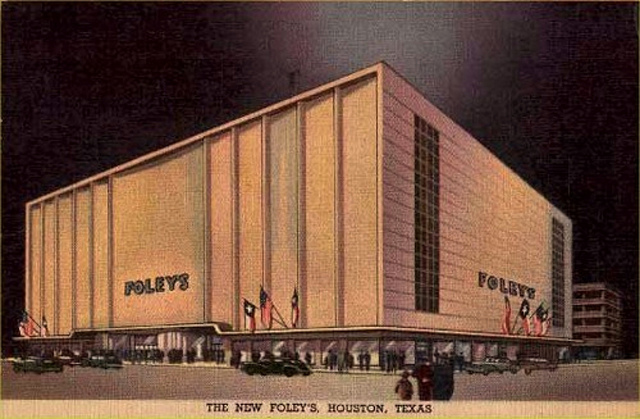
Foley's Downtown at 1110 Main in Houston opened on October 20, 1947.

Foley’s Downtown at 1110 Main in Houston opened on October 20, 1947.

The closing of Macy’s Department Store downtown is the final nail in the door of an era that got hammered shut a long time ago. The place wasn’t even Macy’s back in the day. It was Foley’s, a department store started on Main Street in 1900 by James and Pat Foley, and one that grew under corporate ownership in the 1940s to build and add the current site of the store at 1110 Main Street in 1947. It was Foley’s until 2006, when it was re-branded under new major ownership as Macy’s.

When the new Foley’s opened on October 20, 1947, Sears on South Main, smaller and away from downtown, was the only other store in Houston that offered its range of products and services.

Downtown was centrally important to Houston shoppers in the immediate post-World War II era. There were no shopping malls in 1947 and most people lived within ten miles of downtown. The first of its kind, Gulfgate Mall, would not open until 1956 – and it only got there because of the new Gulf Freeway (today’s I-45 S from downtown) that opened in 1948, the year following the start of the big Foley’s store downtown.

So, there was a premium period for downtown Houston shopping at Foley’s that ran roughly from its big store opening in 1947 to the fuller expansion of suburban freeways and malls by 1962. By 1962, Sharpstown Mall was up and running as Houston’s population was growing west and southwest and moving away from the old town center. By 1965, the Katy Freeway was up and running and Memorial City Mall and others were handling much of the western consumer shopping attraction.

By 1970, for sure, Foley’s downtown and downtown in general were hurting, but this isn’t an article on the failed effort to revitalize the area by resurrecting Market Square as an entertainment area in the late 1960s and early 1970s. Those who ventured downtown for the fun were soon enough put off by the dangers of criminal assault in the area as well as the inconvenience and risk of driving back to the suburbs under the influence.

Market Square failed. The movie theaters moved out. The musical art and dramatic theater programs improved, but there still wasn’t a significant consumer population living in the area to support downtown as a shopping area. The 21st century movement of baseball, basketball, and soccer to downtown in the form of new venues seems to have helped some, but competitive efforts in places like Sugar Land, Town and Country, and The Woodlands make it doubtful that downtown will ever again be the shopping mecca it once was.

Goodbye, Foley’s, We know you’re really the guy behind the Macy’s mask.