Archive for 2013

Farewell, Jack Pardee

April 8, 2013
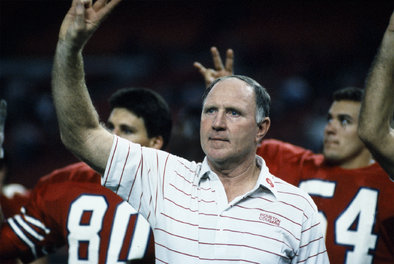
Jack Pardee, UH Head Football Coach, 1987-89.

Jack Pardee, UH Head Football Coach, 1987-89.

It’s been a week since Jack Pardee passed away on April 1, 2013, but we’ve needed all that time and then some to thank him for his contributions to the game of football and to the State of Texas for this contribution of another world-class human being in athletics.

Pardee died of gall bladder cancer at a hospice in Centennial, Colorado that he had chosen for sake of being near his family in his final days. He was 76 years old when he died.

Jack Pardee was first noted as a survivor of Texas A&M Coach Bear Bryant’s 1954 “Junction” camp in the Hill Country near Kerrville. He survived well enough to become one of the best linebacker/fullback two-position players in Texas Aggie history, becoming a second round draft selection of the Los Angeles Rams in 1957.

Pardee played linebacker for the Rams from 1957 to 1964 before sitting out a season in 1965 for the treatment of melanoma. He returned for five more seasons with the Rams (1966-70) before finishing his playing career with the Washington Redskins (1971-72).

Jack then tried is sure hand at coaching with the Chicago Bears (1975-77) and the Washington Redskins (1978-80), and in 1979, he was named as NFL Coach of the Year. On a break from the NFL, Pardee then used a previously conceived offense called the “run and shoot” to steer a new club called the Houston Gamblers before taking the offense on a three-year tour under his coaching auspices at the University of Houston (1987-1989). In that last season under Pardee, Cougar QB Andre Ware captured the Heisman Trophy.

From UH, Jack Pardee was hired to coach the Houston Oilers, which he did for the better part of five seasons (1990-1994). He was fired in 1994 after the club started with a 1-9 record and replaced by assistant coach Jeff Fisher.

Jack Pardee is survived by his wife, Phyllis, five children, and twelve grandchildren.

Rest in peace, JP. You did a great job for a boy coming out of tiny Christoval, Texas and a six-player football team conference to become one of the 35 players from 100 that started and survived the 1954 Junction Aggie football camp of Coach Bryant. “I never thought about quitting,” Pardee said of his time with the Junction Boys. “If I did, where would I go, Christoval? Hey, I worked hard to get out of there.”

Good traveling on God’s Road too, Jack. – The whole State of Texas should treasure your memory as your footsteps now take you over the hill that none of us ever see in person until it’s our time to be there too.

Astros AL Move in the Hopper for Years

April 7, 2013
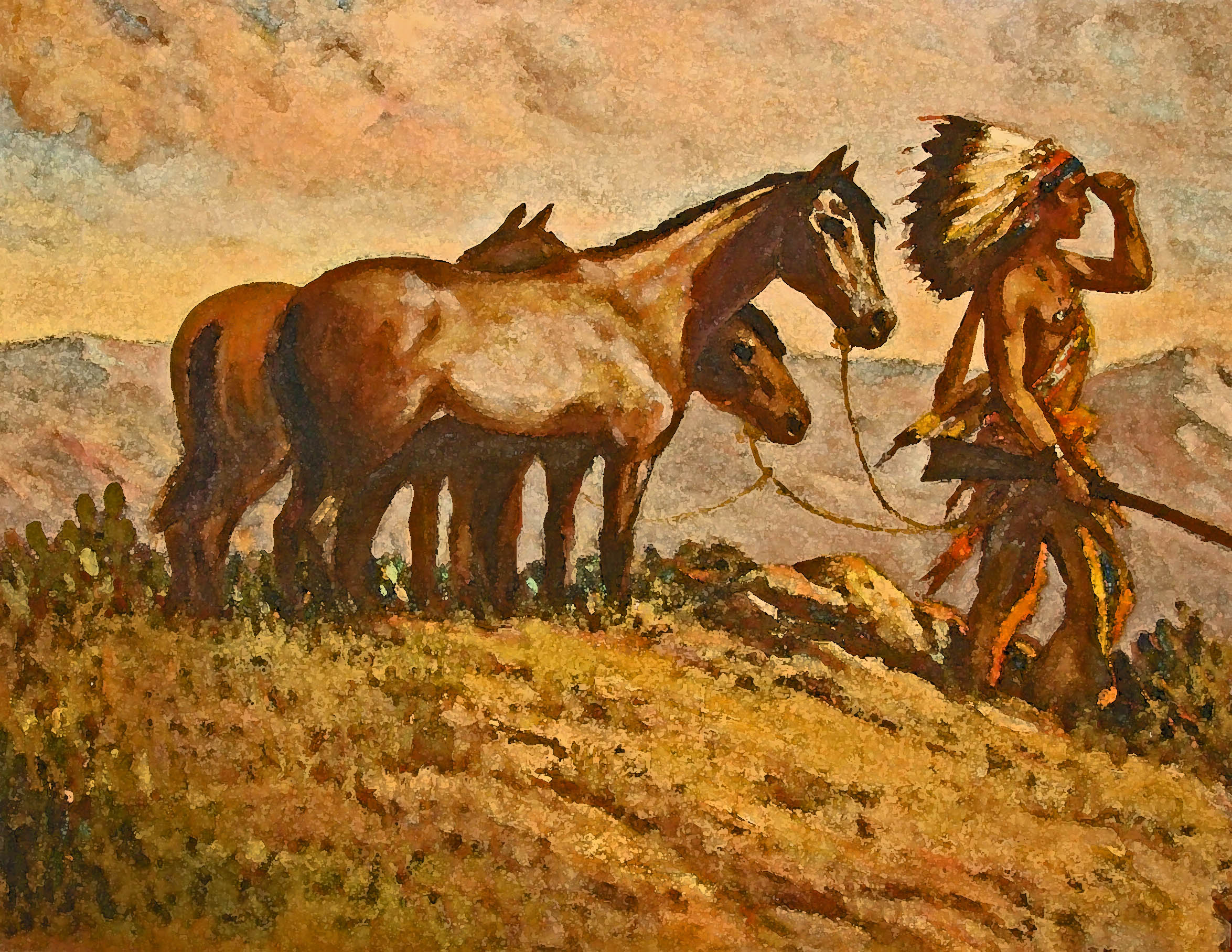
The Cleveland Indians, Bob Feller, Larry Doby, and Satchel Paige were some of my AL favorites as a kid. I will be looking forward to their first visit to Houston.

The Cleveland Indians, Bob Feller, Larry Doby, and Satchel Paige were some of my AL favorites as a kid. I will be looking forward to the first visit of the 2013 Tribe to Houston.  (Artwork by Myrtle Hunt in the 1930s)

Last Thursday I had this wonderful luncheon visit with good friend Greg Lucas in which he also brought me a copy of this most interesting article from the June 6, 2000 USA Today Baseball Weekly and a “Leading Off” column by writer Paul White.

It was all about figuring various ways to realign the 16/14 club NL/AL in a way that would make inter-league play and the playoffs more attractive to fans. All of the plans were not spelled out in expressed detail, but the pony being pushed by Commissioner Bud Selig back then was not the one that happened when Houston was finally forced to the AL as a sales condition placed upon new owner Jim Crane in 2011.

In Selig’s 2000 plan, one AL team from the ALE (probably Tampa Bay) would move to the ALC, producing a 6-team division to go along with the two remaining post-change 4-team divisions in the ALE and ALW. By some other (here unspecified) formula, the NL would be reorganized into four 4-team divisions.

At the same earlier time, however, the Major League Baseball Players Association drafted its own counter-proposal to the Selig-streaming MLB plan. In the MLBPA counter-plan, the goal was to create two 15-team leagues, with the most likely way to go being the movement of Houston from the NL to the ALW, as actually happened over time.

Very interesting, but not that surprising. After all, there are only so many ways to do things like this actual change to the 15/15 two league format. It wasn’t likely that it would happen by a way that had not been suggested previously.

In spite of all the NL tradition issues “the change” has spaded in Houston’s baseball soil, I do prefer the symmetry of the six 5-team divisions it gives baseball over one large 6-team division fitting its way into the old pattern that included four 5-team units and one dinky 4-team division.

4-team divisions are unacceptably too small for competitive purposes over the season. 5-teams may not statistically be much better, but they certainly look better on paper as competitive units and, the more clubs you have, the more you increase the odds of competitive presence.

The Astros may not win much this year, but they will not quit, not with a guy like Bo Porter at the helm. There is no room for quitters on a club managed by Mr. Porter.

On that optimistic note, have a beautiful baseball Sunday, everybody!

Congratulations to Coach Guy V. Lewis

April 6, 2013
Former UH Basketball Coach Guy V. Lewis, looking pretty much as he did that day we spoke together at UH back in 2009.

Former UH Basketball Coach Guy V. Lewis, looking pretty much as he did that day we spoke together at UH back in 2009.

The fall of 1956 will always be a special time for both Coach Guy V. Lewis and yours truly. Coach Guy was beginning his 30-year career (1956-1986) as the head basketball coach for the University of Houston Cougars. I was starting my life as an undergraduate student at UH (1956-1960) and fixing my red and white corpuscled soul firmly as a Cougar forever.

Since we didn’t grow up playing basketball in Pecan Park, it was only when I got to UH that I saw my first college game. There was no local NBA club in those days, just occasional stories in the Houston Post about some tall white guy who had been a former player named George Mikan, some nice feeds about former UT, NBA star, and fellow Houstonian Slater Martin, another couple of white guys named Bob Pettit and Jerry West, and a high rising new giant player at the University of Kansas named Wilt Chamberlain who apparently both hung the moon and also lowered the baskets for easy delivery.

UH played their home games in the Jeppesen (later Robertson) Stadium Field House on Cullen and Wheeler south of the football field in those days. It didn’t hold many fans, but it was loud, and Cougar students were just starting to get behind what Coach Guy V. was setting in motion. With early Cougars stars like Ted Luckinbill and Gary Phillips leading the way, folks were beginning to get behind the ball-bouncing Coogs of that early period. I remember big games we played and barely lost or won over Chet Walker and the Bradley Braves and Oscar “Big O” Robertson of the Cincinnati Bearkats.

The excitement was emanating from the spirit and skill of Coach Guy V. Lewis.

By the early to mid-1960s, Coach Lewis of UH basketball was doing exactly what Coach Bill Yeoman of UH football was doing – making sure that UH was leading the way in the recruitment of black athletes to their formerly all-white university athletic program. By the time that schools like UT and AM had awakened to what was happening, UH was light years ahead of most southern/southwest schools in that regard.

Naming those recruits today is a virtual trip to the Basketball Hall of Fame and NBA All Star Annals in itself. The great Elvin Hayes and Don Chaney were the two earliest Lewis recruits. It was around these two stars that Coach Lewis built his “Game of the Century” at the Astrodome against Lew Alcindor and the UCLA Bruins in January 1968. “The Game” drew 50,000 fans and changed the face of basketball as a marketable commodity in the world.

Led by Elvin “The Big E” Hayes, UH defeated UCLA in the Astrodome Game of the Century, 71-69.

The stars of UH basketball history are a book unto themselves. I won’t begin to try to name them all over the years in this article. Suffice it to say, (H)Akeem Olajuwon, Clyde Drexler, and Phi Slama Jama in the early 1980s should be enough.  There’s barely enough space here to bullet drop all the reasons that Coach Guy V. Lewis’s induction this week into the Robert Naismith Basketball Hall of Fame at the age of 91 is long overdue:

As head coach at UH from 1956-1986, Lewis posted a career record of 592-279.

Twice (1983, 1984) Guy V. Lewis was named National Coach of the Year.

Lewis posted 27 consecutive winning seasons.

Coach Guy’s Cougars made 14 trips to the NCAA tournament, 5 Final Four appearances, and 2 finals games.

The day I got to thank Coach Lewis for all he’s done for all of us at UH, he looked exactly as he does in this story’s featured photo. It happened at a tailgate party outside Robertson Stadium near the H Association pavilion back in 2009. I had gone over to speak to Coach Lewis when, all of a sudden, like the parting of the Red Sea, everybody else just peeled away, leaving us there together alone to talk for a precious five minutes or so. A best I recall, here’s how that time passed:

“Coach Lewis,” I said, “I just have to repeat what I’m sure so many others have already told you. Thank you for all you’ve done for UH. We would not be all we have become as a university without you.”

Coach Lewis grabbed my hand and gave me a quiet sincere smile. “Thank you,” he said. “That means a lot to me.”

Then he really brightened when I told him that I had arrived at UH during his first season as a head coach. He sort of lit up when I recalled the names of our early foes, Chet Walker and Oscar Robertson, and he seemed to like hearing  that I once gave a hitchhiking Ted Luckinbill a lift on Cullen because he was late for practice.

“We’ve been here a long time, haven’t we?” Coach almost whispered before other new people saw him and started pouring in to make contact with our shared treasure of UH greatness.

“We may have been here a long time,” I thought, as the newcomers descended upon Coach Guy, “but you’ve got much further to go. Forever is a very long time.”

Thank you, Universe of Fair Play, for making sure that Coach Guy V. Lewis finally got his just recognition from the Hall of Fame while he was still alive to know of it.

The Montreal@Jersey City Box Shows…

April 5, 2013
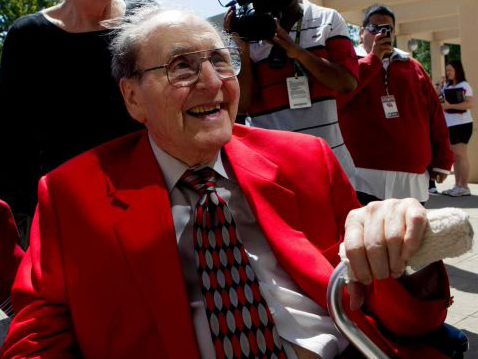
Larry Miggins of Jersey City went 2 for 4 in the Jackie Robinson debut game with Montreal.

Larry Miggins of Jersey City went 2 for 4 in the Jackie Robinson debut game with Montreal.

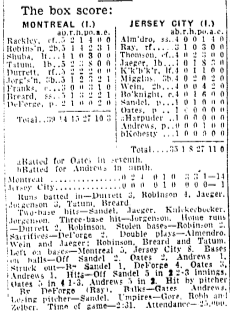
Thanks to Cliff Blau of SABR and David Barron of the Houston Chronicle, I today received two independent copies of the box score on Jackie Robinson’s initial minor league color line breaking game from Opening Day of April 18, 1946. Here’s how the game and survivorship of the participating players over time has played out, starting with Montreal and feeding directly into Jersey City:

MONTREAL AB R H RB1 2BH 3BH HR SB
Marv Rackley, CF 5 2 1 0 0 0 0 0
Jackie Robinson, 2B 5 4 4 4 0 0 1 2
George Shuba, LF 4 1 0 0 0 0 0 0
Tommy Tatum, 1B 5 2 3 1 0 0 0 0
Red Durrett, RF 5 2 2 3 0 0 2 0
Spider Jorgensen, 3B 5 1 2 3 1 1 0 0
Herman Franks, C 3 0 0 0 0 0 0 0
Stan Breard, ss 5 1 3 1 0 0 0 0
Barney DeForge, P (W) 2 1 0 0 0 0 0 0
TOTALS 39 14 15 12 1 1 3 2
JERSEY CITY AB R H RB1 2BH 3BH HR SB
Jaime Almendro, SS 4 0 0 0 0 0 0 0
Charlie Ray, RF 3 1 0 0 0 0 0 0
Bobby Thomson, CF 4 0 2 0 0 0 0 0
Norman Jaeger, 1B 4 0 1 1 1 0 0 0
Austin Knickerbocker, LF 4 0 1 0 1 0 0 0
Larry Miggins, 3B 4 0 2 0 0 0 0 0
Russ Wein, 2B 4 0 0 0 0 0 0 0
Dick Bouknight, C 4 0 1 0 0 0 0 0
Warren Sandel, P (L) 1 0 1 0 1 0 0 0
Phil Oates, P 1 0 0 0 0 0 0 0
Mel Harpuder, PH 1 0 0 0 0 0 0 0
Hub Andrews, P 0 0 0 0 0 0 0 0
ED Kobesky, PH 1 0 0 0 0 0 0 0
TOTALS 35 1 8 1 3 0 0 0

Of the 9 players who took the field for Montreal that record day, 3 are still living: winning pitcher Barney DeForge, age 95; center fielder Marv Rackley, age 91; and left fielder George “Shotgun” Shuba, age 88.

Of the 13 players who took the field for Jersey City on April 18th, 1946, 4 are still with us: second baseman Russ Wein, age 96; pitcher Phil Oates, age 90;  third baseman Larry Miggins, age 87; and shortstop Jaime Almendro, age 85.

In total, 7 of the 22 players who participated in the original color line breaking game in Jersey City on April 18, 1946 are still alive. *

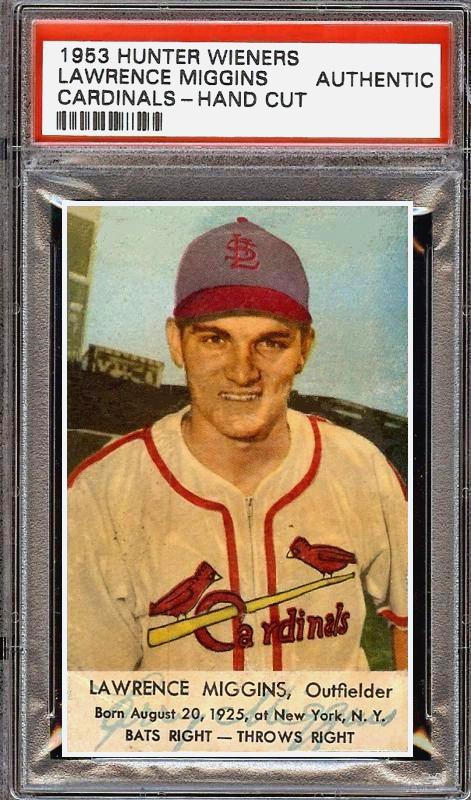
Larry Miggins is Houston’s strongest connection to this game because of his years of service as a Houston Buff in 1949, 1951, 1953, and 1954, and his sixty plus years as a Houston resident. This little research, however, has brought to light that Montreal’s catcher in the big game, the late Herman Franks, also bore a Houston connection into the game as a former Houston Buff catcher from 1936 and 1937.

The following season, another greater Houston area player, a first baseman, the late Ed Stevens of Galveston, would have his own direct connection to the great Jackie Robinson when No. “42” would replace him at that position in the Brooklyn Dodger lineup on Opening Day 1947.  It wan’t the original color line break, but it was the major league level version. And that was the big wall that needed to fall.

Just one more footnote on the box score. Remember the reason behind the fact that Montreal scored 14 runs on the day, but only had 12 RBI. It was because of the fact that Jackie Robinson twice reached third base with his aggressive base running and then provoked balks-home scores off Jersey City relievers Phil Oates and Hub Andrews.

After the game, fans applauded and clamored for Jackie’s autograph. Now that would be a nice collector’s item today, especially if it came from one’s own parent’s or grandparent’s experience. I always wonder how many items from these kinds of momentous days actually get saved over time.

Thank you one more time, Cliff Blau and David Barron. And thank you Baseball Reference.Com for making it so easy now to look up the rosters and current survivorship information of past players from even the most obscure organized baseball backgrounds. All of you guys made my day. Again.


* Since this column was posted, a member of the family has contacted us to clarify that Norman Jaeger, first baseman for Jersey City in this historic game, has been dead since August 18, 1997. I have since that contact informed Baseball Reference.Com for the purpose of getting this update posted into his playing record. – Bill McCurdy

JR Debut 02

Jackie Robinson Movie Has Houston Connection

April 4, 2013
s

Larry Miggins, later and today of Houston, played in Jackie Robinson's first groundbreaking game that broke the organized baseball color line first at the minor league level in in 1946.

Larry Miggins, later and today of Houston, played in Jackie Robinson’s first groundbreaking game that broke the organized baseball color line first at the minor league level in 1946.

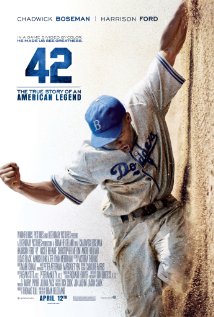
JR42The new Jackie Robinson movie “42” is set for nationwide release next week on April 12th. It stars a believable young actor named Chadwick Boseman as Jackie Robinson and Harrison Ford in an incredible portrayal of Branch Rickey in a great retelling of how the color line was broken in organized baseball back in the late 1940s. Throw in the rich gifts of digital photography in bringing back the look and feel of Ebbets Field and Brooklyn in the post World War II years and we almost have the makings of a perfect tale about to play out every string of sentimentality that most of us still have for this great moment of change in baseball and American cultural history.

Except there is more. And I doubt the film is going to highlight what I’m about to describe for you here.

The color line wasn’t broken in 1947 with the Dodgers. It was broken on April 18, 1946 in a game between Robinson’s Montreal Royals of the AAA International League as they blasted their way to a 14-1 victory over the home team Jersey City Giants. Jackie Robinson played second base for Montreal that banner day, going four for five at the plate, including a two-run homer. He scored four runs on the day, picked up two bunt singles, stole two bases, and also scored two runs from third base on balks. His speed and derring-do on the base paths had the Jersey City staff thrown off balance all day. He also played with heat and sportsmanship, drawing positive support from even many of the Jersey City fans who came to see him make the real official return of a black man to organized baseball for the first time since the late 19th century.

The Houstonian who played in Jackie Robinson's first organized baseball game.

Larry Miggins:    A Man for All Seasons.

There was another thing about that game that I’m betting may not come out in the bigger frame presentation of the movie as a Brooklyn Dodger event. And that’s the fact that the game contained a connection to a future Houstonian.

You see, 87-year old Larry Miggins, who later played for the AA Texas League Houston Buffs and then briefly with the St. Louis Cardinals, also played in that famous groundbreaking game. Larry Miggins played third base that day for the Jersey City Giants and, somewhere among his souvenirs, he even has a news article photo of him taking a late throw on a steal of third base by Jackie Robinson. Miggins will tell you himself too. He’s a man who gives credit where credit is due. The atmosphere was electric that day – and Jackie Robinson played a lights-out magnificent game of ball.

Today, Larry Miggins is one of the few, if not the only surviving player from Jackie Robinson’s first official 1946 game in organized baseball. If we are ever so fortunate as to come across a box score of the game, we will be able to make that determination for certain. Either way, it is important enough to know that Larry Miggins was there as a participant in one of the most dramatic days in American baseball history – and that he still walks among us in Houston in 2013.

That being said, I’ll say it again: I can’t wait to see “42”.

Post Script: Oh, yes, by the time Jackie Robinson broke the big league color line in 1947, I am reminded by Dr. Jimmy Disch that a second Greater Houston area connection comes into play when Robinson replaces the late Ed Stevens of Galveston as the starting first baseman of the Brooklyn Dodgers on Opening Day 1947, but that’s a whole other story that is not connected to the original color line break in Jersey City in 1946.

Dickie Kerr Statue Now at Constellation Field

April 3, 2013
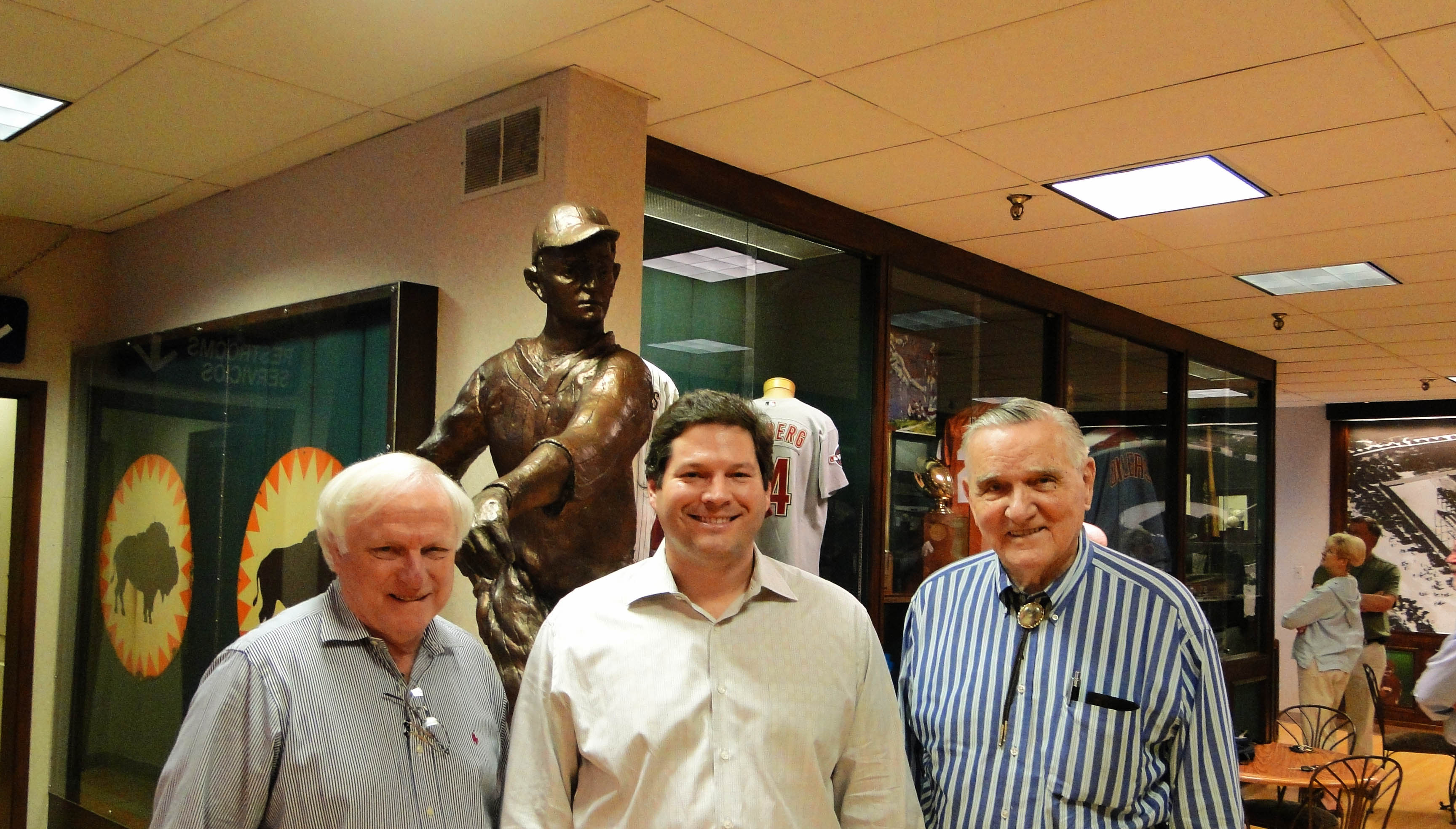
Dickie Kerr Statue over the shoulders of Tom Kennedy, Curator & Historian; Rodney Finger; and former Houston Buff Larry Miggins.

Dickie Kerr Statue over the shoulders of Tom Kennedy, Curator & Historian; Rodney Finger, BB History Sponsor; & former Houston Buff Larry Miggins.

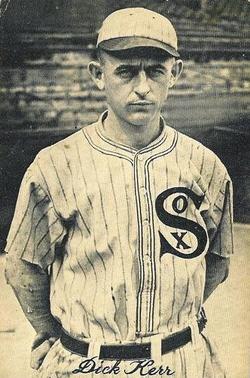
Most people achieve fame for the things they do. Some people, however, also achieve fame for the things they don’t do. Little Dickie Kerr, the 5’7″ rookie left hander for the 1919 Chicago White Sox, did it both ways. He posted a 13-7, 2.88 ERA record as a first year starter for the 1919 American League Champion White Sox. Then he followed that up by winning both his starts in the World Series against the eventual champions, the Cincinnati Reds. What he didn’t do was follow the lead of his eight teammates, including fellow pitchers Eddie Cicotte and Lefty Williams, who went out there and made sure their own club lost the World Series by fixing the outcome of key plays in favor of the Reds.

Dickie Kerr didn’t even know that the fix was on. He was raised to play the game right and to always give winning his best effort. As the years went by, and the stench of the fix began to dissipate, the heroic role of Dickie Kerr became clearer and clearer to the baseball public. It isn’t often that rookies even reach a World Series in their first year, let alone get to pitch and then win two games against the almost impossible odds of beating the other club, plus the undermining efforts of eight men from your own team also working against you.

Dickie Kerr

Dickie Kerr

Regardless of how innocent or guilty some of the eight “Black Sox” players may have actually been individually from the view of today’s differential evidence against each banned player, Kerr still won an uphill battle against the odds to have taken two wins in a Series that his club was destined to lose.

Kerr would post a 21-9, 3.37 record with essentially the same rostered club in 1920, but after that last intact roster season, the permanent suspension of the eight White Sox offenders by the new Commissioner of Baseball. Kenesaw Mountain Landis, would gut the club and drop the Pale Hose to a seventh place finish in 1921. Kerr would go 19-17 with a 4.72 ERA for the 1921 season, giving up league-leading totals of 357 hits and 162 earned runs.

Ironically, Dickie Kerr would find himself temporarily banned from organized baseball for violating the reserve clause in 1922. His offense? He signed to play independent baseball rather than remain bound to contract by the cheapskate owner Charlie Comiskey, a problem that led to fouler reactions by his earlier eight lost teammates when confronted by their inability to get paid what they each apparently felt they were worth.

The difference here is large. Kerr didn’t cheat. He just quit organized ball. He did try a brief comeback with the White Sox in 1925 at the age of 31, but he gave it all up after 12 games and a 0-1 record. From there on, Dickie Kerr earned his modest life keep as a coach and minor league manager. The book on his MLB pitching record closed at 54-34, with a 3.84 ERA.

In 1927, Dickie Kerr was attracted to Houston by the opportunity to coach baseball at what was then known as Rice Institute, now Rice University. The St. Louis native loved Houston even though he had not played any of his minor league ball here. It was still a Cardinals town because of the minor league Buffs and Dickie had a lot of baseball friends who also lived in the general area.
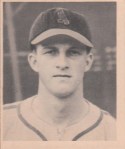
Stan Musial

Stan Musial

A few years later, Dickie Kerr served as manager for the Cardinals’ Class D club at Daytona Beach, Florida when he acquired a young lefty pitching prospect named Stan Musial from Donora, PA. The kid was only 19, but he had posted a couple of stats from 1939 that must have jumped off the page at Kerr as the now wily old manager looked over his new talent.

The “kid” had posted a 9-2, 4.30 ERA pitching record at Williamson in 1939, but he also had batted .352 in 75 times at bat for Williamson that same season. If those two facts did not evoke a mild “hmmm, what have we here?” muttering from Kerr right away, I would be greatly surprised.

As 1940 turns out, the kid pitcher goes 18-5 with a 2.62 ERA in his work for Kerr, but he also bats .311 in 405 times at bat in the field. An injury to his left arm made his bat much more available to the club as an outfielder. By season’s end, the young man is a little perplexed about his baseball future. He and his young wife have also grown quite close to Mr. and Mrs. Dickie Kerr.

The Kerrs invited the Musials to spend the winter with them. During this time, Kerr convinced Stan Musial that his prospects for the future were as a hitter, not a pitcher. During this time also, the Musials gave birth to their oldest born son, with Dickie Kerr leading the hospital entourage on a mad drive to the delivery room. The Musials named their eldest boy Richard, in honor of Dickie Kerr.

The rest is history. Musial’s future as one of the greatest hitters in baseball history was off and running and he was in the big leagues to stay by 1941.

The great ones never forget where they came from. In 1958, Dickie Kerr was living modestly in Houston when San Musial swooped down upon him and made him a present of a brand new home. To do the deal, Musial used a great percentage of his 1958 baseball salary. Dickie Kerr lived there until his death on May 4, 1963.

This week, the Dickie Kerr Statue that once graced the grounds at the Astrodome and then impressed all visitors to the Houston Sports Museum at the former site of Finger Furniture and Buff Stadium on the Gulf Freeway is returning to public view on the grounds outside the gate at Constellation Field, home of the Sugar Land Skeeters.

Mr. Kerr

Mr. Kerr

Thanks to their healthy respect and appreciation for the rich baseball history of our community, going way back into the 19th century, the Skeeters are now working with Mr. Rodney Finger of the Finger family and their longtime curator, Tom Kennedy, to make some precious historic items and artifacts available for public view over time, in and around the new pioneering base of minor league baseball in Houston that Constellation Field in Sugar Land has the chance of now becoming. With deep baseball commitment people like Tal Smith of the Skeeters behind the project, the Kerr statue almost takes on the beacon role of Lady Liberty, calling out our attention to the memory and honor of a great Houstonian named Dickie Kerr – and a lot of other Houston-rich baseball treasures to soon come our way too via all that positive energy that now brews baseball in Sugar Land.

Check out the Dickie Kerr Statue at Constellation Field very soon – and stay tuned for further news and details.
Fireman, Save My Child

April 2, 2013
In "Fireman, Save My Child", Joe E. Brown wore the Cardinal uniform that was made famous by the Gashouse Gang.

In “Fireman, Save My Child”, Joe E. Brown wore the Cardinal uniform that was made famous by the Gashouse Gang.

In “Fireman, Save My Child” from 1932, Joe E. Brown stars as Joe Grant, volunteer fireman, inventor, and star pitcher of the Rosedale (KS) Rosies. An opening scene game, unfortunately, is interrupted by a huge fire at the local pickle plant and sauerkraut factory that is too big for Grant and his boys to handle. Joe had invented a chemical “affinity” bomb that puts out fires, but he had none on hand to help with the fire.

Joe Grant is too good a pitcher to stay small town. The St. Louis Cardinals sign him at mid-season and put him right out there on the mound. Grant comes through with complete game shutouts in his first three starts, quickly earning the new nickname of “Smokey Joe” Grant.

Still, Grant holds out that baseball is fun, but that chasing fires is his real passion in life. He doesn’t take kindly to the clubhouse laughter that his declaration incites, but no one pays his fuming protestations much mind.

Joe Grant is pure corn ball naive. When a gang of crooks sicks a tough moll named June on him to drain his new bank account, Joe is  too arrogant to be capable of defending himself against an aggressive, money-grabbing female monster. In fact, when he meets the moll and tells of his plans to patent his fire-fighting affinity bomb, she and the other crooks she represents convince Joe to let the famous patent attorney known as “T.F.” handle his application. They drain all of Joe’s earnings and he has nothing to show for it as the Cards take on the Yankees in the World Series.

When his home town girl friend Sally shows up in St. Louis to check on what’s been happening to the money, she learns that it’s been shifted away by June and the thieves – and that June has even managed to trick Joe into an engagement that will leave his World Series winnings also open for the taking.

Sally runs away in despair and things look pretty bleak for the dim-witted Joe Grant.

Joe finally figures out that he’s been duped, but he disappears with the World Series knotted at 3 games a piece in St. Louis to consult a real attorney about his invention. After almost burning down the legitimate attorney’s office, his fire bomb device works effectively to stop disaster and win Joe a big contract, plus a full-siren ride to the ballpark with the fire chief. Joe gets to the game in time to retire the Yankees in the top of the 9th and then win the game with an RBI triple and an absurd steal of home in the bottom of the 9th.

Joe ends the season with a World Series ring, a wedding ring that unites him with his hometown true love, a patent and residuals for his fire extinguishing affinity bomb, a new fire chief’s hat, and with everything else that represents a little bit of happily ever after in his mind.

Isn’t that the way most old movies used to end?

At any rate, “Fireman, Save My Child” (1932) was the first movie in his Joe E. Brown baseball trilogy. The others were “Elmer the Great” (1933) and “Alibi Ike” (1935). Joe E. got the girl, home, and hearth in those flicks too in the wake of beating back the bad guys in the old-fashioned All American Way.

March 31, 2013: A Night of Astros AL 1sts

April 1, 2013
Astros Manager Bo Porter congratulates Rick Ankiel on 1st Astros AL History HR.

Astros Manager Bo Porter congratulates Rick Ankiel on 1st Astros AL History HR.

Sun., 03/31/13, was a night for 1sts in Astros Baseball History …

1st win as an American League club, 8-2, over the Texas Rangers;

1st time to lead the entire American League with a perfect record of 1-0;

1st base hit in AL history, a single by Jose Altuve on the 1st pitch of the game to the Astros in the home half of the 1st;

1st two triples in Houston AL history, both struck by center fielder Justin Maxwell;

1st run scored in Astros AL history when Brett Wallace crosses the plate in the bottom of the 4th;

1st two RBI in Astros AL history when Justin Maxwell triples in the bottom of the 4th, scoring Wallace and Pena.

1st pinch hit in Astros AL history when Rick Ankiel homers to right in the bottom of the 6th;

1st HR in Astros AL history when Rick Ankiel pinch hits a 3-RBI blast in the bottom of the 6th;

1st pitching win in Astros AL history when starter Norris departs with 2 outs in the 6th and a 4-2 lead that holds;

1st pitching save in Astros AL history when Erik Bedard earns it by holding Texas scoreless in final 3.1 IP of 8-2 win;

1st win in Astros AL history for new manager Bo Porter;

1st win in Astros AL history at Minute Maid Park.

We could go on and on, but those are the big ones as “1sts” on a beautiful new start. We don’t expect everyday to finish this grand – or even a third of the games in 2013 to work out this well, but they did yesterday – and yesterday was Opening Day. – it all just made Opening Day all the sweeter.

And, I gotta tell you something else too. Maybe it’s my long-term and late in life liberality coming hard and fast together when it comes to change as a good thing, but I didn’t inch away from the game for any kind of break in front of the screen at home last night until the game was over. I just watched and enjoyed, and never once did I feel cheated that I wasn’t getting to see the pitcher bat.

In fact, had the NL rules been in effect, the Astros might have taken Bedard out in the bottom of the 6th since the ninth man in the order made the last out in the Astros order – and that would have denied Bedard the chance to pitch three more innings of fairly brilliant relief for a much deserved save credit.

I’m going to save my angst for “meaning of life questions,” and, for me, at least, those queries have nothing to do with pitchers batting, the DH, or the American League game. What I watched last night was baseball at it’s finest, as far as I’m concerned – and that was good enough for me.

Have a nice week, everybody!

Oh, yeah! I forgot something. Here’s how the MLB standings look after the first day of play. …

AMERICAN LEAGUE


EAST

W

L

PCT

GB

Boston

0

0

.000

NY Yankees

0

0

.000

Baltimore

0

0

.000

Toronto

0

0

.000

Tampa Bay

0

0

.000

CENTRAL

W

L

PCT

GB

Cleveland

0

0

.000

Chicago Sox

0

0

.000

Detroit

0

0

.000

Kansas City

0

0

.000

Minnesota

0

0

.000

WEST

W

L

PCT

GB

Houston

1

0

1.000

LA Angels

0

0

.000

.5

Oakland

0

0

.000

.5

Seattle

0

0

.000

.5

Texas

0

1

.000

1


NATIONAL LEAGUE


EAST

W

L

PCT

GB

Washington

0

0

.000

Atlanta

0

0

.000

NY Mets

0

0

.000

Philadelphia

0

0

.000

Miami

0

0

.000

CENTRAL

W

L

PCT

GB

Chicago Cubs

0

0

.000

Cincinnati

0

0

.000

Pittsburgh

0

0

.000

St. Louis

0

0

.000

Milwaukee

0

0

.000

WEST

W

L

PCT

GB

San Diego

0

0

.000

LA Dodgers

0

0

.000

San Francisco

0

0

.000

Colorado

0

0

.000

Arizona

0

0

.000


Opening Day, 2013

March 31, 2013

MLB-opening-day-2013

The Houston Astros begin their American League career tonight at 7 against the visiting Texas Rangers. Right-handed Bud Norris takes the mound for Houston against lefty Matt Harrison of Texas in a game that likely represents the Astros’ only chance this season to be ahead of the Rangers in the standings with a victory for even a single day.

For all of us who don’t have Opening Night tickets or Comcast Cable, the game will still be available on TV via ESPN. For some of us, it will be our first look at the new Astros – and maybe our last look until the gods of greed and their minion company dollar-devils work out the salient details of how much extra money it’s going to cost all private TV network subscribers for a lesser number of us to watch Astros baseball over the tube on a regular basis.

I’m excited, of course. I’m always excited on Opening Day, no matter what. After all, “we gotta have hope. Mustn’t sit around and mope.” That being said, it doesn’t mean we also have to be loaded down with great expectations either. To expect much this season on the winning side would be an almost total disconnect to the facts available about what our boys are up against in the AL West – and what they bring to the fight at $25 million for the whole active roster.

Hope for hustle, quick learning, and some extra games won by the energy exertions of a club run by the likes of a powerful field leader named Bo Porter. Just don’t expect the Astros to buck the odds against the talent they face and actually make the playoffs. That being said, I do think we shall see this season moving things in the direction of a brighter tomorrow next year. And I also think the mid-season infusion of young talent like Singleton and others into the MLB roster is going to sweeten that pot too.

It’s spring. Time to hope. Let’s do it.

GO ASTROS!

Welcome Back, Baseball Season!

March 30, 2013
Welcome Back, Astros Baseball!

Welcome Back, Astros Baseball!

Good morning, fellow baseball fans!

The Houston Astros will open their first season in the American League tomorrow night, March 31, 2013, against the visiting Texas Rangers at Minute Maid Park in Houston. As best I now know, Bud Norris will be the Opening Day starting pitcher for the Astros and their original starting lineup will look something like the one I’ve posted below.

Starting Rotation

#20 Bud Norris                       BR/TR

#64 Lucas Harrell                  BS/TR

# 59 Philip Humber               BR/TR

#43 Brad Peacock                   BR/TR

#45 Eric Bedard                       BL/TL

Starting Lineup

#27 Jose Altuve, 2B                 BR/TR

#29 Brett Wallace, 1B              BL/TR

#44 Justin Maxwell, CF         BR/TR

#12 Carlos Pena, DH              BL/TL

#2 Brandon Barnes, RF          BR/TR

#30 Matt Dominguez, 3B       BR/TR

#28 Chris Carter, LF                BR/TR

#15 Jason Castro, C                 BL/TR

#13 Ronny Cedeno, SS             BR/TR

With the exception of the fact that DH Carlos Pena will bat for the pitcher, the object of the game is the same as it always has been: to have more runs than your opponent does by the time you register 27 put outs against your foe for the day or evening. Scoring more runs than the opposition remains the purpose of the game, no matter who bats or doesn’t bat, for or against your club over nine scheduled innings.

I love the confidence, spirit, and fire that exudes from every pore and spiritual cell that emanates from the body and soul of Astros manager Bo Porter and I am really looking forward to watching how he keeps eyes lifted among his young pups on the prize that awaits those that never give up. The 2013 Astros may not have a snow ball’s chance in hell of winning it all, but that doesn’t mean that they are condemned to another 100-loss season – or even the worst record in baseball. Before season’s end, I’m thinking help from the farm is even going to boost the second half effort in positive ways we may not have counted upon even a short while ago.

Life’s too short for pessimism. Let’s make the most of each day and get back to the joy of baseball. And the sound of the ball striking the bat. And the smell of hot dogs at the ballpark. And the way the skies look on those mornings we wake up knowing we’ve got a game to go see that night. And the company of family and friends that we share these moments with forever – in person and in memory.

Play ball, boys. The baseball season is here again.