Archive for 2013

Buff Biographies: Eddie Kazak

July 29, 2013

Buff Logo 12

Eddie Kazak, 3B 1951 Houston Buffs

Eddie Kazak, 3B
1951 Houston Buffs

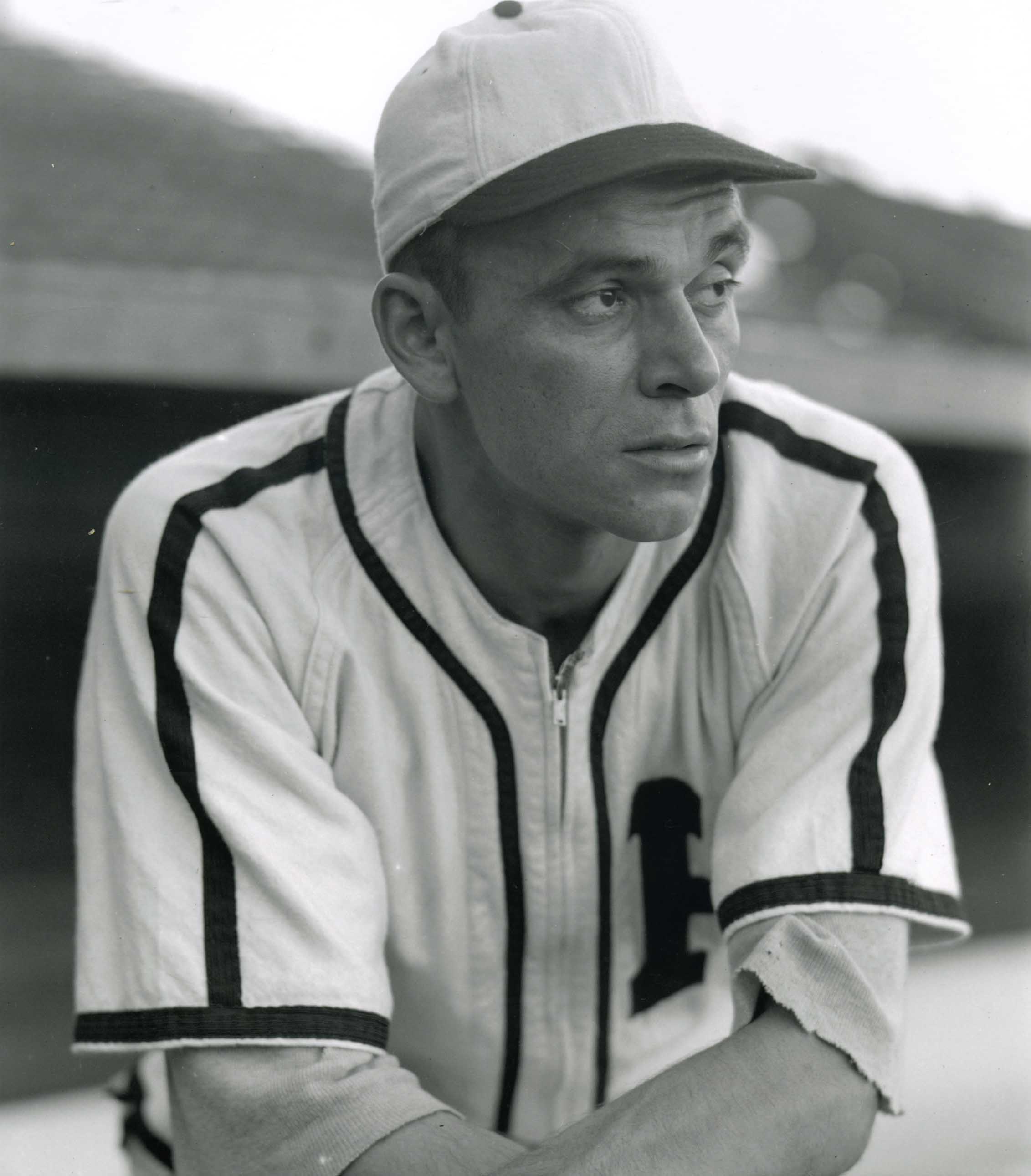
Eddie Kazak (6’0″, 175 lb.) (BR/TR) was a wiry-muscular third baseman who played for the Houston Buffs in both 1942 (.257, 5 HR) and 1951 (.304, 13 HR).

EdwardT. Tkaczuk (Eddie Kazak) was born in Steubenville, Ohio on July 18, 1920, three years after a fellow named Dino Paul Crocetti also was born in the same Ohio steel mill town. Crocetti would grow to fame as singer/actor. It’s unlikely that Dean Martin and Eddie Kazak ever met (by any names) as kids. Eddie’s family moved early on to  the small coal-mining town of Muse, Pennsylvania where he grew up.

Eddie Kazak enjoyed a 16-season career in the minors (1940-42, 1946-48, 1951-60), coming out of same with a career minor league batting average of .307 with 153 career home runs.

As a paratrooper in the U.S. Army Air Corps during World War II, Kazak suffered a bayonet wound to his left arm and shrapnel damage to his right elbow in a landing that followed the invasion of Normandy in 1944.  Kazak spent the next 18 months in a hospitals, enduring numerous surgeries, including one to replace the missing bone in his left elbow with a plastic patch. His doctors told Kazak to forget about baseball upon his release from the army and medical care, but Eddie couldn’t do it. In spite of shooting pains in his right arm every time he threw a ball, Kazak attempted a comeback in 1946.

When Eddie couldn’t break into a spot with the AAA Rochester Red WIns in 1946, he moved down to A Columbus Cardinals of the South Atlantic League for an absolutely amazing first game at second base. In a 10-3 win over Savannah on April 23, 1946, Eddie Kazak signaled his come back with 2 home runs, a double, and a single in five times and bat, throwing a steal of home for good measure. Nobody AKWS bout Eddie’s ability or will to play the game after that night. – With results like that, the guy could play with pain, even if his superman production couldn’t happen most of the time.

In human terms, Kazak’s best minor league season was 1954, when he hit .344 with 1992 hits and 19 HR for Beaumont of the Texas League. That same year, hot third base prospect Ken Boyer of Houston had comparable totals that included a .319 BA, 202 total hits, and 21 total HR.

In his best major league season, Eddie batted .304 with 6 HR in 92 games for the 1949 St. Louis Cardinals. In his 5 MLB seasons (1948-52), Kazak played in only 208 games, never reach 100 games in any single season.  All years but 1952 were spent with the Cardinals, but that last season was split between the Cards and the Cincinnati Reds. Eddie was just one of those who ate up AA pitching, but struggled some against the MLB arms. His MLB career marks included a respectable .273 BA and 11 career homers.
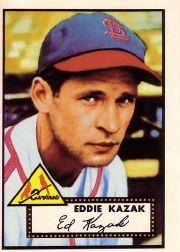
Seeing one your favorite former Buffs on a real MLB baseball card always felt so good back in the day.

Seeing one your favorite former Buffs on a real MLB baseball card always felt so good back in the day.

Eddie Kazak was a slashing line-drive hitter with pretty good base-path speed and athletic ability as a defensive third baseman. He was also an Allen Russell kind of guy. Russell was the Buffs President during Kazak’s 1951 second tour with the club and he was also a major owner at Beaumont in 1954. Kazak finished his professional career with 3 games at Austin in 1960, and that was another club touched by Russell late in the 1950s. Russell liked players with strong working class ethics and that definitely took in the Planet Earth space occupied by Eddie Kazak.

Kazak settled in the Austin area following the conclusion of his baseball playing career. He died in Austin on December 15, 1999 at the age of 79.

Former 1951 teammate Jerry Witte and Eddie Kazak hit it off as buddies due to their shared Polish ethnic background.  (Witte was half-German and Half-Polish, but he hardly recognized the former in preference for the other.)

“You know how two Polish ball players stay out of trouble when they have time on their hands in Houston?” Witte used to ask. “Me and Kazak would get a line and a pole and go fishing down on the banks of the (Sims) bayou near where we lived. We’d also take a .22 rifle and shoot at turtles when we got the chance. They could be pretty tasty too.”

I still can’t believe that they cooked and ate any turtle that came out of any bayou in Houston, but sometimes it’s just better to listen rather than over-think the camaraderie stories of ball players from the Post-World War Two era.
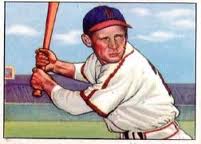
Eddie Kazak in Line Drive Form!

Eddie Kazak in Line Drive Form!

R.I.P., Eddie Kazak! ~ R.I.P, Jerry Witte! ~ Hope you guys are having fun on the banks of those heavenly golden shore bayous these days!

Baseball Expressions We Use in Everyday Life

July 28, 2013

Baseball Expressions We Use in Everyday Life …

(1) Sam “couldn’t get to first base” with Sally.

(2) Joe was in prison for life due to the “three strikes and you’re out” policy on three felony convictions.

(3) Tim and Bob were going to need “a homer in the bottom of the ninth” to keep their little burger joint open against the competition they faced from all the new corporate retailers.

(4) Selling that bad-running, but good-looking used sports car to that hungry-eyed, 21-year-old buyer for too much money this afternoon was salesman Tom’s “can of corn” deal of the day.

(5) Jack’s four-point business plan for the new corporate fiscal year received “grand slam” approval from this boss and the board of directors.

(6) Joe’s ideas for his company’s business plan, on the other hand, were rejected as too radical, too “out in left field”, if you please.

(7) “Double Play” Dolan was an old-fashioned politician. When he ran for office, he always promised the people more service and less taxation.

(8) Sales manager Sidney says to his commission-based land line phone service and reconditioned typewriter company sales staff: “You gotta have heart – miles and miles and miles of heart! – When the odds are saying you’ll never win – that’s when the grin should start! – You gotta have hope – mustn’t sit around and mope! – Nothing’s half as bad as it may appear – wait’ll next year and hope! – When your luck is batting zero – get your chin up off the floor! – Mister you can be a hero! – You can open any door! – There’s nothing to it – but to do it – FIRST – you gotta have heart!”

(9) Mary took an “intentional pass” on Harold’s invitation to the Star Trek Fans Convention.

(10) Harold later “struck out” with three Trekkie girls he tried to meet at the same convention.

(11) … And finally, for here, anyway – J.D. Salinger may or may not have had baseball in mind when he came up with this next title. – I don’t think you will even need the following picture to figure it out, even if it isn’t an expression from the game that we use every day. It’s still a phrase so closely associated with baseball that one of the game’s figures, Bob Uecker, even used a play on these same words as the title of his own autobiography.

catcher

Now that the barn door is open, please list your own favorite baseball expressions from everyday life as comments on this column. There’s no way we came even close to doing anything more than simply referencing a few of the more popular ones for the sake of getting things started.

And have a great, peaceful Sunday.

How Do You Boil A Frog?

July 27, 2013

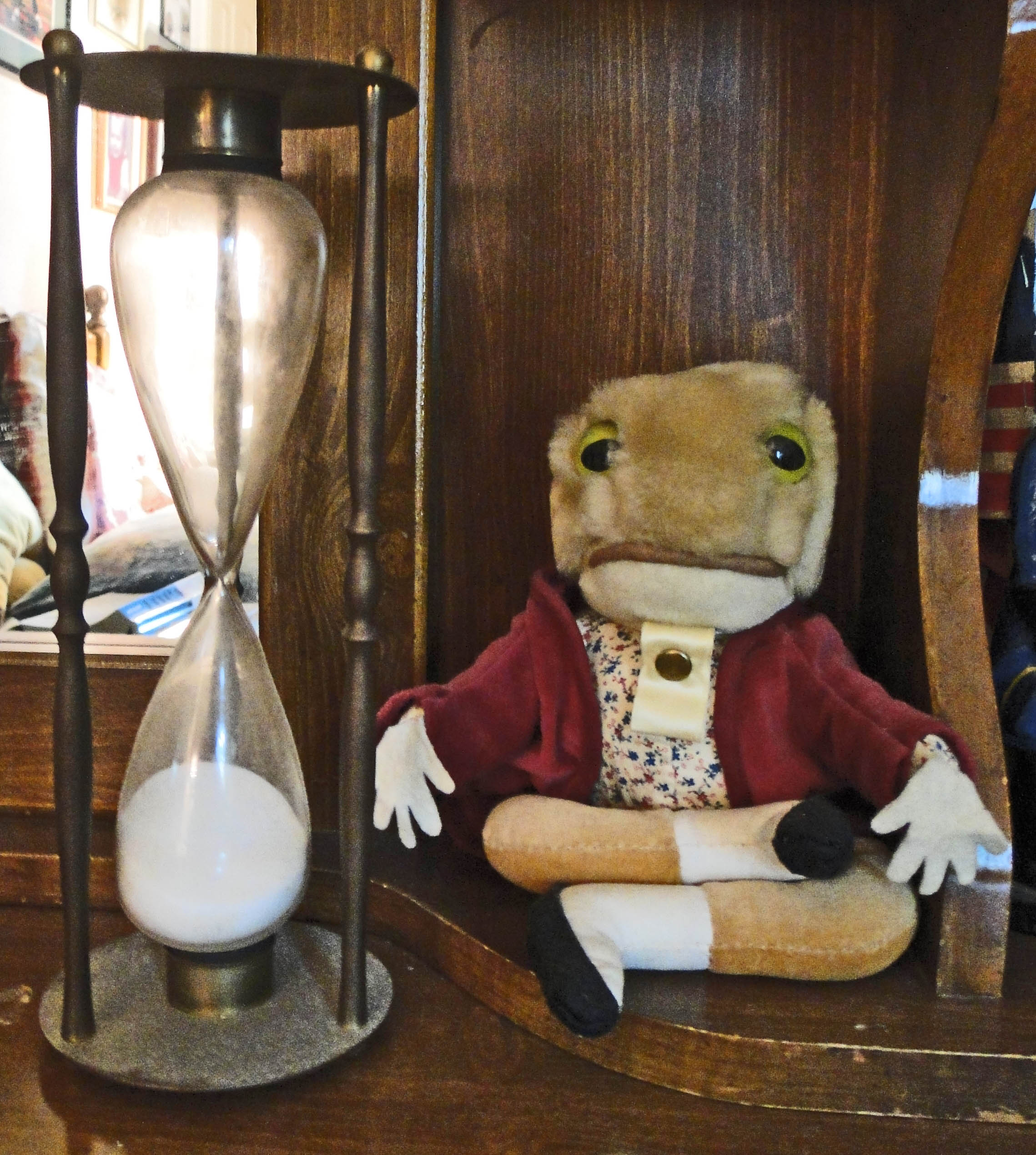
The Frog and the Hour Glass

How do you boil a frog?

ANSWER: Never drop a frog in a pot of boiling hot water. He or she will reflexively jump right out and hop away.

Always place the frog in a pot of cold water and then light the fire, bringing the water to a slow, but sure boil. He or she will get used to the gradual change. By the time the water temperature has reached a good cooking boil, the frog’s goose will be cooked and dinner will be served.

And what does the story of the frog in boiling water have in common with baseball fans who are called upon to watch a 100 plus losses per season team finish last for several years in a row?

ANSWER: Just about everything.

The seasoned fans are like the frog dropped into the pot of boiling water. Because they know how the winning game is supposed to be played, the veteran fans will have short patience with “rebuilding logic” and soon lose interest in a club that cannot hit, run, throw, or protect a lead in the late innings. After a max-time exposure of no more than three years to dead weight losing (as the hot water), the knowledgeable fans will either pick another team or just go away to pursue some other precious pastime. After three years, there must be some measurable signs of significant progress, or all is probably lost.

The rookie fans are the ones who are most in danger from the slow boil of bottom-feeder losing. Because they don’t know any better, many of the rookie fans may just stay with losing as the way things are. That’s what the old St. Louis Browns fans once did. Former St. Louis Browns pitcher Ned Garver still expresses his gratitude to the small, but quietly loyal Browns fans with these words: “Our Browns fans would not think of booing our club in 1951,” Garver says. “They wouldn’t dare. – We outnumbered them.”

Some Cubs fans today have gone so long since they last won that World Series in 1908 that they simply expect a guy like Steve Bartman to show up and mess with any opportunity they next seem to have. How can you be a rookie fan to the Cubs experience and not be negatively touched by the idea that losing is normal? As someone who is not a Cubs-hater, I would really welcome some true Cub fan feedback on that question. As one who always has marveled at the curious heart and loyalty of true Cub fans, I would welcome some Cub fans feedback.

And now we have some more rookie fans in our own City of Houston. Somebody needs to tell them that what they are watching in 2013 at Minute Maid Park is not the norm for championship baseball, but that we are trying like crazy to be patient. –  If things are not radically better by no later than 2015, it will be time for Houston baseball fans to pick another leisure time killer.

I hear that dipping snuff is making a comeback, but you sure wouldn’t want to try that one in a pot of boiling water.

Buff Biographies: Tommy Glaviano

July 26, 2013

Buff Logo 12

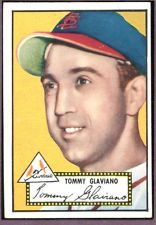
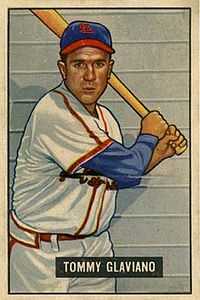
Tommy Glaviano 01 Over the years, a lot of shortstops have managed to spin double-digit year MLB careers as “good field/no hit” players due to the importance of speed, range, and athleticism at the critical middle infield spot. Not so third basemen. Strong arms and a good reflexive reaction capacity are important to third base defense, but the guy’s got to hit, preferably for average and power – and he needs to be a killer batter with men on base.

The legion of those who couldn’t cut it offensively in the majors at good old “3B” is large in numbers and, sadly so, it includes Tommy Glaviano,  the third baseman for the 1947 Dixie Series champion Houston Buffs.

Born October 26, 1923 in Sacramento, California, Tommy Glaviano (5’9″, 175 ib.) (BR/TR) signed with the Cardinals out of high school at the age of 17 and played a couple of seasons (1941-42) at Class C level before serving in the Coast Guard during World War II (1943-45). Early Warning: At two city team stops at Fresno and Springfield in his first two seasons, .253 was Glaviano’s best mark.

Things seemed to change after the war. In 1946, Glaviano returned to Fresno and batted .338 with 22 HR in 126 games. It looked like a bright new beginning. It turned out to be his career-best year – and the only time Tommy would hit over .300 and only twice more come anywhere near that magical good-hitter mark in his professional career.

In his 1947 AA Houston Buff season, Tommy batted .245 with 13 HR in 125 games at 3B. In 1948, he pumped it up to .287 with 18 HR for AAA Columbus, Ohio. Things were looking good.

Tommy Glaviano 02 Glaviano began his five season MLB career (Cardinals 1949-52; Phillies 1953) the next spring. 1950 would prove his best MLB season when he hit .285 with 11 HR. For all five seasons in the Bigs, Glaviano played 389 games, batting .257 with 24 HR.

After 1953, Glaviano played two more seasons (1954-55) with AAA Sacramento and 12 games with 1957 AA San Antonio before retiring from active play at age 33. Over the long haul of his 8-season minor league career, played variously from 1941 to 1957, Tommy Glaviano posted a career minor league mark of .257 with 69 HR.

Tommy Glaviano passed away in Sacramento, California on January 19, 2004 at the age of 80.

R.I.P., Mr. Glaviano! You were the first third baseman of my Buffs fan years – and you played your spot right there at 3B with my other Houston Buff infield heroes: Solly Hemus at 2B, Billy Costa at SS, Johnny Hernandez at 1B, and Gerry Burmeister at C. – And let’s not forget outfielders Eddie Knoblauch in Left, Hal Epps in Center, and Vaughn Hazen in Right, – and, oh yeah, 1947 Buff pitchers Clarence Beers (25-8) and Al Papai (21-10), – and a certain manager named Johnny Keane.

Long live Tommy Glaviano and the memory of all the 1947 Houston Buffs!

Buff Biographies: Ruben (Mora) Amaro

July 25, 2013

Buff Logo 12

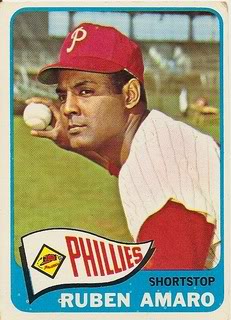
Ruben Amaro Sr Infielder Ruben (Mora) Amaro was a two-season former Houston Buff (1956-57); outfielder Ruben Amaro, Jr. was not.

Ruben (Mora) Amaro (5’11”, 170) was born January 6, 1936 in Nuevo Laredo, Mexico; Ruben Amaro, Jr. (5’10”, 170) was born February 12, 1965 in Philadelphia, Pennsylvania.

Ruben the Father (BR/TR) batted .257 with 35 HR in 9 seasons (1954-71) as a minor leaguer; Ruben Jr. (BB/TR) batted .304 with 44 HR in 10 seasons (1987-96) as a minor leaguer.

Ruben (Mora) Amaro played shortstop for the last two Houston Buff Dixie Series championship clubs of 1956 and 1957. In each year, the Buffs defeated the Atlanta Crackers in six-game sets. Daddy Amaro batted .266 in 152 games for Houston in 1956 and .222 for the Buffs in 142 games in 1957. He was more than happy to collect his glory when it came to him, playing good defense both seasons, even if his offensive production fell hard in 1957. The Buffs both needed and benefited from the game he brought to the park as an infield spark plug and defensive leader.

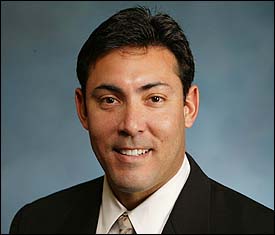
Ruben Amaro, Jr.

Ruben Amaro, Jr. (He’s almost a dead ringer for his father in the featured 1965 baseball card shown above.)

Ruben the Father batted .234 with 8 HR in 11 seasons as a major leaguer with the Cardinals (1958), Phillies (1960-65), Yankees    (1966-68), and Angels (1969); Ruben the Son batted .235 with 16 HR in 8 seasons as a major leaguer with the Angels (1991), the Phillies (1992-93), the Indians (1994-95), and the Phillies again (1996-98),

Ruben Amaro, Jr. stopped playing 1998, but he had earned a reputation as a good judge of talent and a leader. by this time. After joining the Phillies as a coach, he quickly ascended to the title of Assistant General Manager under burgeoning HOF executive GM Pat Gillick, and then taking over the GM job in 2008 upon the retirement of his boss and mentor.  Recent decay in the 2013 Phillies plan and some of the big contracts that Amaro has written for players who aren’t performing at their megabuck-expectation levels have left this son of a former Buff on shaky grounds in Philadelphia.

The only cure is winning. It’s the baseball way.

Buff Biographies: Walt Alston

July 24, 2013

Buff Logo 12

Walt Alston

Walt Alston

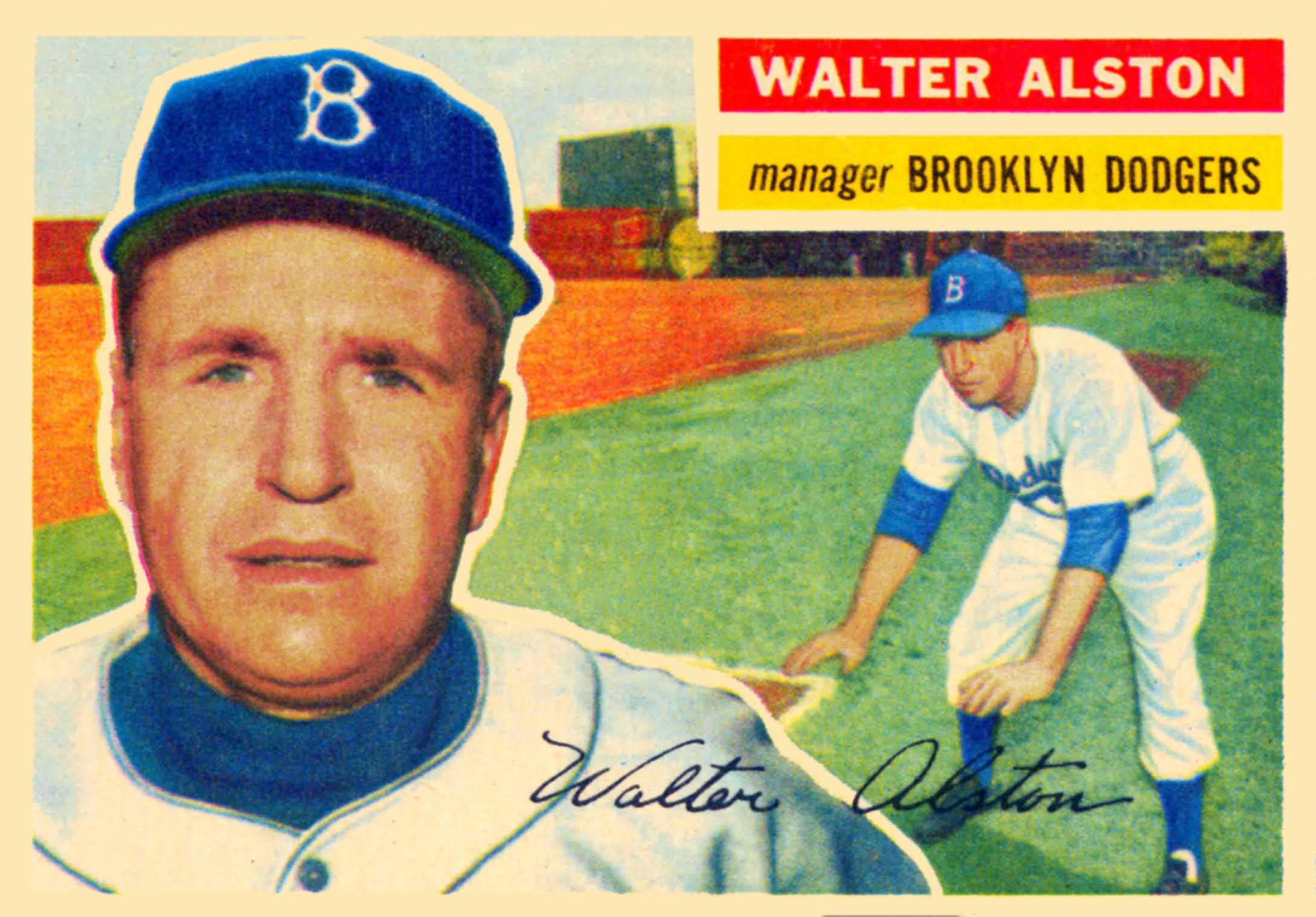
Bill Johnson’s biosketch for the SABR biography project at Baseball Reference (d0t) Com is the best, most comprehensive you are likely to find. Check it out for a fact-packed good page of information you may not already completely have about the legendary Dodger manager and Miami (O) University graduate. Were you aware, for example,  that Brooklyn players Jackie Robinson and Billy Loes weren’t exactly happy with Alston as the two-straight-years NL champion Dodgers (1952-53) lost the 1954 pennant to the New York Giants in Walt’s first year at the helm of his 23-season career as manager of the boys in royal blue? Check it out:

http://sabr.org/bioproj/person/cfc65169

Walter Alston was also once a Houston Buff, if ever so briefly, and it came on the heels of his even most brief career as a three-pitch strikeout victim for the St. Louis Cardinals in his only MLB time at bat on September 27, 1936. Alston was on the big league club roster as an end-of-season call-up player, but he only got into the game as a replacement for first baseman Johnny Mize after the latter was ejected. Alston then followed this opportunity by committing an error on one of his two chances in the field and then striking out on three pitches in his only time at bat. The next spring, Walt Alston started the 1937 season as a first baseman fo the Houston Buffs.

In 65 games for the 1937 Houston Buffs, Walt Alston hit only .212 with no home runs in 208 times at bat. Somehow he was promoted from Houston to Rochester that same season where he hit .246 with 6 HR in 66 games and 203 times at bat. Go figure.

Over his 13-season minor league career (1935-47), first baseman Walt Alston batted a very respectable .295 with 176 home runs. He also built a reputation as a quiet, mild-mannered, unassuming personality who was slow to anger on the outside, but a guy who was totally committed to doing what he felt was right. Sometimes that mild exterior was misunderstood by those who count on explosions of rage as their first choice for managerial reactions to disputes that come up in many games.

As he would prove over time as the 23-season manager of the Dodgers (1954-76), Walt Alston was neither slow nor weak. He was simply the “real deal” as the strong silent type.

In his time at the Brooklyn/LA Dodger helm, as you probably know, Alston was the first and only manager of a Brooklyn Dodger World Series winner in 1955, but he also led the Brooklyns to another pennant in 1956. That second time, the Dodgers lost to the Yankees that they had defeated in 1955. The Dodgers lost out to the Braves in 1957 and then moved to Los Angeles in 1958. They returned to the World Series again in 1959, defeating the Chicago White Sox for their first World Series win as the Los Angeles Dodgers.

Under Alston, the Dodgers played in seven World Series. They won in four tries (1955, 1959, 1963, & 1965) and they lost in three (1956, 1966, & 1974).

Walt Alston was a three-time MLB manager of the year and a six-time NL manager of the year. He won 2,040 games as a major league manager and was selected for the Baseball Hall of Fame by the Veteran’s Committee in 1983.

When Walt Alston yielded the managerial reins to Tommy Lasorda late in 1976, he tuned things over to a guy who would also stay on the job for a Hall of Fame managerial career (1976-1996). Think about that. – For 43 seasons (1954-1996), the Dodgers had only two managers – and they together won over 4,000 games and places for each of them in the Hall of Fame. How great does great have to be before we find another word for it?

Walt Alston 01

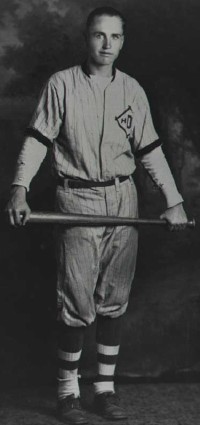
Walt Alston’s life began and ended in places far away from the big spotlight of the country’s media spotlight. The (6’2″, 195 lb.) (BR/TR) former first baseman was born December 1, 1911 in Venice, Ohio. He died October 1, 1984 in Oxford, Ohio at the age of 72.

The man was Dodger Blue all the way, but it’s still nice to remember that his path to managerial greatness includes the time he passed through our town in 1936 as a member of the Houston Buffs.

Buff Biographies: Floyd Wooldridge

July 23, 2013

Buff Logo 12


Floyd Wooldridge 1955

Floyd Wooldridge
1955

Pitcher Floyd Wooldridge (6’1″, 185 lb.) (BR/TR) was born on August 25, 1928 in a little place called Jerico Springs, Missouri and, like a lot of the baseball-talented kids in that state in those times, he signed as a young man to play ball in the St. Louis Cardinals farm system. At age 21, he broke in with Class D Albany, Georgia in 1950, posting an excellent starting mark of 14-12 with a 3.36 ERA.  He kept improving, going 12-6 with a 3,81 ERA the next year for the 1951 Class A Columbus, Georgia club – and that was good enough to earn Floyd a promotion to AA Houston for the following season.

Wooldridge found some resistance to he effort and ability on the pitching staff of the 1952 Houston Buffs. His 7-18, 2.34 ERA was a reflection of a pitcher getting better while playing for a bad team that didn’t hit well in support of him. The ’52 Buffs would finish last in the 8-club Texas League with a 66-95 record. Wooldridge would remain a Buff in 1953.

1953 was a turnaround year for Floyd. He went 15-13 with a 2.20 ERA for a Buffs club that improved only to 6th place with a 72-82 season win-loss record. The Cardinals now saw Wooldridge as a guy who might be able to jump AAA and go straight to the big league staff.

Then, as life often brings it, tragedy struck. In late 1953, Floyd Wooldridge was injured in a car wreck that could have killed him. He escaped with a broken leg, but thought that he might fully recover by the early regular season. The Cardinals took him to  camp, but it soon became obvious that Wooldridge might be in danger of hurting himself by compensating for how the injured leg caused him to throw. And, even in those still days of low concern, the Cardinals had learned something from the loss of Dizzy Dean to compensatory motion injury in the late 1930s. It’s doubtful they saw Floyd Wooldridge as the second coming of Dizzy Dean, but they valued him, nonetheless.

Floyd Wooldridge was shutdown from pitching anywhere in 1954. It was time to heal all the way.

Floyd got his shot with the Cardinals in 1955. In 18 games that split almost evenly between starting and relieving, Wooldridge went 2-4 with a 4.84 ERA for the ’55 Cards.

Wooldridge was never the same, even though his 2-4, 2.70 mark with the ’55 Buffs was briefly deceiving. His 0-2 mark that same year at AAA Rochester offered fairer warning that his psychological or physical injuries from the car wreck had done a greater damage to his prospects as a pitcher – and, by the end of year, he’s now 27 – and falling off the prospect list.

The Cardinals dealt him away to the Kansas City Athletics and they assigned him to AAA Columbus, Ohio for the 1956 year. He went 6-9 with a 4.80 ERA in his last serious season of ball. The A’s sent him to AAA Buffalo in 1957 where he got into 4 games before retiring from baseball with no W/L record for the 1957 season.

When you’re done, you’re done. Floyd may not have made it, anyway, but the car wreck injury had put the cap on any chances he might have had. Wooldridge retired with a career 57-62, 3.00 ERA minor league record. That’s life.

Floyd Wooldridge passed away in Springfield, Missouri on May 25, 2008 at the age of 79.

Thanks for the time you gave us in Houston, Floyd! – When you took the mound during the terrible seasons you were here, you at least gave us the hope that winning was possible. And that’s important because it’s the one thing no real baseball fan can live without – and that’s hope. Hope in somebody. And hope in things getting better. – You brought both items to the table.


Buff Biographies: Howie Phillips

July 22, 2013

Buff Logo 12

The Buff with a 1954 Buffs cap. No Photo of Howie Phillips was available. Try to visualize Huckleberry Finn in an old flannel uniform that is a size too big for him. That will get you there as fast as an actual photo.

That’s the Buff with a 1954 Buffs cap. No Photo of Howie Phillips was available. Try to visualize Huckleberry Finn in an old flannel uniform that is a size too big for him. That will get you there as fast as an actual photo.

He almost falls in the cracks of most baseball memories. It’s easy to do when you’ve been a slender of build guy with only modest accomplishments at the minor league level and no time in the big spotlight of the major circuits. Yet, as much as the descriptors fit him to a tee, no Houston Buffs fan who watched him play out his greatest season in 1954 as a second basemen for the Texas League champions will ever forget him.

His name was Howard Dale (Howie) Phillips (5’10”, 162 lb.) (BL/TR). He was a little guy (DOB: 1/07/1930)  who could play second base at the age of 24 with all the cool, clear look of a legitimate prospect for the big leagues, except for one legitimate career complication: Howie was digging ’em out of the dirt for a farm team of the St. Louis Cardinals, behind several other prospects and a guy at the keystone sack who was coming off a .342 season in 1953 and another .300 plus year in the majors on his way to the Hall of Fame playing ahead of him. Still, no one could see the unthinkable in 1954: Two seasons later, a new Cardinal GM named Frank “Trader” Lane would be dealing the “elder” Red Schoendienst off to the New York Giants.

It wasn’t hard for Phillips to get lost from attention among his fellow infielders on the 1954 Houston Buffs. Third baseman Ken Boyer was the

Howie Phillips Buffs 1954

Howie Phillips
Buffs 1954

hottest prospect going for the Cardinals that year and he was manning third base, playing great defense, and knocking the cover off the ball. Ditto Bob Boyd at first base on the productivity scale – and Boyd also drew attention as the first black player in Houston Buffs history. That left shortstop open to be ably filled by another very popular hot prospect named Don Blasingame – and a little barely wind resistant fellow named Howie Phillips to play second base for the second year in a row in 1954.

Phillips had batted only .257 in his 1953 first season as the Buffs second sacker and no one really expected him to have the best season of his pro career in 1954, but he did – and it still went pretty much unheralded by the media, perhaps, due to the attention the other infielders were drawing to the cause of winning.

Howie Phillips, Courtesy of Contributor Bill Hickman. (Looks like elsewhere he got a uniform that fit.)

Howie Phillips, Courtesy of Contributor Bill Hickman. (Looks like elsewhere he got a uniform that fit.)

Howie Phillips batted .306 for the ’54 Buffs. He hit only 3 HR, but he sprayed out 200 hits in the 161 games he played. It was his only season as a plus .300 batter. after playing 1955 for Rochester, Phillips came back in 1956 to hit .290 for the Buffs for his second best offensive year in eleven all minor league seasons (1948-58). He was on his way to a career batting average of .272 and 30 homers. Like many others of those reserve clause days, Howie simply never got a shot at one major league time at bat. He was always one of those guys who, in spite of their hustle, never got to see a single official pitch in the big leagues.

One other note about Howie: he probably looked even smaller because of his preference (or assignment to a uniform that was a little too big for him. We always kidded that he chose the big size for its greater weight support against the wind.

The guy was a hustler, a good fielder, a pesky base runner at the top of the batting order, and he also just may have been for the 1954 Buffs a variant of that old Reggie Jackson descriptor as “the straw that stirred the drink” of victory for the 1954 Buffs.

Howie Phillips passed away at the age of 70 on July 10, 2000 in Fresno, California.

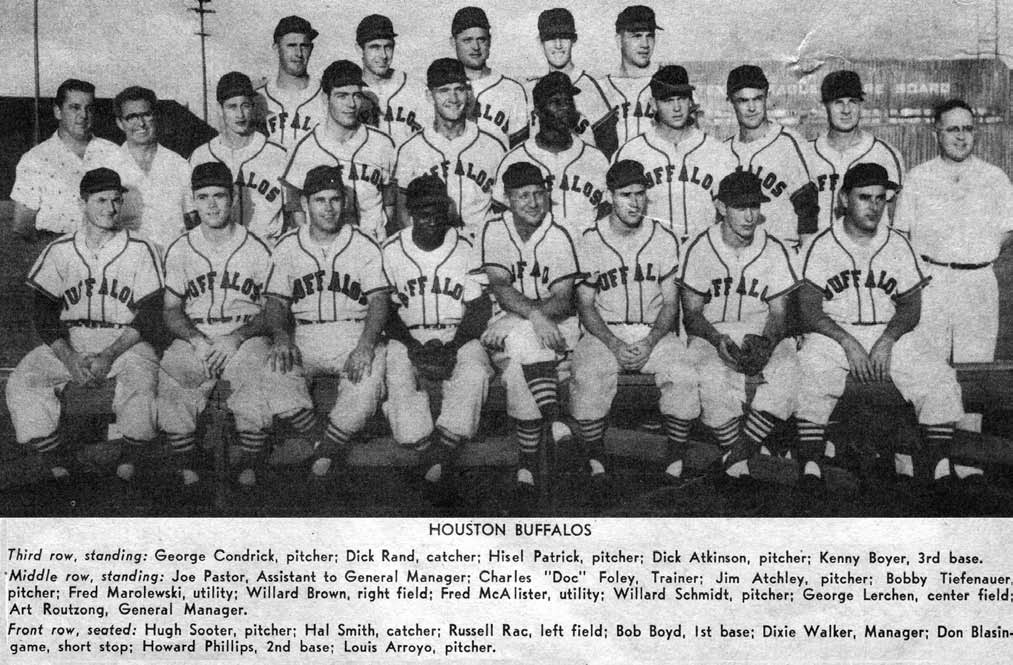
Photo Courtesy of Darrell Pittman. - In this one of the 1954 Buffs, Howie Phillips is the 2nd from right on front row. He got a fitting uniform in time for the late season team photo.

Photo Courtesy of Darrell Pittman. – In this one of the 1954 Buffs, Howie Phillips is the 2nd from right on front row. He got a fitting uniform in time for the late season team photo.

Buff Biographies: Don Gutteridge

July 21, 2013

Buff Logo 12

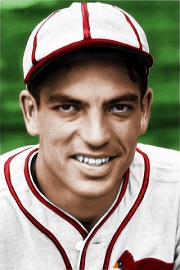
Don Gutteridge

Don Gutteridge

The 1934 Houston Buffs weren’t the greatest baseball herd in this city’s history, by far.  Managed by famous former Buff Carey Selph, the boys could finish no better than 6th place, near .500 at 76-78, .494, but 13 games back of Galveston, the first place club and playoff winner of the 1934 Texas League pennant.

The ’34 club also fought uphill all season against the challenges of the Great Depression, bringing in a final tally of only 61,180 paying fans to all their home games in Houston that season.

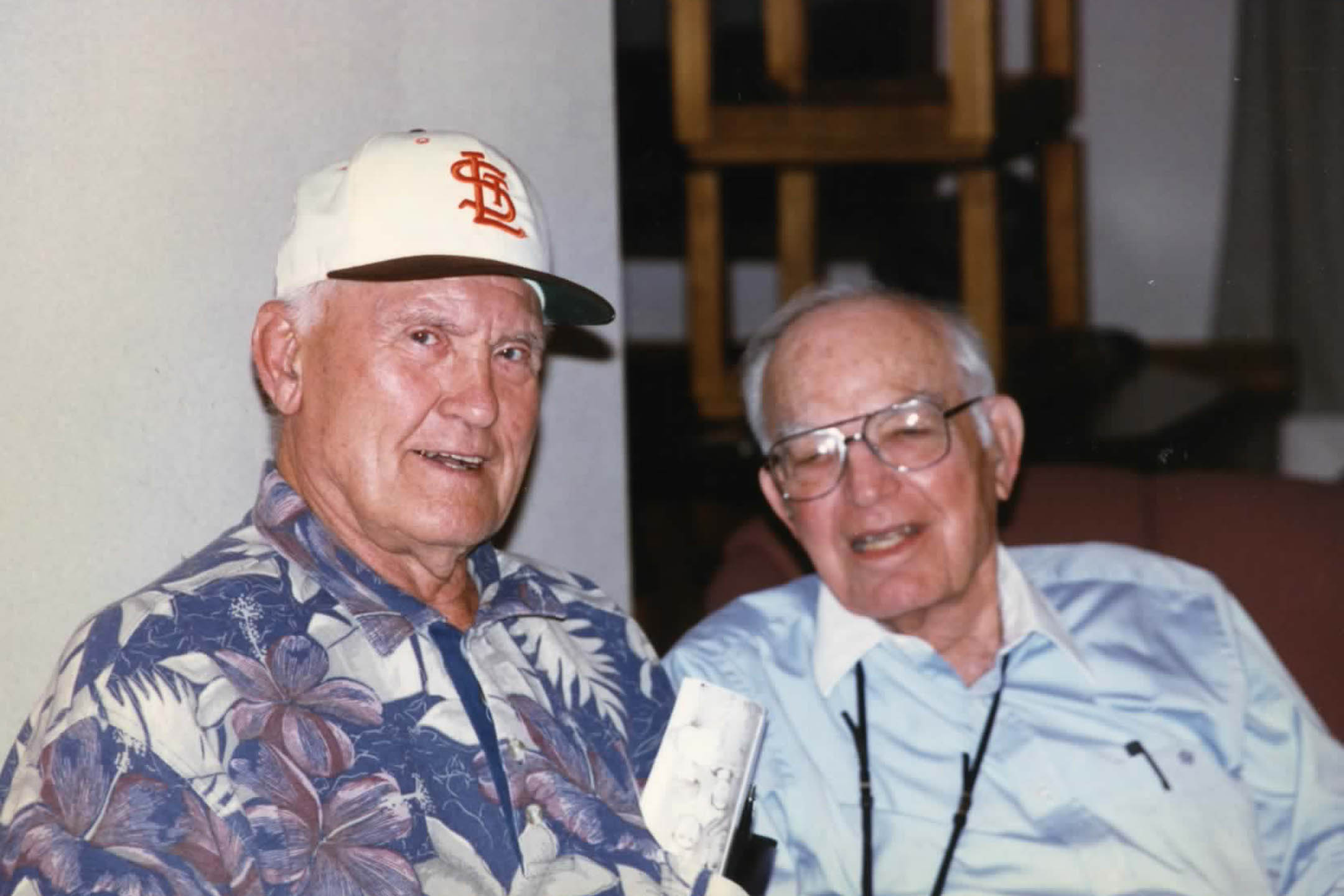
It was within this mire that quiet-spoken, but feisty spirited Don Gutteridge played out his only Buff season as a 22-year old 3rd baseman for the Houston Buffs, batting .272 with 167 hits in 149 games at the hot corner, including 20 doubles, 8 triples, and 7 home runs. The kid never gave up on things and his hustle and effort just broadcast the idea that he intended to get everything out of his ability that he could find and put into play. And that’s how I got to know about him first hand from the general drift of comments from his surviving St. Louis Browns and Cardinals teammates who spoke with me about Don at annual banquets for the old St. Louis Browns in the 1990s.

Everybody loved Donald Joseph Gutteridge of Pittsburg (without an “h”), Kansas. The 5’10” 165 lb. infielder was born in Pittsburg, Kansas on June 19, 1912. Don Gutteridge (BR/TR) played ball at Pittsburg State University prior to signing with the Cardinals and turning pro in 1932 at the age of 20. Over the course of all 10 of his minor league seasons (1932-36, 1941, 1946-50), Gutteridge batted .294 with an OBP of .311. After Houston and two moe quick stops at Columbus, Ohio, Don broke in with the St. Louis Cardinals in 1936. He would play five seasons for the Cards (1936-40), four seasons for the St. Louis Browns (1942-45), two seasons with the Boston Red Sox (1946-47), and one doughnut coffee dip spell with the 1948 Pittsburgh (with an “h”) Pirates for a twelve MLB season record of a .256 BA with 200 doubles, 64 triples, and 39 HR. before finishing his active play in two more seasons as a minor leaguer.

Jerry Witte (L) hit .312 with 46 HR and 120 RBI under manager Don Gutteridge at Toledo in 1946.

Jerry Witte (L) hit .312 with 46 HR and 120 RBI under manager Don Gutteridge at Toledo in 1946

Don Gutteridge also spent six seasons as a minor league manager (1946, 1951-54, 1967) and two partial years as an MLB manager for the Chicago White Sox (1969-70). The guy looked the part too in his later years. He looked a lot like the movie manager in the film version of “Damn Yankees”, but with a much milder social personality. Whenever he walked into a group of us visiting in the hotel lobby at one of those Browns functions, I kept waiting for him to break into that famous pep talk from that famous baseball movie: “Now listen to me! – This game of baseball is only one-half skill! – The other half is something bigger! – You gotta have – HEART! – MILES AND MILES AND MILES OF HEART! …”

He never did, but he could have. These were the old St. Louis Browns I was sitting among. They knew as much about losing as the old Washington Senators ever did – and even more, if you care to check their comparative records from the old days.

Don Gutteridge & Pepper Martin

Don Gutteridge & Pepper Martin

Don Gutteridge did hold an unusual history with the Cardinals after breaking into the majors with the St. Louis NL club. After he left them, he played for both of his next two clubs in the World Series against the St. Louis Cardinals. He played for the St. Louis Browns against the Cardinal in 1944; and he played for the Boston Red Sox against the Cardinals in 1946. Unfortunately for Don Gutteridge, he was on the losing team both times.

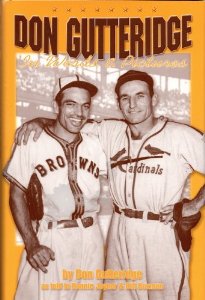
A few years ago, Don Gutteridge wrote and published his autobiography with friends and colleagues Ronnie Joyner and Bill Bozman. The book is a beautiful little baseball life story. Copies may still be available over Amazon for those who may be interested.

Don Gutteridge passed away at his home in Pittsburg, Kansas on September 7, 2008, not too long after the death of his sweet wife of a thousand years. He was 96 years old when he died.

Buff Biographies: Al Papai

July 20, 2013

Buff Logo 12

Al Papai

Al Papai

In his four seasons as a Houston Buff (1947, 1951-53) knuckleballing ace Al Papai (6’3″, 185 lb.) (BR/TR) was a 20 plus win guy for two Texas League championship clubs (1947, 1951), tagging a 69 win, 48 loss total as his Buff career record. As a 14 season minor league pitcher (1940-41, 1945-48, 1951-58), Al Papai complied a career record of 172 wins, 128 losses, and a 3.29 ERA. He also had a 4 season major league record (1948-50. 1955) with the St. Louis Cardinals, St. Louis Browns, Boston Red Sox, and Chicago White Sox, mostly as a reliever, for an MLB total of 9 wins, 14 losses, a 5.37 ERA, and 4 saves.

Papai’s knuckler too often escaped his control in the big leagues, but it served him well as a Texas League starter, allowing a 38-year old Al to go 23-7 for a 1955 Oklahoma City TL club and 20-10 at age 39 for the 1956 Memphis Chicks of the also AA class Southern Association.

Papai was also a droll, strange-looking character. Born May 7, 1917 in tiny Divernon, Illinois, Al had keen sense of irony and humor about everything that was going on around him – and for years after the fact of whatever it may have been. In 1951, for example, Al Papai had to step in at the last-minute as the escort for bathing suit contest contestant Kathryn Grandstaff at a Buff Stadium presentation walk when teammate Larry Miggins bailed out as her assigned escort because he was too embarrassed to walk in public with a woman he thought was “almost naked”.

Kathryn Grandstaff went on from her walk with Papai to win the Houston Buff and Texas League beauty queen contests. From there, she went on to Hollywood to pursue an acting career as “Kathryn Grant”. She ended up meeting and getting married to superstar Bing Crosby – and making several now forgettable movies that drew some attention at the time, partially because of her famous husband.

The former beauty queen’s success wasn’t lost on the mind of Al Papai. When asked what he thought about her later success, Al Papai replied: “I just hope she remembers that I gave her the start long ago that made her what she has become today!”

Unfortunately, Al Papai missed the late September 1995 Last Round-Up of the Houston Buffs that former Buffs President Allen Russell staged at the Weston Galleria Hotel in Houston. I was helping Russell search and find the former Buffs whose addresses or whereabouts had fallen off the cliff somewhere. As a result, it was the first week in September before our invitation went out to Al Papai’s home address in Springfield, Illinois.

The Buffs Reunion invitation ended up reaching the family’s residence on the day of Al Papai’s funeral. Al Papai had passed away on September 7, 1995 at the age of 78. His wife Claire came alone to the Houston reunion and was warmly greeted by old friends. Claire said she wanted to make sure that Al was represented at a homecoming that only death could have kept him from making.

That old Houston Buff and minor league baseball veteran blood bond was some mighty powerful stuff.

Goodnight, Sweet Buffs, wherever you are! ~ Away from our hearts, you will never be far!