Archive for 2013

Buff Biographies: Rip Repulski

September 11, 2013

Buff Logo 4

Former Houston Buffs outfielder Eldon John “Rip” Repulski (6’0″, 195 lb.) (BR/TR) was born October 4, 1928 in Saux Rapids, Minnesota. Straight out of high school at the age of 18, Rip began his 7 season minor league (1947-52, 1961) and 9 year big league (1953-61) careers with Class D West Frankfort, Illinois in 1947, although he did continue his higher education at St. Cloud State University near his home town during the off-season.

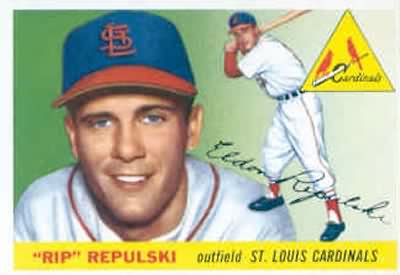
Rip Repulski 01

Rip Repulski had a career minor league batting average of .290 with 101 HR and a career MLB mark of .269 with 106 HR – not bad for a guy with good speed and an adequate arm as a center fielder.

Rip’s two seasons as a Buff were both limited by the parent Cardinals desire to push him up through the system at a speedy basis. He arrived in Houston late in the 1950 season, coming up from Class A Columbus, Georgia in time to play 37 games and hit .256 with 2 HR for the ’50 AA Buffs. The following year, Repulski played center field for the ’51 Buffs only long enough to hit a measly .217 with no HR before the Cards moved him up to AAA Columbus, Ohio by a need or design that had little to do with his actual performance on the field.

Rip Repulski played 4 MLB seasons with the St. Louis Cardinals (1953-56), 2 years with the Philadelphia Phillies (1957-58), 2 seasons with the Los Angeles Dodgers (1959-60), and 2 years with the Boston Red Sox. That Dodger hitch allowed Rip to pick up a World Series ring with the 1959 Los Angeles club, but I would assess his best season as having been 1954 when he hit .283 on the back of 19 HR and 79 RBI for the Cards.. He also hit 23 HR for the 1955 St. Louis club, but his numbers were down in other areas.

As a kid,  I recall that we Buff fans got a pretty breezy volume of writer’s ink on the coming of Rip Repulski and what he could mean to the team’s Texas League chances. He simply wasn’t here long enough to do very much and, while he was here, he didn’t do anything he could write home about.

Such was the often experienced life span of minor league fan hope back in the day.

Rip Repulski passed away in Waite Park, Minnesota on February 10, 1993 at age of 64.

R.I.P., Rip.

Former Astro Bill Heath Is September SABR Hit

September 10, 2013
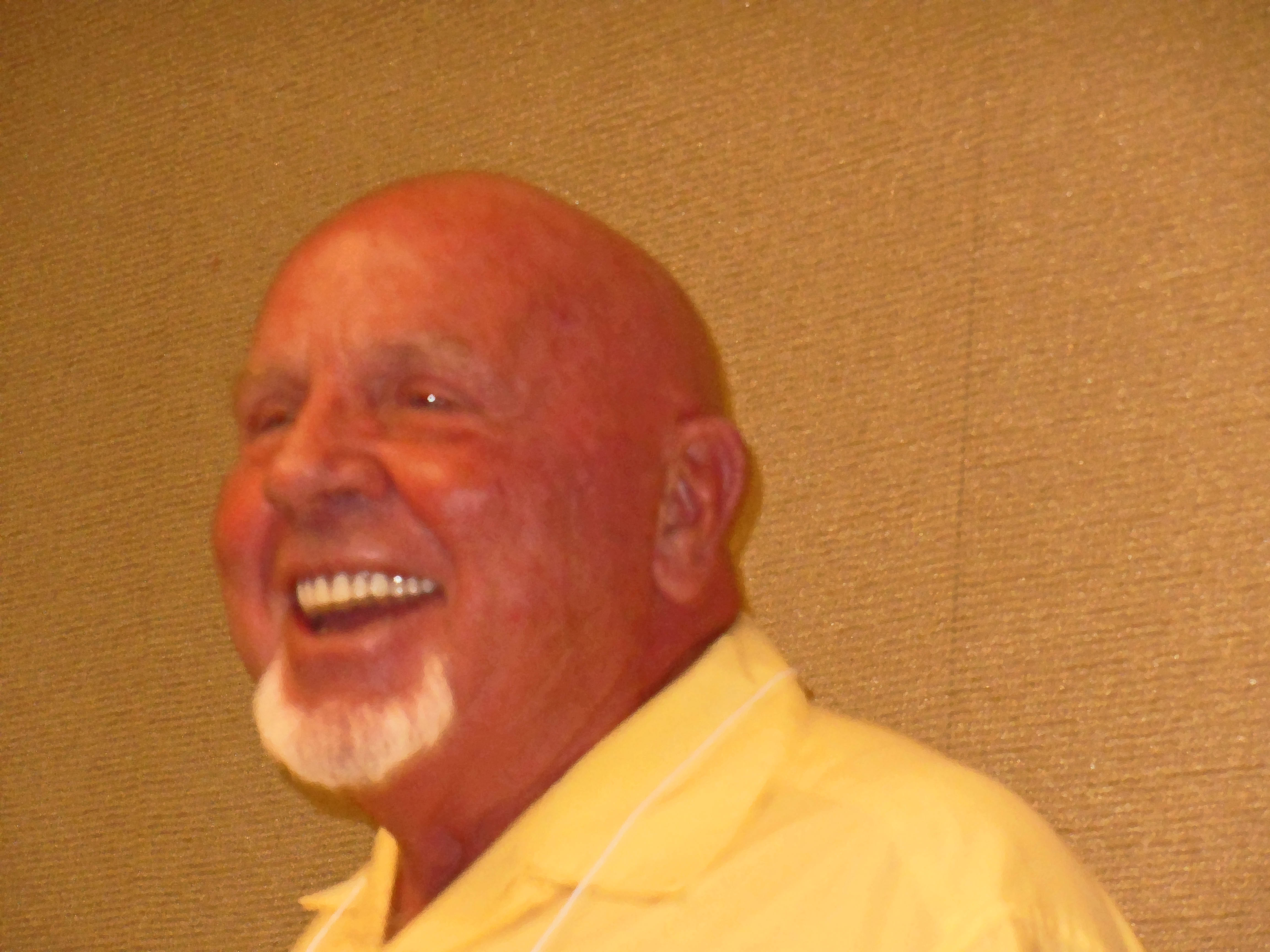
Bill Heath today says he's spent the last forty plus years building an accounting and financial planning firm. He was back in his first element talking baseball on subjects that generated everything from laughter to empathy to reflection.

Bill Heath today says he’s spent the last forty plus years building an accounting and financial planning firm. He was back in his first element Monday, talking baseball on subjects that generated every reaction from laughter to empathy to reflection.

Former Astro catcher Bill Heath was a solid line drive hitter last night, Monday, September 9th,  as the main speaker at the monthly meeting of SABR In Houston inside the always beautiful Inn at the Ballpark, catty-cornered across the street from Minute Maid Park on the SW corner of Texas at Crawford.

Mixing a crisp brand of his own talent for expressing clarity, self-deprecation, humility, wisdom, and the point-of-view that only comes full-blown to those who make it in the big leagues on a marginal very limited playing time basis. Heath gave us a great thumbnail on how important it is to maintain a winning attitude, if one hopes to stick for any time in the big leagues.

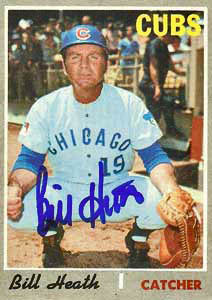
74-year old catcher Bill Heath (5’8″, 175 lb.) (BL/TR) (DOB: 03/09/39) had a 4-year MLB career (1965-67, 1969) as a  bench guy with the White Sox, Astros, Tigers, and Cubs. He hit .236 for his 227 times at bat, garnering only 7 extra base hits (six doubles and one triple.)
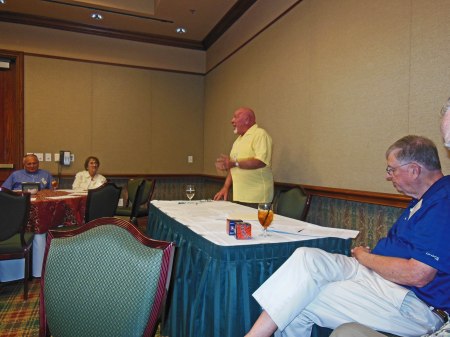
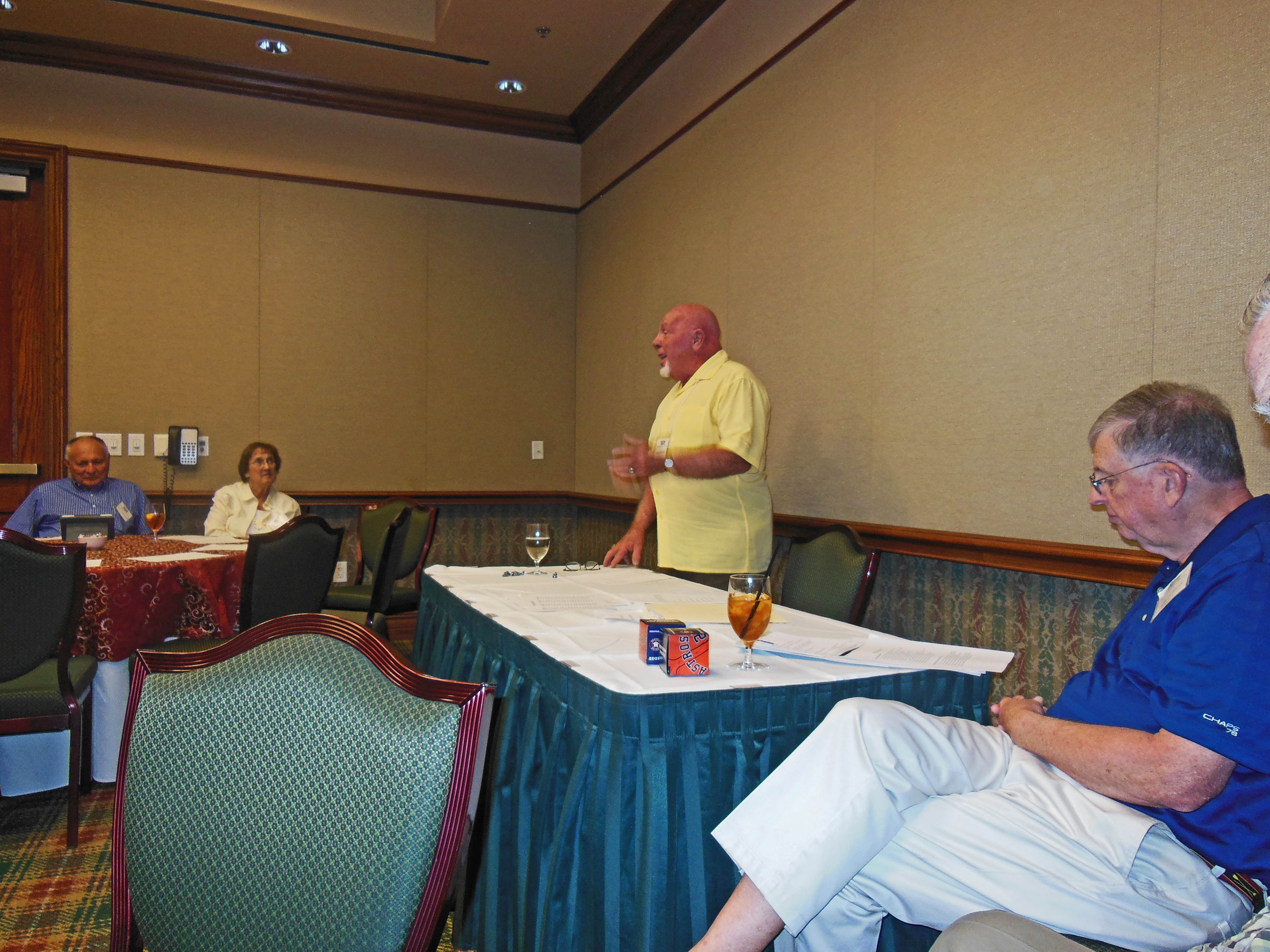
Bill Heath speaks; Bob Dorrill (foreground) and others listen.

Bill Heath speaks; Bob Dorrill (foreground) and others listen.

Heath says he was proud of his stolen base record of having never been caught stealing as a baserunner. He stole one base successfully and never tried again.

Heath blames the Astros for ruining his MLB chances by destroying his confidence. After one unsuccessful time at bat for the 1965 White Sox, Heath was traded to the Astros that winter and promptly followed up by hitting .301 in 55 games for the 1966 Astros, and getting hits of some of the greats of the game – greats like Don Drysdale and Bob Gibson. “It didn’t matter who I faced that year, ” Heath says, “my belief in my ability to hit was unshakeable.”

That changed in 1967. Heath says he came to camp that year, expecting to play more, based on his previous good year, but instead, he found himself riding the pines and coming up only rarely as a pinch hitter. “I started putting pressure on myself. but that just made it worse. I just lost confidence in my ability to hit and never got it back.” By the time the Astros traded me to Detroit that same ’67 season, my bad confidence just came in the bag with me. By 1968, I was back in the minors, missing out on the Tigers’ World Series title run in 1968.”

The Cubs signed Heath for 1969 and the little catcher got to be a member of the great Cubs team that just ran out of gas in September 1969 to make way for the “Miracle Mets.” Heath blames Durocher for the Cubs swoon. “Leo just wore the starters out. By September, they were gasping for air, but Durocher wouldn’t rest anyone. As a result, I got to miss out on another World Series opportunity.”

Bill Heath “I was about done after 1969,” heath says. “I played another year in the minors with Tacoma in 1970, but that was my swan song in organized baseball. I was offered a coaching job in the minors with the Cubs, but I had no interest in doing any more of those long bus rides in the country. I was ready to go home and build on my new career in accounting.”

By 1970, the USC graduate Heath was working on completing a correspondence course in accounting through the University of Chicago. By 1972 he had become a CPA and had established his new practice in his new home town of Houston. And, he says, he and the business are still going strong.

Bill Heath nodded a personal hello to the man who had been the Astros travel secretary during his brief stay with the Astros.  SABR member Tal Smith was in the audience for Heath’s talk.

Other speakers last night included Chris Chestnut, who presented a new Saber-metric formula for evaluating the relative value of pinch hitters. You will have to attend the next article or lecture that Chestnut plans to do to get the lowdown on this subject.

Mike Vance stressed the importance of everyone getting out the vote on  November 5 in favor of Referendum Proposition #2. According to Vance, the outcome of this referendum vote will determine the final fate of the Astrodome. For time-critical news and endorsements, please check out the following website for further information:

https://www.facebook.com/OurAstrodome

Joe Thompson provided a brief survey of his master’s thesis work on Marvin Miller, the attorney whose strategies brought the MLB Players Union into position for becoming the powerful force it is today.

Chapter leader Bob Dorrill reported on SABR 43 in Philadelphia; gave a brief positive report on our almost completed Early Houston Baseball book; and, he began the general outline of things we need to be considering now in our plans for SABR 44 in Houston next summer.

And finally, Herb Whalley administered the monthly baseball trivia quiz.

A good time was had by all.

A good time was had by all.

PS: Don’t look now, but former Astro 3rd baseman Chris Johnson of the Atlanta Braves is now leading the National League with a batting average of .329. The guy’s only 28 years old, so, please remind me: What did the guy do wrong? It doesn’t look like Johnson’s confidence was hurt one bit by the deal to Atlanta by way of Arizona.
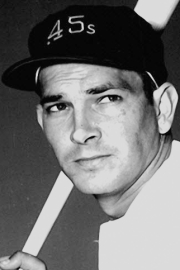
Don Buddin: Houston’s 1st MLB Shortstop

September 9, 2013
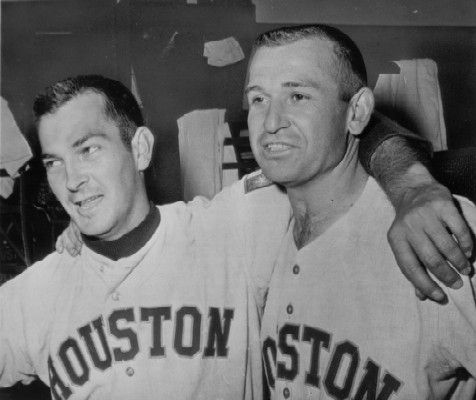
Don Buddin (L) celebrates a road win with Houston Colt .45 first baseman Norm Larker at some point in his brief 1962 local job as the club's shortstop.

Don Buddin (L) celebrates a road win with Houston Colt .45 first baseman Norm Larker at some point in his brief 1962 local job as the club’s shortstop.

When the Houston Colt .45’s took the field at Colt Stadium to play their first-ever game in the major leagues on April 10, 1962 against the visiting Chicago Cubs, an almost 28 years old fellow named Don Buddin trotted out to play shortstop as the first man in history to handle that job for our local heroes. He batted eighth in the order; he played errorless, uneventful ball in the field; and he went oh for three at the plate. Along with pitcher Bobby Shantz,   Buddin was the only regular to go hitless in the Colts’ 13-hit, 11-2 mashing of the Cubs that monumental day in Houston baseball history.

Don Buddin (BR/TR) (5’11”, 178 lb.) only had 40 total games in the early season of 1962, but his coming and going, to and from Houston, are both summarily interesting, if nothing else beyond the fact that he really was in actuality our town’s first big league shortstop.

Let’s retrace how he got here:

The Colts already had a couple of candidates for shortstop courtesy of the special 1961 National League expansion draft that was held for the purpose of stocking both of the two new franchises awarded to Houston and New York so they could begin NL play in 1962. The New York club, of course, was set to be called the Mets. Infielders Eddie Bressoud from San Francisco (#1) and Bob Lillis (#5) from St. Louis were both drafted by Houston with the shortstop position in mind, but Bressoud would never see a field shot at that job.

Don Buddin 1st Shortstop Houston Colt ,45's April 10, 1962

Don Buddin
1st Shortstop
Houston Colt ,45’s
April 10, 1962

On November 26, 1961, Houston traded Bressoud to the Boston Red Sox for shortstop Don Buddin. Then, on July 20, 1962, Houston looked at Buddin’s .163 for 40 games and sold his contract to the Detroit Tigers. Buddin would hit well enough at Detroit to bring his total season average up to .196 by year’s end. Meanwhile, as these things so often go, Eddie Bressoud batted .277 with 14 homers for the 1962 Boston Red Sox.

Don Buddin’s 6-year MLB career was done after 1962. He took a .241 career MLB batting average with him. Eddie Bressoud finished a 12-year MLB career in 1967 with a .252 batting average.

Don Buddin was born on May 5, 1934 in Turbeville, South Carolina. He passed away on June 30, 2011 in Greenville, South Carolina at the age of 77.

At least you got there first, Mr. Buddin. Thanks for contributing to our local history by being there on record as our first Houston Colt .45 shortstop.

Saturday Night Memories

September 8, 2013
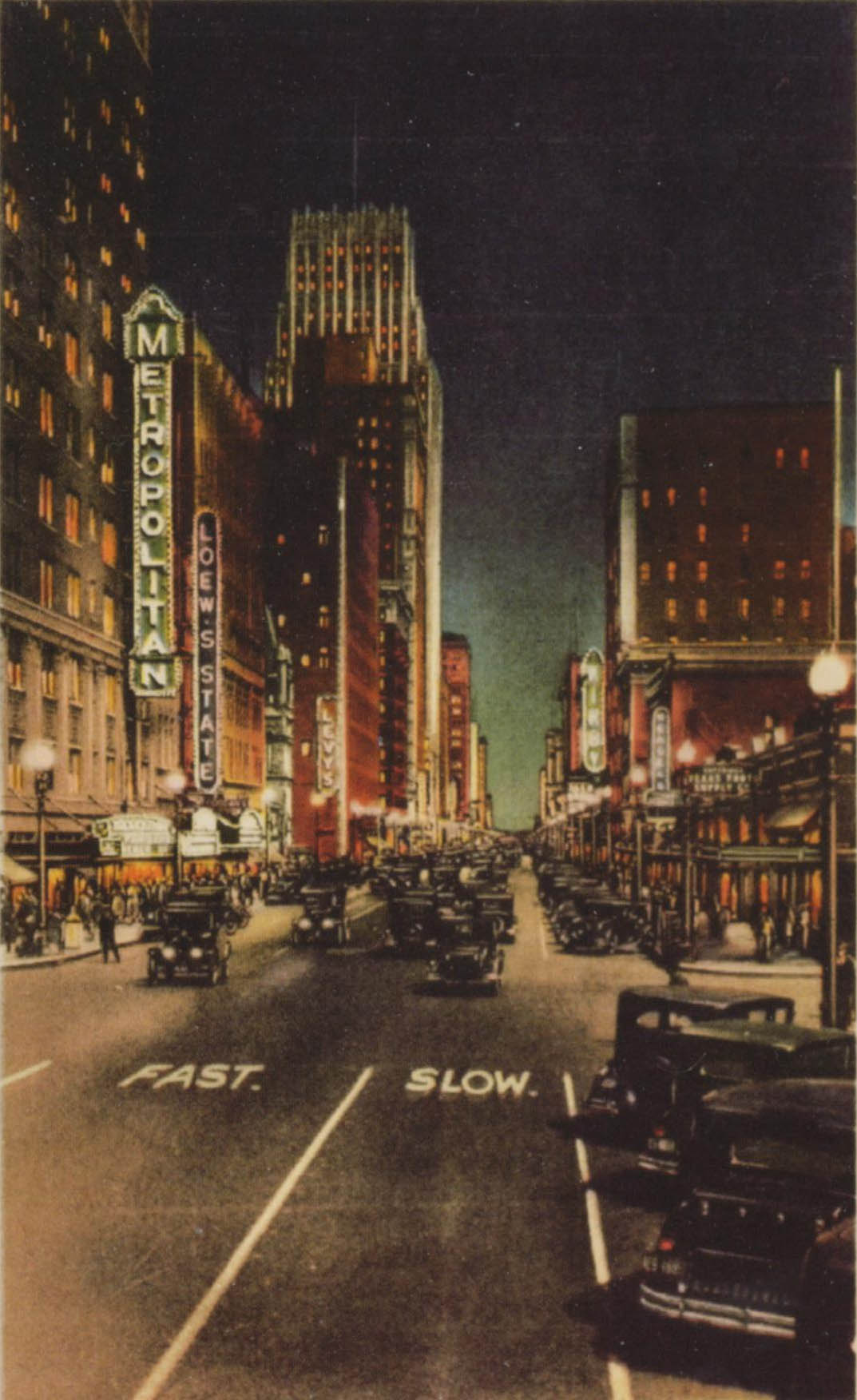
The Met and the Loew's (to the left above), along with the Majestic on Rusk were the Big 3 Houston movie house downtown back in the day.

The Met and the Loew’s (to the left above), along with the Majestic on Rusk were the Big 3 Houston movie house downtown back in the day.

Once Upon a Time, during the Reign of King Elvis and the Knights of the Rockin’ Round Table, a kid who wanted to impress his steady girl friend on a normally lame and calm Houston Saturday Night had only one sane, affordable choice. He took her downtown to a first-run new movie at one of the “Big Three”, the Metropolitan or the Loew’s State on Main, just north of the Lamar intersection, or a couple of blocks further north on Main and a half block to the left on Rusk for a show at the Majestic.

The Kirby on Main was OK for buddy movies, like the time my East End friends and I stayed downtown after leaving classes at St. Thomas to take in a double feature showing of the original Dracula and Frankenstein films at the Kirby, but those weren’t good date movies until we were all old enough to access cars for drive-in movie dates. Drive in movie theatres and horror shows were a natural for teenage dating on the snuggling level, as “The Creature from the Black Lagoon” would soon enough prove by 1956, but they didn’t work worth a flip at indoor houses, at least for me. Indoor theatres and horror movies just made girls want to go home as they sometimes also lectured all the way, “I can’t believe you took me to that horrible movie.”

No, the Kirby was cheaper, but they showed older movies and what used be known as first run “B” movies. “B” movies also usually featured unknown to lesser known actors, simple scripts, cheap production, and black and white only prints. Some were also good enough to be revered today on the Turner Classic Movies cable TV channel as just that – classics. – That simply wasn’t how they were seen back in the day.

For myself and most of the people I knew, those Saturday Night Memories were only made possible by our abilities to hold down minimum wage jobs at grocery stores that started clerks at fifty cent cents an hour and checkers at seventy-five cents an hour. And most us worked eight to twelve hours on Saturdays before we got off to start our own ideas of fun. We had to plan our pending carefully.

Although we may not have put it out on a spreadsheet at the time, we did have to plan for economy rides or luxury splurges. We had no debit cards or access to credit lines in which today’s spending could be put off to some farther down the road day of reckoning. In our day, we either had the money for it – or we couldn’t buy it. And downtown dating on a Saturday night in Houston took only cold hard cash.

Here’s a reconstructed look at Saturday Night Dating Expenses, circa 1956:

Downtown Movie Expense Economy Model Luxury Model
Gas @ 25cents per gallon $ 0.50 $  1.00
Nearby Parking       .00       .50
2 tickets @ $ 1.25 each     2.50      2.50
Pop Corn @ $ 0.15 a bag       .15        .30
Cokes @ $ 0.10 each       .20        .20
After movie burgers (2)       .00        .60
After movie fries (2)       .00        .30
After movie cokes (2)       .20        .20
Carhop Tip       .05        .10
TOTAL EXPENSES ->>>> $   3.60 $    5.70

The dating scenario around here was pretty routine. – Go downtown for an eight o’clock movie. Then drive out South Main to Prince’s or Stuart’s for burgers, cokes, and fries. And then maybe a half hour of gazing at the lake in Hermann Park and listening to the car radio – or getting out to visit with the ducks – and then getting your date home at the time you promised her mother she would be there.

We didn’t do drugs or booze so much back then, and maybe we were a little bit boring too, but so what. We were solid. And we loved our city, our state, our country, the game of baseball, – and the idea that we each had a shot at making our lives matter someday. And so much of those Saturday Night plans were centered on the illusionary search for our soul mates.

Someone in our cultural mentoring pool back in the days of King Elvis forgot to tell us the whole truth about love: You have to first find your own soul before you can really find your soul mate – and no one else in this world can do that for any of us. It is our job alone through the painfully born wisdom that spawns from personal discovery.

That being said, I still wouldn’t trade my Saturday Night Memories of Houston for anything in the world.


Native Texan Lineup Proves Easier Task

September 7, 2013
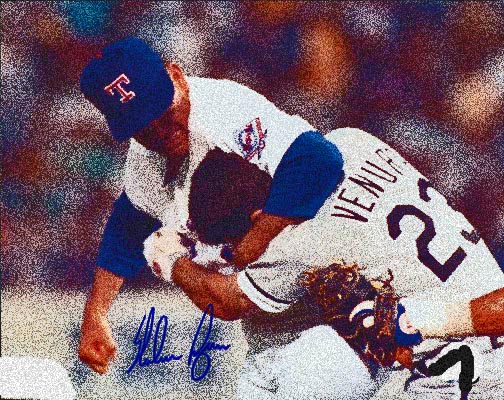
Every All Star team needs a pitcher who can respond to critics as Nolan Ran did to Robin Ventura back in the day.

Every All Star team needs a pitcher who can respond to critics as Nolan Ryan did to Robin Ventura back in the day.

Armed with the new (to me) search engine material from Baseball Reference.Com that organizes players in various ways, this time by state of birth, it was far easier coming up with my favorite All Time Starting Nine for the State of Texas Natives than it was for what several of us encountered producing the same outcome for Native Houstonians.

Thank you again, Cliff Blau, for putting me to the wise on that advanced feature of my favorite baseball data site. The data feature, aided by the fact that Texas is also much larger than Houston alone and the birthplace of several Hall of Famers and some others to soon enough be.

Here’s my starting lineup for the Native Texan All Stars:

1) Tris Speaker HOF (Hubbard, TX, 04/04/1888) CF

2) Ross Youngs HOF (Shiner, TX, 04/10/1897) RF

3) Rogers Hornsby HOF (Winters, TX, 04/27/1896) 2B

4) Frank Robinson HOF (Beaumont, TX, 08/31/1935) LF

5) Ernie Banks HOF (Dallas, TX, 01/31/1931) SS

6) Eddie Mathews HOF (Texarkana, TX, 10/13/1931) 3B

7) Norm Cash (Justiceburg, TX, 11/10/1934) 1B

8) Gus Mancuso (Galveston, TX, 12/05/1905) C

9) Nolan Ryan HOF (Refugio, TX, 01/31/1947) P1 & Greg Maddux HOF2B (San Angelo, TX  04/14/1966) P2

OK, Fry me. I couldn’t pick between Ryan and Maddux. Both were great and Texas deserves each of them.

But seriously, would you pay to see that lineup play even a single game with that batting order? I sure would.

Native Houstonian Lineup Needs Your Help

September 6, 2013
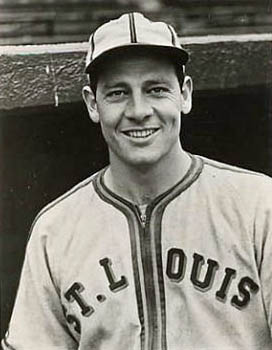
Native Houstonian Frank Mancuso batted .667 im the 1944 World Series as a catcher for the only St. Louis Browns club that ever won a pennant.

Native Houstonian Frank Mancuso batted .667 im the 1944 World Series as a catcher for the only St. Louis Browns club that ever won a pennant.

Sometimes a column idea is either harder than it first looks – or it just takes more time than I immediately have for the job. Most often, that results in me putting it aside and working off the clock on the subject to get it done for some undetermined future date.

Today I’m choosing to a different route by inviting those of you who are interested in joining with on coming up with the best 9-player starting lineup of native Houstonians we can either recall or discover. Feel free to suggest alternatives to the six names I have put forth already, but double-check the birthplaces of those former big leaguers you may want to use. Roger Clemens, Josh Beckett, and Wayne Graham, for example, were all born elsewhere.

Simply put what you have, even if it’s a completely fresh lineup from the one started here, as a comment on the column in the section below – and please include the birth dates of your choices. And please contribute. For the moment. I can’t even come up with the names of native Houstonians who played at least one game of big league ball at 3B, 2B, or SS.

Here is my Incomplete Big Leaguer Batting Order (by date of birth in Houston & position)

ORIGINAL INCOMPLETE NATIVE HOUSTONIAN LINEUP

1) Curt Flood (01/18/1938) CF

2) Carl Crawford (08/05/1981) RF

3) James Loney (05/07/1984) 1B

4) Steve Henderson (11/18/52) LF

5) 3B

6) 2B

7) SS

8) Frank Mancuso (05/18/1918) C

9) George “Red” Munger (10/04/1918) P

IN PROGRESS COMPLETE NATIVE HOUSTONIAN LINEUP

1) Michael Bourn (12/27/1982) CF

2) Curt Flood (01/18/1938) LF

3) Carl Crawford (08/05/1981) RF

4) James Loney (05/07/1984) 1B

5) Chuck Knoblauch (07/07/1968) 2B

6) Kelly Gruber (02/26/62) 3B *

7) Craig Reynolds (12/27/1952) SS

8) Frank Mancuso (05/18/1918) C

9) George “Red” Munger (10/04/1918) P

* Thanks to Cliff Blau for his advisory on to use the state and city features of the Baseball Reference search engine. I will happily take Kelly Gruber as our 3rd baseman as we send Curt Flood out to LF and retire Steve Henderson to the bench,

Also, thanks again to Bob Dorrill, Tom Kleinworth, and Harold Jones for the help.

A Better NCAA Division 1 Football Playoff Plan

September 5, 2013
It's time for a real post-season college football playoff system. Four team are better than two, but 16 is about the lowest number that does service to fairness.

It’s time for a real post-season college football playoff system. Four teams are better than two, but 16 is about the lowest number that does service to fairness.

Forget the barriers of greed and politics from the current bowl game system and its marriage to the egos, status, and coffers of the NCAA and its member conferences, universities, and television networks, the following plan is the simply better system we could have in place now without those obstacles:

(1) It would be a 16-team playoff that begins the 2nd Saturday in December, requiring each participating conference to have completed its regular season and any conference championship games by the 1st Saturday in December.

(2) The 16-team field would contain automatic bids to the five (5) champions of the SEC, ACC, Big 12, Big Ten, and PAC-10, plus the next highest 11 ranked teams from a special all-season poll of the best 25 teams in college division 1 level football.

(3) Round One Playoff Pairings would be based on the usual top seed vs. low seed matches down the line:

16 vs. 1;

15 vs. 2;

14 vs. 3;

13 vs. 4;

12 vs. 5;

11 vs. 6;

10 vs. 7;

9 vs. 8.

(4) All first round games would be played at the home fields of the top 8 seeds.

(5) Round Two Pairings would be based on the same seeding plan already in play. The four games of Round Two would pair teams in this way:

16  – 1 winner versus 9 -8 winner;

15 – 2 winner versus 10 – 7 winner;

14 – 3 winner versus 11 – 6 winner;

13 – 4 winner versus 12 – 5 winner;

(6) All Round Two Pairings would be played on the 3rd Saturday in December at four of the previous Tier One bowl sites on an annually rotating site basis.

The Round Three Semi-Finals would be played on New Years Day at two other rotating Tier One bowl sites:

16-1v9-8 winner versus 13-4v12-5 winner;

15-2v10-7 winner versus 14-3v11-6 winner.

(7) The two surviving teams would meet for the Division 1 College Football Superlative Bowl on the Sunday prior to the NFL Super Bowl at a site that could either be determined by either a rotational schedule among the old top bowl venues – or by competitive community bids to be the site.

While they are at it, maybe it’s time too for the NCAA to abandon their hypocrisy about money and cut the players in for a share of the swag they are raking in in the name of pure amateurism. College football hasn’t been an amateur sport in a long time, if, indeed, it ever was.

Maybe they could even get the Campbell Company involved as a permanent sponsor and just call it “The College Football Souper Bowl”.

Triple Milestone Targets-2013

September 4, 2013

Bill Gilbert Astro2


Triple Milestone Targets – 2013

By Bill Gilbert

9/3/2013           billcgilbert@sbcglobal.net
 Here is a look at who is on target for the milestones of a .300 batting average, 30 home runs and 100 RBIs with 4 weeks to go.
Triple Milestone Targets-2013
With four weeks to go, only two players are on target for triple milestones of a .300 batting average, 30 home runs and 100 RBIs but six others are close.  Only one pitcher is on target for the milestones of 20 wins, 200 strikeouts and an ERA less than 3.00.  No other pitchers are close.
At this point in the season, a batter must have a batting average of .300, 25 home runs and 85 RBIs to be on target.  To be considered close, he must have a batting average of .290, 23 home runs and 80 RBIs.
A pitcher must have 17 wins, 169 strikeouts and an ERA of less than 3.00 to be on target.  To be considered close, he must have 16 wins, 159 strikeouts and an ERA of less than 3.15.
Here are the players who are on target or close:
HITTERS               BA-HR-RBI
Miguel Cabrera  .358-47-122.  Has it made with room to spare.
Robinson Cano  .305- 25- 89.  On target but needs home runs and RBIs.
Chris Davis  .298-47-122.  Needs a couple of points on batting average.
Paul Goldschmidt .295-31-104. Close, but short on batting average.
Adrian Beltre  .327-28-82.  A little short on RBIs.
Adam Jones  .293-28-98. Close and coming on strong.
David Ortiz  .312-24-85.  Close but needs home runs.
Mike Trout  .335-23-82.  Close but needs home runs and RBIs.
PITCHERS            W-L, Strikeouts, ERA
Max Scherzer  19-1, 201, 2.90.  On target but ERA could be a problem.
No other pitchers have more than 15 wins.  Since pitchers wins are not controllable, it’s interesting to look at which pitchers are on target on both strikeouts and ERA but not wins..
PITCHER             W-L ERA-Strikeouts
Yu Darvish           12-6, 2.73, 236
Clayton Kershaw  14-8, 1.89, 231
Felix Hernandez   12-9, 3.01, 200
Chris Sale            10-12, 2.99, 193
Matt Harvey            9-5, 2.27, 191
Adam Wainwright  15-9, 3.14, 187
Steven Strasburg    6-9, 2.85, 174
Jose Fernandez    10-6, 2.33, 173

Astros Show Signs of Improvenent in August

September 3, 2013

Bill Gilbert Astro2

Astros Show Some Signs of Improvement in August

By

Bill Gilbert

9/02/2013

            Before finishing the month of August with a disappointing five game losing streak, the Astros had shown some signs of being competitive.  Though the team’s record in the month was only 8-21, the Astros led in 22 of their 29 games.  That they only won 7 of these games pinpoints the team’s most glaring of their many weaknesses, the bullpen.

The numbers below illustrate just how bad the Astros have been this season:

BATTING

Category                        Astros   MLB Avg.            Astros Rank

Runs/Game                    3.87             4.19                 23rd of 30

Batting Avg.                   .239              .254                 T 27th

On-Base Pct.                  .299              .318                    29th

Slugging Avg.                 .382             .398                  T 23rd

OB + SLG                         .681              .716                 29th

Strikeouts                       1273                                     30th

PITCHING

Runs /G                           5.28          4.19                    30th

ERA                                  4.86         3.88                     30th

Starters ERA                    4.62         4.02                    28th

Relievers ERA                5.28         3.59                     30th

                  The Astros are clearly well below the major league average in important hitting and pitching categories with the biggest deficiency being in relief pitching.  Former GM, Gerry Hunsicker once said that the bullpen is the easiest part of a club to build.  If that is true, GM Jeff Luhnow should have a rebuilt bullpen in place for 2014.  Hunsicker also once said that he expected Morgan Ensberg and Jason Lane to achieve the same level of success in the major leagues as Lance Berkman.  We know how that turned out.

Despite the poor overall performance in August there were some bright spots.  Jason Castro continued his breakout year in August, batting .338 with 5 home runs and an OPS of 1.067, and won his second AL Player of the Week award this year.  Three young starting pitchers, acquired in trades by former GM, Ed Wade, joined the starting rotation and performed well.  Brett Oberholtzer was 2-1 with an ERA of 3.24, Jared Cosart was 0-1 with an ERA of 2.10 in 5 starts, and Paul Clemens was 0-0 with an ERA of 1.50 in his only start.

The Houston minor league teams continued to play well.  All four full-season clubs at the AAA, AA and Class A levels are in the playoffs starting after Labor Day.  Two of the short-season clubs are in first place headed for the playoffs.

On a personal note, we made a weekend trip to Houston in August and I saw my first two major league games this season.  Surprisingly, the Astros scored two decisive wins over Toronto, 12-5 and 6-2 in the games I saw.  What are the odds of going 2-0 with a home record of 21-47?  It was the 49th straight year that I have seen major league games in Houston.

September Song

September 2, 2013
Can the changing of the leaves be far away?

Can the changing of the leaves be far away?

It’s back. The first day of the real new year slipped quietly through our fingers yesterday. September’s here again. The time for fresh beginnings is at hand. – And so – what truly is so special about the month of September,  anyway?

1) School Starts Again with the Same Old Great Expectations.

2) The Baseball Season Pennant Races are Wrapping Up.

3) The World Series will be here soon.

4) Football season is back – and ready to fill our weekend social calendars with tailgates and ESPN TV game marathons.

5) Yard raking in Houston will commence with the coming of the first “norther” that bears both the blow and cool power to dip this far south and stun the leaves of our deciduous trees.

6) It’s time to see Halloween costumes on our store shelves. By the middle of September, move that stuff over for the Thanksgiving Holiday and Christmas Season items. – Happy New Year, Everybody!

7) After months of Houston Life at the rim of Dante’s Inferno, the possibility, if not the probability, of cooler weather is again on the board. Prepare to relish the first morning, whenever it does arrive, that we all wake up to temperatures in the 60’s to 40’s and that more comfortable one-third of the year that makes the other two-thirds of Houston’s weather bearable.

8) Think outside the Houston box. Maybe this will be the year you finally fly to New York City during the first two weeks of October and rent a car to drive up the Hudson River Highway to West Point to see what a real changing of the leaves during the fall season looks like. – It’s a real breath-taker, if you do, and a trip you will never either regret or forget.

9) While you are in upstate New York, amble over to Cooperstown for a quiet and beautiful trip to the Baseball Hall of Fame. In my book, it’s the best time to go there to the shrine of our greatest game.

10) Enjoy Labor Day, September 2, 2013, in love and peace, with family and friends. Like all our other days, it only got here by itself, and we only get to enjoy it from moment to moment, one day at a time, as the clock ebbs and flows from the only time that ever truly exists for us – in the ever-present here and now.

Happy Labor Day, Everybody! 🙂