Archive for 2012

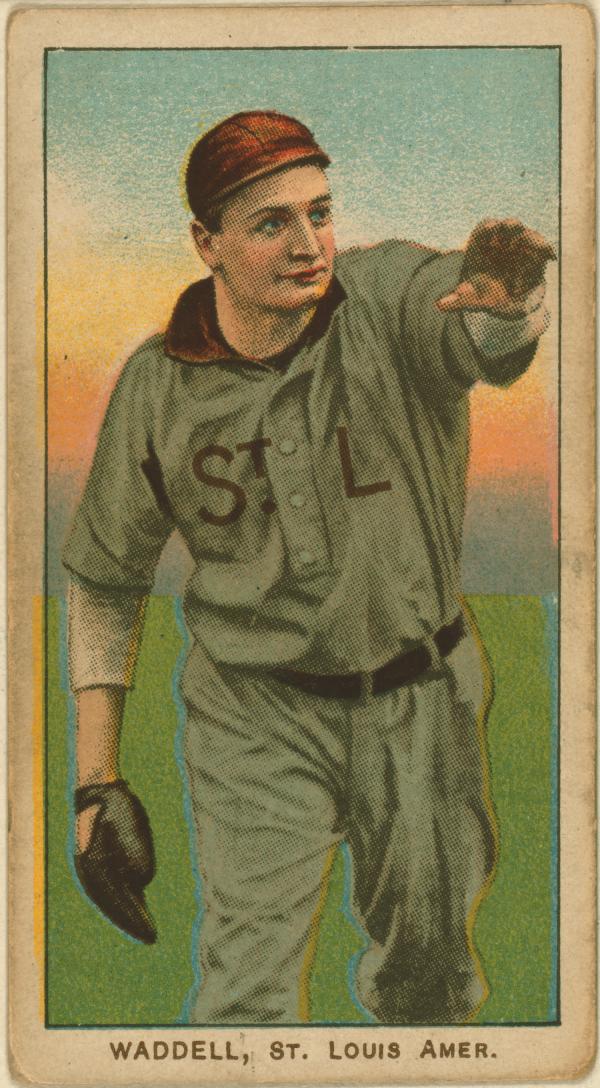
Rube Waddell, A.D.D.

October 11, 2012

Long before our awareness of “Attention Deficit Disorder” and the medications that help to control the behavior that spins from this condition, there were people in this world like George Edward “Rube” Waddell, the Hall of Fame lefty pitcher that lit up batters during the first decade of the twentieth century and the American League.

Rube was a virtual savant performer, able to pitch with the best in the world against other greats like Cy Young, Addie Joss, and Walter Johnson and winning far more often than losing against some of the best of the American League.

As we vividly note in Norman Macht’s first volume on Connie Mack, the price a club paid for having the talents of Waddell on their side was the personal behavior of the man himself. Left to his own devices, urges, impulses, attractions, and addictions, Rube was every pound and muscle inch little more than an overgrown child with no control over his distractions from the game of baseball and his contractual obligations to the club. Waddell would sometimes disappear for days or weeks to tend bar somewhere, go fishing, or hang out with new friends he met along the way. He was able to come back because of the talent he brought with him. An average or marginal pitcher would have been finished at the first turn down this “bad actor” lane.

And Rube Waddell had a temper that could frighten anyone, if they pushed the right buttons long enough. On page 322 of Norman Macht’s “Connie Mack and The Early Years of Baseball,” the author describes the Athletics Manager Connie Mack’s lesson in the first decade of the 20th century from Waddell’s temper after the eccentric lefty returned to the club on the heels of being jailed on an assault and battery charge:

“I went after him strong,” Mack said. “I was laying on the words thick and fast and I saw a nasty look come into Rube’s eyes.” Quick as a flash it dawned on me that I had gone too far. Breaking off in the middle of a scorching sentence, I reached out my hand and said, ‘Say, Rube, I had you that time. All that time you thought I was in earnest.’ And do you know that great big fellow who was ready a few seconds earlier to throw me through the door actually broke down and cried.”

Yep. “Anger Management” would have been a good alternative recommendation back then, but there was no such option back in Rube Waddell’s “Turn of the 20th Century” era. Then as now, the jailhouse is still our best option for those fists, knives, or guns people who take out their anger upon others. “Anger Management” only works for people who choose it soberly in calmer moments.

Rube Waddell wasn’t just about anger. His mind and behavior were all over the place, fitting him almost everywhere in the psychiatric lexicon of things. As a psychiatric disorder, Rube Waddell is variously diagnosable all over the psychiatric diagnostic manual dial as a schizophrenic, a bi-polar disorder, a character disorder bordering on sociopathy, an inadequate personality disorder, an alcoholic and/or drug addict, or even a codependent relationship partner.

His behavior often suggested that he was not particularly grounded in reality; he suffered mood swings from out of control highs to down in the depth lows; he sometimes took advantage of people in ways that showed little concern from him about the suffering they had endured from his behavior; he could binge drink for days and weeks; and he probably used other substances that helped him self medicate the difficult feelings he housed.

Rube was famous for chasing fire trucks, supposedly leaving his dugout during games to chase a fire-wagon down the street. I’m not really sure how often this sort of thing happened, but it serves as a good model for the kind of behavior that is typical of some people who suffer from “Attention Deficit Disorder” as a hard level of extreme distractibility from long-term attention to an engagement at hand. A.D.D. people have trouble at work and home because they simply cannot stay focused on what is going on in the moment for very long. A.D.D. seems to derive from some kind of biochemical imbalance which responds well in many people to the kinds of meds we now have available.

There were no efficacious treatment drugs for A.D.D. in Rube Waddell’s time. Rube did what most people still do to medicate themselves. They drink and drug themselves with whatever is available as a mind-altering substance, most often suffering the downside of whatever flows from the loss of impulse control effects that flow from entertainment drinks and substances.

I cannot place old Rube in any category for sure since I’ll never have a chance to meet him in this lifetime, but I will hedge enough to suggest that his two principal issues were “Bi-polar Mood Disorder” with “Attention Deficit Disorder” and that any treatment for him would begin or end with the presence or absence of appropriate  medication, administered to a patient who was willing to start his treatment by taking his medication regularly as prescribed. Only then could we move on to the stuff that might have mattered.

I still like old Rube. Waddell is history’s proof that you don’t always have to have peace of mind, relationship sanity, or a full grip on reality to do great things that entertain, but do not bring harm to others.
Bill Gilbert: Worst Astros Finish Strong

October 10, 2012

SABR Colleague Bill Gilbert is back with the Pecan Park Eagle today to give us his final appraisal of the worst season of the Houston Astros on the field. Thanks again Bill for making your two cents worth, at least a buck and a quarter at current market valuation. We shall hope that your closing possibilities that the Astros may be back to a competitive level of play by 2015 live up over time with reality. If they do, I will be hoping we get to keep the core leaders of the club’s competitive resurrection once the “boyz2men” new Astros stars are good enough and old enough and contract free enough to ask Mr. Crane for some real money. If all the good efforts of Mr. Luhnow go the way we hope they shall, we shall next hope that we never move to an operational level in which we only get to keep the star players who are willing to remain in Houston at below market level salaries.

The line between fiscal responsibility  and miserly cheapness is sometimes blurry and shrouded with clubs that never quite get to the World Series before they lose all their best players to trades or free agency. For now, we shall best hope that the new ownership understands this point and that we shall stay clear of administrative murkiness in the financial policy area once the Luhnow Field Performance Plan leads the Astros out of the current rebuilding wilderness.

That being said, here is the inimitable Bill Gilbert and his well=considered thoughts and conclusions on the field side of things in 2012. – Bill McCurdy, The Pecan Park Eagle.

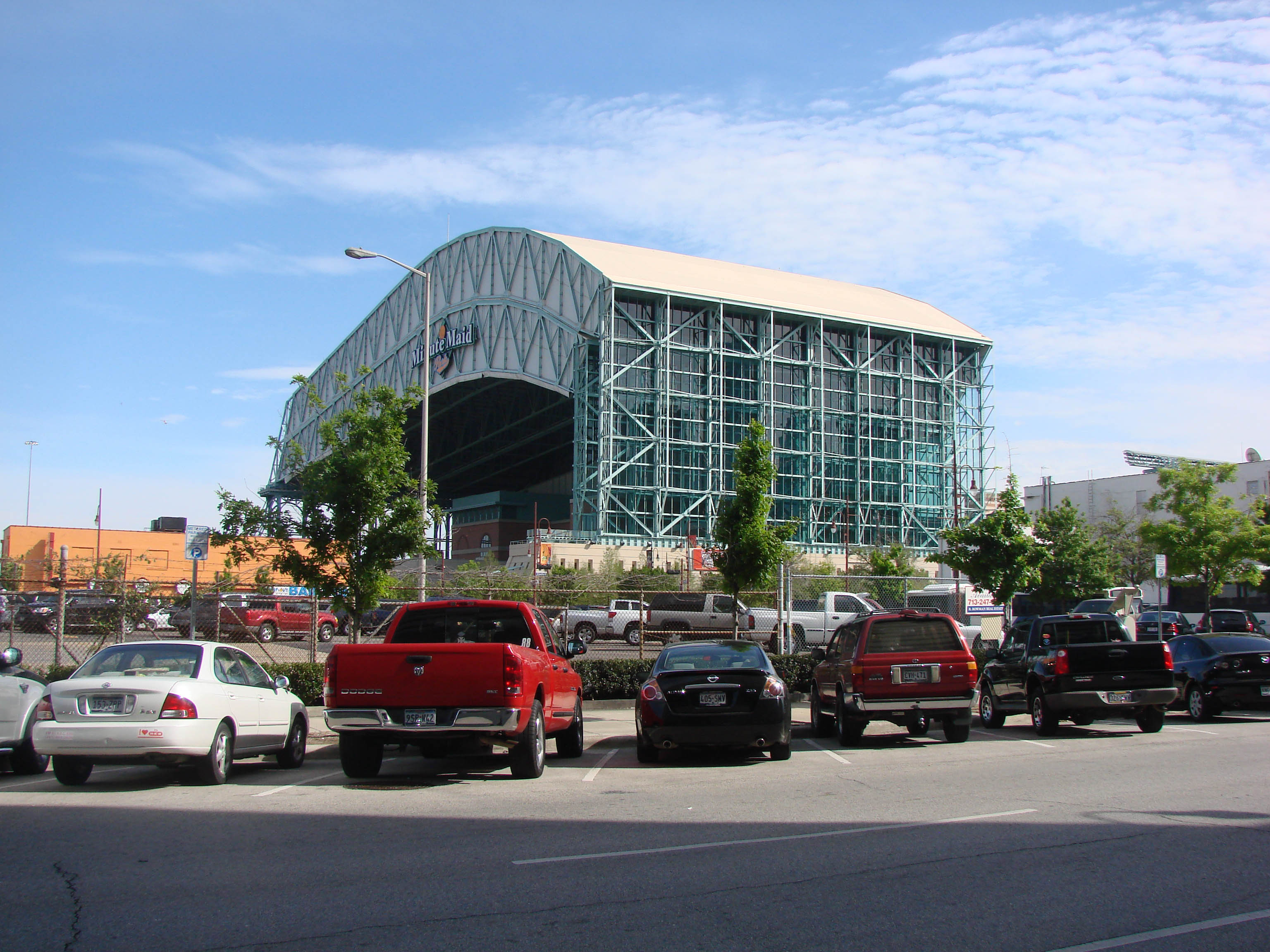
Minute Maid Park in Houston during brighter days. The 2012 Astros finished with a worst-in-their-history record of 55 wins and 107 losses, but hold hope for better days to come through a rigorous rebuilding of the farm system. Bill Gilbert comments today on what their actual field performances may be telling us.

Astros Complete Worst Season with a Strong Finish

By Bill Gilbert

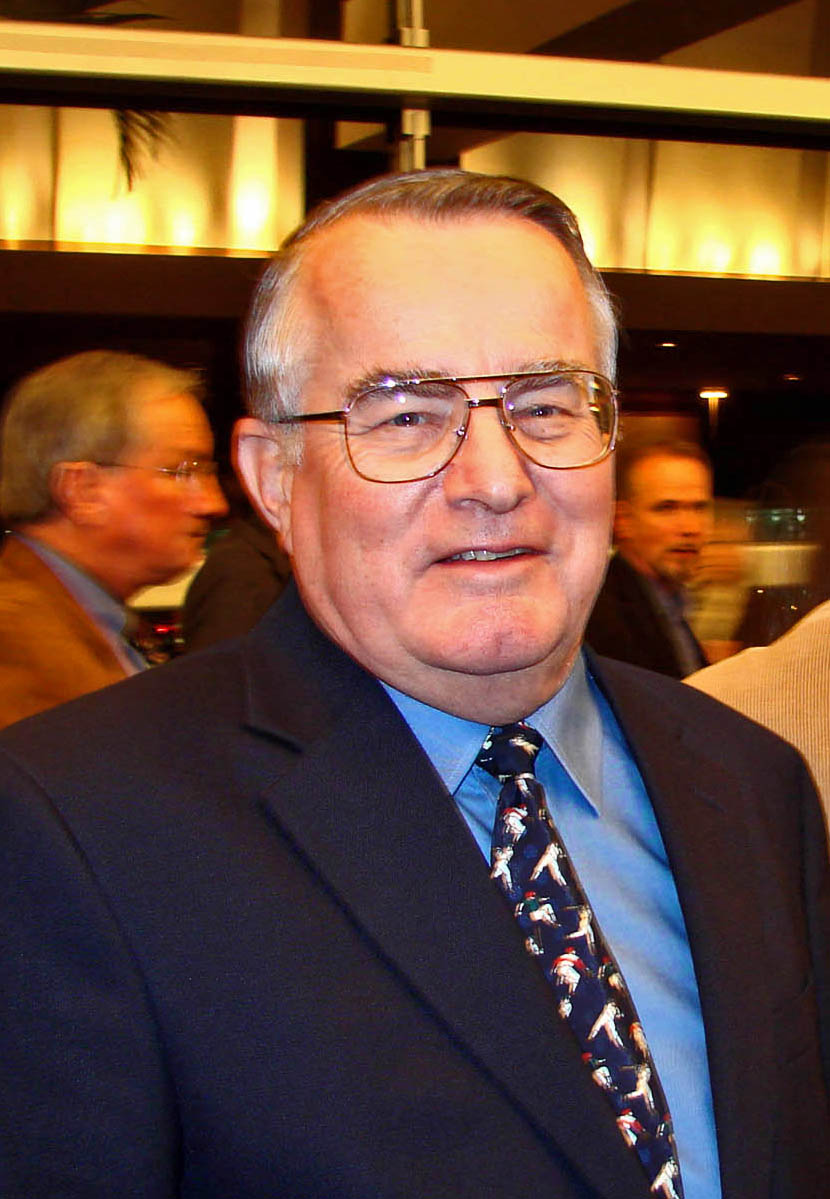
Bill Gilbert

 The Houston Astros finished the 2012 season with a record of 55-107, one game worse than last year.  After playing their worst baseball in the team’s 51 year history in June, July and August (18-63), the team seemed to respond to the leadership of interim manager, Tony DeFrancesco and compiled a 15-15 record beginning September 1, slightly better than that of The Texas Rangers (15-16) in the same time frame.

Except for the Cardinals, who took 5 games out of 6 from the Astros in September, the team inflicted some pain on the other teams they played.  They took 2 out of 3 from the Reds in Cincinnati in a series beginning September 7 but it obviously didn’t slow down the Reds as they breezed to the NL Central Division title.  Next came the Phillies who rode into town on a 7-game winning streak that propelled them into contention for a wild card.  They figured to keep rolling against Houston’s band of replacement players but it didn’t happen.  The Astros took 3 out of 4 and the Phillies were not heard from again as a potential contender.

The Pirates came to town on September 21, desperately seeking a few wins that would allow them to finish with a winning record for the first time in 20 years.  However, the Astros took 2 out of 3, pretty much putting the winning record out of reach.  The Astros moved on to Milwaukee to face the Brewers who had been hot and still had an outside chance at the wild card.  The Astros took 2 of 3, mathematically eliminating the Brewers from any chance for post-season play.

Finally, the Astros finished the season in Chicago against the Cubs, who needed to sweep the 3-game series to keep from having a 100-loss season for the first time in 50 years.  However, the Astros received shutout pitching from Bud Norris, Lucas Harrell and the bullpen to take the first 2 games of the series before dropping the finale 5-4.  The loss in the final game was disappointing since a win would have ended the Astros tenure in the National League the same way they came in with a sweep of the Cubs in 1962.  Also it would have been win No. 4000 for the club. Instead they finish their 51-year stay in the National League with a record of 3999-4134.

The Astros relative success in the last month of the season was largely the result of two things that had been missing all season, consistent pitching and the long ball.  The staff turned in 5 shutouts in the final 30 games and the hitters bashed 34 home runs.  However this wasn’t enough to keep the Astros from ranking near the bottom in many hitting and pitching categories.  For the season, they scored an average of 3.6 runs per game, the lowest in the major leagues.  They finished last in the National League in batting average (.236), on-base percentage (.302) and slugging average (.371) while striking out more than any other team.  Despite the improvement in September, the pitchers ERA was 4.56 for the season compared to the league average of 3.94.  Only the Rockies were worse.

Team MVP, Jose Altuve led the club in batting average (.290), on-base percentage (.340) and stolen bases (33).  Justin Maxwell led the team in home runs with 18 and J.D. Martinez was the RBI leader with 55 despite spending some time in the minor leagues.  Harrell led the pitching staff with 11 wins and an ERA of 3.76.  The top reliever was Wilton Lopez with 6 wins, 10 saves and an ERA of 2.17.

The Astros used 27 position players and 23 pitchers during the season.  Nine players, mostly veterans, were traded away during the season and most of the rest were auditioning for positions in 2013.  Some showed significant promise.  Matt Dominguez may look like he is too young to shave but plays third base well and hit better than expected.  Maxwell has power but must cut down on strikeouts to be an everyday player.  Former Met prospect, Fernando Martinez, played well in September and should be a factor next year.  Jed Lowrie has the makings of an above average shortstop both offensively and defensively.

Looking to the future, patience will be required.  Here’s my blueprint for the future:

Year                                    Wins                        Status

2012                                    55                        Embarrassing

2013                                    60-70                        Improving

2014                                    70-80                        Respectable

2015                                    81+                        Contending

This is a bold projection but I think it is warranted based on the bold steps taken by Jeff Luhnow in tearing down and rebuilding the franchise.  Anything less will probably result in further erosion of what’s left of the fan base.  The key will be a significant upgrade in the pitching staff.  Harrell, Norris and Jordan Lyles could become reliable starting pitchers but none projects as an ace.  Most of the players the Astros obtained in trades were pitchers and several of them need to develop into productive major leaguers for the Astros to regain their position as a perennial contender.

Bill Gilbert

10/9/12

Historic World Series Possibilities

October 8, 2012

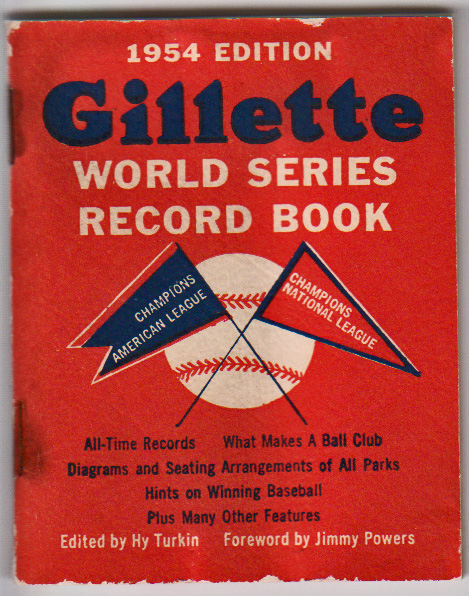
Remember when Gillette Razor Blades was the company we most identified with the World Series on television? (Look sharp. Feel sharp. Be sharp.)

It comes up almost every year. It’s probably impossible, or possibly improbable, that it could not come up. The chance for two famous franchises meeting again in a World Series is out there on the line, for now, but,with two of the qualifying league playoff series now at 2-0 in the 3-win series tier of things, chances are shrinking fast.

As of this Monday morning, October 8, 2012, they are all till out there – and here’s what they are as match ups between clubs that have met before as franchises – even if the present clubs, in some instances, are now at home in different cities and/or playing by different mascot names these days.

Possibilities:

(1) Cardinals-Yankees (5 times). Cardinals won in 1926, 1942, and 1964; Yankees won in 1928 and 1943.

(2.) Cardinals-Athletics (2 times). Cardinals won in 1931; Athletics won in 1930. Athletics were located in Philadelphia during each of these previous meetings.

(3) Cardinals-Tigers (3 times). Cardinals won in 1934 and 2006; Tigers won in 1968.

(4.) Cardinals-Orioles (1 time). Cardinals won in 1944 when the Orioles franchise was still located in St. Louis also and known as the Browns.

(5) Yankees-Giants (7 times). Yankees won in 1923, 1936, 1937, 1951, and 1962; Giants won in 1921 and 1922. (The Giants moved from New York to San Francisco in 1958).

(6) Yankees-Reds (3 times). Yankees won in 1939 and 1961; Reds won in 1976.

(7) Reds-Tigers (1 time). Reds won in 1940.

(8) Reds-A’s (2 times). Reds won in 1990; A’s won in 1972. A’s were located in Oakland each time.

(9) Reds-Orioles (1 time). Orioles won in 1970.

(10) Giants- A’s (4 times). Giants won in 1905, when the franchise was still in New York; the A’s won in 1911 and 1913, when the club was still in Philadelphia – and again in 1989, when the club had moved to their current home in Oakland.

(11) Washington-Giants (2 times). A “City of Washington” club known as the Senators defeated the New York Giants in 1924; the same NY Giants, in turn, defeated the same “Washington Senators” in 1933. The current Washington Nationals club (formerly the Montreal Expos) would be making its first appearance in a World Series, if it advances that far.

At any rate, what are your preferences for a mach-up, if any? If it helps, here are the W/L records in the World Series for all four of our remaining clubs, arranged in descending order from most to least previous appearances in the World Series. Interesting to note that the top three appearance clubs have also won the last three World Series played through 2011:

(1) (40 apps) New York Yankees (won 27, lost 13, WP: .675) last won in 2009.

(2t) (18 apps) St. Louis Cardinals (won 11, lost 7, WP: .611) last won in 2011.

(2t) (18 apps) San Francisco Giants (won 6, lost 12, WP: .333) last won in 2010.

(4) (14 apps) Oakland Athletics (won 9, lost 5, WP: .642) last won in 1989.

(5) (10 apps) Detroit Tigers (won 4, lost 6 WP: .440) last won in 1984).

(6) (9 apps) Cincinnati Reds (won 5, lost 4, WP: .556) last won in 1990).

(7) (6 apps) Baltimore Orioles (won 3, lost 3, WP: .500) last won in 1983).

(8) (0 apps) Washington Nationals (won 0, lost 0, WP: .000) never played).

I only had this morning to work on this display, but I don’t work with the benefit of an endless clock or a fact-checker. I think my data is correct, but if it is not, just let me know where I’ve made errors and I will correct them in the copy.

Hope to see you Houston people at SABR tonight. Astros TV broadcaster Bill Brown is our featured speaker. The meeting at the downtown Inn at the Ballpark starts at 7 PM, but come as early as 6 PM and join some of us for a light evening meal in the hotel dining area prior to the program.


Robertson Stadium: 1942-2012

October 7, 2012

Robertson Stadium, University of Houston, Houston, Texas, October 6, 2012.

It happens to all of us and to all things that spring from each of us mortals in the physical world eventually. “The End” is coming for the 70-year old variously past named, but most recently proclaimed Robertson Stadium at the University of Houston.

After the 2012 UH Cougar football season ends, they will be tearing old Robertson down and building a new and larger venue for the Cougars’s 2014 second season in the Big East Conference. Houston will make its 2013 Big East Conference debut playing home games at Reliant Stadium.

Construction on the present Robertson structure began in 1940 as a joint project of the Houston Independent School District and the federal Works Progress Administration program from the Great Depression “New Deal” relief package. It was built in the block bordered by Holman, Cullen, Wheeler, and Scott on property acquired from the Settegast Estate in the Third Ward.

First known as Houston Public School Stadium, and later as Jeppesen until it became Robertson Stadium, the first football game to inaugurate the football/track&field venue unfolded on September 18, 1942, with Lamar HS of Houston defeating Adamson of Dallas by a score of 26-7.

The University of Houston played its first college football game in the old digs four years later, on September 21, 1946, losing 13-7 to Louisiana-Lafayette. Three weeks later, on October 12, 1946, UH won its first collegiate game at the stadium by 34-o roll over Texas A&I.

On May 3, 1970, after UH took over the property, the university formally dedicated that the aging venue would henceforth be called “Robertson Stadium” in honor of Corbin Robertson, who served as Chairman of the UH Athletic Committee for twenty years and the person most often considered as the driving force behind the establishment and success of the UH athletic program.

Robertson Stadium has a listed official capacity of 32,000, but its largest UH game crowd happened only last year on  Dec 3, 2011, when the Cougars lost the C-USA championship game to Southern Miss, 49-28.

The largest (eventually Robertson) football venue crowd of all time, however, happened back on December 23, 1962 when the Dallas Texans defeated the Houston Oilers for the third annual old American League Football championship in double over-time by a score of 20-17. 37,981 fans turned out to watch the only single or double over-time game in American Football League history that cold and gloomy day.

I’m not 100% sure about the future identity of the new stadium that will be constructed and open for UH football in 2014, but I’m assuming that “John O’Quinn Field at Corbin J. Robertson Stadium” in shared honor of the two people most responsible for financially supporting Cougar football is still good enough for the new edifice.

The “new” Robertson will comfortably seat 40,000, with feasible, architecturally compatible, and affordable expansion to 50,000, when needed. As a UH alumnus, I will just be happy to see the progress. The old ramps and steep stadium aisle walks of the WPA-inspired baby are getting a little too hazardous for those of us UH Cougars who are long of tooth and short on falling-down dexterity.

“Throw me a bag, Mr. Peanut Man! … No wait; not now! … Not while I’m standing! …. Not nowwwwwww!!!”

Remember Graham McNamee

October 6, 2012

Graham McNamee

This whole subject begins with a column I wrote quite awhile back on Graham McNamee, the true Father of the Play-By-Play in baseball and other sports broadcasting. You may want to take a look at it now as the next step in making sense of the point I’m trying to make this morning. Here’s the link:

https://thepecanparkeagle.wordpress.com/2010/08/03/graham-mcnamee-the-inventor-of-play-by-play/

My contention has always been a frustratingly easy position to defend. That is, that baseball and the Baseball Hall of Fame, as the mind of Milo Hamilton conveys in the long ago talk I had with him about McNamee, is incredibly dull and short-sighted. To put aside McNamee’s “invention” of the real-time, in the present moment description of a baseball game over the radio airways as an unworthy single reason for awarding him the Ford C. Frick Award for Baseball Broadcasting because (1) he didn’t do it long enough; and (2) he did things other than baseball broadcasting is simply put, just plain stupid.

We may as well ignore Thomas Edison for his invention of the electric light bulb because he didn’t use them long enough and spent way too much time on other things. How dull do the Baseball Hall of Fame voters have to be to keep ignoring the man who invented the genre that makes their award even plausible?

Fortunately, the National Radio Hall of Fame inducted Graham McNamee into their broader based entity of honor in 2011, but is still only a partially compensatory amends for the fact that he continues to be ignored by the very people he invented in baseball broadcasting.

Everyone out there needs to know the McNamee story. His life is also a testament to those who take the risk of knocking on doors that others leave closed – and the possibilities that may open from there when one does try.

Remember the story? McNamee was a 25-year-old college graduate in NYC back in 1923, with no defined career path beyond his desire to become a professional singer. One day, while he was walking down the street on the way to jury duty, he passed radio station WEAF and saw a sign that advertised they were looking for help.

McNamee could have blown the thought off with the excuse that many of have used at one time or another that “they are probably looking for someone with more experience than me” and just kept walking away into obscurity, but he did not. He went inside to check things out.

The next thing he knew, he was auditioning. The station loved him enough to hire him on the spot. And his life  was moving in a direction that would eventually lead me, this total stranger of some 89 years later, to be writing to the world about him on a quiet Saturday morning in Houston, Texas through a medium that was far beyond even McNamee’s wildest dreams in the early 20th century.

The ancient lesson?

Run the risk. Knock on some doors, folks. The ones you pass today, may be closed or even gone tomorrow. And also, please stay alive among the folks who think we need to save our real awards for those who have made the biggest contributions to our better life – and not just mindlessly join company with those who politically hand them out to those with the biggest egos and the most connections.

Graham McNamee was an innovative baseball broadcasting creator, but he also happens to be an ego-less dead man with few remaining connections to his very large contributions. Let’s give him a boost in the Frick vote that he so richly deserves.

Maybe someday, the Ford Frick voters will wake up and select Graham McNamee for the award that should be bearing his name in the first place.


Astros Release Broadcasters Raymond and Dolan

October 5, 2012

Larry Dierker & Dave Raymond, SABR Meeting, 2009.

As you probably know by now, the Houston Astros have announced that radio game broadcasters Dave Raymond and Brett Dolan will not be back to continue their media duties with the club in 2013. After seven seasons as the “back street boys” to the forever-on-his-way-to-retirement Hall of Famer Milo Hamilton, the guys have been let go for all the usual reasons that flow from the explanatory blanket that always reads as “we’ve decided to go in a new direction.”

“New direction” covers everything, but it always begins with “we didn’t hire these guys; let’s go find our own.” If the replacements fail to turn out to be Hall of Fame quality, at least, we won’t have to live with the fact that one or both of the guys we just terminated were pretty darn good, even if we didn’t hire them.

I don’t envy what Raymond and Dolan had to encounter over the past seven years: Milo Hamilton is a treasure, all right, but he was always this fading into the distance figure, sort of like that ancient Jimmy Durante act in which the old actor keeps walking away in the dark, but always stopping to turn and wave goodbye again from the next receding spotlight down the path. – And his verbal shout “GOODBYE!” back to Houston fans never grew any quieter, even as Milo faded further into the distance each lesser dutiful year in the act of supposedly turning the show over to Dave and Brett.

Didn’t happen. Probably never was going to happen. And now that it has, the two younger men are left holding the bag of having to say all the right things they need to say to help them blur over their disappointments and find other jobs in broadcasting somewhere else as Milo takes the “no comment” route in protection of his own hope for one more spotlight goodbye tour with the Astros next season.

It’s just how the world turns. And always has. As it is, we seldom see justice or equity in real-time. When they do occur, they sometimes arrive way beyond the precipitating moment. Other times, they just may not happen at all. Not in this lifetime, at least.

Good luck to both Dave Raymond and Brett Dolan. Although I never got to meet Brett Dolan, I did get to meet Dave Raymond through SABR and I was most impressed by his intelligence, his humor, and his love of baseball and its history. Our highlight SABR memory with Dave Raymond will always be the time he interviewed both Hall of Famer Monty Irvin and former Astros icon Larry Dierker on the same afternoon. What a great time we all had as Raymond led these baseball greats smoothly through a narrative review of how things used to be.

Class lands on its feet. Dave Raymond and Brett Dolan are going to be fine. We Houstonians are just going to miss them. Until their terminations, anyway, many of us still embraced the idea that our town was capable of raising our own Hall of Famers – and that class and character are not qualities that must always be imported to Houston. Even though Raymond and Dolan hailed from California and Iowa originally, they had been here long enough to have become real Houstonians, anyway. We jut gave them the opportunities they needed, but with all the aforementioned floor-traction problems.

Maybe next time.

Mark Wernick Answers the Astros Survey

October 4, 2012

I awoke this morning to find that friend, SABR colleague, and Pecan Park Eagle reader Mark Wernick had left the following fine piece as a comment on yesterday’s column here. It’s much too big to be left there. I have taken the liberty of removing it from the comment ranks and placed it here, where it belongs, as a germane guest column in its own point subject tight this morning at the Pecan Park Eagle.

With the Astros now at the actual “jumping off place” between the NL and the AL, Mark’s comments are on the point of some issues that all of us need to bear in mind this morning. Thanks, Mark, for this superb contribution. And please know that you are welcome to do it again here, anytime. Just end me what you have to say by e-mail.

From here on, beyond the pictorial of a Minute Maid Park sunset from earlier times that is now literally here and gone in all forms as an NL experience, it’s all Mark Wernick in passionate, well-considered narrative discourse.

An unobstructed view of the train on the wall at MMP in earlier, simpler times.

My Responses to the Astros Fan Survey

By Mark Wernick, Astros Fan & SABR Member

Today I received a poll in my e-mail soliciting feedback about some of the hot topics bandied about here this season.  This is the first time I’ve seen any such poll.  I’ve decided to share some of my key responses here.

Some of my key responses to the Astros fan survey – the first time I’ve seen any attempt by the team to take the pulse of public opinion.

Question #1: What is your opinion of Tal’s Hill? Please rate on a scale of 1-5, with 1 being extremely negative and 5 being extremely positive.  [5]

I didn’t like it in the planning stages because I thought it would create a heightened injury risk,  but I don’t believe there has been one injury to any players fielding on it in the park’s 12  years.  By now it has enhanced the park and team’s historical legacy and tradition – which,  mind you,  ALWAYS  has been National League for the past hundred years except for a couple of years in the  50s; and it adds a distinctive quality to the park that sets it apart from other parks in a positive way.  So does the  436  foot distance,  which definitely should not be reduced.  I could deal with removing it if the team were still in the National League,  the  436  foot distance is retained, and the crappy signs in left are removed so I can see the train. But mix in removing the hill with all the other horrifying moves ownership has made  WITHOUT  FAN  INPUT,  and you can be sure you are killing your fan base. This is the first time I remember seeing a poll.  Did you do even one focus group before agreeing to the move to the  AL? The move to the American League was deadly,  and I strongly believe that you should refund the  $60,000,000 to Selig and tell him you’ve changed your mind,  because any moves you make regarding food concessions, music, merchandise,  and Tal’s Hill will amount to rearranging the deck chairs on the Titanic unless you staunch the bleeding you’ve started with that move to the AL. You’re going to lose 100%  of your seniors who won’t stay up watching games in Oakland, Seattle, and Los Angeles;  and the young people also who have to go to bed for school. Houston is a central division team geographically. This is just a crap-ass move anyway you slice it. Deadly, just deadly for Crane. And for Houston.

Question #2: What is your opinion of the train above the concourse in left field? Please rate on a scale of 1-5, with 1 being extremely negative and 5 being extremely positive.  [5]

ARE  YOU  KIDDING  ME?   EVERYBODY  LOVES  THE   TRAIN!!   Well,  at least you’re asking the question.  I hope you publish the results.  I’ll eat my Colt .45s cap if you get below  90%  in positive responses.

Question #3: What is your understanding of the purpose of the Community Leaders sign? Please be as specific as you can.

I see it as a crass way of trying to make up the massive amounts of money you’ve lost as a direct result of gutting your team without retaining even one home-grown popular player like Pence or Bourn.  Okay, I can see wanting to rebuild. But you gut the team, and then right on top of that you move to the  AL, stick a trashy sign in front of the popular locomotive, talk about removing Tal’s Hill, and then you wonder why nobody is coming to Astros games anymore? This isn’t rocket science.  The tradeoff of the money you make on those eyesores in left will NOT, I predict, offset all the revenues you are going to lose from alienating your core fan base. They carry this team. I was there rooting for the Houston Colt .45s in  1962,  an  NL  team, mind you. I was at the first game in the Astrodome.  I’ve been a season ticket holder since  1996. Surely I’m not an isolated example of the irritated,  alienated fan. I came within a hair’s breath of not buying into my SABR group’s season ticket package for next season. Our purchases were way down. In fact,  we may still be below threshold for qualifying for the renewal. But you know what? That will be the team’s loss just as much as ours.  This is not how to run a business.  And I’ll just continue being blunt here:  if you don’t have deep enough pockets to fund and run this team, to wit that you need to stick those awful signs in front of the train in left field, then you darn sure as heck should not have bought the team in the first place, because those signs are not going to be your pathway to a sufficient cash flow to run a major league team. So if that’s your pickle,  how about offering to sell the team to the city? We could have a referendum, float bonds,  and get this done.  Green Bay did it with the Packers;  we can do it with the Astros.  I am just fuming.

Question #4: Does your answer regarding the Community Leaders sign change knowing that $18 million from the Community Leaders sign is going towards rebuilding and maintaining youth baseball fields in Houston parks over the next 5 years? Please rate on a scale of 1-5, with 1 being much more negative and 5 being much more positive.  [no change]

Okay, let’s say what you wrote there is true. How about sticking the sign somewhere on one of the concourses? Caring businesses shouldn’t object to that. How about sticking it somewhere on the outside of the stadium? How about suspending it over the wall in left adjacent to the Crawford boxes? Why does it have to block the train?  Who is the genius who came up with that hair-brained idea?

Question #5: On a scale of 0-10, with 0 being not at all likely and 10 being extremely likely, how likely is it that you would recommend attending an Astros game to a friend or colleague?   [8]

The only reason my current level is so high despite my harsh comments, isn’t hard to explain. I love baseball. I don’t want our city to lose it.  My love for baseball trumps all. But not that many casual fans love baseball the way I do.  I am one of the core.  I am part of the fan base. I still go to games. But most casual fans are being alienated, because what keeps people coming to baseball games, especially when you don’t field a winner, is TRADITION! Tradition is what keeps filling Wrigley Field and Fenway Park and whatever the corporate-name-of-the-month is that describes that place where the Mets play. You cannot dismantle all a teams’s traditions – ESPECIALLY in one season – and expect to keep filling seats, especially in a city where the primary tradition before MLB always was football. Houston – compared to Boston, Chicago, New York, Philadelphia, and St. Louis – is new to baseball.  These past 20 years of competitive baseball in Houston, the fine players, and the administrative continuity, was a powerful building block in what could have been – and maybe still could be – an enduring legacy of baseball for this community. I hope and pray the new ownership hasn’t figured out how to destroy  50  years of deepening traditional roots in one short season. Reverse this trend,  before it’s too late.

Astros Face Brink of History on Major Date

October 3, 2012

The Houston Colt .45s began our 51-season franchise NL history with a three-game series sweep over the Chicago Cubs in 1962. Today the Houston Astros have a chance to go out as a club leaving the NL by doing the same thing. All they need do is win today.

Sixty-One years ago, on October 3, 1951, Bobby Thomson unleashed his “Shot Heard ‘Round the World, that incredible 3-run walk-off homer to left in the 9th at the Polo Grounds that propelled the New York Giants to that magical pennant playoff game win over the Brooklyn Dodgers by a 5-4 count.

Today, October 3, 2012,  some lesser achievements are on the line for the Houston Astros as the close out the season and their 51-year National League lifespan on their way to the American League next season, but they are there to be had – and having them in the bag of local baseball history would be nifty.

(1) As Darrell Pittman noted yesterday in a comment on my column about the Cubs, an Astros sweep of the Cubs series would allow the franchise to leave the NL in the same way they entered the league back in 1962, that is, with a 3-game sweep of the Chicago Cubs.

(2) A shutout win over the Cubs today in their last game would allow them to finish the season as the first 100-loss club in history to finish a year with four shutout victories. – Whoa? Has any club ever finished with four shutout wins? And when was the last time a big league manager got fired after leading his team to four straight shutout wins at the end of the season?

C’mon, boys, let’s do it. – It would be nice to close the season with any kind of win to avoid a loss that would set the new record for most losses in a single year. “106” is a big enough “L” bulge. Let’s not make it any worse.

Go Astros! – Gout with guts, glory, and the symmetry of two three-game Cub Sweeps as the bookends on your history in the National League. That would, indeed, be sweet!

Astros Pull Cubs into 100-Loss Company

October 2, 2012

From Tinker to Evers to Chance,
To a belt that comes with no pants,
100 losses – and counting,
– Cubs Lose. Again. Again. And again.

With only three games left and little else to play for beyond the sweet meat infliction of pain upon others, the Houston Astros used Game # 160 of the 2012 season to induct the Chicago Cubs into their otherwise exclusive big league 100-loss club. They did it with a 3-0 whitewash win in Wrigley Field Monday night behind the tenacious 2-hit pitching of  Lucas Harrell and the powerful HR blasting of rookie left fielder Fernando Martinez.

Harrell evened his season record at 11-11, holding the Cubs to 2 hits and a walk over 6 innings while fanning 7 before yielding the final 3 stanzas to 3 relievers who gave up no runs and no hits down the stretch. Fernando Martinez launched a monster HR to the street in right in the 2nd, hi 3rd blast in 3 games, and then tacked on 2 other scores in later innings.

The win also allowed the Astros (54-106) to avoid surpassing their record loss total from 2011, but they still have to win their last 2 games to keep from getting there. The Cubs, on the other hand, even with the former boy genius Theo Epstein now at residence for a year as their GM, now close the book on their 108th year of play since their last “1908” World Series win.

I don’t know which quality is the greater marvel among Cubs fans, their patience for winning- or their mentality bout losing. They simply seem to accept losing as inevitable, but I guess that should not be so surprising. After all, they have been losing more often than not for more than a century now.

C’mon, Astros, finish up your National League life like a soul-mission. Take those two remaining games from the Cubs.

Whither Thou Goest, CSN Houston?

October 1, 2012

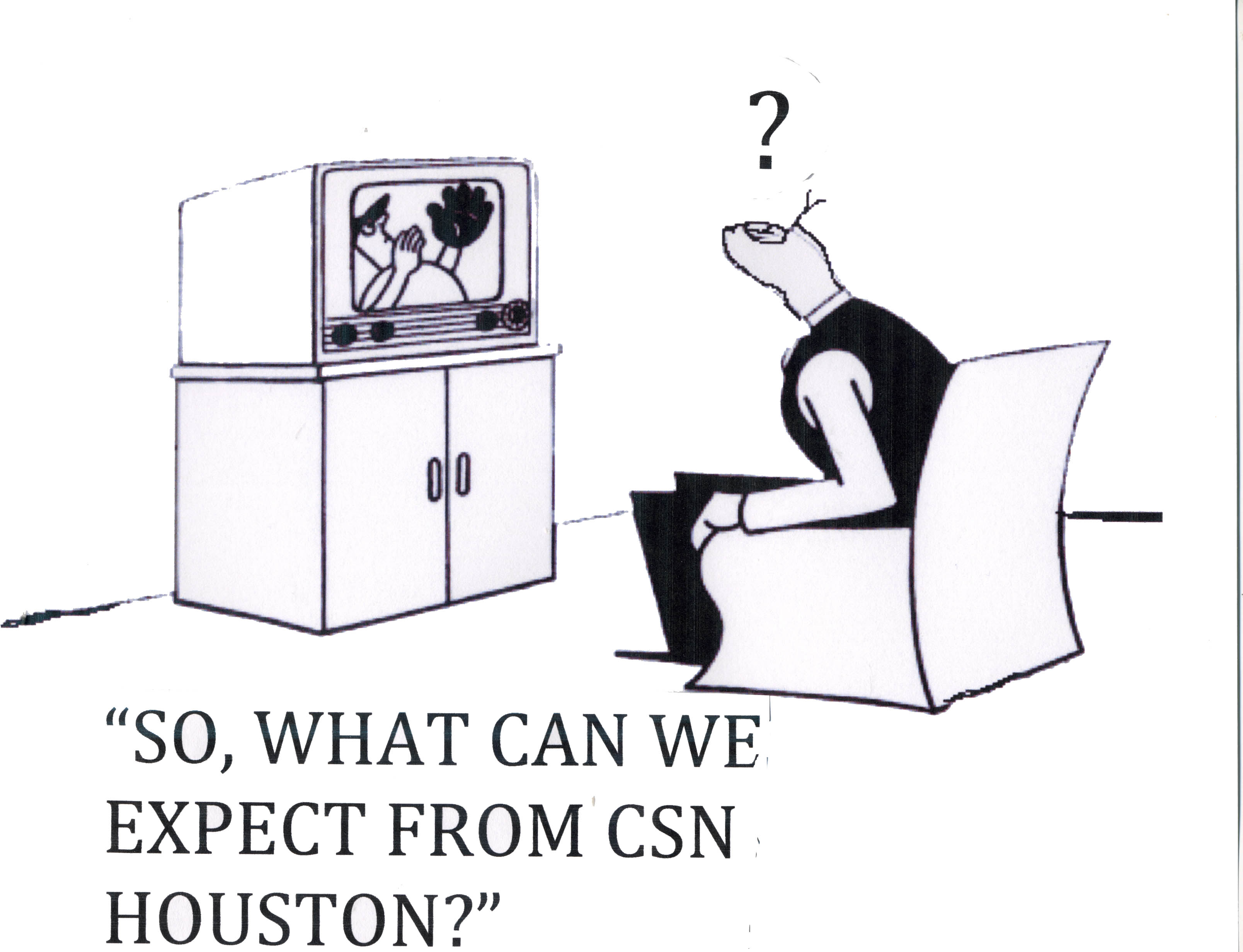
I guess the only good answer to out title question is – we’ll have to wait and see. For now, the Astros and Rockets are the two paying client/subjects and the  distribution for the new Houston-hub sports network is mainly or completely through Comcast. Those of us who use DirectTV or other satellite television service will have to wait and see if the new project work out distribution plans through a wider body service providers.

The company word, if we go by what they are saying in current articles, is that CSN Houston plans to bring back the best of the old HSE network with the focus on Houston sports and the local teams that people care about.

Good plan – but how do they measure caring? Are we talking about local teams that draw big crowds, just those that contribute to the underwriting of the new network’s operations, local professional teams only, or local college and amateur sports as well? As far as I know, the football Texans are not an underwriter of the new network, but I will presume that something like the little hope “blip” that they are creating on the local scene will get some coverage. I also presume that UH, Rice, TSU, HBU, and St. Thomas are local schools with major feet to minor toes in athletics that could qualify each of them as Houston entities that people care about and that worthy foreign (out-of-town) schools like UT, A&M, Baylor, TCU, and LSU would not quality as local sports groups deserving of central focus attention from CSN Houston.

Maybe I’m wrong.

Back in 1956, when I was starting my undergraduate work at UH as a radio-tv major, the fairly new world of commercial television was a whole lot simpler than it is today. It was only simpler because our cultural understanding of its potential was so limited, Back then, it seems that most of my professors were treating television as though it were simply “radio with pictures.”

The goal was to develop interesting programs that people would watch through the minefield of advertising that sponsors put out there much as they always had done on radio. We lacked all the technical apps of videotape, satellite immediacy to live events, digital advancements in sight, sound, and special effects, and the Internet that would transform the medium into the “monster creative force on the loose creature” that it has now become.

In a way, I see “reality tv” as a manifestation of our narrative deficit at the good storytelling bank. Because we cannot keep up with the demand for more and more quality materials, we turn the technology over to everyday idiots, allowing same the time and space to make idiot-ass-celebrities of themselves.

CSN Houston has my best wishes for a successful expansion on the sports narrative coverage of local sports, but not as “radio with pictures.” Even home-based, we need more than the faces of disgruntled sports fans on camera to achieve that end. All the life lessons and deeper human interest components are located in these places: the backstories of our athletes and other local sports figures and entities; the data, artifacts, people, places, and events of local sports history; and the relevance of sports lessons to our larger life as the Houston community.

In brief, it is my hope that CSN Houston can become a breakthrough digital age narrative informer that does not settle completely for the same hackneyed “soundbites at ten” format that characterizes most others.