Archive for 2012

Update: Houston Guys Who Became MLB Managers

October 24, 2012

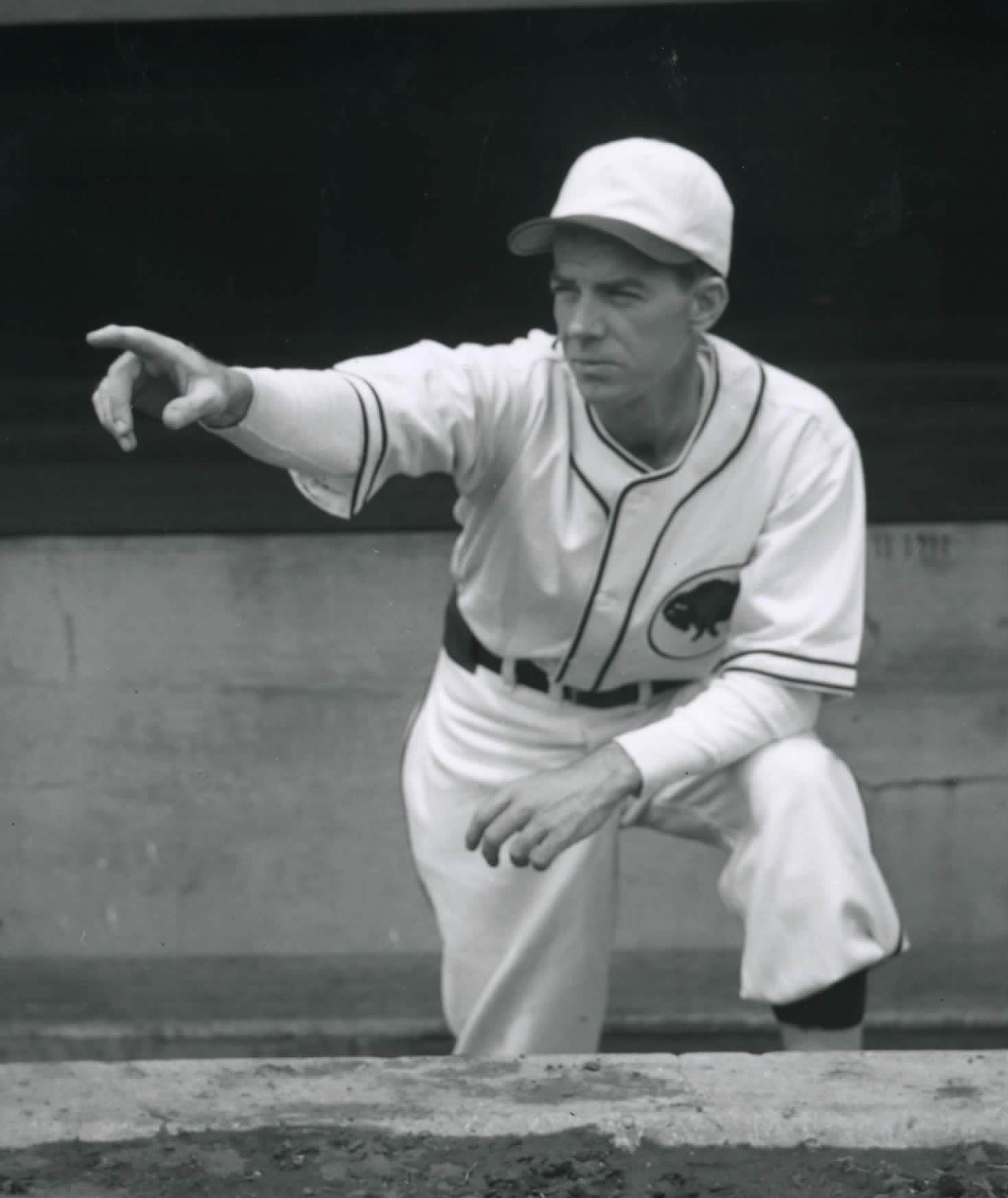
1947 Manager of the Dixie Series Champion Houston Buffs and former Buffs player Johnny Keane. His worst career move proved to be the one he took after leading the 1964 St. Louis Cardinals to the World Series title.

Thanks to 9 new contributions from Bill Hickman (SABR National & Cubs Fan), plus confirmation of one of those on Herman Franks that actually came in fifteen minutes earlier from John Watkins of our research team (and a descendant of former Buff and Cardinal Watty Watkins), our list of Houston minor league team players who went on to become MLB managers to what may be our complete total at 23 confirmed names. As always, while data collection is still open, the Early Houston Baseball Research team remains open to the addition of any other names we may have missed.

Our appreciation to both contributors for these valuable listings in this very interesting Houston Baseball area of fact. John Watkins is already on our list of research contributors. He is now joined by Bill Hickman – and anyone else who submits a confirmed name in this category that all our efforts have so far missed.

Sometimes getting it right means giving a search long enough to get it complete. Even though I think we have now cleared the bases on this one, as project research director, I’m leaving this one open for now – just in case.

Here is the updated list of 23 Houston team player names, followed by their year(s) of service as a Houston minor league team player in parentheses, followed by a dash to the names and periods of service as manager of specific big league clubs, plus brief data on (WSC) “World Series Championships” and other pennant years, if any: 

Houston Minor League Team Players Who Became MLB Managers:

01) Bill Joyce (1889) – New York Giants (1896-98)

02) Johnny Kling (1896) – Boston Braves (1912)

03) Tris Speaker (1907) – Cleveland Indians (1919-26) / 1920 WSC

04) Jewel Ens (1920) – Pittsburgh Pirates (1922-25)

05) Jim Bottomley (1921) – St. Louis Browns (1937)

06) Ray Blades (1921-22, 1929) – St. Louis Cardinals (1939-40); Brooklyn Dodgers (1948, one game)

07) Eddie Dyer (1923) – St. Louis Cardinals (1946-50) / 1946 WSC

08) Joe Schultz (1932, 1939) – Seattle Pilots (1969); Detroit Tigers (1973)

09) Don Gutteridge (1934) – Chicago White Sox (1969-70)

10) Johnny Keane (1934-37, 1946-48) – St. Louis Cardinals (1961-64) New York Yankees (1965-66) / WSC 1964

11) Walter Alston (1937) – Brooklyn Dodgers (1954-57); Los Angeles Dodgers (1958-76) / WSC 1955, 1959, 1963, 1965; MLB Pennants: 1955, 1959, 1963, 1965; 1966; 1974.

12) Herman Franks (1937) – San Francisco Giants (1965-66); and Chicago Cubs (1977-79)

13) Bob Scheffing (1937) – Chicago Cubs (1957-59); Detroit Tigers (1961-63)

14) Danny Murtaugh (1940-41) – Pittsburgh Pirates (1957-64, 1967- 76) /1960, 1971 WSC

15) Bill Norman (1941) – Detroit Tigers (1954-55)

16) Solly Hemus (1947-49) – St. Louis Cardinals (1959-61)

17) Mel McGaha (1948-49, 1952) – Cleveland Indians (1962); Kansas City A’s (1964-65)

18) Del Wilber (1949) – Texas Rangers (1973)

19) Vern Rapp (1950) – St. Louis Cardinals (1977-78)

20) Earl Weaver (1951) – Baltimore Orioles (1968-86) / 1970 WSC; 1969, 1970, 1971, 1979 AL pennants

21) Ken Boyer (1954) – St. Louis Cardinals (1978-80)

22) Harry Walker (1956-58) – Pittsburgh Pirates (1965-67); Houston Astros (1968-72)

23) John McNamara (1952) – Oakland A’s (1969-70); San Diego Padres (1974-77); Cincinnati Reds (1979-82); California Angels (1983-84, 1996); Boston Red Sox (1985-88); Cleveland Indians (1990-91); One AL Pennant with Boston Red Sox (1986)

Look at these men and their involvement in some of the most memorable games in baseball history:

Johnny Kling was the great catcher for the Cubs in the infamous 1908 “Fred Merkle fails to touch 2nd base on what would have been the game-winning hit for the Giants against the Cubs. His “bonehead put out” on a protested post-game force play by Cubs 2nd baseman Johnny Evers resulted in a replay of the game and a win by the Cubs that gave them the NL pennant in their last 1908 World Series championship year.

Tris Speaker managed the 1920 Indians during their WS win over the Brooklyn Dodgers. That was the series of the famous unassisted triple play by Cleveland Indians 2nd baseman Bill Wambsgans.

Eddie Dyer managed the 1946 WS champion Cardinals in a series that was highlighted by the “mad dash to score from first” by Enos Slaughter of the Cardinals in the deciding game.

Johnny Keane managed the 1964 Cardinals to one of the most incredible pennant comebacks over the “Pholdin’ Phillies” – then he led them to a dramatic seven game series win over Mickey Mantle’s last WS ride with the New York Yankees – and then it all culminated by Keane quitting the Cardinals and taking over as manager of the Yankees for 1965. The move proved to be one of the worst career decisions in baseball history.

Walter Alston collected enough World Series rings to decorate a Christmas tree, but his biggest moment has to be 1955, when he led the Brooklyn Dodgers to their first and only World Series title with a win over the New York Yankees.

Finally, Danny Murtaugh managed the 1960 Pittsburgh Pirates to a seven game World Series title? How did he do it in the final clutch situation of the final game? – Can you spell M-A-Z-E-R-O-S-K-I-?

And those are just the moments and events that jump off the page in my mind. Others may evoke their way to the foreground in your favorite recollections.

The essence of this data speaks for itself. The people and processes of the game who stand for major success have a deep and broad record of passing through Houston as a historic baseball town.

Baseball was never a lately discovered afterthought to football, no matter how important football and the Houston Texans are today. – It was the other way around.

But that’s OK. Some things change. Others remain the same. There will always be those of us among the many who first or only prefer baseball to everything else in life this side of God and family. If that’s our obsession, so be it. It’s where our lives and where our souls come alive. It is a happy place that none of us are willing to give up in a world which disappoints on so many other levels.

We, the fans of the game, are also the stewards of baseball’s history and its basic contributions to goodness in our lives as the “sweet spot of joy.”  That is why the subject of this column is important to the Early Houston Baseball History Project.”

There is no research fact that is too arcane to pursue, if it contributes, even as a nail, to holding together the house of history.

Houston Buff Players Who Became MLB Managers

October 22, 2012

Johnny Kling of the 1896 Buffs went on to become the star catcher of the Turn of the 20th Century Chicago Cubs and the first former Houston player to manage in the big leagues with the 1912 Boston Braves.

As usually happens, it’s almost inevitable, Saturday’s meeting of the Early Houston Baseball History project fed the spark of  new discovery. Teammate Steve Bertone noted that his own research had produced some marvel over the numbers of former Houston Buff players who later went on to become successful big league managers, and that was enough comment to incite secondary spark from others to starting filling in the blanks.

I spent some time Sunday on the DL with a disabling back “episode,” but that never stops my mind. I used the time to start filling in the blanks with the names of those former minor league Houston Buff players who later went on to become MLB managers (period). Most of the people I found actually were successful – in fact, in some cases, Hall of Fame successful.

Here’s what I found, with a nod to anyone who reads this blurb and really cares. Can you think of anyone I’ve missed or overlooked? You will be contributing to the work of history, if you come up with anything and you will be listed in our book as a contributor, if your submission of new correct information as a comment upon this column is the first to be received, and if you are willing to supply and take public credit under your actual legal name in print.

Here’s what I found – by name and year(s) of service as a Buff player – and followed by the MLB team(s) they managed by years of service with /World Series and pennant year activity, where applicable:

1)   Johnny Kling (1896) – Boston Braves (1912)

2)   Tris Speaker (1907) – Cleveland Indians (1919-26) / 1920 WSC

3)   Jim Bottomley (1921) – St. Louis Browns (1937)

4)   Eddie Dyer (1923) – St. Louis Cardinals (1946-50) / 1946 WSC

5)   Don Gutteridge (1934) – Chicago White Sox (1969-70)

6)   Johnny Keane (1934-37, 1946-48) – St. Louis Cardinals (1961-64) New York Yankees (1965-66) / WSC 1964

7)   Walter Alston (1937) – Brooklyn Dodgers (1954-57); Los Angeles Dodgers (1958-76) / WSC 1955, 1959, 1963, 1965; MLB Pennants: 1955, 1959, 1963, 1965; 1966; 1974.

8)   Danny Murtaugh (1940-41) – Pittsburgh Pirates (1957-64, 1967- 76) /1960, 1971 WSC

9)   Solly Hemus (1947-49) – St. Louis Cardinals (1959-61)

10)                  Del Wilber (1949) – Texas Rangers (1973)

11)                  Vern Rapp (1950) – St. Louis Cardinals (1977-78)

12)                  Earl Weaver (1951) – Baltimore Orioles (1968-86) / 1970 WSC; 1969, 1970, 1971, 1979 AL pennants;

13)                  Ken Boyer (1954) – St. Louis Cardinals (1978-80)

14)                   Harry Walker (1956-58) – Pittsburgh Pirates (1965-67); Houston Astros (1968-72)

WSC = World Series Championship

Honest Larry Miggins

October 21, 2012

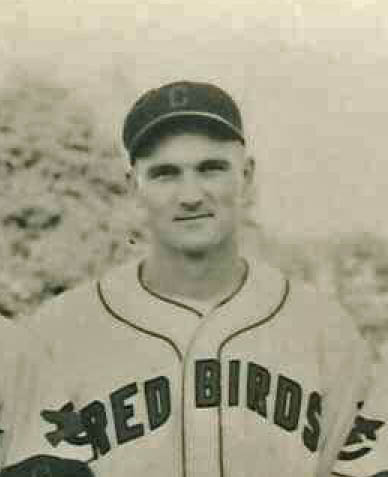
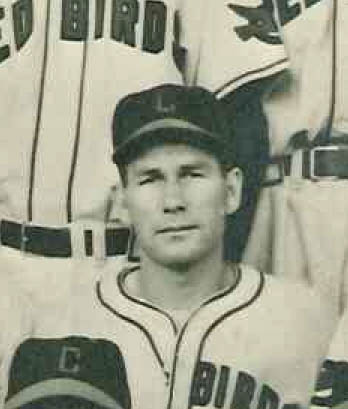
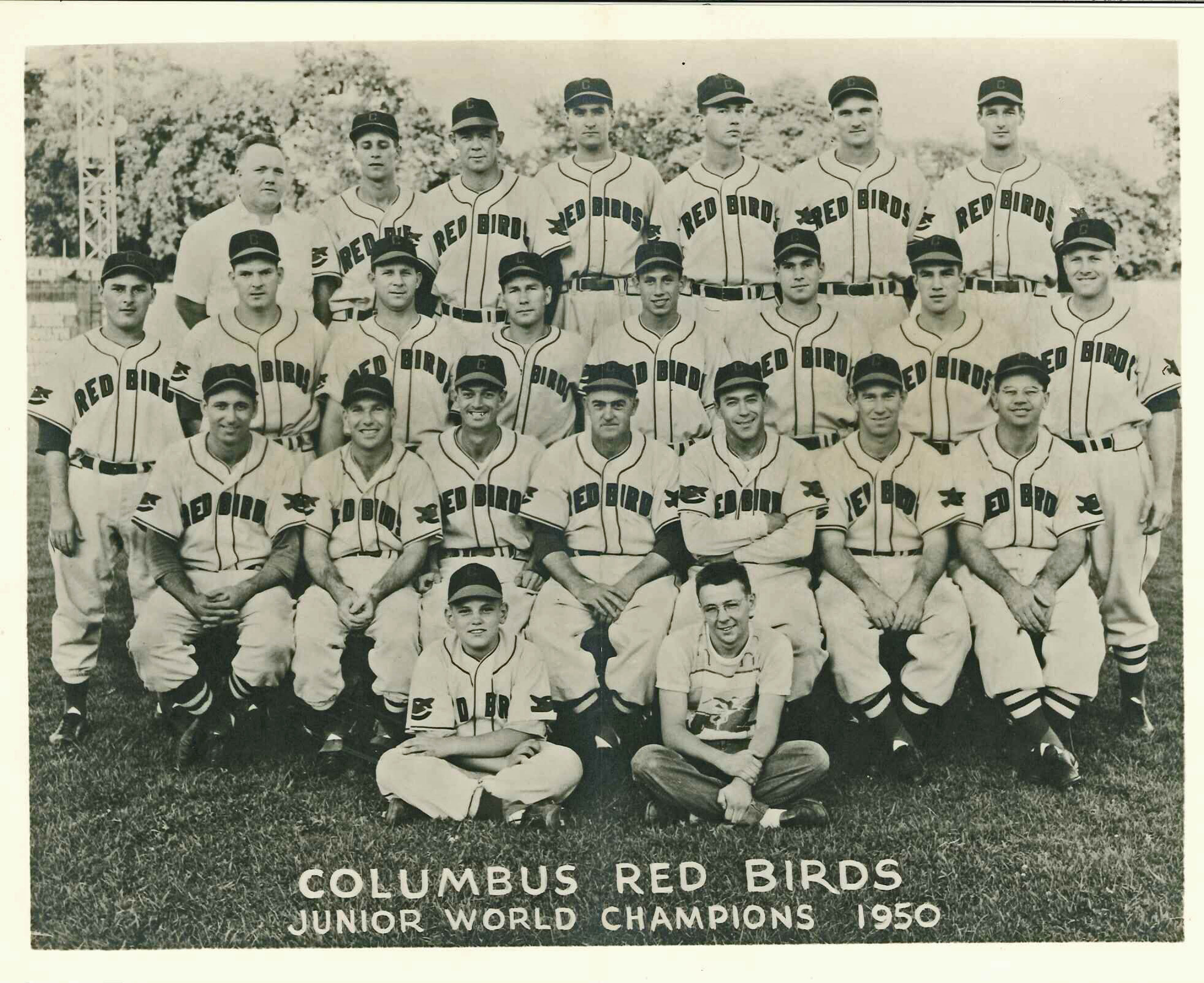
Columbus Red Birds, 1950 Junior World Series Champions. Former Houston Buffs Larry Miggins and Solly Hemus, among others, both played for the club managed by Rollie Hemsley.

Honesty was Larry Miggins’ Policy

By

J.T. Hittoff, Columbus (OH) Dispatch, 2007.

Nobody tells the story quite as well as the old Irishman himself, but that time in Columbus, Ohio back in 1950 when one player’s honesty helped cost his club a game in the Junior World Series between the local Red Birds and the Baltimore Orioles is a story we all need to remember and honor because – chances are – we may be running out of people who are capable of ever reproducing this dilemma for a new story in the future.

J.T. Hittoff gave the Miggins example a pretty good ride in 2007 as the major part of a larger article he wrote for the Columbus Dispatch.  Here’s a link to his original piece:

http://www.dispatch.com/content/pages/sports/clippers/odd-remedy.html

And here’s the excerpted J.T. Hitoff coverage of how a really honest Irishman handled a tough big game situation:

Larry Miggins, LF
Columbus Red Birds
1950

 The right-handed-hitting (Larry) Miggins finished with a team-high 18 home runs, but only four in cavernous Red Bird Stadium.

 “I was a dead pull hitter, and the left-field line was 361 to the corner and it went out to center field, where it was 452,” Miggins said. “I hit two home runs all year at home to left field and by accident I hit two to right — I had 14 on the road and only four at home. I could have had 30-35 home runs in a different park.”

In a best-of-seven league semifinal, the Red Birds won two of three against St. Paul in Minnesota before heading to Columbus for what would be a memorable fourth game Sept. 17.

Columbus led 2-1 in the eighth inning, but a grand slam by St. Paul catcher Jake Early gave the Saints a three-run lead. The next batter, pitcher Bill Ayers, drove a ball to deep left field.

“I went over there and leaned up and missed the ball by about a foot,” Miggins said. “The ball hit a seat in the stands and bounced back and I grabbed it and fired it back to second base.”

When umpire Bill Jackowski called it a ground-rule double, St. Paul manager Tommy Heath rushed out of the dugout to protest. Like most managers, Heath was losing the argument so he tried one final plea to Jackowski: Ask Miggins if it was a home run. Sure enough, Jackowski started walking toward left field toward Miggins, known as one of the more honest players. His teammates tried to keep him away from Jackowski.

“(Center fielder) Harry Walker and I are talking and he sees what is happening and he says, ‘Come on, let’s go,’ ” Miggins said. “I said, ‘Where can I go? We’re on a baseball field?’

Solly Hemus, SS
Columbus Red Birds
1950

 “Jackowski said, ‘I lost the ball in the sun and couldn’t tell if it bounced in or went in on the fly. I gotta ask you man to man: Was it a home run?’ ” Miggins said. “I said, ‘Bill, anybody who hit a ball that far on the fly in this ballpark deserves a home run. Yes, it was a home run — but, for heaven’s sake, from now on you do the umpiring. I have enough trouble trying to play left field.’ “

Columbus lost that game but won the series in six games. The Red Birds followed that up by beating Indianapolis in the championship series when Mo Mozzali hit a home run in the top of the 13th inning in Game 7 to earn a spot in the Junior World Series. The Red Birds defeated International League champion Baltimore four games to one in what was the last Junior World Series title for Columbus — and the last year that Hemsley managed the team.

PPE Postscript: When Miggins tells the story, he paints this vivid word picture of umpire Jackowski marching toward him to get his call on “homer or not.” Behind the umpire, Larry says he can see friend and shortstop Solly Hemus tiptoeing toward him too at a slower pace, frantically waving his arms sideways, and silently making the “shush” sign with the index finger over his lips.

All to no avail. Truth prevailed over team cause or player friendship. Miggins says the Columbus fans almost booed him out of the stadium as he trotted back to the dugout at the end of the inning. His teammates weren’t too warm as welcome greeters either. “Thank God we won the Series,” Miggins concedes. “My life might have been in danger during the cooling off period.”

As it was, people came to appreciate Larry Miggins for what he did that day. It was an ultimate example of integrity.

We will never be able to replace Larry Miggins, but let’s hope we don’t run out of people whose honesty spills from the deepest parts of their souls. Their absence is our big loss in all the tough left field calls that come up in life each day.

The Hell Fire Series

October 19, 2012

With the current baseball playoffs standing on the probable brink of another match between the Detroit Tigers and the St. Louis Cardinals (if they can use their present 3 games to 1 win advantage over the San Francisco Giants to full advantage), wonder generates: How do they handle their baseball playoffs in hell? (We are assuming, of course, that the place has enough players and front office people to pull it off.)

Here’s a brief look at a couple of the clubs trying to get there.

Site of the Hell Fire Baseball Playoff Games: Their groundskeepers deserve to be in the other place.

Hell’s Big Game


By Bill McCurdy


Once upon a red-sky time – in a ballpark down below,

All hell was burnin’ brimstone – as was the usual show.

They had a game a churnin’ – as they played into the last,

The Devils 3 – The Demons 3 – the 9th came hard and fast.


The game had much a ridin’ – as the Demons came to bat,

The Devils aimed to goose ‘em – and then to drown the cat,

By bringin’ Dolphie Hitler in – to panzerize the Demons,

Lucifer hoped to kill the need – for extra inning schemins’.


Old Dolphie was a cranker-arm – goose-steppin’ every pitch,

But when he let each damned ball fly – many slipped a hitch,

And sailin’ wide and wild, they flew – and landed in the ditch,

And Dolphie walked four Demons – before he killed the glitch.


And headed for the bottom – of Lucifer’s last hope,

The Demons led the Devils – by a 4-3 Hitler mope,

Twas time for Satan’s big sticks – to show up with the soap,

And to wash away disaster; – they simply had to cope.


But Saddam went down swinging – and Osama pulled up lame,

And Qaddafi bit the bullet – the lodged one in his brain,

And the Demons took the Devils – moving up to higher ground,

To the Underworld Series, off they go – in no way to confound.


Leaving all this simple quest: Are the Unholy Ghosts around?


The Dixie Series: 1920-1958

October 18, 2012

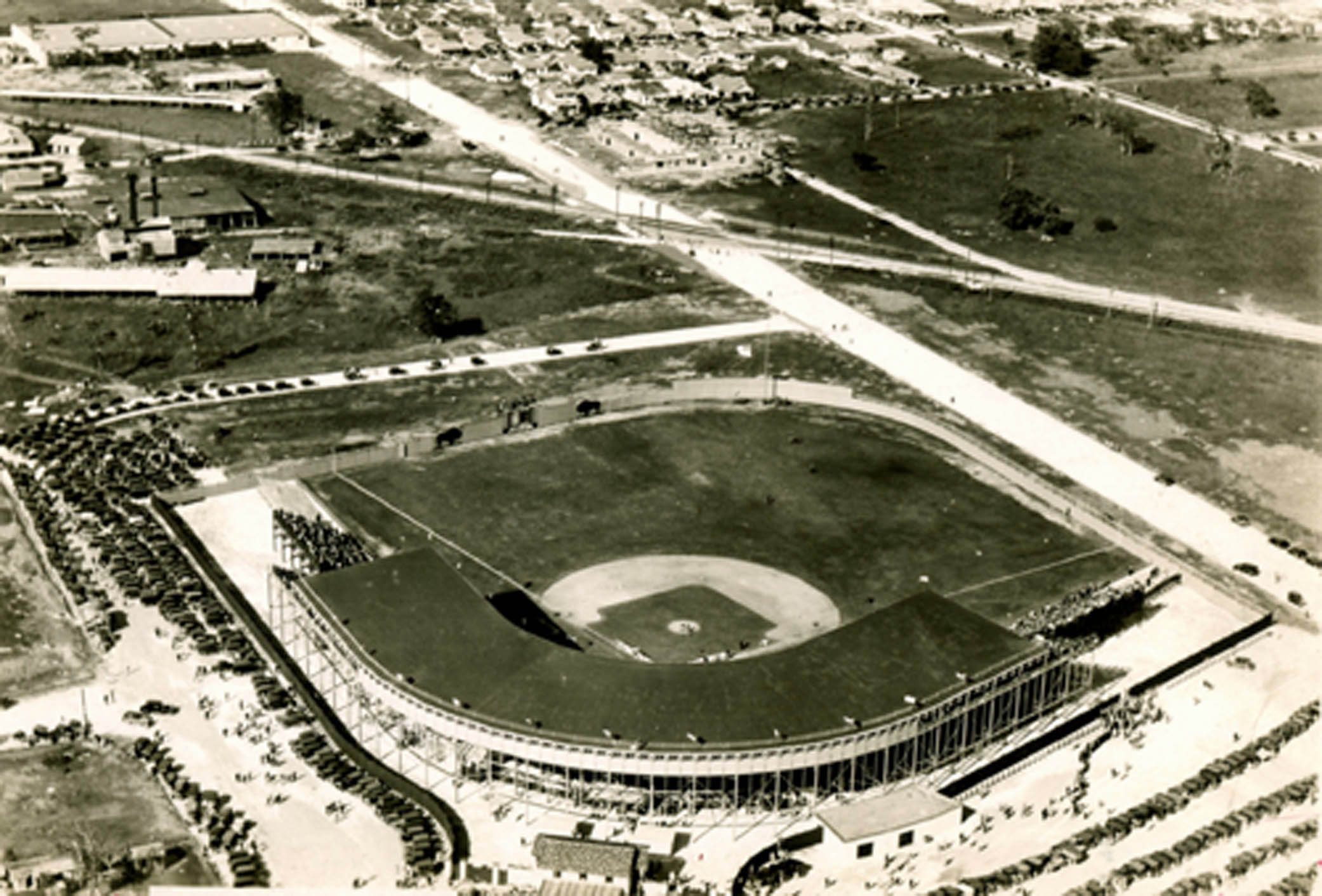
Buff Stadium, Houston (1928-1962): The Houston Buffs played all of their home game dates here over all eight of their pennant year appearances in the Dixie Series.

The day was coming, long before its growing voice was clearly heard. As the Texas League began to stabilize, near the end of World War I, the hunger for other hills to climb on the field and at the turnstiles was bound to grow – and so it did.

At the same time, the Southern Association league of eight clubs that played in cities stretching from New Orleans to Atlanta was reaching for the same quality increase in competition, income, and recognition.

The Texas League and the Southern Association were like the two proverbial sticks that came together to start a fire – and this one was a fir of competitive desire.

Prior to the 1920 season, ownership groups from the two leagues came together to plan a post-season playoff series between the champions of the Texas League and the Southern Association. It would be modeled after the major league World Series with the championship going to the first team to win four games in head-to-head, home and home based competition.

They picked a name for the competition that fit the mindset then of the two league cultures and the spirit of those early twentieth century times: The Dixie Series would annually pit the southeast and southwest sections of the country against each other over an area that covered only territory that once made up the old Civil War Confederacy.

The Dixie Series thrived continuously from 1920 through 1958, only missing three seasons (1943-1945) due to World War II when there was no play in either league.

Houston played in eight Dixie Series competitions, winning four and losing four.

Some of those outcomes were a little surprising, as per always is the case in baseball, if you play enough teams over the course of enough games over the time span of several years.

Things happen.

Dixie Series 1928: Houston Buffaloes defeat Birmingham Barons, 4 games to 2. (Houston’s Dixie Series Record is 1-0.)

The 1928 Buffs had a lot going for them. Their brand new ballpark, Buff Stadium, had been praised by many as the finest venue in minor league baseball; they had a pitching staff that included four 20-game winners; and they had a starting lineup that boomed from the bats of five men who hit over .300 for the entire season. Few in Texas, if any, were surprised when the Buffs won. Some may have been shocked that Birmingham actually captured a couple of games.

Dixie Series 1931: Birmingham Barons defeat Houston Buffaloes, 4 games to 3. (Houston’s Dixies Series Record is 1-1.)

The 1931 Houston Buffs were the club of future Gashouse Gang members Dizzy Dean and Joe Medwick. Dean had a pitching mark of 26-10 for the Buffs and Medwick hit .305. They were the young heart of a club that has been rated as one of the 100 best minor league clubs in history. Overall the Buffs had three 20 plus wins pitchers and three .300 hitters. They simply weren’t the best team in Game Seven of the Series.

Dixie Series 1940: Nashville Vols defeat Houston Buffaloes, 4 games to 1. (Houston’s Dixie Series Record is 1-2.)

Future St. Louis Cardinal manager Eddie Dyer is the field mentor of the Buffs. Howie Krist (22-9) and Howie Pollet (20-7) pace a staff that includes 7 pitchers with ERAs under 4 and 2 with ERAs under 2. Three players, including Danny Murtaugh, hover in the area of .300, and a couple of guys show some homer pop. The club just doesn’t have what it takes to get past a more talented in-that-moment Nashville team.

Dixie Series 1947: Houston Buffaloes defeat Mobile Bears, 4 games to 2. (Houston’s Dixie Series Record is 2-2.)

Two future St. Louis Cardinal managers, Johnny Keane and Solly Hemus, are on board as manager and second baseman for the Buffs. Clarence Beers (25-8) and Al Papai (21-10) pace the Buffs pitching as center fielder Hal Epps (.302) and first baseman John Hernandez (.301) provide a lot of the hitting and defense.

Dixie Series 1951: Birmingham Barons defeat Houston Buffaloes, 4 games to 2. (Houston’s Dixie Series Record is 2-3.)

First baseman Jerry Witte (38 HR) and left fielder Larry Miggins (27 HR) paced an aggressive and powerful batting order and Al Papai (21-10), Octavio Rubert (19-5), Vinegar Bend Mizell (15-13), and Freddie Martin keep opposition scoring way low. Illness to Mizell limits his productivity and availablity in the Series and the Buffs collapse at home, losing the Series to Birmingham.

Dixie Series 1954: Atlanta Crackers defeat Houston Buffaloes, 4 games to 3. (Houston’s Dixie Series Record is 2-4.)

Strong for-average and power hitting, good starting pitching, good defense, and great relief work carried the 1954 Buffs. Third baseman Ken Boyer ( .319, 21 HR) was busy cutting his teeth for a long MLB career. Bob Boyd was on board as the first black player in Houston integrated professional baseball history, but his contributions (.321, 7 HR) were on the field. Willard Brown also joined the Buffs after playing most of the year with Dallas and he, Eddie Phillips, and Don Blasingame also contributed. Willard Schmidt (18-5) was the mound ace and relievers Luis Arryo and Bobby Tiefenauer were the superglow that kept an average starting rotation boat afloat. They just couldn’t do it in Game 7 versus Atlanta.

Dixie Series 1956: Houston Buffaloes defeat Atlanta Crackers, 4 games to 2. (Houston’s Dixie Series Record is 3-4.)

With Harry Walker on board as manager, Bob Mabe (21-10) and Tom Hughes (18-6) are the dual carb aces of another solid Buffs pitching staff. Pidge Browne breaks out at first base with hit math and power (.328, 29 HR) – and he is ably supported by people like third baseman Benny Valenzuela (.314, 18 HR) and center fielder Russell Rac (.289, 19 HR). Having Ruben Amaro, Sr. at shortstop also seals the defense as the Buffs avenge their 1954 loss to Atlanta.

Dixie Series 1957: Houston Buffaloes defeat Atlanta Crackers, 4 games to 2. (Houston’s Dixie Series Record is 3-4.)

Catcher Nelson Burbrink (.308, 0 HR) is the only full season .300 hitter for the Buffs, but his total lack of power and the decline in production from Pidge Browne leads to the acquisition of first baseman Edwin Little (.243, 30 HR) from Oklahoma City for more pop on the long ball in late-season play. Adequate pitching that rises to special occasions carries the Buffs through to victory and an all-time even record in Dixie Series play.

After the 1958 season, the Dixie Series ends. The end coincides with the city’s last season as a member of the Texas League as the Houston Buffaloes move up in 1959 to face AAA competition in the American Association under independent ownership by Marty Marion and his group of investors.

Here is a concise graph that depicts the results of 36 series that occurred over the course of the entire chronological period of the 39 years that the Dixie Series existed:

The Dixie Series 1920 – 1958

YEAR WINNING LEAGUE WINNING TEAM LOSING TEAM RESULTS
1920 Texas League Fort Worth Panthers Little Rock Travelers 4 games to 2
1921 Texas League Fort Worth Panthers Memphis Chicks 4 games to 2
1922 Southern Association Mobile Bears Fort Worth Panthers 4 games to 2
1923 Texas League Fort Worth Panthers New Orleans Pelicans 4 games to 2
1924 Texas League Fort Worth Panthers Memphis Chicks 4 games to 3
1925 Texas League Fort Worth Panthers Atlanta Crackers 4 games to 2
1926 Texas League Dallas Steers New Orleans Pelicans 4 games to 2
1927 Texas League Wichita Falls Spudders New Orleans Pelicans 4 games to 0
1928 Texas League Houston Buffaloes Birmingham Barons 4 games to 2
1929 Southern Association Birmingham Barons Dallas Steers 4 games to 2
1930 Texas League Fort Worth Panthers Memphis Chicks 4 games to 1
1931 Southern Association Birmingham Barons Houston Buffaloes 4 games to 3
1932 Southern Association Chattanooga Lookouts Beaumont Exporters 4 games to 1
1933 Southern Association New Orleans Pelicans San Antonio Missions 4 games to 2
1934 Southern Association New Orleans Pelicans Galveston Buccaneers 4 games to 2
1935 Texas League Oklahoma City Indians Atlanta Crackers 4 games to 2
1936 Texas League Tulsa Oilers Birmingham Barons 4 games to 0
1937 Texas League Fort Worth Cats Little Rock Travelers 4 games to 1
1938 Southern Association Atlanta Crackers Beaumont Exporters 4 games to 0
1939 Texas League Fort Worth Cats Nashville Vols 4 games to 3
1940 Southern Association Nashville Vols Houston Buffaloes 4 games to 1
1941 Southern Association Nashville Vols Dallas Rebels 4 games to 0
1942 Southern Association Nashville Vols Shreveport Sports 4 games to 2
1943 No Series WWII
1944 No Series WWII
1945 No Series WWII
1946 Texas League Dallas Rebels Atlanta Crackers 4 games to 0
1947 Texas League Houston Buffaloes Mobile Bears 4 games to 2
1948 Southern Association Birmingham Barons Fort Worth Cats 4 games to 1
1949 Southern Association Nashville Vols Tulsa Oilers 4 games to 3
1950 Texas League San Antonio Missions Nashville Vols 4 games to 3
1951 Southern Association Birmingham Barons Houston Buffaloes 4 games to 2
1952 Southern Association Memphis Chicks Shreveport Sports 4 games to 2
1953 Texas League Dallas Eagles Nashville Vols 4 games to 2
1954 Southern Association Atlanta Crackers Houston Buffaloes 4 games to 3
1955 Southern Association Mobile Bears Shreveport Sports 4 games to 0
1956 Texas League Houston Buffaloes Atlanta Crackers 4 games to 2
1957 Texas League Houston Buffaloes Atlanta Crackers 4 games to 2
1958 Southern Association Birmingham Barons Corpus Christi Giants 4 games to 2

1958 was the last encounter in the Dixie Series between the Southern Association and Texas League. Beginning in 1959 it was replaced by the Pan-Am Series, the Texas League vs. the Mexican League.
SOURCE: The Encyclopedia of Minor League Baseball, Volume 2

Retrieved from

http://www.baseball-reference.com/bullpen/Dixie_Series

Ground Truth: By Rob Sangster

October 17, 2012

I’ve just learned that my old St. Thomas buddy Rob Sangster is now the published author of his first fictional work. From the looks of the things, “Ground Truth” is a tightly wound political intrigue action thriller and, if it’s even half as engaging as the mind of the fellow who wrote it, we are all in for a delightful escapist trip to a world of adventure that has pulled ay my friend forever.

Here’s a brief look at Rob’s website description of his new book. Once I’ve obtained and read my own hard copy,  I will review it here – objectively as possible. And I do not shill for anyone, not even my old friends. If you tell me that it’s a book that’s hard to put down – it had better be – and that truth better rest in the writing quality, story drive, and character credibility of the narrative – and not because each book comes coated with super-glue.

Rob and I sometimes muse over the fact that his life has carried him all over the world while mine only got me as far as New Orleans for graduate school at Tulane and a brief stay of employment at Tulane Med School before coming back to Houston by way of Austin in 1966. My world traveling has included a couple of trips to Ireland and a beautiful one two years ago to Italy, but no flat-out, throw-your-life-to-the-winds of an all-out adventure on the Sangsterian level.

Richard Nixon

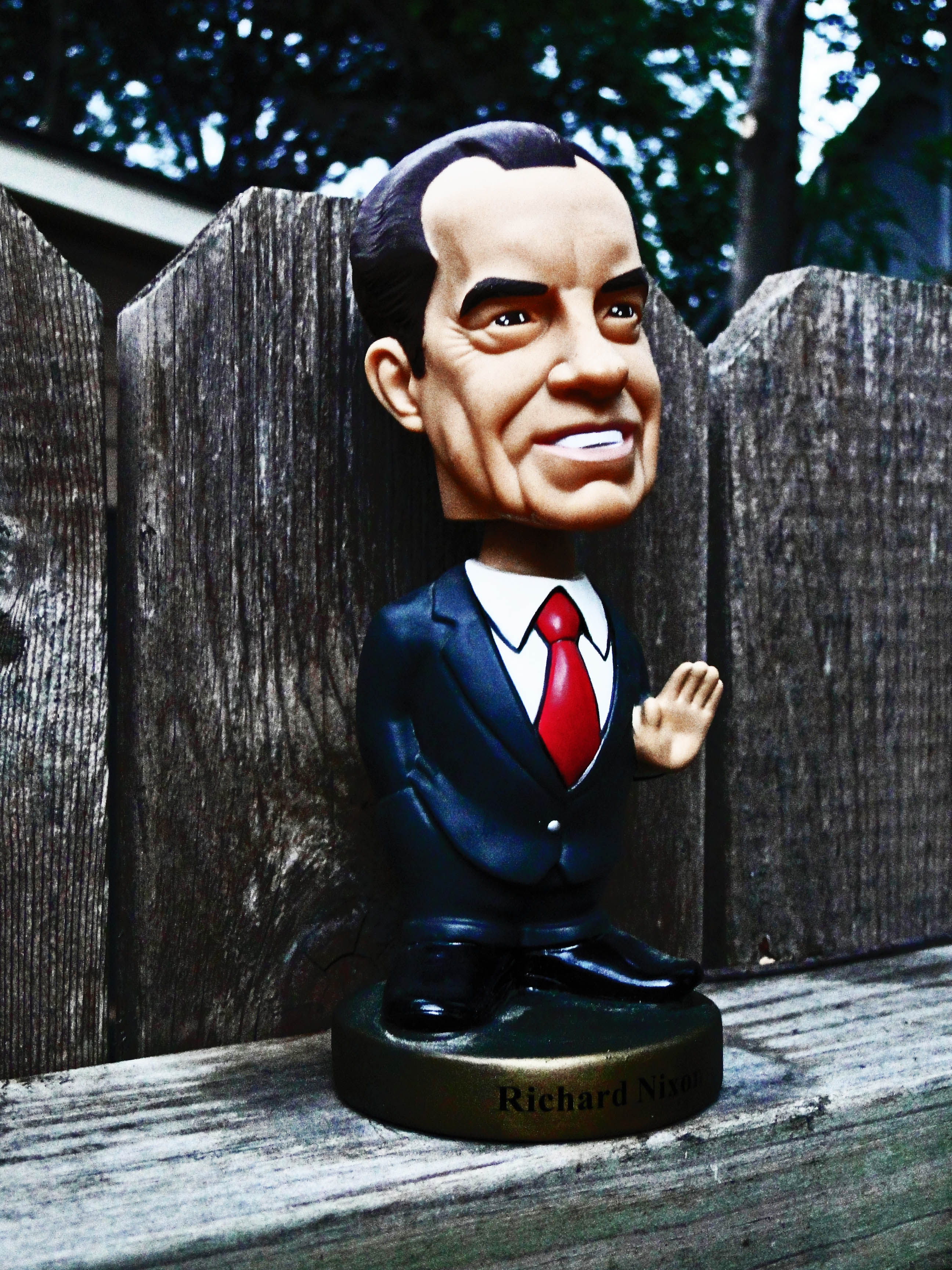
Still, through my reading and the international character of my local life play, I’ve done some mind and soul traveling of my own through my private practice and non-fictional publication years. I also have a completed novel, but it sits in dust in hard copy form only from 1998 on my grandfather’s old writing desk. It’s called “Sisler’s Legacy” and its an occultish baseball fiction novel about something that happens to the great George Sisler and the St. Louis Browns in 1920 that forever alters the face of baseball through the Bud Selig era. Richard Nixon even gets thrown into the mix of things along the way.

In the end, “Sisler’s Legacy” implicitly predicts the coming of the great steroid scandal, even though the thing was finished in the year that McGwire and Sosa both broke Roger Maris’s single season 61* homer mark.

New York @ St. Louis, ppd.

Maybe Rob’s big step away from non-fiction will now inspire me to dust off the old ‘script to see what’s salvageable and let the spit hit the fan from there.

Here’s a link to Rob Sangster’s website and the marketing pitch for his new book, “Ground Truth:”

http://www.robsangster.com/books.html

And finally, I will close today with a bit of whimsy. The first two paragraphs on Rob Sangster are straight from the About Me section of his website. The second two paragraphs on me are simply a parody I wrote today on the roughly comparable experiences I’ve had in my own younger life.

Rob Sangster

Rob Sangster

Chased by a Cape Buffalo in Botswana and then by a corrupt governor in Tennessee. Abducted by a black market money changer in Mombasa. Spent one New Years Eve in Paradise Bay, Antarctica; another in the Himalayas. Is this from the plot of a novel? Nope. It’s Rob Sangster’s life.

And throw in swimming with Humpback whales, spending the night on top of a Mayan temple in Tikal, Guatemala, and traveling in seven continents and more than 100 countries – all of which were more important to him than earning the last possible dollar. And that attitude led inevitably to . . . becoming a writer.

Bill McCurdy

Bill McCurdy

Chased by a Houston Buffalo Stadium cop in the city’s East End and then all the way down Cullen Boulevard by a corrupt ballpark vendor for the change he tried to steal from me. Abducted as a hitchhiker by a crazy girl driver of a cool rumbling 1954 2-Door Red & Black Ford Hardtop Sedan on Buffalo Drive (Allen Parkway). Spent one New Years Eve in Pasadena, Texas; another in Hempstead. Is this from the plot of a novel? Absolutely nope. It’s Bill McCurdy’s life.

And throw in swimming with bully Tod Herring and his Deady Junior High School buddies at the Mason Park pool, spending the horror movie night in the very top row of the balcony at the Eastwood Theatre on Telephone Road, and traveling to seven different drive-in burger joints in one Houston Saturday night 100 mile cruise – that was in itself as a journey more important than his arrival at any of his drive-in destinations. And that attitude led inevitably to . . . becoming a writer.

Have a nice day, everybody. Have a happy and literate Wednesday – and may all your dearest thoughts today be complete ones.

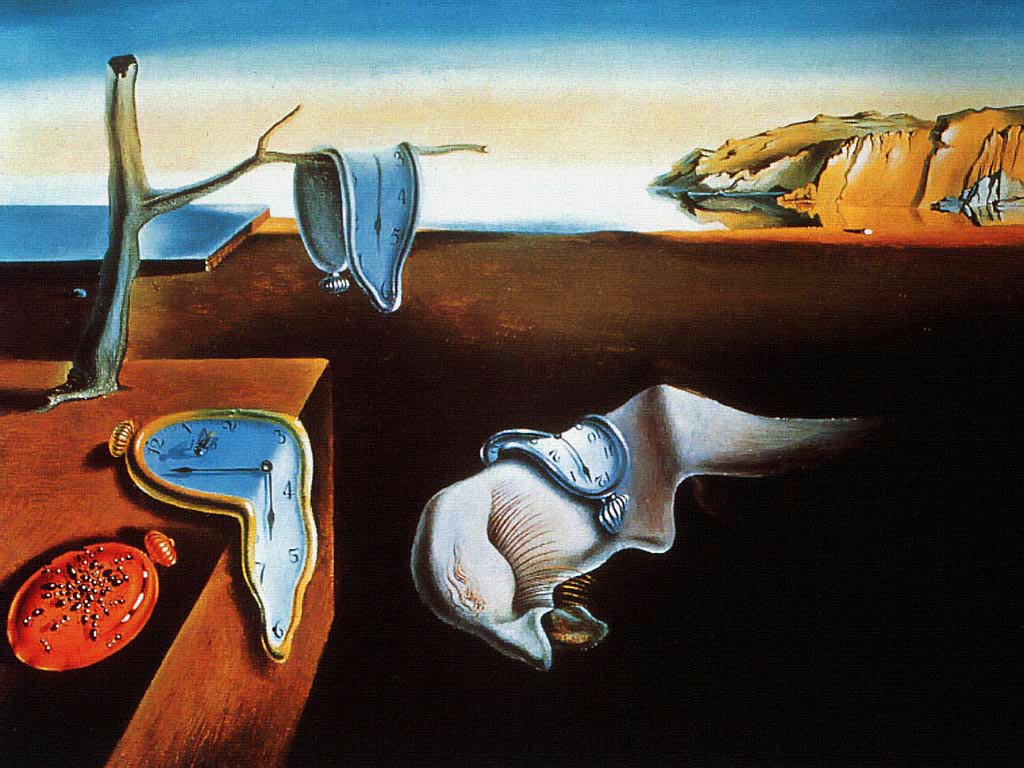
Horseless Telephone of the Early 21st Century

October 16, 2012

In homage to Salvador Dali, the artist who bent time, life, and human perception to the possibility of a new day over the horizon.

Irony of ironies.

As we were concluding our 60th Reunion of the 1952 St. Christopher’s 8th Grade Class this past Sunday, I thought it might be a good time to update and obtain accurate e-mail addresses from some of my fellow classmates. Things were going fine until I reached one old friend who responded in a friendly way as follows:

“No, you cannot have my e-mail address because I don’t have one and never will. If you want to talk with me, just pick up the phone and call. I don’t have time for any of that (newfangled) stuff.”

I was a little shocked, but not surprised. Some people are still offended by the idea of e-mail contact as cold and impersonal because it allows for no immediate chew-the-fat social time. I’m sure that a century ago there were still people who took offense at telephone call attempts from anyone other than immediate family:

“No, you cannot have my telephone number, so, please don’t ask again. If you want to talk with me, drop by the house sometime and leave your calling card. I’ll let you know if I want to talk with you.”

E-mail, the Internet, the computer – these things are just too “new” for some people, even though the home computer has now been around since its primitive days in the early 1980s and the Internet since the 1990s. To some people, they are still “strange visitors from a strange land” – and with much power to evoke intimidation.

Fifteen years ago, I cut bait in my private office from a human answering service that then handled a pretty high volume of calls for my consultant services. I did so for reasons of cost effectiveness and the availability of new answering machine technology that would allow me to handle the same calls in virtually the same way in my own voice at hardly any cost once I got past the reasonable price of the equipment at the original point of sale.

It worked great. My fears that people might be offended by a recorded message were quickly dispelled. More places were doing the same thing in the mid-1990s and the expectations of callers were adjusting to the change as simply a shift to the “new normal.”

Only thing is, “voice mail” service from AT&T and other phone company providers soon proved even better and we all moved to that generic option for quality, price, and the lack of maintenance that came with answering machine tape purchases and equipment breakdowns.

Oh, yes. – Back to “irony of ironies.” My classmate said he didn’t have time for e-mail. The irony is – we only were able to organize our reunion so quickly because of Internet e-mail – not because of the telephone. And because of the e-mail technology, I was able to write a column on the reunion that appeared on the Internet for the whole world to see yesterday – and on the very first morning that followed the event.

I was also able to send eleven individual people photos by e-mail attachment to all classmates who have the Internet. My friend who declared his lack of time for the Internet (and here comes that irony winger again) did not get these for some simple reasons. (1) He doesn’t have the Internet and an e-mail box that could receive them; (2) I don’t have time to go buy the photo paper I would need to print them out at some extra expense to me; and (3) I really don’t have time this week to package hard copy photos (that I don’t possess anyway) and take them down to the post office and stand in line to pay the postage on sending these out by “snail mail.”

Because of the Internet e-mail option, it is possible today to send something like a 500-page manuscript to your editor, publisher, or printing typesetter and get an almost instant response the same way. The net result is faster communication with greater clarity of purpose and better positive movement of production.

The quill, typewriters, telephones, and the post office could never bring us all together quite so magnificently.

As for the straight communication of information, like the time and date for an important meeting, it happens instantly with those are Internet-wired and accustomed to checking their e-mail boxes daily. What slows you down are the people who don’t check their e-mail boxes – and those who only have phones and may not even have a voice mail option.

After a while, it makes you wish that people who want get involved in any kind of serious dynamic group action in 2012 would either get themselves wired to the task before they sign up – or else – just hold off until they are.

It’s nothing personal. It’s just how it is. If we want to fly with the eagles these days, we’ve got to have a craft that will get us off the ground. And that craft is no longer a landline phone at home without any voice mail.

A Happy 60th Year Reunion

October 15, 2012

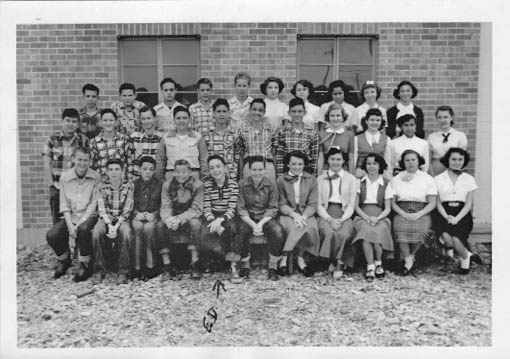
Smack Dab in the Middle of It: Bill McCurdy, Larry Baggett, & Martha Fischer Kubicek celebrate in joy the 60th anniversary of their 1952 graduation from St. Christopher’s Parochial School (8th grade) in the SE Houston neighborhood of Park Place.

Yesterday, Sunday, October 14, 2012, is a day that a handful of us will remember forever as the 60th year reunion of the St. Christopher’s Parochial School 8th grade graduating class. Eleven members (8 men and 3 women) of the approximately 20 surviving classmates made it to the home of classmate Garland Debner Pohl and her husband, Bill Pohl, for the afternoon dinner social. For many, it was our first glimpse of each other in the total lapsed time, but a few of us had made it to a slightly wider range class year reunion at St. Chris back in 1997.

The eleven St. Christopher’s alums in attendance included Larry Baggett, Earl Cobden, Don Dittlinger, Foster Foucheaux, Martha Fischer Kubicek, Bill McCurdy, Star Boyle O’Connor, Jerry Peters, Garland Debner Pohl, John Robinson, and Neil Sweeney. – Nine spouses also attended.

For the record, and with our thoughts and prayers for each in remembrance, our nine identifiably deceased include Joseph King and his wife, Mary Lou Dalberg King, Robert Long, Barbara Jean Marshall, Ronnie Martinsen, Ronnie Massey, Billy Murphy, Jon Roark, and Marshall Seavey.

For one reason or another, as life always works out, several other surviving members of our 1952 class were unable to attend. We thought of you too, even if you could not join us in your own versions of aging flesh. As the old song goes, “time waits for no one,” and Father Time leaves no door bells unrung. Had you been here, you would have been in the good and loving company of some of your earliest friends on the planet. Maybe next time, if there is one, you will be here too.

St. Christopher’s Parochial School
Houston, Texas
Class of 1952

Garland Debner Pohl
Our Gracious Reunion Hostess

We spent a lot of time reminiscing over little things, like the way our principal Sister Mary Immaculata held the power to control us into silence with her eyes alone – and how we used to qualify for special holidays on “Canned Goods Day” by bringing our pastor, Father Fulkerson, enough food of what he liked to eat from his own pantry.

I’m guessing they have laws or rules against pastoral holiday declarations in exchange for food contributions in today’s world and, speaking of such, there was no talk of politics yesterday, nor what our generation might have done to better save the world. We were just there together for a few precious hours that will likely never come again – and that seemed enough.

“Will be good shepherd for food” sounds funny, doesn’t it?

We plan to cover all the “meaning of life” lessons we’ve absorbed at out next reunion. That one is now set for 2052 and the 100th anniversary of our eighth grade class graduation.

As for all of you e-mail wired fellow alums, look for pictures of the eleven classmates I took in your Internet mailboxes today.

Have a nice day, everybody. And have a nice life.

Cardinal Halloween Magic Rolls Nats

October 13, 2012

What is it with these guys behind the red birds on the bat?

Last night, as they twice did in Game Seven against the Texas Rangers in the World Series last year, the St. Louis Cardinals twice survived a stand at that “one strike away” door into eternal baseball damnation one more time with a dazzling rally in the 9th and rolled to an amazing win over the Washington Nationals before their heartbroken fans.

If Nolan Ryan stayed awake to watch, and we have a hunch he did, it isn’t a big stretch to see him muttering something like the following with a deadpan face to his dear spouse: “Let’s change the channel, Ruth. I think we’ve seen this show before and I didn’t like it the first time it played.”

I watched the Cardinals-Nats Game Five at home with my adult son Neal and had drifted easily into one of those teaching modes that often come over me these days about things I care about. Neal doesn’t mind. He either likes it, or else, he has long-past-childhood mastered the “humor thy father as he needs” mode of attentive listening.

When the Nats pushed across an insurance run in the bottom of the 8th to give them a 7-5 two-run lead over the Cards, I commented to Neal that the extra run had most probably given Washington the cushion they would need to finish St. Louis in the 9th. “With closer Drew Storen pitching for the Nats,” I said, “it isn’t likely that the Cards will get the two runs they now need to tie the game in their final time at bat.”

With the Astros now AL-bound, Neal has shifted his loyalties from the Astros to the NL-icon Cardinals. That’s important here to the point of my son’s following response: “Dad, do your thoughts on probability take into account that the Nationals are playing the Cardinals?”

“Of course, they do,” I affirmed.

“Then you and I must have been watching two different Game Sevens in the World Series last year,” Neal said in that smirky tone he sometimes good-naturedly reserves for me alone. What actually happened next in the game is best summarized in the following graphic by that top of the 9th inning scoring cell for the St. Louis Cardinals:

1 2 3 4 5 6 7 8 9 R H E
STL 0 0 0 1 2 0 1 1 4 9 11 0
WSH 3 0 3 0 0 0 0 1 0 7 11 0

The amazing, magical Cardinals did it again! Twice coming back from the fated door and escaping the “one-strike-away” plunge, the St. Louis Cardinals plated four RBI from the two-bottom position player hitters in the batting order to set up their own two-run lead as a margin that would break the hearts and smother the dreams of all Washington.

Daniel Descalso ripped a two-out bases loaded single that caromed off the glove of Nationals shortstop Ian Desmond to score the two runs that pulled the Cardinals into a 7-7 tie. Then Pete Kozma followed with an opposite field single to right that plated two more runs for the final 9-7 margin that closer Jason Motte would defend to the death of Washington hope in the bottom of the 9th.

Maybe the science of baseball statistics and the art of long-term baseball watchfulness have to be slightly adjusted when it comes to assessing probabilities in big games that include the St. Louis Cardinals in the Halloween month of October. – Makes you wonder if MLB has ever inspected their clubhouse for the bubbling hot presence of a witchcraft cauldron, plus the bells, books, and candles that are so popularly used in the darkly wishful arts.

Now the Cardinals are off to play the club that wears the orange and black Halloween colors, the San Francisco Giants, for the 2012 National League pennant. This one is a best four of seven match, pitting the 2011 World Series champion Cardinals against the club now representing the 2010 World Series champion Giants.

The Cardinals pulled off the greatest comeback in a single playoff game by coming back to win from a 6-0 deficit. The Giants became the first NL club to rally from an o-2 hole at home to win a five-game playoff series on the road against the Reds.

And now the Cardinals and Giants meet each other.

As Bette Davis mighty have said it, were she around today to express anything about the upcoming pennant series between the Cardinals and that other magical NL team, the Giants: “Hold on, baseball fans, we may be in for a long and bumpy night!”

A Day at the Beach

October 12, 2012

Bill and Norma on the beach.

Thursday was one of those golden family days. Norma and Neal and I took off for Galveston on the day following Norma’s birthday to do nothing, but spend time with each other and plenty of it. I think we can say today that we fairly put a successful “Mission Accomplished” banner over that one. It just felt so good to be with the two most special people in my life and to unwind at a different beat from the busy shared life we all live here in Houston.

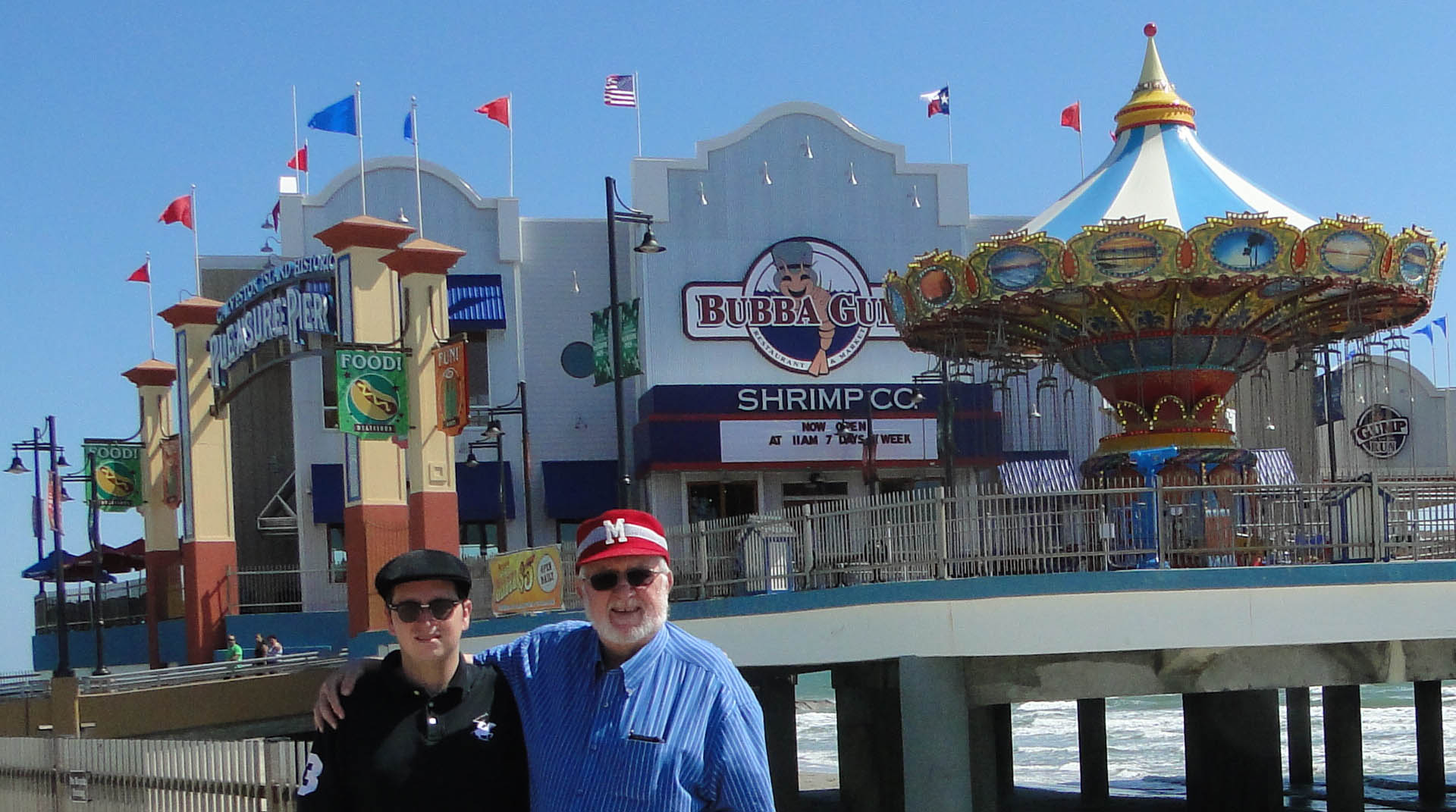
Neal and Bill at the new Pleasure Pier.

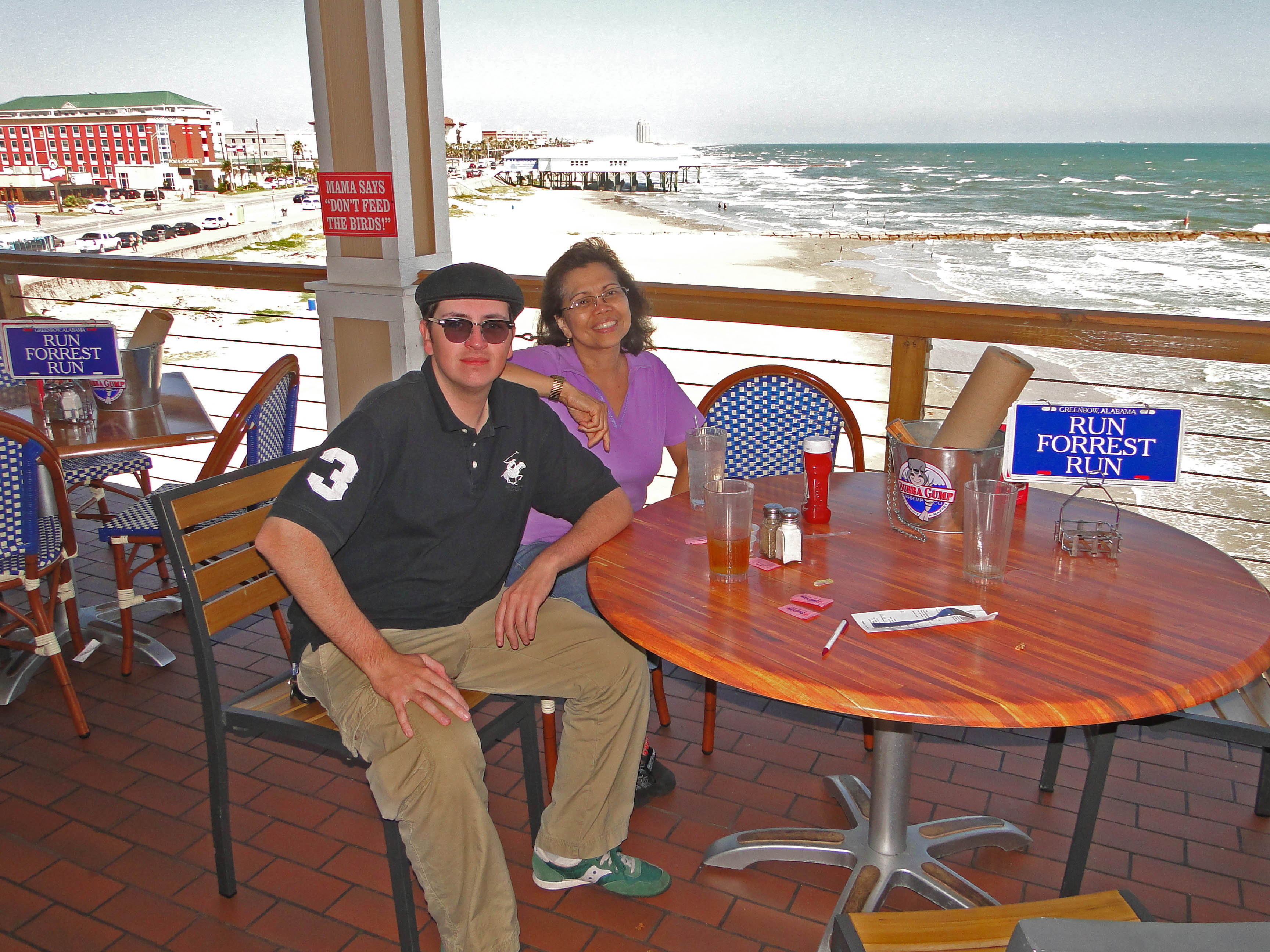
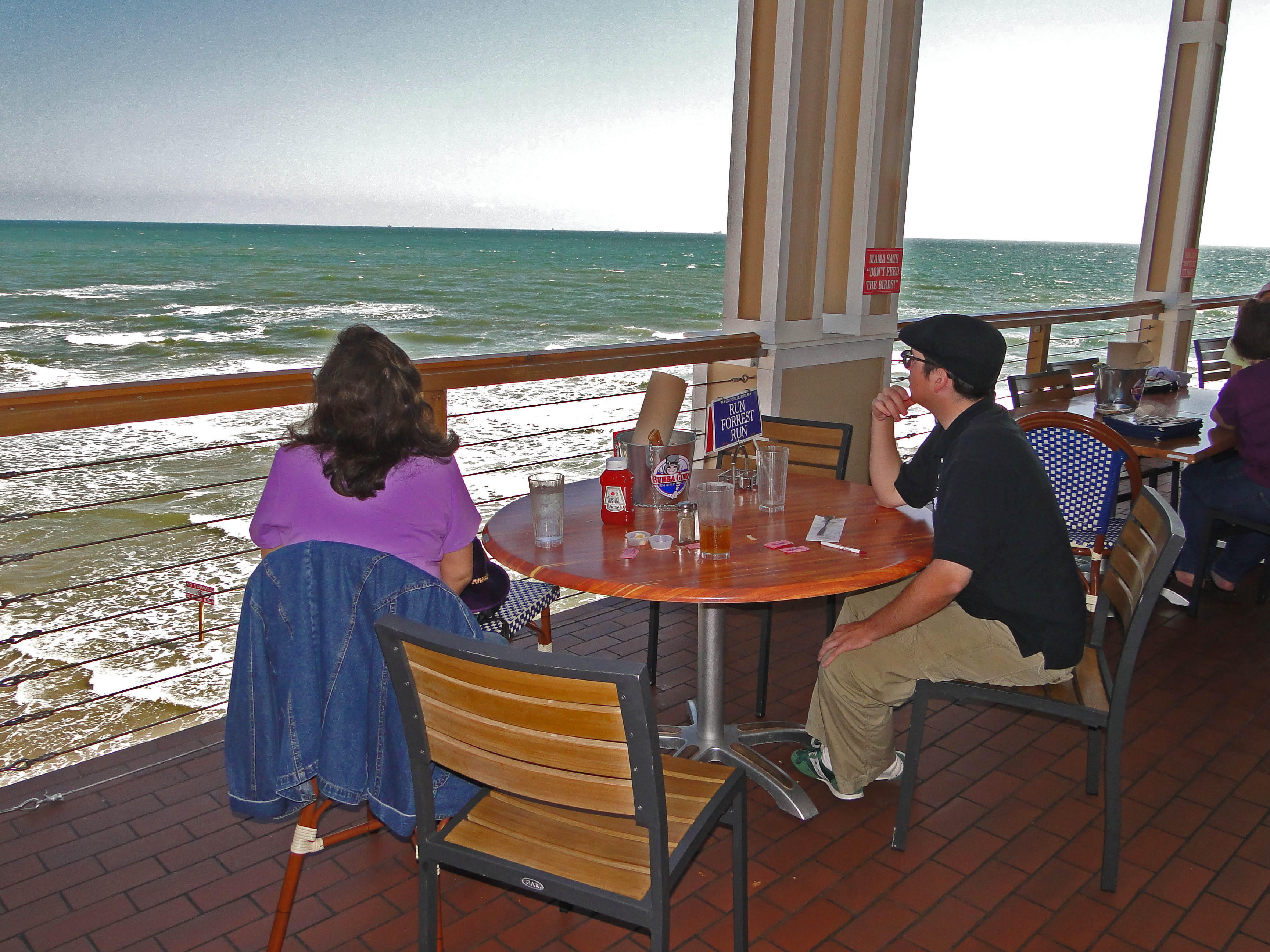
We had lunch at Bubba Gump’s on the new Pleasure Pier. The seafood and pasta were not the best quality and a little on the price side, but the atmosphere and view of the Gulf and beach from the east side outdoor dining area made the stop there worthwhile, even if turns out to be a one-time dining adventure. Watching the seagulls, a few pelicans, and a couple of young people attempting to surf was almost worth the time we spent there in itself.

Neal and Norma at Bubba Gump’s.

Folks, this is almost the middle of October, but yesterday felt a lot more like the last two weeks in July. Our ugly eight month long heat and humidity season just may be expanding until it tags all of Southeast Texas as the land of endless summer, but that didn’t matter yesterday. The weather was perfect for a day trip to the Island.

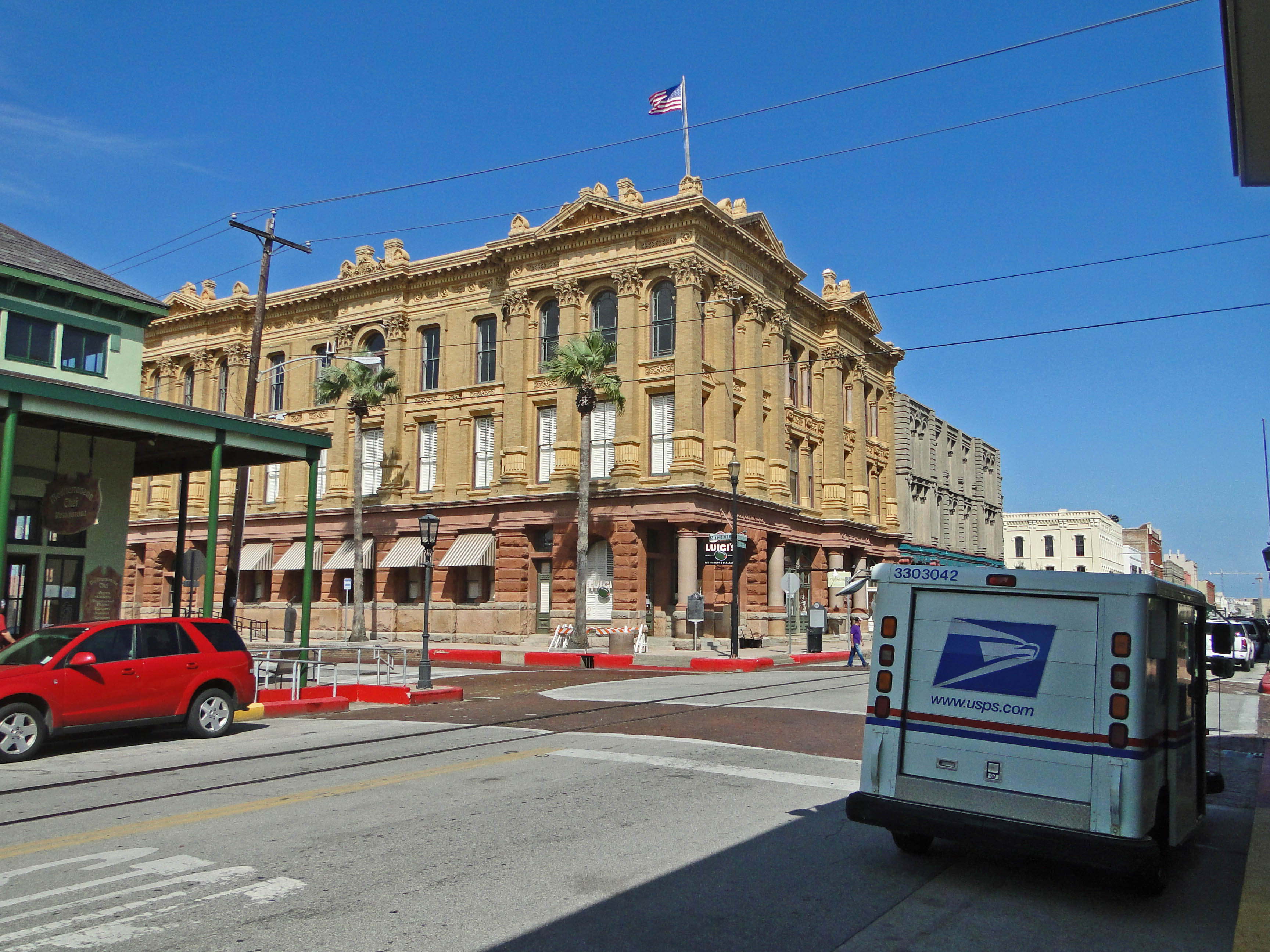
The Strand historical area is still a fun place to get lost in forgetting about the clock. It contains a number of places to tourist-shop, buy affordable good food, and learn something about the City of Galveston and its history – especially with storms.

On the surface of things, Galveston seems to be recovering nicely from Hurricane Ike. The new construction and fix-em-up paint variation on all the old gingerbread houses was a remarkable testament to the rebounding spirit of the Galveston community.

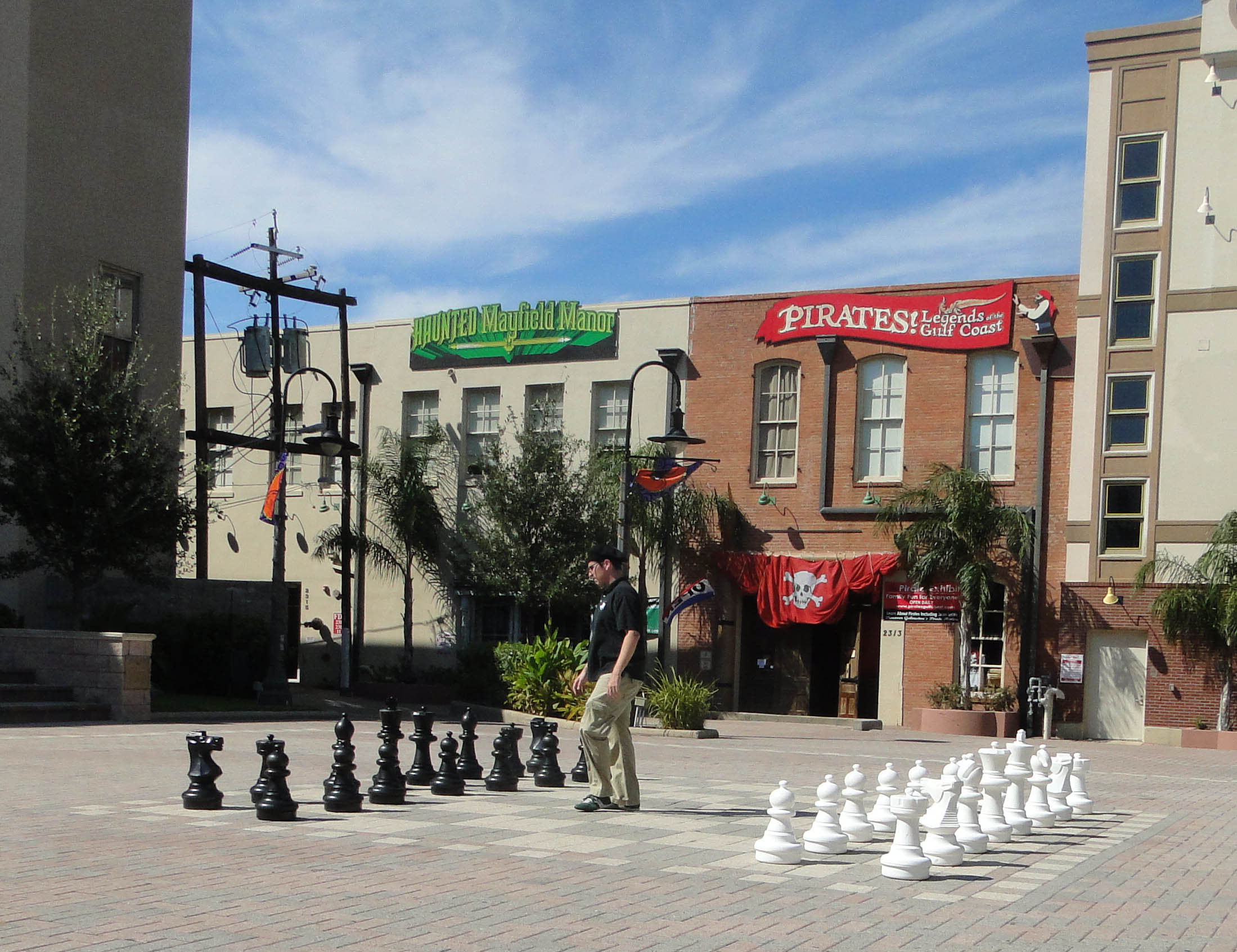
Visitors can even play chess on the Strand these days. We got too lost in our meanderings this time to visit the new flight museum, or tour the harbor, or check out Moody Gardens, but that’s OK. Galveston is no longer a one-gulp jump-in-the-ocean town.

The new Pleasure Pier now rises over the beachfront horizon like a symbolic fist in the air from Galveston to all future storms. “C’mon, monsters,” it seems to say as the voice of Galveston. “Do it again and I will get back up again before you’re even a lost memory.”

Galveston of 1900 and 1908 had to rise again. The world needs the view she gives to us on all that is right and beautiful in life.

… and sometimes a day of rest on the way to spiritual rejuvenation begins simply with a peaceful walk on the beach, breathing in all of the healing restorative power of the saltwater air. The McCurdys thoroughly recommend the Galveston day trip.

Have a nice any day, everybody, and a “hallmarky” signal of peace and love too, even if you refuse it!