Archive for 2012

Astros Lose Jim Deshaies – What Next?

December 4, 2012
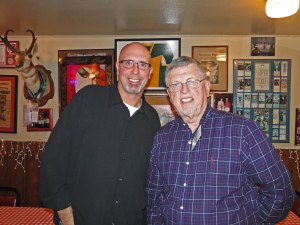
Speaker Jim Deshaies (L) and SABR Chapter Leader Bob Dorrill at the group's December 2011 meeting.

Speaker Jim Deshaies (L) and SABR Chapter Leader Bob Dorrill at the group’s December 2011 meeting.

As you’ve probably heard by now, Jim Deshaies is leaving the Astros in 2013 after several years as the color man to Bill Brown, our very accomplished play-by-play broadcaster on telecasts of the team’s regular season games.

It’s another big loss for Houston on the baseball side of things. “Brownie and JD” were the best in my book when it came to providing all of us a look and feel for each game, balancing baseball data input with a unique capacity for just the right squeeze of humor when attention spans and interest in the actual games began to redundantly thin, especially over the course of two long 100-game losing seasons. If a team cannot win on the field, the team in the broadcast box better be winners at what they do. And we had them with Brownie and JD.

Astros President George Postolos expressed his regrets over the departure of JD for a similar job in Chicago with the Cubs and I believe he was sincere in that regards. We don’t really know why JD has decided to leave what had seemingly become a comfortable job working from home with someone he loved and respected in Bill Brown, but that’s life.

Things happen. More money. The scent of new challenge. A larger stage for his performing talents. Discomfort with all the change he saw going on around him in Houston, including the cold firing of Dave Raymond and Brett Dolan from the Astros radio broadcasting booth. – JD’s reasons for leaving the Astros could have included any and all of these aforementioned factors, plus, or maybe only because of personal reasons we know nothing about.

When I think of Jim Deshaies the pitcher, my mind always goes to two things: (1) his importance to the staff of the great 1986 Astros team, the one that lost that heartbreaking extra inning Game Six to the New York Mets, and (2) that time as an Astros he set n MLB record by striking out the first eight Los Angeles Dodgers he faced in the first and second innings of a game at the Astrodome. JD was “King of the World” that night.

My favorite “color broadcasting moment” always goes back to that early game at Minute Maid Park when the ground crew was still getting used to closing the open roof when a sudden summer rain came up.

On this particular occasion, sideline broadcaster Greg Lucas had taken shelter from the quick rain under a tarp he found attached to a fence that runs behind the Astros dugout. Ever the trooper, Greg was attempting to finish his report from a point of invisibility under the tarp when JD started making an unsuccessful straightaway halt attempt to break from Greg for some new, more time precious report from the booth.

Greg Lucas apparently couldn’t hear or get the gist of JD’s attempts and just kept on talking. The situation simply flipped JD into comedy mode, as he stared at Lucas on the field, apparently now viewing Greg as a caricature of the man in “The Wizard of Oz” as he talked on while he was trying to control all those scary special effects from a position of hiding in the Great Hall of the Emerald City.

“PAY NO ATTENTION TO THAT MAN BEHIND THE CURTAIN!” JD almost shouted as he bellowed out that classic line from “The Wizard of Oz”  and broke away from Greg Lucas for whatever that urgent news happened to have been long ago.

Now that we have to say goodbye to Jim Deshaies in Houston, I too am reminded of the farewell scene in “The Wizard of Oz” for a paraphrased goodbye: “Jim, of all the people who are now leaving the Astros, for a lot of us, I think we are going to miss you most of all.”

Good luck in the Land of the Bill Goat Curse too, JD. Someday you will have to come back and explain how leaving a club that probably won’t win for one that definitely will not win is an upgrade. ????

Prospects Versus Suspects

December 3, 2012

DSC03204bb pitcher

When 39-year old unknown Roy Hobbs arrived as a fill-in position player for the not-so-good New York Knights in the book and movie, “The Natural,” he rode the pines until destiny and circumstance brought his hitting ability to center stage and finally revealed him as a guy who could literally knock the cover off the ball.

After that, it was all about: “Who is this guy? Where did he come from? And why is it we never heard of him until now?”

End of fiction. Beginning of fact: There are no 39-year old Roy Hobbs level hitters out there – just a few poetic souls who may like to think they are. By age 39, most often, the guys who were good enough to hit, pitch, run, or field at the big league level are either retired or getting ready to do so.

What made me think of this reality this morning was the news that 35 year old former Astros closer Brad Lidge says that he is now retiring. Of course, at 35, we don’t know for sure if its a real retirement from the game or the Andy Pettitte type that later gets reversed by the call of the mound and the aroma of fresh bucks from a pennant chasing closer-spent team down the line.

The larger thought that awakened today is the fact that, until they establish themselves as fully delivered MLB players at some variable level of competence, all players universally are, and mostly are, in their own language, either “prospects” or “suspects” – as major league talent.

And what separates one group from another? It appears to start with age and the expectations placed upon each of them by the scouts and other systemic evaluations used by each particular MLB club. There is no hard and fast number on the age cut-off for prospects, but the line seems to get clearer by the mid-20s in age. It also depends on when a club signs a player. If they signed a guy at 16 in Venezuela, its possible they may still see him as a prospect by age 24. On the other hand, age 24-25 for original signees puts them more in the suspect category and all those “where have you been” questions.

If we use the current Astros rebuilding program as a model, it would appear that no player has much prospective value to the long-term future once they hit 27-28. And that makes sense. Once players hit 30, the aging card begins to kick in with some as bad legs, weaker arms, and slower bats. You never know. Maybe some will play to 40 with no significant loss of physical ability, but most will not. Physical ability will lessen. For some it will be gradual. For others, it will be all at once.

Again, it makes sense that teams dedicated to winning are better off maintaining a roster of good players who won’t all age at once than putting all their eggs into the basket with one or two great players and not much else.

Of course, there are all kinds of performance and personality factors that will help clubs separate the keepers from the klunkers along the way. For hitters, bat speed and pitch selectivity are important, no matter what kind of hitter a guy may be. For pitchers, the ability to deliver different pitches on the corners at variable speeds from deliveries that all look the same is big. And for fielders, speed, agility, and arm strength are big measuring sticks. Throw in the guy’s personal life, habits, and behaviors – and what its like to have him in the clubhouse – and you just begin to go through all the technical things that separate prospects from suspects on their ways to either major league careers or trips out the door.

You just won’t find any 39 year old Roy Hobbs types showing up in the spring who can really knock the cover off the ball.

The Visionary Mind of Judge Roy Hofheinz

December 2, 2012
Maybe Moody Gardens would be a good working model for this possibility.

“Is this the eighth wonder of the world?”

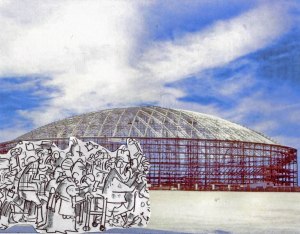
No one among us knows for sure exactly when the names “Astros” and “Astrodome slid into place for Houston’s new MLB team. Some of us just assume that these new monikers for the club’s team and new domed stadium may have been incubating in the mind of visionary HSA leader Judge Roy Hofheinz throughout the team’s entire residence at Colt Stadium on OST as they played out their first three years as the Houston Colt .45s from 1962 to 1964.

Why do we think this way? What happened?

This is one of those historical questions that I have been kicking myself for over time now. For several consecutive years from the mid-1990s through the mid-2000s, I saw former Cardinal and Buff ownership president Marty Marion every year at an annual social function in St. Louis and never once pulled him aside to provide answers that he alone may since have carried to the grave with him. In fairness to myself, I wasn’t aware of the acrimony that sparked between Hofheinz and Marion as the former judge attempted to negotiate the purchase of Marion’s minor league territorial rights in Houston as a condition of HSA’s final approval of the new expansion franchise that had been awarded to the Hofheinz faction.

It couldn’t have been easy. Hofheinz was having to deal with Marion, who had been his active competitor for that precious franchise expansion award. There was no way Marion was going to win. He had Buff Stadium; Judge Hofheinz had the promised delivery of the new Harris County Domed Stadium.

Now I understand from more recent hints from some sources that Marion stuck it to the Judge pretty good for those can’t-move-on-without minor league territorial rights in a deal that also included the sale of Busch/Buff Stadium to the HSA (Houston Sports Association). And this was precedent to the Judge’s “contest” that gave fan credit for the new “Colt .45s” team name and the western theme and “Colt Stadium” name given to the uncovered temporary park in the NE corner of the OST grounds where the new domed stadium was set to undergo construction.

Here’s the point: Prior to the Marion “negotiation,” Hofheinz seemed open in the media to the possibility of playing MLB games at Buff Stadium until the domed stadium was ready – and maybe even keeping the “Buffs” nickname as the team’s MLB identity too. Now that was all off.

Now the Judge wanted a new identity for the MLB team. And he wanted people on site in the sun, watching the dome arise from the ground like some forever out of touch mirage of an oasis that was always just beyond reach on a hot Houston summer afternoon. Colt Stadium, “The Skillet,” provided Houston fans that perspective.

As fans, we thirsted for the promised cool relief of the dome. We collapsed in the heat from it. And some of us even wound up in the Texas Medical Center in a state of unconsciousness because of it.

My guess is that “1963” was the turnkey year for the Judge’s full awakening that the now active presence of NASA and Houston’s new “Space City” identity were both too big for promoting the domed stadium as a home for cowboys and six shooters. No, this new place needed a new name that would justify it’s newly proclaimed standing as “the eighth wonder of the world.” Now, no matter how much its origin may have been fueled by the issues that Judge Hofheinz had with Marty Marion, now this new identity was taking on a life of its own.

Astros. Astrodome. Eighth Wonder of the World.

Those names and that idea will never die within the soul of Houston. Now it’s just a matter of what kind of legacy we as a community plan to give them in our efforts to accurately preserve our history in ways that both give truth and mean something worth the protection and honor of all those generations which now follow.

December 2012 Lagniappe

December 1, 2012
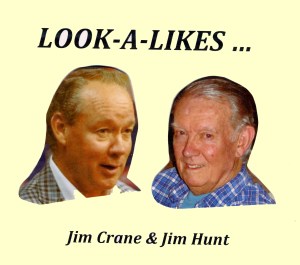
Jim Crane is the new Astros principal owner. Jim Hunt is my dear great friend and cousin.

Jim Crane is the new Astros principal owner. Jim Hunt is my dear great friend and cousin.

Look-a-Likes

I still cannot get over the physical resemblance of my dear cousin Jim Hunt to Jim Crane, the new principal owner of the Houston Astros. Other than their shared soft-spoken natures, they don’t appear to have much else in common and, of course, Jim Hunt is old enough to have been Jim Crane’s very young father or much older brother.

There is one observable difference. Jim Hunt doesn’t like those ugly sponsorship signs that still hang from the rafters in left field.

Maybe Moody Gardens would be a good working model for this possibility.

Maybe Moody Gardens would be a good working model for this possibility.

For Whom the Dome Tolls

If the Dome-Deciders just settled on striping away everything about the Astrodome and turned the interior into a nice nature park for family visits and activities, would the result be enough to preserve the shape and memory of the Astrodome to satisfy the aims of its architectural preservation for history? – Or would the results be simply an insulting skeleton that only served to fill the public with equivalent doses of anger or antipathy?

Bob Boyd passed away in his home town of Wichita, Kansas in 2004 at the age of 84. He spent his baseball retirement years in Wichita driving a bus for the local transit authority.

Bob Boyd passed away in his home town of Wichita, Kansas in 2004 at the age of 84. He spent his baseball retirement years in Wichita driving a bus for the local transit authority.

Houston Needs to Honor Bob Boyd

In May 1954, first baseman Bob Boyd became the first black player to break the color line in baseball and all other professional sports to come in the Houston area, contributing significantly to the 1954 Texas League pennant that the club captured that year. He was joined later in the same 1954 season by future Hall of Fame outfielder Willard Brown, who earlier had broken the color line in the American League as the first black batter to homer in league play as a member of the St. Louis Browns.

Bob Boyd batted .321 with 7 HR for the 1954 Houston Buffs. He returned to the club in 1955, hitting .310 with 15 HR before working himself back to the big time for a nine season career and a .293 MLB BA. Boyd finished his baseball career as a three-season player (1962-64) for Oklahoma City and San Antonio in the Houston Colt .45s new farm system.

Bob Boyd will not be forgotten in the forthcoming 2014 SABR book, “Houston Baseball, The Early Years, 1861-1961,” but it would be nice for the City of Houston and/or the Houston Astros or Sugar Land Skeeters to honor Boyd’s contributions to an important page in the community’s baseball and racial relations history with some kind of honorable public exposition or plaque of appreciation as well.

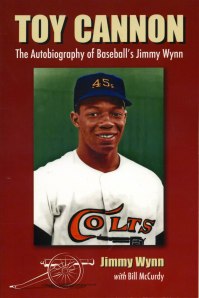
Available for Christmas through Amazon, E-Bay, Barnes & Noble, and McFarland's!

Available for Christmas through Amazon, E-Bay, Barnes & Noble, and McFarland’s!

Toy Cannon Still A Good Buy at Christmas Time

Jimmy Wynn was one of the young players mentored by the veteran Bob Boyd when he came over to the Houston MLB organization from Cincinnati in 1963. His autobiography, “Toy Cannon,” is also still a can’t miss item for anyone on your Christmas shopping list who hasn’t yet read the story of his coming-0f-age as an icon in Houston baseball history in his own right too. Please do them a favor and order it for all those folks you know who love Jimmy Wynn and the Houston Astros. – It’s still the home run gift of the Christmas season.

My dad and his songwriting buddy drove all the way to New York City from Beeville, Texas in the early 1930s to try and get Rudy Vallee to sing their song over the national radio airways.

My dad and his songwriting buddy drove all the way to New York City from Beeville, Texas in the early 1930s to try and get Rudy Vallee to sing their song over the national radio airways.

The Moon Is Here

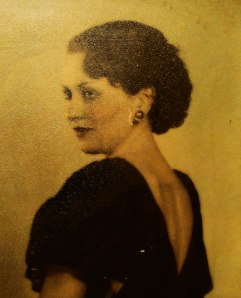
My sweet mom and dad were just wonderful teachers. Dad was a town ball outfielder who fancied writing music. Mom was a movie addict who loved singing. In fact, she loved it so much that it became the way she and dad met.

On a trip to see her grandmother in Beeville in 1936, Mom somehow got booked to do some live singing over the radio at the little Beeville AM station while she was there. She was 20 at the time and Dad was 25, but they had never met – and possibly might never have met, had Mom not had the singing gig.

Dad heard her singing “Paper Moon” over the radio and drove over to the station to see who she was. Dad was busy at the time putting together a Dodge-Plymouth dealership in Beeville, but could not resist his urge to meet the girl behind the voice he was hearing over the radio. They went out for cokes and hamburgers right way in a way that never stopped from there, falling in love, and, with Mom staying on in Beeville, they just became too close to ever again part.

Two weeks after meeting, they eloped to Saltillo, Mexico after a quick and quiet wedding in Beeville with the help of the parish priest. They stayed married for 58 years, until Mom suffered a stroke on their May 30, 1994 anniversary and died three days later. Dad, who had been in good health until then, died exactly five weeks later, of renal failure. He just left us. His will was to be with Mom.

Earlier in the 1930s, Dad and Dan Lanning, a buddy, had written and published a song called “The Moon Is Here,” which they drove all the way to New York City to push on the Justin Beiber/Elvis Presley of his era, Rudy Vallee. They even managed to wrangle a meeting with Vallee, but he would give them no commitments that he would sing it on the radio. Dan Lanning also had become Father Dan Lanning, the Catholic priest who helped speed their wedding so they could get away the possibility of any family objections on either side that Mom, a Christian Scientist, was getting married to a Catholic fellow in a Catholic Church in a wedding officiated by a Catholic priest.

They drove back to Beeville disconsolate, but later learned from friends back home that Rudy Vallee had sung their song live over the radio in their absence. It’s too bad the boys had not either thought to have had a car radio installed, or else stopped somewhere and looked for someplace they could have heard the Rudy Vallee Radio Show, just in case. Oh well. The song was not a hit anyway, but nevertheless, I always admired Dad for the great try.

Dear Mom and Dad, I’m sorry we McCurdy kids made the rest of your years a lot less glamorous than you once may have dreamt of them becoming, but thanks for the love, the care, and all of the answers you provided to our challenges to your parental creativity.

Our Paper Moon Girl

Our Paper Moon Girl

Have a nice weekend, everybody. That’s all I’ve got for now.


Abbott and Costello: The Economic Stimulus Plan

November 30, 2012

“Who’s on 1st?”

Good as they were at explaining baseball in “Who’s On 1st?”, Abbott and Costello also do an excellent job explaining how the bureaucracy works by, you’ve probably seen it, – by paying people to “loaf” on the job.

https://www.youtube.com/watch?v=6ib9N7L9y08&feature=player_detailpage

If you listen carefully, you may even be able to hear our government’s current plan for creating the kind of jobs we need that will put our dough in the hands of loafers whom we pay to come up with something the salaried makers then sell back to us non-loafers who work elsewhere in the private sector.

Happy Weekend, Everybody! It’s time for everyone to loaf – even if you don’t get paid for it!

Baseball Hall of Fame: Who Gets In?

November 29, 2012

(original oil-wax by Opie Otterstad, 2004)           Will Craig Biggio make it into the HOF his first year?

The following is the alphabetical list of those former players who are now eligible for 2013 induction into the Baseball Hall of Fame. All any of them has to do to get there is to receive 75% support from the 600 voters who represent the deciding deity as The Baseball Writers Association of America. (BBWAA).

The rules for judging candidates are not tied to specific statistical accomplishments. Voting baseball writers are instructed to judge each candidate on ability, integrity, sportsmanship, character, and contribution to the team or teams on which he played — as well as to baseball in general.

So, how are things stacking up this year, in Craig Biggio’s first eligible year on the ballot?

Well, most of these eligible names are on the ballot for the first time, but a few have sustained enough hanger-on votes over the years to be headed into their 13th to 15th seasons on the ballot. And, of course, there are several players with impeccably incredible stats that are only missing out because of their association with the steroids-enhanced era in recent MLB history. I’ve taken the liberty of bold-face typing the names of those so effected in my own mind. Your own steroids-era list may vary from mine – and that’s just one of the problems the actual voters face. Without convictions of offense, the worst-publicized players are drawing attention for lies and arrogance that could be keeping the spotlight away from others who have been better able to avoid the sear of the spotlight.

Here’s the list of 2013 eligible HOF candidates, with my list of steroids-smeared, not convicted, candidates shown in bold type:

Sandy Alomar, Jr, Jeff Bagwell, Craig Biggio, Barry Bonds, Jeff Cirillo, Royce Clayton, Roger Clemens, Jeff Conine, Steve Finley, Julio Franco, Shawn Green, Roberto Hernandez, Ryan Klesko, Kenny Lofton, Edgar Martinez, Don Mattingly, Fred McGriff, Mark McGwire, Jose Mesa, Jack Morris, Dale Murphy, Rafael Palmeiro, Mike Piazza, Tim Raines, Reggie Sanders, Curt Schilling, Aaron Sele, Lee Smith, Sammy Sosa, Mike Stanton, Alan Trammell, Larry Walker, Todd Walker, David Wells, Rondell White, Bernie Williams, and Woodie Williams.

If you were one of the “godlies” this year, who would you pick? – And who would you leave out, for cause?

No Sign Is The Best Sign

November 28, 2012

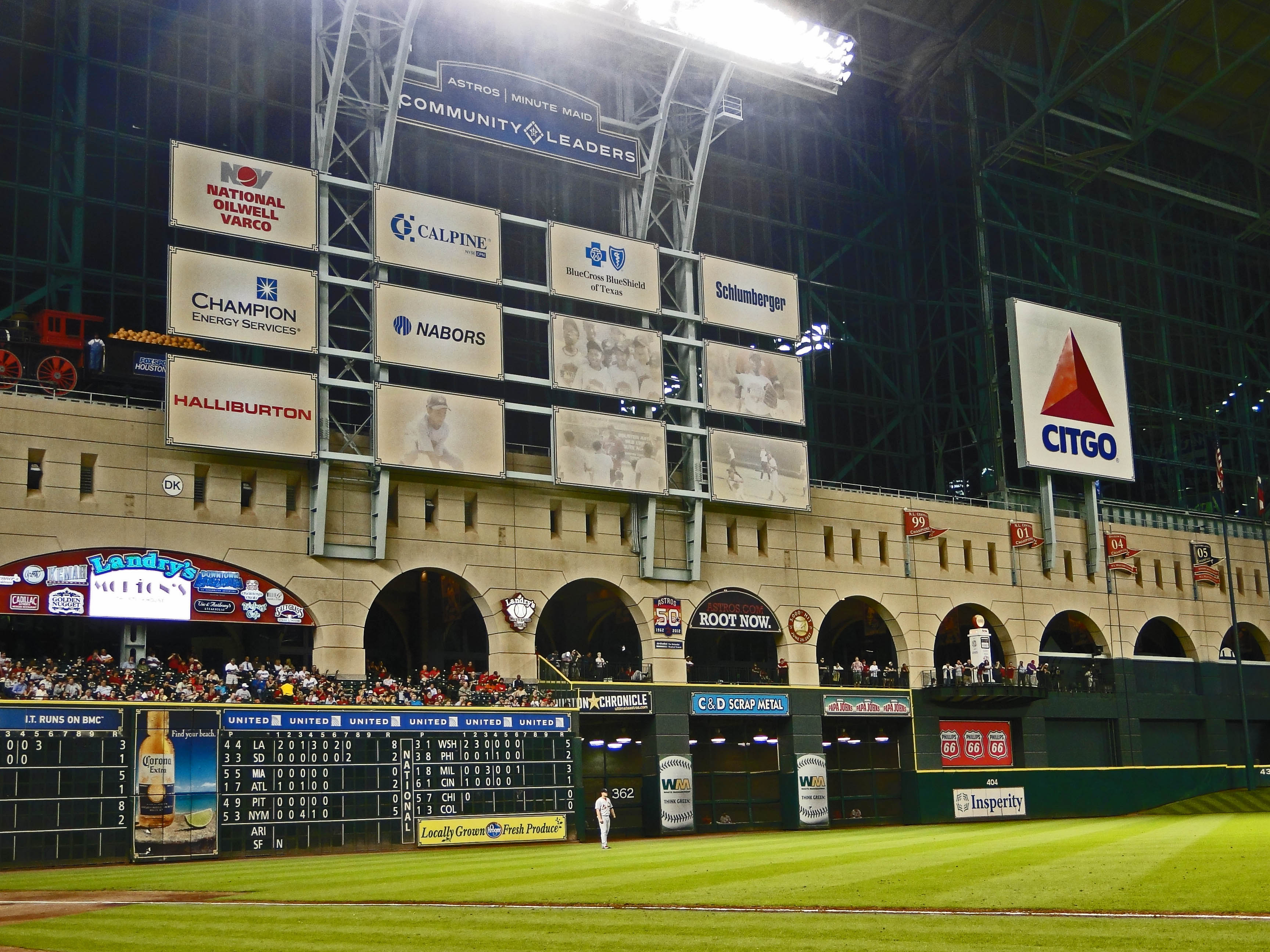
It would be even cleaner without the Citgo sign and the Chick Filet mess on the foul pole, but we can’t have everything in this ever promotional hungry world, can we?

Just another photo reminder today that the sign campaign at Minute Maid Park goes on even though we now float deeper into the off-season time that most people think of as the Christmas and New Year holidays.

The Citgo sign is at least designer tasteful without interfering with the long stretch of horizontally inclined architectural sight lines. In case you have forgotten how badly the brown and blocky faded looking sponsor signs obscure everything, I’ve added their pictorial reminder below.

The train belongs.

Why?

This ballpark is built on the site of Union Station, the depot for Houston’s reception of the great and small during the early part of the 20th century in which our town was becoming one of America’s great cities. Unlike the soon-to-be-demolished old Ben Milam Hotel across the street on Crawford, Union Station has a cadre of supporters for its honorable memory prior to its becoming headquarters for our major league baseball team.

If could go back in time, juxtaposing the incoming rail lines where the ballpark playing field now rests, we would see that the parallel tracks ran pretty much on out from the south to the north ends of Union Station in a roughly east-west direction. Every great ballplayer from the early 20th century, from Babe Ruth to Joe Jackson to Ty Cobb to Rogers Hornsby to Tris Speaker most likely walked straight into the station’s large rotunda from somewhere on that track along the area that eventually became the third base line.

How hard is it to remember that this place has a historical meaning and identity that many of us in Houston would like to keep fresh and alive? It’s way past the time we simply tear something historical down just because somebody sees the need for a new figurative or literal parking lot.

What follows is simply a reminder of the sponsorship signs we are hoping Mr. Crane will choose to relocate to either an interior or exterior solid wall at the ballpark, where they will each receive the honorable attention they deserve – and not the growing contempt of fans who care about the view at our ballpark:

The sponsorship signs, as they now hang at MMP, 11/28/2012.

If you wish to let your feelings about these signs be known to the sponsors they represent, here’s a link to an earlier column on how to contact each and every one of their CEOs.

https://thepecanparkeagle.wordpress.com/2012/10/31/time-to-write-the-mmp-signage-sponsors/

That being said, have a nice Wednesday, everybody!

Time for UH to Honor Its Icons!

November 27, 2012

Artistic Rendering of the New UH Football Stadium.

With the passing of Robertson Stadium as a 40-17 consolation game win for the Cougars over Tulane at the end of a most disappointing football season, its time to give some thought to larger measures and how the university may be thinking in their plans for naming the new planned venues for football and basketball. I’m not real sure what the target date is for the basketball field house, but we definitely are on board for the new football stadium in 2014.

How about, this time, we forego naming these places in favor of the generous alumni who pick up the biggest part of the tab and name them for the two icons, both still living and capable of accepting our statements of appreciation, who made success possible in each of the two big money sports.

Bill Yeoman Stadium and The Guy V. Lewis Pavilion sound pretty good to me.

What do the rest of you Cougars out there think?

All Bill Yeoman did was coach at UH for 25 seasons (1962-1986) without dumping us over for bigger bucks and “a more prestigious offer” elsewhere. Yeoman’s career record at UH (160-108-8) included four Southwest Conference titles (1976, 1978, 1979, 1984) and a winning record (6-4-1) in bowl games. The Cougars’ win over Nebraska in the January 1, 1980 Cotton Bowl pulled UH to its highest ratings finish in football history at # 4.

Bill Yeoman, of course, is the father of the veer option offense that revolutionized college football, starting with its introduction in the Astrodome in the fall of 1965. That same season, Bill Yeoman’s offense featured the first black player to suit up and start for any of the previously all white universities in Texas. Running back Warren McVea was a runner for the ages,  who later led the 1967 Cougars to a 27-7 upset win over Michigan State at East Lansing in the Spartans’ opening game of their season.

Bill Yeoman is a member of both the College Football Hall of Fame and the Texas Sports Hall of Fame.

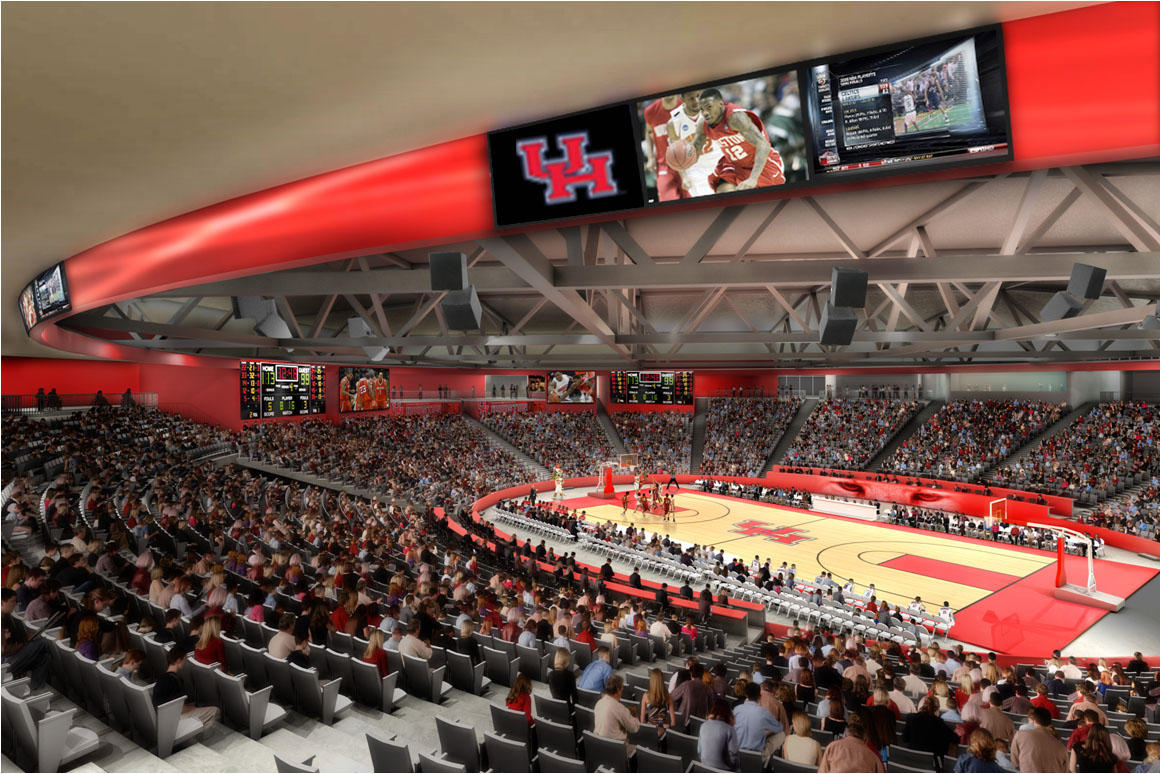
Artistic Rendering of the New UH Basketball Court

Guy V. Lewis coached basketball for 31 seasons at UH (592-279), leading his Cougar teams to five Final Four appearances (1967, 1968, 1982-1984) during both the Elvin Hayes and Akeem Olajuwon eras. Lewis was among the first to recruit black players (Elvin Hayes and Don Chaney, 1964) and the major cast of the famous “Phi Slama Jama” team that came later under the leadership of future Hall of Fame greats Akeem Olajuwon and Clyde Drexler.

The first future UH Hall of Famer, Elvin Hayes, led the Cougars to a 71-69 win over UCLA in the Astrodome on January 20, 1968, forever changing the scope and scale of basketball in the mind of the viewing public.

Guy V. Lewis was voted Coach of the Year in 1968 and 1983. He was elected to the College Basketball Hall of Fame in 2007.

What say thee, fellow Cougars and friendly Houstonian supporters of our Tier One university? Should we honor the dedicated coaches who did the work in the trenches for years to bring accolades to our university? Or do we do what most universities do, sell the name to the folks who write the fattest checks because that’s what they expect to get for their money?

Last Hurrah for Robertson Stadium Today

November 24, 2012

Goodbye, Robbie, Goodbye!
November 24, 2012

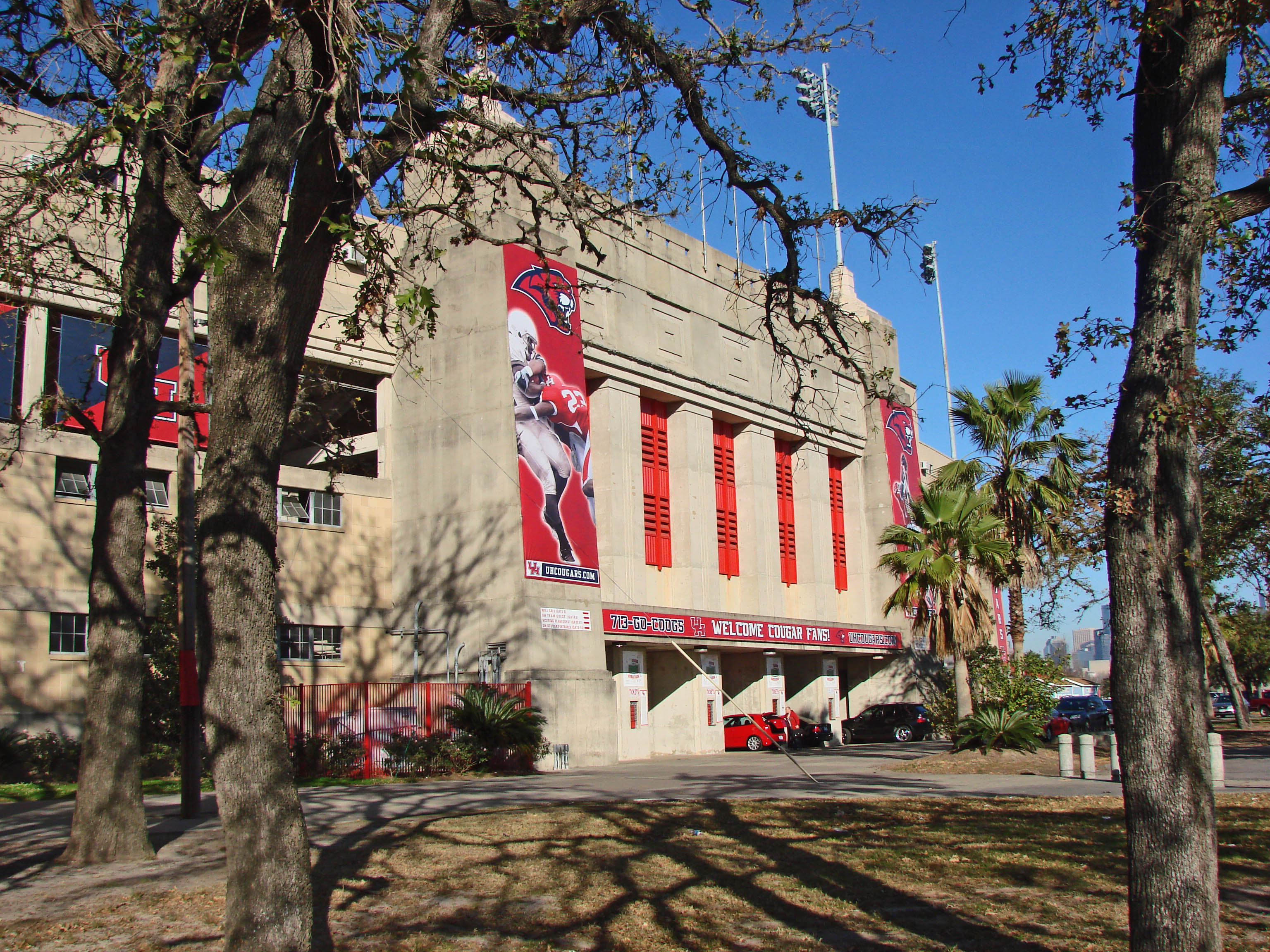
Saturday, November 24, 2012, is going to be a sentimental day for many longtime Houstonians. Today is the last hurrah for venerable old Robertson Stadium on Cullen at the UH main campus as the Cougars entertain Tulane in the final event ever scheduled for the ancient (by local standards) venue since its 1942 birth. After today’s final UH football game of the 2012 season, Robertson will be destroyed and become the site of a new state of-the-art facility that will go up and be open in time for the start of the 2014 NCAA UH Cougar football season as second year members of the Big East Conference.

J.R. Gonzales has a wonderful commemorative column on Robertson today in his always entertaining “Bayou City History” blog at Houston Chron.Com.

http://blog.chron.com/bayoucityhistory/2012/11/say-a-farewell-to-storied-robertson-stadium/

          David Barron has another fine column slant on the Robertson parting moment, but you have to be a digital subscriber to the Houston Chronicle to see his comments.
http://www.houstonchronicle.com/sports/college-football/article/Houston-says-goodbye-to-another-landmark-4062646.php
          My take is simply a nostalgic figurative wink and a smile goodbye to a place where I’ve been going since 1946 when UH played their first college football game ever in 1946, to the time in 1954 when my St. Thomas Eagles High School team knocked off eventual State of Texas finalist Austin High of Houston in a major upset, to the track meet in 1958 when I outran future Detroit GB Pat Studstill in my second leg of the 440 relays held there, to the January 1, 1961 first American Football League Championship game between the Houston Oilers and the Los Angeles Chargers, to the return of UH Cougar football to Robertson in 1998, to the last game today between UH and Tulane!
          Goodbye, Old Girl. All I can say additionally, regardless of the sentiment surrounding separation, is that my now aging body will not miss your steep climbing ramps and the absence of hand rails on the descending path down to my season ticket aisle seats. Hopefully, your replacement body and spirit venue will come equipped with updated features like gradient steps, handrails, and elevators for the sake of keeping Cougar fans alive and kicking as long as possible.
          GO COOGS! ~ BEAT THE GREEN WAVE TODAY!
          IT’S OUR LAST HURRAH AT ROBERTSON!

Black Thursday Captures Thanksgiving

November 22, 2012


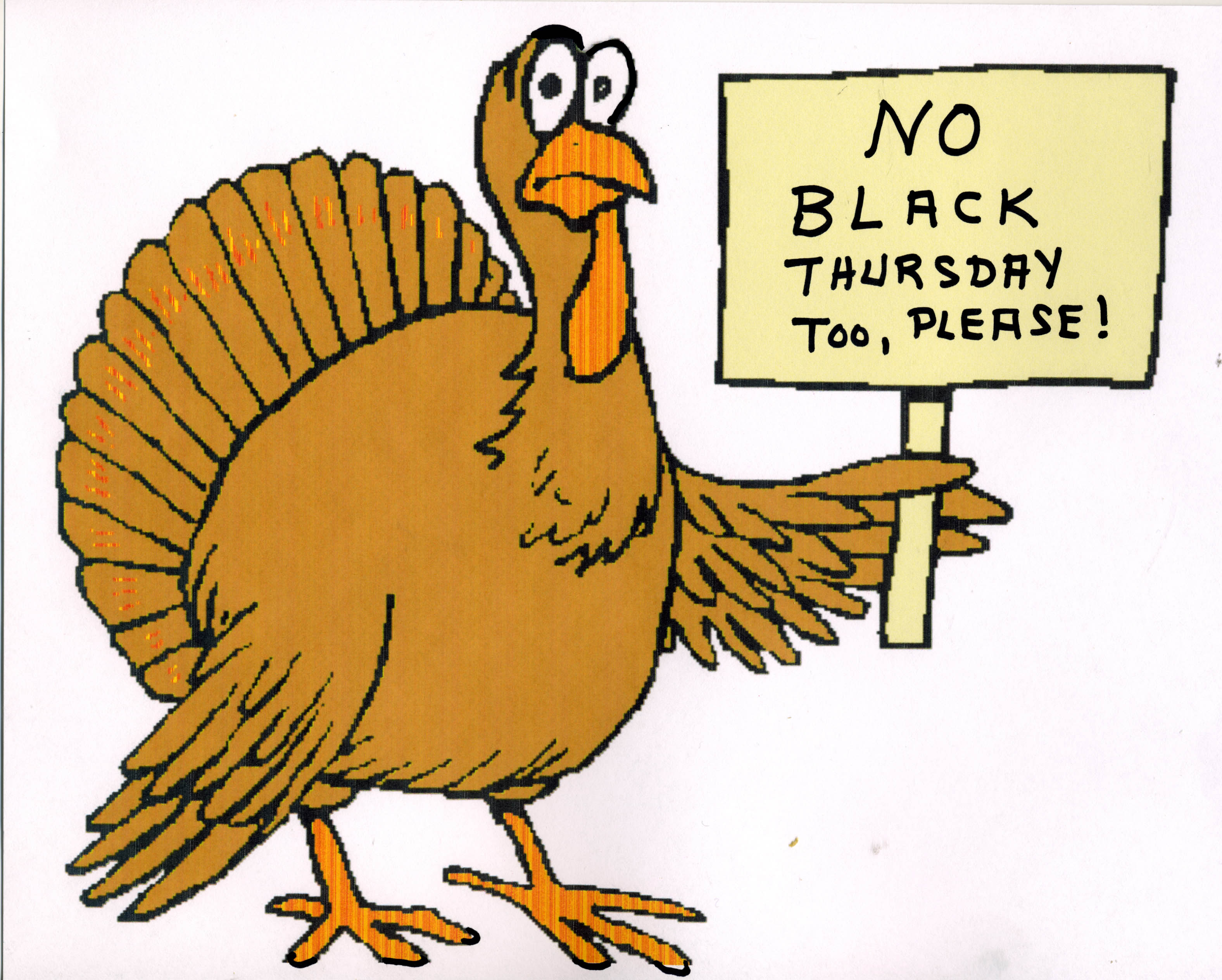
Poor old Tom doesn’t get it. Once a few major corporate stores rolled back the starting gate on “Black Friday” Christmas sales this year to include the Thursday evening hours of Thanksgiving Day, the time for any kind of “Save Thanksgiving Day from Becoming Black Thursday” campaign were over before they even started. The dam has cracked, the cash registers are cranked, and the corporate chomps are already biting hard on the first blood of earlier sales.

Some brilliant middle management guy at Target or Best Buy is now being promoted for mumbling his or her way past the obvious with an e-mail to the big boss that probably went something like this:

“Hey, Boss! Long as we got all those people sitting out there in a line until Midnight Friday, just dying to buy stuff, wouldn’t it make sense to just let them all come in earlier so they can get a good running head start on spending money?”

Of course, it makes sense. The dictates of greed and the corporate profit margin, on everything from our life filling electronic toys to our life saving prescription drugs, has to be up there, highly maintained, and forever expanded further into the American psyche that, if you want to live, you gotta spend.

Now Thanksgiving Day is blurred forever from its originally created purpose as a day of gratitude for the deeper spiritual gifts of Life that we enjoy from God through Love, Family, Friends, Peace, and Health to a partial day in which spending money on the trivial now requires some of us to work on that day to keep our jobs.

This is one of those bells that cannot be unrung. The silent digital cash registers ring loudly where it really counts and it will not be long before they expand to take over the entire day – and Thanksgiving meals relegate to where they belong in a culture such as ours – something you grab at the food court on the way to Macy’s or Best Buy or Target or Walmart or whomever else is out there raking in the green all day soon.

Happy Thanksgiving Day, Friends! Let’s celebrate it while we still have it – while we always try to keep one big fact in mind that is far more important than the formal holiday:

Everyday is Thanksgiving Day if we are truly grateful for what really matters.

Bill McCurdy

The Pecan Park Eagle