Archive for 2012

The Galloping Ghost of the Java Coast

March 1, 2012

The USS Cruiser Houston


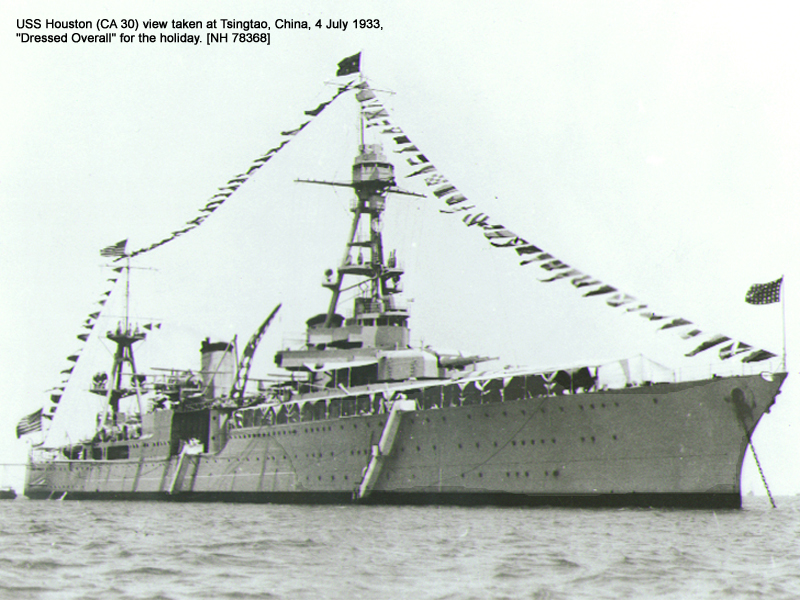
Capt. Albert Rooks went down fighting with the USS Houston on March 1, 1942.

Today, March 1, 2012, marks the 70th anniversary of the sinking of the USS Houston, the United States Navy Cruiser, that everyone called “The Galloping Ghost of the Java Coast.” The Houston and The HMAS Perth encountered a large contingent of the Japanese Imperial Navy on February 28, 1942 in waters known as Banten Bay in the Far Pacific theatre following an earlier battle in which American and Allied forces had fairly run the Japanese forces from their previous positions.

This time, the Houston and the Perth were up against all odds of survival and quickly came under heavy torpedo and artillery fire. Shortly after midnight, on March 1st, the Houston became the second of the two Allied ships to go down from the heavy assault. Of the 1,061 man crew, 368 survived and a handful of those battle combatants live on to this day to celebrate their bond with each other on this anniversary, March 1, 2012.

Captain Albert Rooks died amidst the flames on deck that night in 1942, directing counter attacks against the Japanese to the very end.

The USS Houston that went down in 1942 was the second American naval ship named for our city. It was originally commissioned for duty in 1929 at Newport News, Virginia and it served the nation proudly to the very end.  For more complete information about the history of the USS Houston, please take a look at both of these following recommended links.

http://en.wikipedia.org/wiki/USS_Houston_(CA-30)

http://www.usshouston.org/

The men of the Houston were all American souls, even fielding their own baseball club to compete with the other ships in the American Pacific fleet.

Houston can be proud of the men who served and died on the Houston that fateful day in World War II – as we also take comfort in the knowing that a special handful survive to celebrate their bond today.

It is small wonder that the World War II group is remembered today as our “greatest generation.” When it comes to old-time issues like loyalty and commitment to duty and country, and a God-fearing sense of responsibility for protecting the future of generations to come, we could use a few of them as candidates for President in 2012.

The USS Houston Baseball Club

Rest in Peace, men of the USS Houston. Thank you for representing our city and the country in a first class All American way.




When Was a Hit Also Scored as an Error?

February 29, 2012

Look it up. It's in the book.

Back in the 19th century, the rules of baseball scoring changed radically from year to year. The leaders of the professional movement responded to the complaints and criticisms of others in an ongoing struggle to fine tune the game to just the right balance between offense and defense as that sort of thing was perceived to be for that day at a time.

In 1887, for example, the rules makers gave the batter a fourth strike before he could be retired. In 1888, they took it back, The batter was back to the key spot of “three strikes and you’re out” in plenty of time to not mess up Jack Norworth’s and Albert Tilzer’s 1908 baseball anthem, “Take Me Out To the Ball Game” – or that wonderful Mudville lament about the absence of joy after Casey took strike three.

Can you imagine singing, “‘for it’s one, two, three, four strikes you’re out in the old ball game?” – Neither can I?

Perhaps the screwiest book changes of 1888 were rules 6.08 and 10.13

Rule 6.08 gave a hit batsman first base and credit for a base hit because of the pitch that struck him.

Rule 10.13, among other things, also awarded the pitcher an error for hitting the batsman with a thrown ball.

Didn’t anyone do contradiction or irony searches among the various rules changes back then? Apparently not. Where is the common sense of awarding a hit to one player and an error to another for nothing more than what happened on one thrown pitch?

The error charge to the pitcher on a hit batsman was removed the following year, 1889. I’m not really sure when the hit credit to the batter on a “HBP” was removed, but fell it did too as ludicrous, but certainly not as silly as some of the earlier rules. Back in 1869, for example, baseball gave strong attention to how many runs a player scored and no attention to the players who drove the runs across the plate. Also in 1869, baseball devalued base runners for being forced out at the next base on infield plays. The presumption was that the runner should have been fast enough to have already moved up – or athletic enough to have broken up the play before the “out” was registered.

As long as we stick with 4 balls, 3 strikes, 9 innings. 90 feet bases and a 60’6″ pitching distance theater of operations, we should be OK – if we can just find a way to bury the dad gum designated hitter option.

NOTE: I may not be writing here daily over the next two to three months. The research, writing, and editorial demands of our SABR Early Houston Baseball History Project are beginning to take a toll on the time and energy I usually have available for a daily column. It could still happen, or come close. If it doesn’t, I just wanted you to know what’s going on with me.

TV Pioneer Bob Marich of Channel 2 Passes

February 27, 2012

Bob Marich of Channel 2 brought music into the heart of Houston homes from the early 1950s forward.

Former 1950s-1960s producer Bob Marich of KPRC-TV in Houston has died. Marich passed away from coronary and pulmonary health issues in Houston on January 23, 2012, just one day shy of his 89th birthday. Born in Chicago, Marich met his widow and soul mate life partner Marietta while both were employed at Channel 2. The couple spent their lives promoting and running a network of live theater houses in the Houston area over the past sixty years.

Marich is survived by his widow, Marietta Marich, and daughter Allison. One son, Michael Marich, preceded his father in death in 1997.

My memories of the Bob and Marietta Marich are purely visceral. Together they apparently were the heart of Channel 2’s live musical and talk show presentations from the earliest days of television’s on-the-air discoveries of its differences from radio and potential for audience-involved programming.

I’m reasonably sure that Bob Marich was the force behind Matinee, Channel 2’s 4 PM one-hour, small studio audience talk show with host Dick Gottlieb, the same Channel 2 figure who happened to telecast Houston Buffs baseball games and be on the air that fated night in the early 1950s when a drunk and mentally disturbed man blew his brains out at Buff Stadium on live (for everyone else) TV.

I also know for sure that Marich was behind building the “Midnight with Marietta” talk show that featured his wife as host of a local early version of the popular “Tonight Show” in Houston.

Marietta Marich was a talent in her own right – and a beautiful blonde with a gifted voice, especially for Broadway production numbers. After graduating from SMU in the early 1950s, the Texas girl went on the road as a band singer with Tommy Dorsey for a while before going to work at Channel 2, meeting Marich, and starting a musically-inspired life with her husband Bob.

One Internet account says that Bob even retained enough air and soul on his last day of life to even whisper sing one last song to his wife and daughter. And I guess I’m not surprised to hear that news. I never had the pleasure of meeting Bob Marich, but he always came across as the smiling, soft-speaking figure who like people and loved what he was doing. The missed opportunity is my loss.

In all those early years at Channel 2, Bob Marich made sure the telecasting halls never strayed far from music. Marich brought in operatic/show singers like the great Howard Hartman to belt out songs like “The Night Has a Thousand Eyes” in between half hour programs – and other guys like crooner Don Estes to sing a smooth-flowing softer sounding version of “Gee It’s All – Fine and Dandy” in other similar spots. Let’s also not forget pianist Paul Schmidt and the Tune Schmidts, plus pianist Johnny Royal who also came along to keep the songs flowing live.

Marich also acquired some early TV juke box videos of nameless singers doing band ballads at other time-filler spots in the programming. Guess I’ll never know the name of that cute little girl who sang “It’s Only a Shanty – in Old Shanty Town. – It’s Roof was so Slanty – It Touches the Ground. – Just a Tumble Down Shack – By the Old Railroad Track – Like a Millionaire’s Mansion – It’s Calling You Back. – You’d Give Up a Palace – If You Were a King. – It’s More than a Palace – It’s Your Everything. – I’m the Girl Waiting There – in an Old Rocking Chair – In a Shanty – In Old Shanty Town.”

Wow! The video just played again in my head and it’s still powerful. Thank you Bob Marich for putting it there.

The sad thing to me is that all this history of Channel 2 is apparently lost to the folks who run the station now, sixty years later. I do not recall KPRC-TV Channel 2 passing on a broadcast note of Bob Marich’s death about a month ago, If they did, and I just missed it, my apologies. I had to learn of Marich’s passing last night on the KTRK-TV Channel 13 News after the Academy Awards Show.

I don’t really blame the specific folks at Channel 2 for such an oversight. The fault rests in the more general way we fail to keep history on a daily basis as a community. We simply ignore many events, the people who brought them about, and the lessons that came with the experience. Bob Marich was a pioneer in Houston television. For that reason, among others, I’m sure his family and friends would agree, he also deserves to be remembered by the community he gifted with his time and creative energy.

Rest in Peace, Robert Marich. – And thanks too for the sunshine of music that you brought to Houston television as a young man.

The True Duke of the Diamond

February 26, 2012

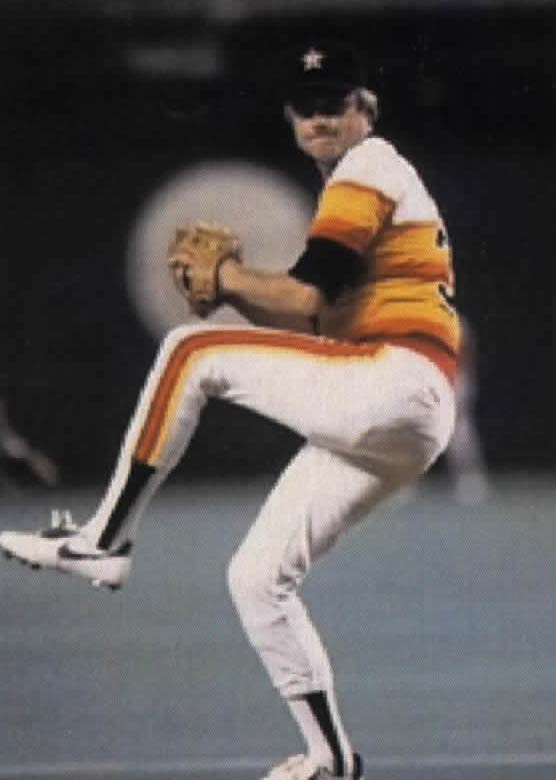
The late Joe Niekro was one of the great "Dukes of the Astrodome Diamond." With the wobbler stuff that Joe served up, there was no way most hitters were going to win the timing/surprise battle between batter and pitcher.

The True Duke of the Diamond

by Bill McCurdy


Pitchers may boil up –  a hot bitter brew,

With heat that both curves – and curves that will screw.

And they can’t be afraid – to hold back the knuckle,

On weavers and wobblers – that jitter and buckle.


And if they are smart – they will hammer the timing,

Of the batter’s next swing – it’s all so subliming.

Give him the grease ball – when he’s waiting for eighty

Then watch him show early – for the date-dressing lady.


And in those tough games – when your hand hits the dryness,

It may be the time – for some royal wryness.

Just moisten those fingers – before you deliver,

And watch the ball dance weird – from slip-slide to slivver.


Up the ladder – in and out,

With balls that move – on hitter’s doubt,

Is really all – your job’s about.


Just watch ’em come – and get ’em out,

By ground – or air – or the strike out route.

The batter has the club – but the pitcher has the clout.

The Hot Stove League

February 24, 2012

Lloyd Gregory and a Houston female fan were responsible for hanging the nickname of "Ducky" on early 30's Buff Joe Medwick.

Things seem to have hit a deeper lull than usual in the Houston media these days. With Richard Justice now suddenly gone from the only print rag in town, the Houston Chronicle now leans most heavily upon columnist Jerome Solomon and beat writer Zach Levine to fill in the blanks on the wipe’s coverage of baseball without soon filling the rather large hole that remains from the disappearance of Houston’s writing pyre.

Don’t get me wrong. I like both Solomon and Levine. I just don’t think that either fit the mold of the nitpicking, fiery, and irritating man who is now inexplicably gone from the Houston print media scene. Justice used do a public job review of Astros owner Drayton McLane about three times a week, at least. Solomon is also capable of the acerbic critique, but he’s more of a cobra to Justice’s wolverine. We’ll have to simply wait to see who receives his first poisonous bite.

Back in the 1920’s, on the date that the Houston Buffs opened Buff Stadium for the first time, April 11, 1928, Lloyd Gregory of the Houston Post-Dispatch, Kern Tips of the Houston Chronicle, and Andy Anderson of the Houston Press were all over the coverage of this major new step in the city’s growth into first class as a minor league baseball operation.

Gregory, and first Buff Stadium game broadcaster Bruce Layer of KPRC were even still around twenty years later when I was a kid and television was a baby in Houston. By this time, Gregory, Layer, and a younger hot baseball writer named Clark Nealon were all doing the new double take as print-electronic journalists, covering baseball in print and broadcast airways, principally on TV after 1949, when the medium first came to Houston.

This time of year, “The Hot Stove League” was a weekly half hour show on Channel 2, starting for a while in the early 1950s. Hosted by Lloyd Gregory, it was sort of the early version Channel 13’s Saturday, 6:30 PM show with Tim Melton. Gregory led Layer and Nealon and a rotating group of other local journalist on an annual discussion of the upcoming season chances of the Houston Buffs in the Texas League.

The show’s prop was a literal black hot stove that had been moved into the Channel Two broadcasting studios for the guys to sit around as they talked, whether they actually needed the heat or not. And this was still Houston back then. Most of the time, extra heat was not needed and, even if it were, it wasn’t coming from the hot stove. Had they fired up that thing, the trapped studio smoke would have driven everyone outside before their half hour air time was up.

Mostly, the guys did some great storytelling about times past. They had to. And they wanted to. The season prospect talk was always limited to qualifiers like “if the Cardinals send us so-and-so at the end of spring training.” – The Buffs were a Cardinals farm team back in the day. Their whole season ahead of them hinged largely upon which Cardinal major farm club city was going to get the best talent over the upcoming season. Would it be Houston, Texas? – Columbus, Ohio? – Or Rochester, New York?

It’s too bad we didn’t have videotape during the era of the TV show, “The Hot Stove League.” The now largely lost storytelling by some of Houston’s greatest early storytellers could have been preserved.

As Time Goes By

February 23, 2012

Play It Again, Brad. Play Real Baseball for Us - Before Time Goes By.

Of all the baseball towns in the whole wide major league baseball world, she had to walk into mine.

Her name is Desi Hitner. I call her “DH” for short. 

DH used to be my doll and, in the words of my old buddy, Damon Runyon, she was one fine sweet-looking broad at first glance – the kind of chick that any rising uptown guy like me would be very, very happy to have hanging on his arm for a swell night out on the town in old Houston at a somebody place like the Atomic or Cotton Clubs.

Trouble was – DH had a glitter that wouldn’t stay put. It fell out all over the place, especially on the shoulders, shirt collars, and lips of other guys. You just couldn’t trust the dame. With all the stupefying offensive power she offered with her good looks, she simply had no defense from the hungry eyes of all them big bad wolves who showed up – just to hit upon my gal Hitner.

I had no choice. I had to dump her back in 1973, just about the same time she was becoming real popular with all the dudes in all the American League cities. Over there, DH got so popular that they even named a new stupid hitting rule after her.

Can you believe it? The American League actually created a new position called the “designated hitter” back in 1973  for a player who would come up to hit as a regular part of the batting order for each team in place of one player on the field, usually the pitcher, who wouldn’t bat at all.

And get this: the designated hitter would never take the field at all. The guy wouldn’t ever need a glove because he would never take a fielding position to ever face a batted ball himself.

In theory, at first, and in actuality over time, it became entirely conceivable that a player could have an outstanding MLB career as a hitter without ever, or only rarely, taking the field in a more traditional spot to play defense.

Take Edgar Martinez, for example. Martinez has a Hall of Fame shot with his 18 seasons (1987-2004) as a DH with only some playing time at third and first. Heck! Edgar finished with a .314 batting average and 309 home runs at Seattle – and he might as well have done it all without ever catching so much as a weak pop fly because it was the DH position and his bat that gave him that HOF shot in the American League.

Now the DH is coming to Houston in 2013 with the American League and it’s bringing my old lady friend Desi Hitner, the other DH, with it. It seems that my old DH is now heavily invested up front as a widow to one of the magnates of a Japanese company that holds some shares in the Mariners, a club that will soon enough be a divisional rival of our Houston Astros in the American League West come 2013.

Ouch. I need to stay far away from that web-weaving lady hurt before I have a chance to prove that age and wisdom do not always ride together on the same rails.

In the meanwhile, I’m just going to enjoy some real pitcher-bats-and-manager-has-to-make-strategic-late-in-game-PH-decisions baseball while I still can.

Play it again, Astros Manager Brad Mills. Do it for all the Astros fans, and especially for those  who say they won’t be around after this coming season plays out as the last run through the National League.

You did it for Drayton McLane – and you can do it for us.

Play it again, Brad. – Play real baseball for us in 2012 – before time goes by.

Signed,

The Ghost of Humphrey Bogart

February 23, 2012


Another Pigs-Fly MLB Realignment Proposal

February 22, 2012

My latest proposal for realigning MLB has about as much chance of getting off the ground as this poor fellow, but it's now baseball spring - the time for impossible dreams.

Some of you continue to take the Astros’ move to the American League pretty hard, as did I, when I first heard the news. Then something happened. Maybe its my age, but I woke up one morning at peace with the fact that this was just another one of those changes in life that most of us cannot control – even when we want to. Petitions of opposition, op-ed articles, grumbling among ourselves, public and private threats by some to never see another game at Minute Maid Park once the Astros go into the American League in 2013 weren’t going to stop it and – heck – even new owner Jim Crane had no power to stop it. Commissioner Bud Selig made agreement to the shift a condition on the final approval of his purchase of the team.

Fair or not, that’s powerful hardball business. What was Crane to do? He could have backed out of the deal on the grounds that he had signed on for the purchase of the Astros at $680 million dollars – and not for a move to the American League, but what would that have accomplished? It would have forced an already disengaged owner (McLane) to hold onto a drifting wreck while the long search and approval process began again – and this time, for someone who knew going in that agreement to the league move was part of the deal.

No dice. Jim Crane did the only thing he could have done that made sense for himself and the immediate and long-term prospects of the Houston Astros and their fans. He negotiated the price down to something closer to $600 million and agreed to the AL move in 2013. Now I find myself in gear to just go with the flow of what happens next. I still don’t like the “DH” rule, but how much control do we fans over that one either. And I sure don’t plan to spend whatever remaining time I have on this earth staying away from the ballpark, even though I shall continue to respect all of your rights to do so, if that’s how strongly you feel about it.

Maybe getting Bud Selig to retire would be a move in the right direction, but I doubt that all of this trend toward despotic decision-making is coming entirely from him. It’s not the first time we’ve seen a commissioner who behaves as Selig – nor did we just start seeing MLB team owners who work behind the scenes and through the commissioner to accomplish their own wishes for dominance.

A sad fallout is – if you get too involved in the politics and pay scale and players rights issues, you begin to lose that romantic attraction to the game you’ve had since childhood – and long before you ever grew up and ran into this same kind of crap in your particular field of endeavor. I don’t care what anybody else says about this issue because they are entitled to think anything they want too, but, for me, you have to keep some of that childhood illusion about the game alive to enjoy following “your” team as a transcendent emotional experience. I derive no joy from the art of assessing how each player’s annual performance affects his contract prospects for next year. To me, that’s the business side of baseball. And even though it’s real, I don’t go to games to watch a business do business. I go to games to watch my team and another play baseball.

After that wind up, my pigs-fly pitch today is simply another never-gonna-happen design for realigning the major leagues. You see, I enjoy the amusement of dancing with ideas that will never happen until a certain oinking creature takes wing into the same air with the eagles. In this model, the Astros still move west in 2013, but they stay in the National League. Meanwhile, a few other clubs shift leagues to help us find the best geographic arrangement for two 15-team leagues with three equal divisions of 5 teams each.

Ladies and gentlemen, Here’s my proposal for a batter geographic alignment of all clubs in 2013.

MAJOR LEAGUE BASEBALL IN 2013: A Proposal Based Upon Geographic Common Sense:


National League Pacific

Los Angeles Angels

Oakland Athletics

San Diego Padres

San Francisco Giants

Seattle Mariners

National League West

Arizona Diamondbacks

Colorado Rockies

Houston Astros

Los Angeles Dodgers

Texas Rangers

National League Central

Chicago Cubs

Kansas City Royals

Milwaukee Brewers

Minnesota Twins *

St. Louis Cardinals


American League Atlantic

Baltimore Orioles

Boston Red Sox

New York Yankees

Philadelphia Phillies

Pittsburgh Pirates

American League East

Atlanta Braves

Miami Marlins

New York Mets

Tampa Bay Rays

Washington Nationals

American League Central

Cleveland Indians

Chicago White Sox

Cincinnati Reds *

Detroit Tigers

Toronto Blue Jays


 * 2/23/12: After due consideration, I’m taking the posted suggestion of Bob Hulsey, one now also seconded by a post from Greg Lucas, and am switching the Cincinnati Reds and Minnesota Twins from their original placements as a move that makes more time zone sense.  Everything else stays the same. The change also opens the door for inter-divisional rivalries between the Indians and Reds in the AL CENTRAL and the Brewers and Twins in the NL CENTRAL.

– Thanks guys!


Hank (Who Dat) Helf’s Special Legacy

February 20, 2012

Hank Helf once caught a ball dropped from 708 feet.

Thanks to Bill Hickman of SABR, Hank Helf was the answer to our recent “Who Dat Brown?” question here at the Pecan Park Eagle. Native Texan Helf was a short-time catcher for the 1946 St. Louis Browns after briefly breaking into MLB with the Cleveland Indians in 1938 and doing something extra-curricular that season that would survive as his only memorable legacy to the game.

On a Saturday morning, August 20, 1938, Hank Helf became only the first of two Indians players that day to catch a baseball dropped from the top of the Terminal Tower in downtown Cleveland. At 52 stories and 708 feet in height, the feat established a new record for distance height catches, breaking the old record first set by Gabby Street of the Washington Senators when he caught a ball dropped from the top of the Washington Monument, a height of 555′ 5″. Frank Pytlak also caught one after Helf that day in Cleveland, but no one since has broken the record. It is estimated that the ball was traveling at 138 mph at the moment of impact – or about forty mph faster than teammate Bob Feller’s fastball.

Click here for a really good account of how the catch was made and how it firs into the risky history of these ball-dropping stunts. The madness partially fed upon America’s early 20th century fascination with carnival tricks, and also the celebration of skyscrapers and airplane stunts. It’s not likely that any current high-priced players would be allowed to try for a new record.

That means that Hank Helf sits on the same shelf with Cy Young in the great Hall of Baseball History in one regard. One once caught a ball dropped from 708 feet. the other once won 511 games as a big league pitcher. Neither record will likely ever fall.

For a great account of Hank Helf’s big day, try this link to a 1985 Sports Illustrated column by Bruce Anderson:

http://sportsillustrated.cnn.com/vault/article/magazine/MAG1119227/index.htm

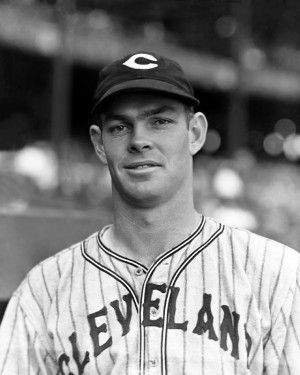
Hank Helf, 1946 St. Louis Browns

Helf’s MLB time was limited to 7 games with the 1938 and 1940 Indians and another 71 games with the 1946 Browns. It’s a good thing Hank caught the skyscraper ball because he only hit .184 with 6 HR as a major leaguer. Still, he got there – which is far more than most of us can say.

Thanks for dropping in today, Hank Helf. – And thank you again, Bill Hickman of SABR, for clearing up the mystery that “Hank Helf” is the name for our unidentified player in the “Who Dat Brown?” column I wrote last week.

Why Astros Win Pennant in Last NL Season

February 19, 2012

Spring Training Rapture

Why the Astros Will Win The Pennant in Their Last NL Season

by Bill McCurdy

Nothing’s quite as fresh – as the first dawn of spring,

That only comes around – with the pitcher-catcher thing.

The first morn we hear the sound of  – leather popping hard,

We know what’s coming next – and we’re racing to the yard.


Just to watch the team show up – old and new alike,

To kibbutz with each other – on whom we see and hike.

Just to watch the easy hits – and strike outs when they come,

Knowing that the books they build – will end baseball for some.


It never takes us long to reach – our op-eds on the season,

And how we’ll finish first or last – for every dad gum reason.

But then we spot the super-stud – trying some bunt-squeezin!’

Wonder where it goes from here – run in place while wheezin?’


Hope wins out against all odds – until the games all count.

And spring is made for wishing! – Let reality take late route!

It’ll find us soon enough, old friend – in August, it’s about,

Spreading fate and destiny – the way these things play out.


So grab your cup of kindness, kid – and hover into spring,

It’s time to see the best you can – of what the year may bring.

Don’t fall into the ugly rut – of picking doom and gloom,

Until we play the best for keeps – there’s lots of pennant room.

Astros All Stars Based on Best Astros Years

February 18, 2012

"No, I didn't bring you here on a Saturday to pick another Astros All Star Team, but GM Jeff Luhnow wants me to find out if any of you possibly have the talent to play for the Astros when we go into the American League in 2013."

Any all time team of any franchise suffers from one limiting flaw: None of them are real. We cannot actually bring these select players from different eras together to actually play a game at the their peak levels of performance. All we can do is fantasize how they might perform if we did have some magical power to carry out our magical wish for getting them together in the first place.

With input from fans, I think, the new Astros ownership has plans to put together an all time Astros team for the sake of history and also generating new interest in the club’s 2013 American League future. And that’s a good thing. For people to embrace the future, it is important that they also value the lessons and heroes of the past.

What I’ve done here this morning is no substitute for the process that we all need to engage together in selecting the greatest 25-man roster we can put together as the All Time Houston Astros All Stars. And to get there, we need to agree upon certain parameters for making our selections.

In brief, here the questions we shall need to first answer:

(1) Are we selecting players based exclusively on their service as Astros – or are we looking at their body of work in the major leagues with other clubs as well? Joe Morgan is an example of one guy who makes it if you give him credit for his Hall of Fame years with the Reds, but not for what he did in either of his early and late tours with the Astros.

(2) Are we looking at a player’s one great season with the Astros – or are we looking at a player’s performance over several years as an Astro?

(3) If we do choose to go for selections based on careers as an Astro, where do we draw the line on how many years a player needs to play for the Astros before we consider them for the all time team? If it’s one exceptional year only, then outfielder Richard Hidalgo makes it from his lights out year of 2000.

Here’s a 35-man roster I put together this morning based on an arguably, in some cases, “best season” with the Astros. WIth the pitching, I like the guys I’ve selected, but I could have been just as happy with Roger Clemens from 2004 and Nolan Ryan from either 1981 or 1982. I figured we could get by with some combo of active starters from the six I picked while one of them worked long relief in preparation for the four closer quality relievers that awaited whomever down the way and late in the game.

Need a starting lineup? I see all the possibilities in the world built into the available starters, relievers, and position players. Any manager who could not find a lineup to fit his mind from these choices isn’t trying very hard.

If only fielding such a lineup were a real possibility.

Here’s my Astros All Time Roster Based Upon Best Single Seasons as an Astro Player

Starting Pitchers

 (1) Larry Dierker (1969) (20-13, 2.33, 20 CG)

(2) Mike Hampton (22-4, 2.90, .846 W%, 3 CG)

(3) Joe Niekro (1979) (21-11, 3.00, 11 CG)

(4) Roy Oswalt (2005) (20-12, 2.94, 35 GS/0 GC)

(5) J.R. Richard (1979) (18-13, 2.71, 19 CG, 313 K)

(6) Mike Scott (1986) (18-10, 2.22, 7 CG, 306 K)

Relief Pitchers

(7) Brad Lidge (2005) (4-4, 2.29, 42 Sv, 103K/70.2 IP)

(8) Joe Sambito (1979) (8-7, 1.77 83K/91 IP)

(9) Dave Smith (1987) (2-3, 1.65, 24 Sv, 73K/60 IP)

(10) Billy Wagner (2003) (1-4, 1.78, 44 Sv, 105K/86 IP)

 Catchers

(11) Alan Ashby (1987) (.288, 14 HR)

(12) Brad Ausmus (1998) (.269, 6 HR)

Infielders

(13) Jeff Bagwell, 1B (1994) (.368, 39 HR, 116 RBI)

(14) Craig Biggio, 2B (1998) (.325, 20 HR, 51 2BH)

(15) Ken Caminiti, 3B (1994) (.283, 18 HR)

(16) Dickie Thon, SS (1983) (.286, 20 HR, 34 SB)

(17) Denny Walling 3B-1B-OF (1986) (.312, 13 HR)

(18) Roger Metzger, SS (1973) (.299, 1 HR, 14 3BH)

(19) Bill Spiers, 3B-SS-2B-1B (1997) (.320, 4 HR, 10 SB)

Outfielders

 (20) Lance Berkman (2006) (.315, 45 HR, 136 RBI, .621 SLG)

(21) Cesar Cedeno (1973) (.320, 25 HR, 56 SB, .537 SLG)

(22) Jose Cruz (1983) (.318, 189 H, 14 HR, 30 SB)

(23) Richard Hidalgo (2000) (.314, 44 HR, 122 RBI)

(24) Rusty Staub (1967) (.333, 44 2BH, 10 HR)

(25) Jimmy Wynn (1969) (.269, 33 HR, 23 SB, 148 BB)