Archive for 2012

How To Lose Your Job as Bakery Manager

July 27, 2012

First the bakery manager has a meeting with the bakery owner and company business manager. He learns that the big brass intends to save money now while they rebuild and retool the bakery for the market of tomorrow.

The bakery manager listens intently like the good soldier he is and swears to do his best for the business during the short-term period of austerity.

Change is underway. The brass fires the gourmet baker; then they can the baker’s apprentice, the happy, smiling clerks who always treat everyone as their very own special customers,  the cooks who keep the kitchen’s fares moving fresh and on time, the wait staff who treat those who lunch at the bakery with all the ease and class of a European epicurean joint, the people who procure the best ingredients for the bakery’s special products, and, finally, they get rid of the staff who keep the place clean and also those who keep the areas around the bakery safe from threat of vandals and muggers.

All of the qualified, experienced, but now fired personnel are replaced by fewer, inexperienced, multi-purpose employees.

Product integrity immediately goes south. People ordering hot fresh doughnuts are served day-old dippers and given photos of the fresh ones they will be receiving again “for the first time” in 3 to 5 years.

Customers stop coming to the bakery. They are hooked on those instant fixes they get for caffeine at Starbucks, They want instant gratification from their bakery too. They don’t want fresh doughnuts in five years. They want them in five minutes. Tops. And they had better be hot.

The brass realizes what they are dealing with, but they know they cannot give their customers what they crave without spending a whole lot of money they either want to keep or do not have.

Finally, under pressure from the loss of business in the short-term, the bakery brass fires the bakery manager, thanking him for his years of service, but announcing to the public that the company has decided that it’s time to go in another direction for the sake of the short and long-term interests of the bakery.

Autographed pictures of the new manager are passed out to all customers who return to the bakery on Saturday and Sunday mornings for the rest of the year.

The old bakery manager now goes away quietly and graciously, looking for fresh employment at a new bakery in a marketplace far away.

Rest in Peace, Big Ed Stevens

July 26, 2012

Ed Stevens played 1st base for 6 seasons with first the Brooklyn Dodgers and then the Pittsburgh Pirates (1945 to 1950).

“Big Ed” Stevens of the old Brooklyn Dodgers has passed away. Born January 22, 1925 in Galveston, Texas the 87-year-old former first baseman died on Sunday, July 22, 1925 at his home in Houston with his wife at his side. He is survived by his wife of 69 years, Margie Saxon Stevens, his daughter, Vicki Lynn Porter, his son-in-law, Jim Porter, six grandchildren, twelve great-grandchildren, and one great-great grandchild. Sadly, as allows, for any parent, two other daughters, Janice Kay and Barbara Sue preceded Ed in death.

Big Ed Stevens at a Houston SABR meeting in 2009.

Growing up in Galveston with both the passion and talent for baseball, the prototypical lefty hitting and throwing first baseman signed with the Brooklyn Dodgers in 1941. By 1945, his .309 batting average with 19 home runs for the Montreal Royals earned Stevens a late season promotion to Brooklyn where he earned his first start with the Dodgers on August 9, 1945.

Big Ed played every one of his over 2100 games at first base. At six feet, one inch and 190 pounds, he was the prototypical first baseman. On the performance level, he batted .252 with 19 homers in five seasons as a big leaguer and .275 with 275 homers in sixteen seasons as a minor league slugger from 1941 to 1961. His best minor league season came in 1954 at AAA Toronto, where Stevens batted .292 with 27 HR. Unfortunately for Ed, in those days of only sixteen major league clubs, what today might be considered enough reason for a shot at the bigs earned nothing for the then 30-year old Ed Stevens. Once the 1950 season ended for Stevens, so did his major league time, but those were different times. Ed continued to play a lot more AAA ball, which was a cut above back then what it has become today.

I’ve saved the biggest factor in the career of Big Ed Stevens until last. It could have been presented first under a title that read something  like “It Had to Happen to Somebody.”

You see, Ed Stevens didn’t just leave first base for the Dodgers when they pulled him out of the lineup and replaced him with a rookie prospect in 1947. Ed Stevens was the man who Jackie Robinson replaced when the latter took the field to break the color line that had thwarted blacks from playing mainstream professional baseball since the late 19th century.

Margie & Ed Stevens, 2009

Ed Stevens most certainly was not the obstacle to change. He was just the man walking up the road of his personal baseball career when the big ball of great social change came rolling down the highway of major league baseball and buried him in its tracks. Stevens had not preformed well enough to have held the first base job in Brooklyn for much longer, anyway, even if Jackie Robinson had not come along when he did. If Robinson had not taken the first base job with Brooklyn in 1947, Gil Hodges would have taken it in 1948, or 1949, for sure.

That being said, Big Ed Stevens still had a career to look back upon and feel good about. The man got to play the game so many of us love for twenty years professionally – and he played it darn well. Then add to that a long life of love with his soulmate and the adoration of his family and the unconditional caring of family that was also included. – Who could want for more?

Services for Ed Stevens are scheduled for 11:00 AM today, Thursday, July 26, 2012, at Forest Park Westheimer.

Rest in Peace, Big Ed Stevens!

The Wizard of Odds

July 25, 2012

The world of baseball and building a winning team goes way beyond “Moneyball” these days.

These days, the smart money is on the franchise administration that values multiple sources of information as the basis for deciding everything from a young player’s draftability to his probability of eventually succeeding at the big league level. So, rather than looking for a general manager who possesses all the powerful magic of a Branch Rickey, the trend today is to look for a GM who both understands and knows how to build a farm system based upon some high probability  that its measurable products are capable of successful high performance at the major league level.

In other words, baseball is on the path of trading their blind faith in a “Wizard of Oz” for a more focused statistically objectified hope in a GM like Jeff Luhnow of the Houston Astros – one who behaves more in tune with things vital to baseball success as the “Wizard of Odds.”

Now don’t get me wrong. I shall always believe that former Astros President and General Manger Tal Smith carried with him the most incredible compendium of baseball knowledge and fact I’ve ever been privileged to watch at work from afar. Tal just hit the wall with an owner who was ready to start everything over from scratch, even it meant throwing the bay out with the bath water, as I think it did with Tal.

I hate to say it, Tal, but I think that wall is out there waiting for most of us who live long enough. When we reach a certain age, some people and factions out there aren’t going to see us as the answer to any so-called “new” problem. The new Astros ownership wanted the younger person, the new kid on the block. That’s my slightly (but only slightly) unobjective take on this issue.

On the other hand, I do think Astros owner Jim Crane and Astros President George Postolos picked a real winner when they selected Jeff Luhnow as the new general manager. The bottom line on his value to the club is down the line with the team’s commitment to rebuilding the farm team and long-term success, but he impresses as baseball savvy and intellectually capable of the reach it will take over so many issues to get the Astros back to where they want to be.

My point is simply this: Both Tal Smith and Jeff Luhnow are bright men, and both are more on the Wizard of Odds side of the ledger. They just happened to come from different generations – and Luhnow is working with the idea of statistical measurement playing loud as a brass band as his mainsail wind while Smith used statistical data far more quietly.

But let’s get back to the fun part of this exercise with no ill will toward anyone.

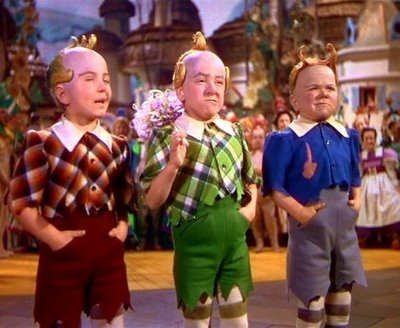
Here are a parody pair of pictures to show how the Astros Directors of Scouting and Information Systems Processing both receive reports from staff who are responsible for evaluating a prospect’s draftability prior to the draft – as well as a brief word from three prospects as they work their way up the line through the minor league chain:

“We’ve thoroughly examined him. – Objectively projected him. – We find him not just nearly good. – He’s really most sincerely good.” (And we can sign him too!)

“We represent … the future of the “Stros … the future of the ‘Stros … the future of the ‘Stros! – We represent … the future of the ‘Stroooooooos! … We hope to make it up to Crawford Street!”

Good Luck, cleaning house on the roster, Jeff. – We are ready to trust in the long term odds. It’s just hard to watch in the short term.

Of Dead and Living Heroes

July 24, 2012

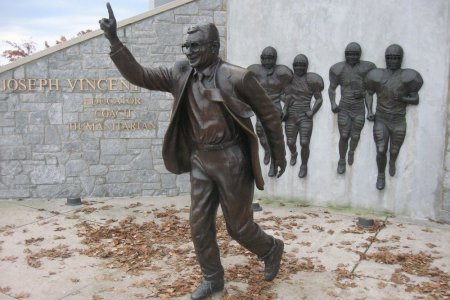
Halls of Fame are for the living. Bronze statues are for the dead.

Sometimes we get so caught up in the aura of a worshipped living human that we forget how fragile heroes are to the ongoing slaughter of anyone’s reputation from the fallout of outrageous human affair. There never should have been a statue of Jo Paterno while he still breathed the air of this often rancid planet. All he had to do was look the other way from a situation that should never have been ignored and his prematurely placed physical likeness was destined to come down. It had become a reminder of betrayal – and not a monument to trust.

And so it has. Come down. Taken down. As it should have been. Removed. Because it never should have been there in the first place.

Sadly for Joe Paterno, the penalty for not doing the right thing to the fullest degree and, perhaps, consciously or unconsciously, conspiring with others at Penn State to cover up the Jerry Sandusky violation of children until the problem “went away,” was this dismantling of the glory that previously had been wrapped around his name.

And now the innocent are thrown under the bus with the guilty. All the young people on football scholarship at Penn State that had nothing to do with the actions (or inactions) of their university, must choose between transferring elsewhere, playing for nothing, or not playing at all. Once again, life rises up to remind us that, even when the hammer of justice lands, life isn’t fair.

Speaking of HR Records…

July 22, 2012

Jim Thome Now Alone at #7 in Career HR!

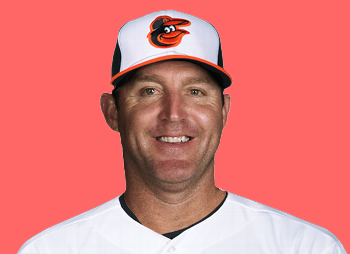
Speaking of home run records, one of the quietest names to ever climb so high on the career home run charts has just edged further into the upper stratosphere. On Friday, July 20, 2012, and now hitting DH for the Baltimore Orioles, Jim Thome signaled his latest return to the  site of his original club, the Cleveland Indians, and blasted Home Run # 610 of his 22-season MLB career. It came in the 6th, with nobody on and nobody out, off Tribe starter Derek Lowe as the Orange Birds went on to demolish the Indians by a 10-2 down and out count. The blast took the 41-year-old Thome out of his tie with Sammy Sosa and gave him sole possession of 7th place behind 6th place Ken Griffey and his 630 HR total.total. Alex Rodriguez occupies 5th place with 643 clouts and  is the only active player ahead of Thome, but at age 38 and in better player shape, it is likely that A Rod will remain in the lead over the Orioles slugger.

At his current pace, it’s likely that Thome would need a couple of more years, at least, to catch and pass Griffey, but that probably will not happen. That’s OK. When we look at the names surrounding Thome, it’s easy to see that he’s in the company of his peers on the production side of power-hitting greatness. You just hope too that the peer factor with career era contemporaries does not include the steroids taint that may keep them all away from their otherwise deserved places in the Hall of Fame.

Congratulations, Jim Thome! And keep it up! I just wish the stench of that other poison cloud would go away, but that’s kind of a hard and slippery hope when you look at the career HR list and have to see whose name sits at the top of the list.

TOP 20 MLB CAREER HOME RUN LEADERS (THROUGH 7/21/12):

Rank Player (yrs, age) Home Runs Bats HR Log
1. Barry Bonds (22) 762 L HR Log
2. Hank Aaron+ (23) 755 R HR Log
3. Babe Ruth+ (22) 714 L HR Log
4. Willie Mays+ (22) 660 R HR Log
5. Alex Rodriguez (19, 36) 643 R HR Log
6. Ken Griffey (22) 630 L HR Log
7. Jim Thome (22, 41) 610 L HR Log
8. Sammy Sosa (18) 609 R HR Log
9. Frank Robinson+ (21) 586 R HR Log
10. Mark McGwire (16) 583 R HR Log
11. Harmon Killebrew+ (22) 573 R HR Log
12. Rafael Palmeiro (20) 569 L HR Log
13. Reggie Jackson+ (21) 563 L HR Log
14. Manny Ramirez (19, 40) 555 R HR Log
15. Mike Schmidt+ (18) 548 R HR Log
16. Mickey Mantle+ (18) 536 B HR Log
17. Jimmie Foxx+ (20) 534 R HR Log
18. Willie McCovey+ (22) 521 L HR Log
Frank Thomas (19) 521 R HR Log
Ted Williams+ (19) 521 L HR Log

DATA AVAILABLE COURTESY OF BASEBALL REFERENCE.COM

Carlos Lee Grand Slams Way into History

July 21, 2012

Carlos Lee, Houston Astros, 2011

Last week former Houston Astro Carlos Lee, now of the Miami Marlins, blasted the 17th grand slam home run of his career, tying him for 7th place with Hall of Famers Jimmie Foxx and Ted Williams for 7th place on the all time list of baseball’s biggest runs producing hits by way of a home tun with the bases loaded.

It’s an interesting list, combining Hall of Famers with another group og guys who simply possessed the ability  to jack a few long balls on a fairly regular basis and another couple of fellows who might make it to the Hall someday if they aren’t stopped by the steroids taint on their days of big league action.

And above many of these now, including Babe Ruth and Hank Aaron, who are tied for 10th place with Dave Kingman at 16 each is the man who knows more about raising cattle than all the other names on this list combined: Carlos Lee.

Good luck, Carlos! Hope your season with the Marlins wraps up in exciting ways. It has to be more exciting than it would have been had you remained in Houston for the balance of the 2012 schedule.

Grand Slams
All Time Leaders’Top 1,000′
Name Grand Slams Rank
Lou Gehrig 23 1
Alex Rodriguez 23
Manny Ramirez 21 3
Eddie Murray 19 4
Willie McCovey 18 5
Robin Ventura 18
Jimmie Foxx 17 7
Carlos Lee 17
Ted Williams 17
Hank Aaron 16 10
Dave Kingman 16
Babe Ruth 16

How Do the Astros Spend the Rest of 2012?

July 18, 2012

“You know what, Ernie? Let,s play two, just for fun!- It’s beginning to look like we don’t have to worry too much anymore about finishing dead last in 2012.”

As the Cubs and everybody else is noting, it appears that the worst teams on paper in the National League has now stepped forward (or stepped backward far enough to have been clearly identified in 2012 and it “ain’t” the boys from the north side of Chicago – even if those of us in Houston wouldn’t trade rosters or general managers with the Cubs for anything.

The question is not – how do the Astros keep from finishing last. but how do they make the best use of the 72 unplayed games they have left on their schedules for 2012? And maybe they are already doing it, but here’s what I see:

(1) Treat the rest of 2012 as the longest pre-spring training period for 2013 that they could give themselves. Short of auditioning players on an everyday basis for the new DH position we shall acquire with the Astros move to the American League next season, every other young player in the system should be auditioning for one of the 25 top roster spots.

(2) Move those veterans via trade, or “amnesty,” by the July 31 trading deadline. Get what they can for Wandy, Brett, and the other older guys and, by all means, bring up Wallace to see if he’s making the transition as a credible big league hitter he seems on the brink of becoming.

(3.) Give Maxwell the rest of the year to show the best side of his hitting. This guy is athletic with the kind of raw power that could turn him into a key offensive figure if can also cut down on his strikeouts. Maybe Mighty Max is our DH prospect?

(4) Find the “five guys, burgers and fries” who are young enough and effective enough to fly as the club’s starting 2013 rotation now. Even if the club changes some of the ingredients in the actual 2013 ST period, at least, go to camp with a list in mind that doesn’t include any of the guys who don’t figure in the team’s future.

(5) Work on why Altuve’s bat is slipping, After batting over .300 most of the year, he’s now fallen to .294 and looking like a guy who may even sink to .275-.280 by season’s end.

(6) Be on the lookout for a young arm with closer potential.

(7) Be patient with Brad Mills. Aside from some problems I have with his management of pitchers, he seems to handle the young guys really well and that’s going to be important. If the Astros need to evaluate Mills further, as I’m almost sure they will, let them evaluate the general opinion that he is a good manager of young players. That needs to be true – and not merely an out-of-earshot impression.

(8) That’s ti. The general question is: What are the best specific ways the Astros could use the rest of their 2012 schedule? – Pleas check in with a comment below.

The Big Picture

July 16, 2012

It’s a good thing this season doesn’t matter,because, through all games of Sunday, April 15, 2012, the Astros own  the worst record in the big leagues:

POSITION TEAM WON LOST W PCT. GB
1 Yankees 54 34` .614
2 Rangers 54 35 .607 0.5
3 Nationals 51 35 .593 2.0
4 Reds 50 38 .568 4.0
5t Braves 49 39 .557 5.0
5t Pirates 49 39 .557 5.0
5t White Sox 49 39 .557 5.0
8t Angels 49 40 .551 5.5
8t Giants 49 40 .551 5.5
10 Dodgers 48 42 .533 7.0
11 Orioles 46 42 .523 8.0
12t Athletics 46 43 .517 8.5
12t Cardinals 46 43 .517 8.5
12t Mets 46 43 .517 8.5
12t Rays 46 43 .517 8.5
12t Tigers 46 43 .517 8,5
17 Indians 45 43 .511 9.0
18t Blue Jays 45 44 .506 9.5
18t Red Sox 45 44 .506 9.5
20t Brewers 42 46 .477 12.0
20t Diamondbacks 42 46 .477 12.0
20t Marlins 42 46 .477 12.0
23 Royals 38 49 .437 15.5
24 Phillies 39 51 .433 16.0
25 Mariners 37 53 .411 18.0
26t Cubs 36 52 .409 18.0
26t Twins 36 52 .409 18.0
28 Padres 36 54 .400 19.0
29 Rockies 34 54 .386 20.0
30 Astros 33 56 .371 21.5


A Pox Upon the Up and Running Baseball One-World

I pledge no allegiance – to the flag,

Of the united big league of baseball,

But to the sweet memory – of Stan the Man,

As they soon move the DH – into old NL land.

Pox to the republic – for which he now plans,

One baseball nation – under Bud,

With liberty and revenue for some.


By the Sea

July 15, 2012

By the Sea, Corpus Christi, 1941.

For as long as I can remember, I’ve carried this visual in my mind of sailboats on the water. These are usually accompanied by billowing white cotton candy clouds, fresh salty air breezes, and a whole of dreams about the good times ahead. The setting is usually Corpus Christi, Rockport, or Galveston, all places in Texas – and a big part of my fondest childhood memories from my earliest times.

The other day, while going through some ancient attic storage boxes, looking for something else, of course, I came across the featured photo of me in Corpus Christi. I remembered seeing it long ago, but I don’t actually recall it being taken. I guess I was about three years old at the time.

It suggests that all of my sailboat memories are not simply coming from my imagination. They were coming directly from my actual childhood experience. I also observe from the photo that I got a little more sun back in the day than I do now, but that’s an easy one to figure. Once you’ve lived long enough to have harvested the kind of skin cancer I picked up from a lifetime of unprotected exposure to the sun through baseball and all other outside pursuits, you get a little more careful about direct sun exposure.

This morning the sailboat scenario reminds me that so much of life is like the picture. Things float by us over the years. Some things are too big and fast for us to do much about; others are our opportunities to jump on to the winds of the world in search of our own destinations; and others are simply there to be either enjoyed for their beauty or avoided for their peril. (Or to teach us that some things we first see as beautiful may be perilous to our long-term consumption of same.)

For baseball fans, sometimes life floats by us in the form of a few seasons we simply have to endure. We are having such a season in Houston in 2012 and we are well on our way to watching the Astros bring home the worst record in baseball. If there’s any consolation, we’ll need to find hope in the word of new owner Jim Crane that he intends to make it better as soon as his people in charge can deliver the goods. Hope in that much for now is what we’ve got and, try to remember too: The Chicago Cubs and their fans have been forced for over a century to endure an endless armada of sailboats that inevitably have sunk on their failed maiden voyages to the rocky shores of hope’s sweet redemption.

Forgive me, folks, but I’m going back to sleep this early Sunday morning, “to sleep, per chance to dream … by the sea, by the sea, by the beautiful sea,”

Entitlement: The Fruit of the Plastic Trophy

July 13, 2012

“Thanks for Showing Up!”

Yesterday I received an interesting article from friend and SABR colleague Dr. Sam Quintero on “Student Entitlement” by Miami (O) University Sociology Professor Stephen Lippmann and others on the increasing face of entitlement in college students, how it disrupts the educational process, and the remedies that institutes of higher learning may take in trying to deal with the problem. Lippmann claims that students today have greater trouble recognizing the difference between mediocrity and excellence, but they still bring high expectations with them to college when it comes to grades. As the cost of college educations have soared, the student “demand” for high grades has increased on increasing levels toward their instructors. The “as if” explanation here seems to be that the American consumer mentality has encroached upon the sacred ground of universities. People want more for their money as a result of the higher school costs – and regardless of how well they ae doing as students.

Check it out for yourselves:

http://www.users.muohio.edu/lippmas/pubs/CT.pdf

Maybe I’m oversimplifying the issue, but when you’ve spent a good part of your professional adult life dealing with the language and style of academics  who complicate things for all kinds of reasons that have little to do with actually solving real problems, the temptation is irresistible.

Here’s what I think:

(1) Mediocrity vs. Excellence: Not all young people today have the problem noted – and many students who  do know the difference also recognize that instructors and universities also do not always stay on top of how well they are doing on that same scale of self-evaluation. Getting your degrees and tenure for teaching anything today is not enough to assure this generation of students  that you have come to class prepared to give them your best. You are going to need to show them too.

(2) The High Cost of a College Education Today Has Awakened the Consumer Mentality: Of course, it has, as, indeed, it should have done. Universities are going to have to get used to the fact that the soaring cost of a college education degree today has awakened consumers to the eternal final question of the marketplace: “What am I getting for my money?” Among those who seek legitimate answers too, there will also always will be some (to many) who feel “entitled” to better grades as a result of the greater cost.

(3) Reeducating the Plastic Trophy Generation: Lippmann suggests a number of steps that boil down to making the expectations for an “A” grade clearer – and the differences between excellence and mediocrity, mediocrity and failure – easier to see and grasp. I’m all for that step, if schools can do it without turning a university-level course into just another test-taking challenge that has little to do with a real education.

We do have a large entitlement contingent out there among our young people – and why should we be surprised? We have spent the last fifty years handing out plastic trophies to every kid who showed up for any of the activities that our adult minds could conceive for the sake of helping our kids build self-esteem.

Who among us has completely escaped that trap as parents?

The plastic trophy did not build self-esteem. If anything, the failed good intentions of the plastic trophy world are the ostensible reasons why academics like Lippmann are writing today  about the need for making the difference between excellence and mediocrity gradiently clear.

In protecting our kids from disappointment for two generations, we have protected too many of our children from the great life lessons that not everyone is excellent  and that failure itself is a great teacher on so many levels.

College students should not be graduated with honors merely for paying their tuition and showing up for class.