Archive for 2012

Goodbye Tal’s Hill

August 17, 2012

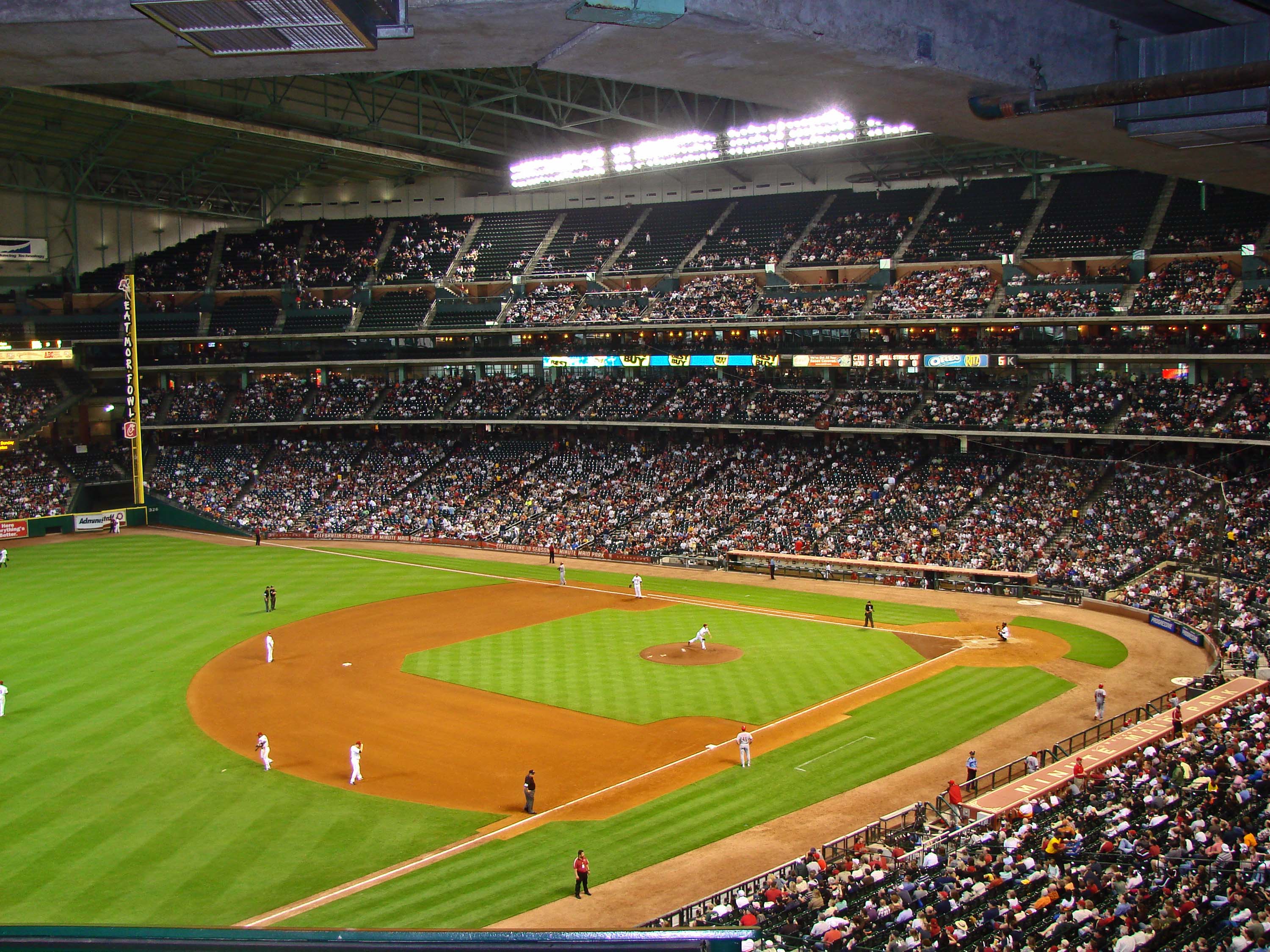
Tal’s Hill, Minute Maid Park, Houston.

The closing paragraph of today.s “Astros Report” on page C8 of the Friday, August 17, 2012 Houston Chronicle sports section pretty much says it all. Astros owner Jim Crane is reported saying that the club has been busy soliciting fans’ opinions on the future of Tal’s Hill in center field.

According to the article, Crane reports that fans have said “they don’t see a lot of sense in having that 436 (-foot fence) in center. We”re looking at a design that would incorporate some other things out there. We would use that space for a lot of different things.”

Other things like what, Mr. Crane? More seats that are too small to sit in without getting married to the two people on either side of you? Two or three more aisles that are so narrow that everyone has to stand when one person in the middle leaves to buy a hot dog? Another over-priced restaurant that everyone quickly learns to avoid? More advertising space, or perhaps, a center field corral of Chick Filet cattle? And, hey, bringing center field back to something like 390 feet and a better match for the short porches in left and right?

OK, I’ll back off this much to say: Please take anything i say on this subject with a huge grain of salt, Mr. Crane. It’s your ball club and money at risk here, not mine. I’m just one of those people who like liked the idea of Tal’s Hill in the first place and also the fact that it is one of the traditional and characteristic quirky  features of our unique venue in Houston. I also liked the guy it was named for. Tal Smith will always be the real father of Houston major league baseball and I will always believe that he and the Hill are both very much deserving of more respect than they have been getting from this transitional period.

Boston Fenway has the Green Monster. Chicago Wrigley has the ivy wall. Both are traditions – something that rarely, if ever, gets fed in Houston, but we had the makings of it in Tal’s Hill and that deep center field dimension. Those fans who haven’t been around baseball long enough to see it need to take another look at the rationale for that deep and spacious middle pasture. The “436” in center takes away almost all of the band box taunts we get from out-of-towners because of the Crawford Boxes – or the almost as short wall in right. The current distances make MMP like a modern-day Polo Grounds – one that just awaits only time and circumstance some day to bring us a play that will stand up in history as a memory rival to Willie’s famous “The Catch” in the World Series of 1954.

Just don’t tell us that Tal’s Hill will be coming out because most of the real Houston fans want it out. You either haven’t talked to enough fans, or you’ve been talking to fans who are ready to tell you what they think you already want to hear. It’s easy to see that happening.

If Tal’s Hill comes out, as it now appears you have already decided it will, just say it’s because that’s the way you want it. We can handle the truth. We just don’t have to like it.

As Tal’s Hill goes, a lot of us will grieve over the latest lost opportunity to preserve a little tradition in Houston.  Call off the demolition of Tal’s Hill and give tradition a chance in Houston. If you can’t do that much, then give us the space to grieve its loss and, while you’re at it, if you could give us more comfortable seating room and aisle space in the nosebleed section now, you might even win the eventual battle with HD home TV viewing comfort that is now totally lost to the currently overwhelming attractions of the latter option.
The Arms of Ruth’s Summer

August 16, 2012

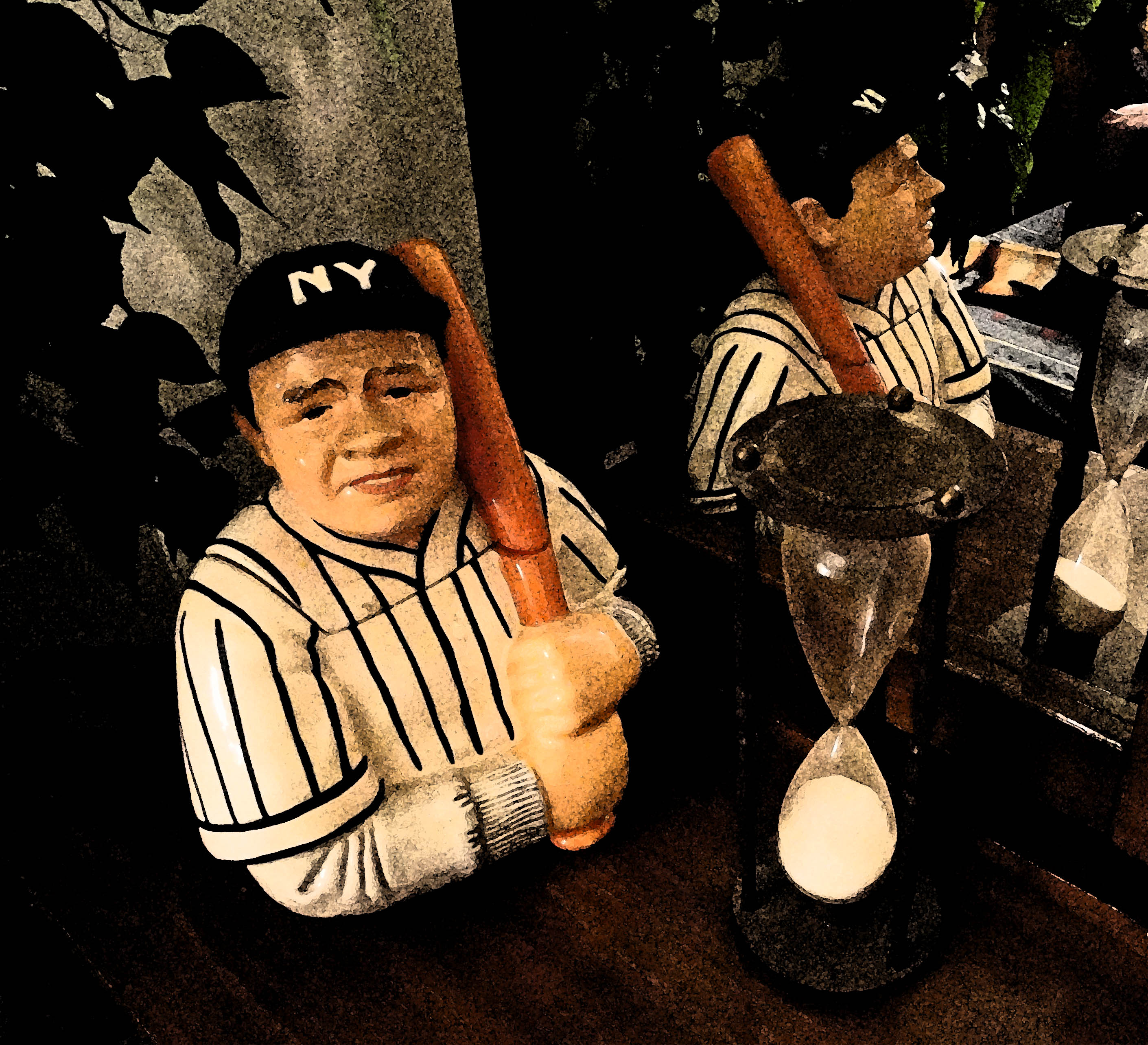
As Time Goes By, It’s Still the Babe

Sooner or later, I always go back in baseball history to the guy who even now seems like Superman to this ancient fan. Babe Ruth was the man all right, even his portrayal by WIllim Bendix in the 1948 biopic “The Babe Ruth Story” did nothing but enhance the heroic imagery I had embraced of him from my earliest readings of his exploits on the field. These too were only amplified by the stories my dad told me of him. I was eleven years old in 1948, the year the Babe died, and I remember just being devastated by the news. I knew that he had been sick for a while, but I didn’t really expect him to die. Not the Babe. But he did.

In the Babe’s honor, The Arms of Ruth’s Summer are the 33 fine pitchers who served up the Bambino’s 60 record homers in 1927. When it happened, many people, including Ruth, harbored thoughts that the mark might stand forever. It didn’t, but it stood fro 34 years, long enough to be carried into every battlefield in World War II in the minds of every young American soldier who also grew up loving baseball and the Babe.

Thanks to the graphic help of Baseball Almanac, here is the path that Babe Ruth took through the Boys of His Summer back in 1927:

The Original 60 Home Runsby Babe Ruth
Home Run # Date Pitcher
1 04-15-1927

Howard Ehmke

2 04-23-1927

Rube Walberg

3 04-24-1927

Sloppy Thurston

4 04-29-1927

Slim Harriss

5 05-01-1927

Jack Quinn

6 05-01-1927

Rube Walberg

7 05-10-1927

Milt Gaston

8 05-11-1927

Ernie Nevers

9 05-17-1927

Rip Collins

10 05-22-1927

Benn Karr

11 05-23-1927

Sloppy Thurston

12 05-28-1927

Sloppy Thurston

13 05-29-1927

Danny MacFayden

14 05-30-1927

Rube Walberg

15 05-31-1927

Jack Quinn

16 05-31-1927

Howard Ehmke

17 06-05-1927

Earl Whitehill

18 06-07-1927

Tommy Thomas

19 06-11-1927

Garland Buckeye

20 06-11-1927

Garland Buckeye

21 06-12-1927

George Uhle

22 06-16-1927

Tom Zachary

23 06-22-1927

Hal Wiltse

24 06-22-1927

Hal Wiltse

25 06-30-1927

Slim Harriss

26 07-03-1927

Hod Lisenbee

27 07-08-1927

Don Hankins

28 07-09-1927

Ken Holloway

29 07-09-1927

Ken Holloway

30 07-12-1927

Joe Shaute

31 07-24-1927

Tommy Thomas

32 07-26-1927

Milt Gaston

33 07-27-1927

Milt Gaston

34 07-28-1927

Lefty Stewart

35 08-05-1927

George Smith

36 08-10-1927

Tom Zachary

37 08-16-1927

Tommy Thomas

38 08-17-1927

Sarge Connally

39 08-20-1927

Jake Miller

40 08-22-1927

Joe Shaute

41 08-27-1927

Ernie Nevers

42 08-28-1927

Ernie Wingard

43 08-31-1927

Tony Welzer

44 09-02-1927

Rube Walberg

45 09-06-1927

Tony Welzer

46 09-06-1927

Tony Welzer

47 09-06-1927

Jack Russell

48 09-07-1927

Danny MacFayden

49 09-07-1927

Slim Harriss

50 09-11-1927

Milt Gaston

51 09-13-1927

Willis Hudlin

52 09-13-1927

Joe Shaute

53 09-16-1927

Ted Blankenship

54 09-18-1927

Ted Lyons

55 09-21-1927

Sam Gibson

56 09-22-1927

Ken Holloway

57 09-27-1927

Lefty Grove

58 09-29-1927

Hod Lisenbee

59 09-29-1927

Paul Hopkins

60 09-30-1927

Tom Zachary

Home Run # Date Pitcher
The Original 60 : by Babe Ruth

Babe’s 60th home run came in the next to last game of the 1927 season before only 6,000 home fans at the cavernous Yankee Stadium. The Yankees had much earlier wrapped up the pennant and, even though Ruth had cruncher homers 58 and 59 only a day earlier, there apparently was little interest among fans in the idea of coming to watch him try for 60.

Ruth finally nailed number 60 with one out and one on in the bottom of the 8th off lefty Tom Zachary of the Washington Senators. It was a mob he hit down the right field line, but things were briefly tense as everyone waited to see if the fall would remain fair. It cleared by no more than six inches, giving Ruth the record and the Yankees a 4-2 win. The date was September 30, 1927.

Tom Zachary gave up 3 of Ruth’s record homers, as did six others. Milt Gaston of the St. Louis Browns and Rube Walberg of the Philadelphia Athletics were the other pitchers to surrender 4 homers each to Ruth;s 1927 record bag. – 7 other pitchers gave up 3 homers each to Ruth that years and the Babe also tagged 17 pitchers for one long ball each.

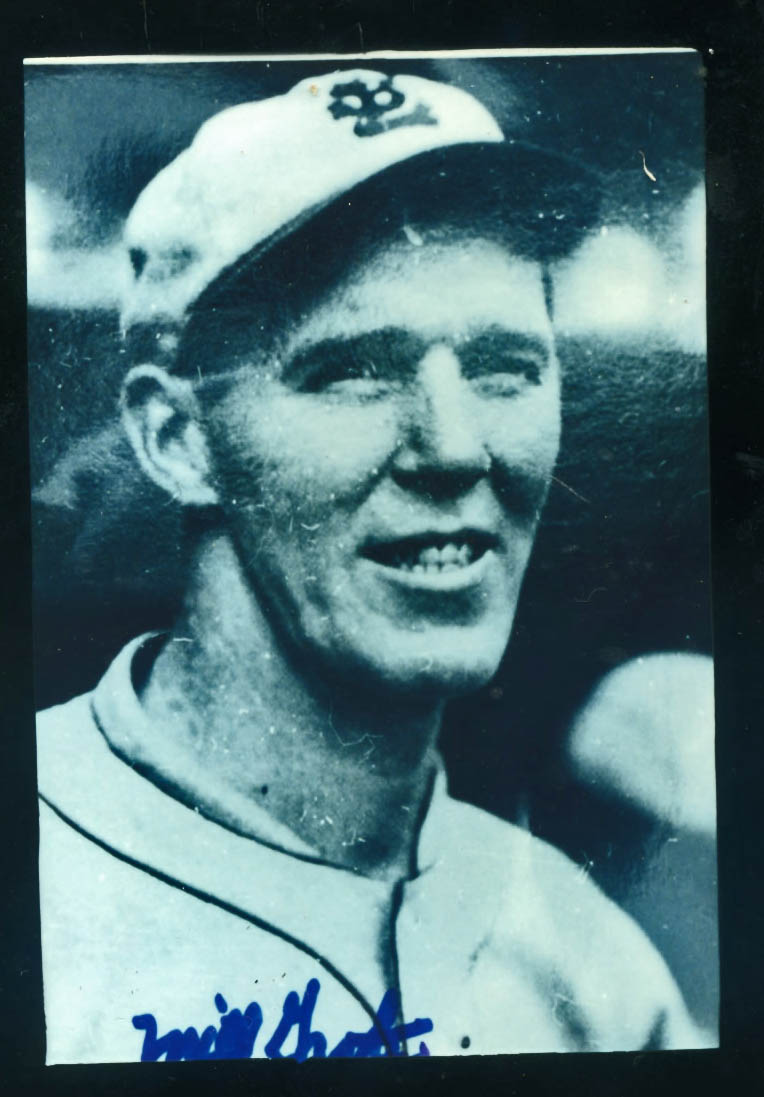
Milt Gaston
1924-1934
5 AL Clubs

 A Milt Gaston Sidebar; When Gaston turned 100 years old on January 27, 1996, I sent him a baseball and asked for his autograph. By this time, Gaston was living in a nursing home in Maine and I wasn’t sure if he could even still write, but I could resist trying. I also included a few bucks to cover his mailing and also help supply him with some loose change. I also told him in a note that I wished I could go back in time and watch him pitch one more game.

I never heard a things. Weeks passed and I had pretty well written off the contact effort to Milt’s age and inability to deal with a request from a faraway fan in Texas,

The one day i picked up the paper and learned that Milt Gaston had died in his Barnstable, Massachusetts nursing home setting on April 26, 1996, The new saddened me greatly. I figured that was it for sure for the last hope of ever hearing from the old pitcher, Then, two or three days later, about April 29-30, 1996, I went to the mailbox and found the shock of my life,

It was a small box wrapped in brown paper, addressed to me from Milt Gaston, and all in this large all over the place blue-ink handwriting, I side the box, Milt had signed the ball I sent him and also had enclosed an autographed signed picture of himself, The ball is now in secure storage. The player photo shown here s a copy of the one Milt sent to me. The original is in storage with the ball.

I’ve compared my Gaston signature with others I’ve seen and am convinced he did it, but I have no idea if had help wrapping the ball for the mail. That handwriting appeared to be his, as well, but I must have either absent-mindedly thrown out the wrapping or stored it separately somewhere I’ve forgotten – which is most probably what happened.

That’s OK. What matters to me is the fact that I know it happened exactly as I’m telling you here. And I have been in contact with, and own a signed ball from one of Babe Ruth’s Arms of Summer. It’s in a bank box because of its sentimental value to me. It’s no big money deal. It’s just that I know that one of Babe’s boys sent that ball and picture to me as one of his last acts on earth. And that makes me a very lucky guy.

Latest Word On Finger’s Museum Plan

August 15, 2012

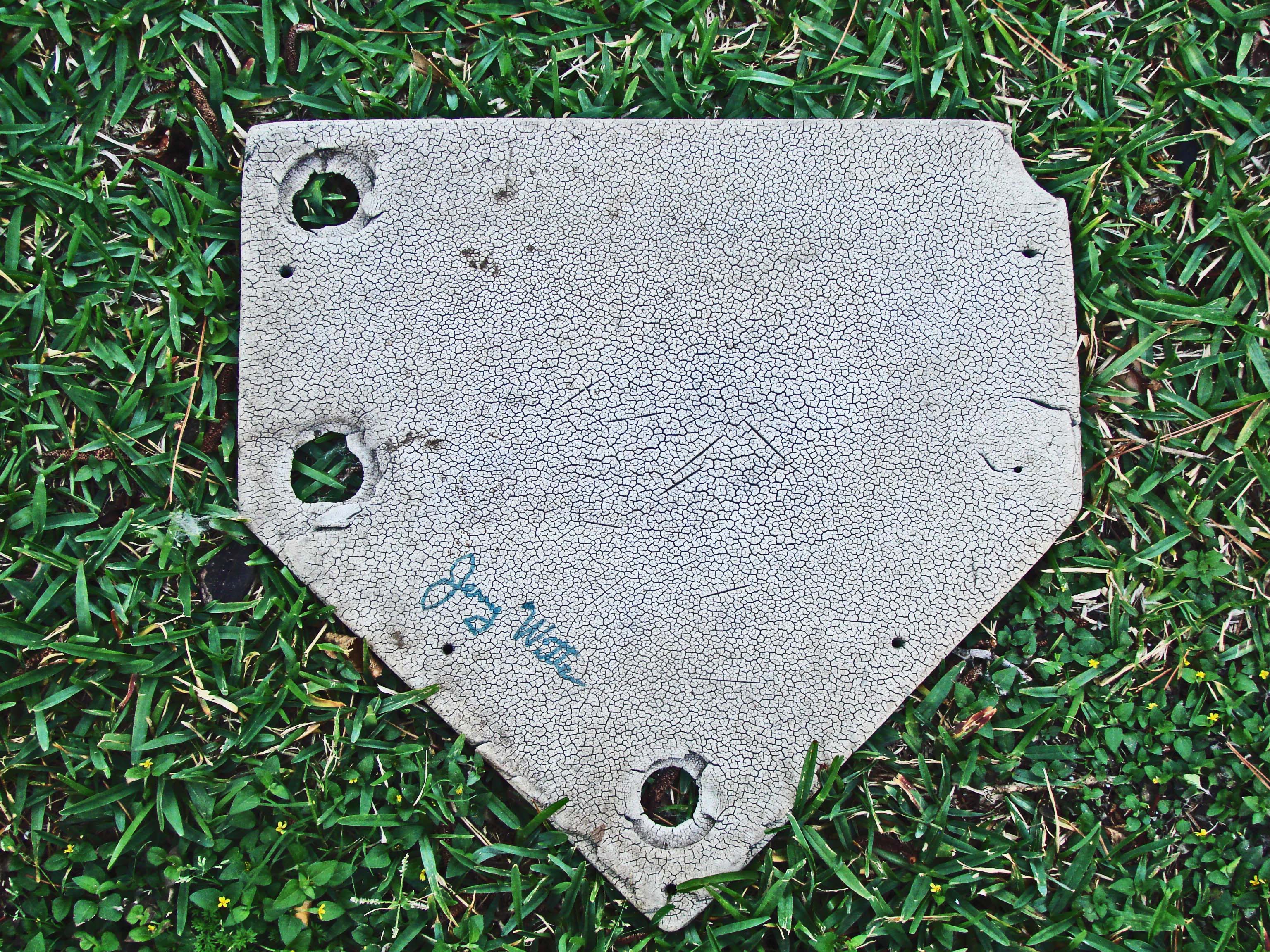
Getting the Buff Stadium home plate out of its original ballpark site within the Finger’s museum is proving to be a technological challenge. It apparently doesn’t want to go.

An e-mail from Houston Sports Museum curator Tom Kennedy and an article by David Barron on page 2 C of this morning’s Aug. 15th Houston Chronicle sports section have essentially confirmed some better, if still incomplete news about the future of the Finger family’s Houston Sports Museum.

Owner Rodney Finger is committed to resurrecting the museum in some form through either or both of his remaining stores at Willowbrook or Clute, Texas, but clear decisions on the exact form this will take are down the line of priorities in the company’s business of closing the current Gulf Freeway location and dealing with a number of other transition issues tied into the store and current museum site closing.

The really good news here is simply a confirmation that the Finger family caring about our local baseball and other sports history continues as a multi-generational commitment in some form. At some point, the museum will open again as either a one or two store site and probably reach more interested fans than it ever saw in recent years at the Gulf Freeway location.

It’s too bad that we are losing our direct connection to the site of Buffalo Stadium, the home of Houston professional baseball from 1928 to 1961, but we are grateful that the Finger family cared enough to keep it alive as long as they did.

Whatever the Finger’s interests decides still falls short of the goal of building either a Houston Baseball Museum, or a Greater Houston History Museum that incorporates baseball into its list of deserving and influential local institutions that have helped make Houston who it became over time. Isn’t either of those historical preservation goals germane to the question: What could we do with some or all of that presently rotting away space at the soul-vacated Astrodome?

For the umpteen-hundredth time, just thought I’d ask.


The Stuff That Dreams Are Made Of

August 14, 2012

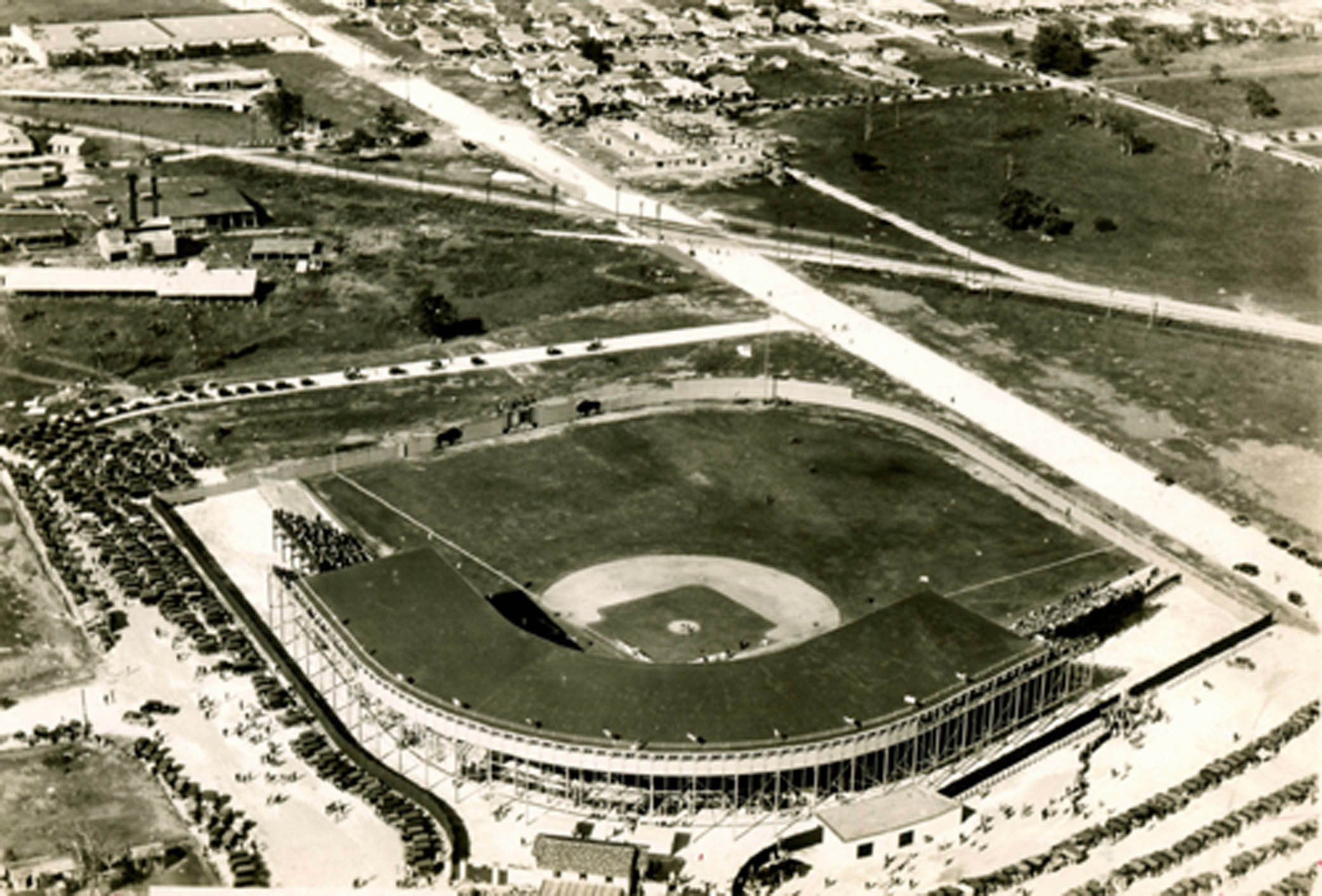
Buff/Busch Stadium
Home of Houston Baseball
1928-1961

“The stuff that dreams are made of.” It’s more than a closing line from “The Maltese Falcon,” a famous Humphrey Bogart film.

Baseball collectibles feed the dreams that many of entertain, but the biggest dreams hang fastest to the rarest. When it comes to rare or one-of-a-kind baseball collectibles, I have always been most interested in the Grade A “Whatever Happened” items (baseballs, bats, and gloves) that decided big games or carved out large and small chunks in baseball history. Who among us hasn’t?  The Houston Astros even employ a very capable guy who serves as the Director of Authentication on any item used in an Astros game. His name is Mike Acosta and he is one of the best in the game.

Thanks to Mike Acosta, for example, large portions of the club’s history were found and preserved during the team’s 2000 move from the Astrodome to the new downtown ballpark that they first called Enron Field that would have otherwise been lost to the rats and other pillages of weather and time deep in the bowels of the world’s former “eighth wonder.”  Thanks to Mike, the remaining space suits that the original 1965 ground crew wore were salvaged. Had it not been for Acosta’s eye and sensitivity to their historical value, these likely would have been left to the ruins.

Mike Acosta‘s full name is bold-faced three times to emphasize that he is most decidedly the real-deal when it comes to the tough job of ongoing authentication of game materials (including uniforms) that were used in the act of the Astros playing the game at Minute Maid Park.

Thanks, Mike Acosta (make that 4 times in bold type), the baseball fans of Houston want to thank you personally for saving what they could not rescue for themselves. We shall also remain hopeful that the Houston Astros shall continue to grow in their realization that they exist as a cornerstone institution in our city. As such, their responsibility to Houston goes way beyond the creation of an external “walk of fame” memorial trek along the ballpark sidewalks in dedication to the great players of Houston’s major league history. The Astros also should be playing a major role in the creation of a Houston Baseball Museum that recognizes all of the rich history of the game in this city since 1861 (at its documentable least) that formed the rich soil of interest that made their big league business today even possible.

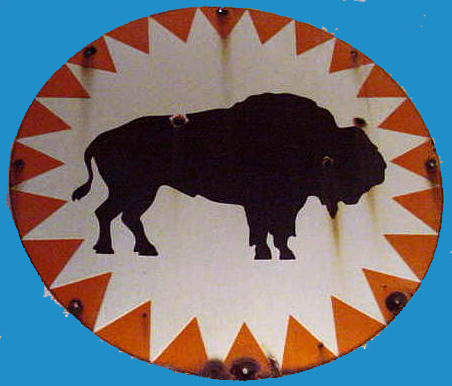
One of these buffalo medallions from Buff Stadium awaits its permanent Houston home.

The big piece that is missing in today’s “put up with failure in the short-term of today for the sake of brighter moments tomorrow” is that yesterday is being largely forgotten. How many Houston fans know that this city first embraced its original “Houston Base Ball Club” in 1861, about 25 years prior to the time that we first even heard the word “football”? How many fans know that Houston won its first professional league baseball championship in 1889? How many fans remember that Hall of Fame greats like Tris Speaker, Dizzy Dean, Joe Medwick, Billy Williams, and Ron Santo all broke into the game as minor league players for the Houston Buffs? How many Houstonians know that a fellow named Bob Boyd was the first black player to break the color line with the old Houston Buffs back in May 1954?

It sure would be nice if that special Houston baseball history could be displayed and recognized at Minute Maid Park. Baseball didn’t begin with the Astros (1965) or Colt .45s (1962). It began much earlier, deep back there in the 19th century. In fact, Houston’s establishment in 1836 by a couple of brothers from New York and a slew of other new early settlers from the Northeast gives credence to the idea that our city and the sport of baseball are roughly the same age.

Home Plate
Last Season as Buff Stadium
1952 (also in secure storage and awaiting its museum home)

People need to know our history. Marvel at it. And remember it. It’s the stuff that tomorrow’s dreams are made of. And without our ongoing appreciation for the past, the future eventually distorts and disappears.

Baseball is too important to too many people to let that happen.

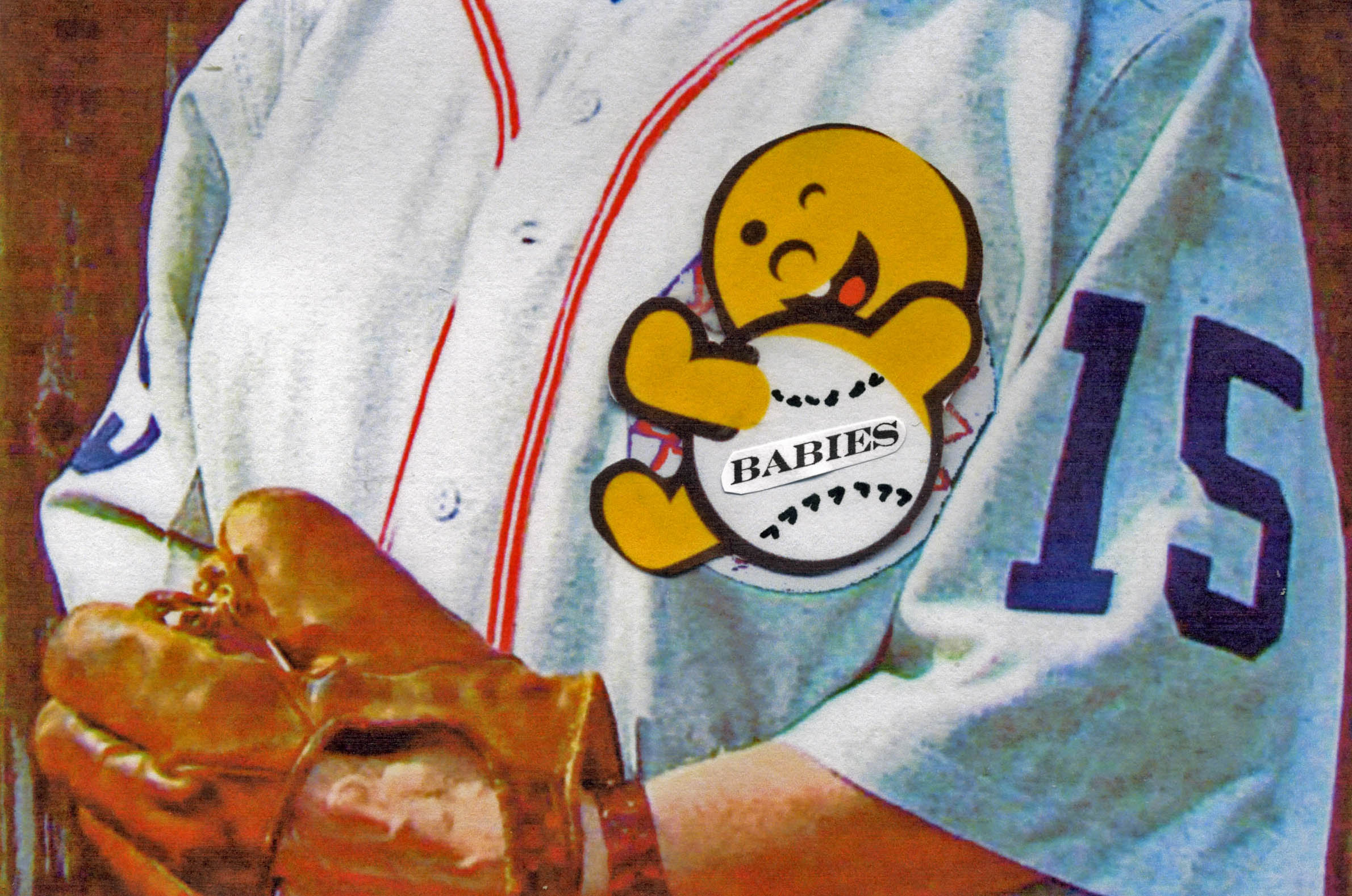
The 2012 Houston Astros-Babies

August 13, 2012

The new Houston Astros-Babies may soon shift to a new logo with a uniform patch that boosts a sleeve-patch date of their expected maturity as a contending AL club.

It’s not everyday we get to watch a pretty good AA-AAA level club knock off a good MLB team two games in a row with walk-off hits, but it happened for the Astros on Friday and Saturday nights at Minute Maid Park against the Milwaukee Brewers. And it came fairly close by set up to happening again Sunday afternoon, but all the magic star dust had settled to earth by that time and outcomes had returned to what has steadfastly become the arrival of our normal expectation: The Astros lost to the Brewers, 5-3.

Look! This is a very young team! What should we expect? Jeff Luhnow could have kept Wandy and Carlos and Myers, et al and maybe added a few other cheaper vets who could help the club under the 100-loss mark and closer to .500, but so what? Would we still feel good about this team’s future with that load of older high-dollar fellows that couldn’t make the magic of 2005 repeat over the six seasons that followed?

I don’t think so.

Like most of you, however, and in spite of the fact that I get the reasons why we now have a short-term loser on our hands, it’s hard to watch, unless you’re focused on minute improvements in how fielders handle the cut off plays, etc. That’s a gruel unless they pay you as a coach or scout – and I’m assuming that your fan spot on that one is the same as mine: We don’t get paid for anything. The payoff for multiple year patience with losing and a lot of ineptness along the way is the expected delivery of a competitive club by rebuilding the farm system and making intelligent free agency additions to the mix along the way. The real pressure is on Astros owner Jim Crane, President George Postolos, and, especially, General Manager Jeff Luhnow. Their futures, jobs, careers, and professional reputations are on the line.

As fans, we have it easy by comparison.We are free to either go, or not go watch through the impatient years. We can even take a “wake me when it’s over approach” or just B****-Blog our way through the long lonely night, but that doesn’t sound like any fun to me. The present Astros really young. Jeff Luhnow is just doing what he said he was going to do – and that’s refreshing in itself today. It’s getting harder to find people who actually do what they promised to do. Let’s give Jeff, the Astros, and the time-table a chance to prove itself.

The current Astros roster is capable of coming together at game time in Manager Brad Mills mind as a nine-man starting lineup that averages 23.6 years of age, if you go with Jordan Lyles, P (21); Jason Castro, C (25); Brett Wallace, 1B (25); Jose Altuve, 2B (22); Matt Dominguez, 3B (22); Marwin Gonzalez, SS (23); Fernando Martinez, LF (23); Jordan Schafer, C (25); and Brandon Barnes, RF (25).

If these, or guys like them, are good enough, it will be OK for the Astros to average close to 27 years of age in the year they finally win the World Series.

Wake us when we get there, Jeff. Some of us are behind you all the way – way behind you.

No Game Today Due To Rain

August 11, 2012

Saturday, August 7, 1954, somewhere in the beautiful heartland of the good old USA,

Two kid teams are getting ready to play the biggest game of their hot, hot summer,

It’s the Smithers Drug Store Bulldogs (9-0-0) versus the Adams Cleaners Cowboys (8-0-1) for the whole shooting match at ten o’clock sharp, over at Gruenson Field, next to the feedlot.

Don’t mind the one tie up there. Ties happen in kid baseball when nobody can afford to light up the field when late afternoon tie games drift into extra innings at the mercy of a disappearing sun.

The half game difference has just sharpened the point of this spear: It’s winner take all, marbles and ball.

Then, along about 6:24 AM, CDT, on game day, winds kick up hard, clanging open shutters with a measured banging sound.

Some awaken to the sudden chill of cooler air blowing in across the prairie and into their bedrooms.

Farmer Fletch peers out to see the flicker of lightning in the far away hills. – His umpiring fee is in jeopardy.

“Oh no,” cries little Johnny Blezel, the scheduled starting pitcher for the Bulldogs, as he also grabs a look,

“Why does it have to rain today – on the biggest Saturday of the year – and in my life? – Why, God, why?

What kind of God would do something like this to me on the most important day of all time? It makes no sense!”

Who knows, Johnny? Maybe God needed the sunshine someplace else! And maybe, just maybe , the local farmers, including your own father, needed the rain even more than you needed a pitching start, even if today seemed like it was meant to be the most important day of your life.

By eight o’clock in the morning, the field was floating away under an inland ocean of water as the rain fell  with the weight of nature’s late payment to a scorching-dry earth.

The rain gave no indication that it would ever stop. And it didn’t stop for long – not until mid-September.

It turned out to be the wettest August on record, floating the whole town past baseball and into the start of a fresh corrnhusking new football season. They never did play the championship game, but that’s OK.

Things like that happen in baseball – and in life. – Don’t know about Johnny Blezel. We lost track of him.

Where the Buffalo Roam

August 10, 2012

Circa 1906 (Possibly), when both the Houston Buffalos and Austin Senators were members of the short-lived South Texas League.

Oh give me a home – where the buffalo roam – and I’ll show you a dirty house!”

– ancient burlesque show/vaudeville one-liner joke.

From the earliest days of their existence as a professional baseball club, the team from Houston has been known by a variety of nicknames, everything from the Babies in 1888 to the Mud Cats the following first local pennant season and then, too, the Magnolias, Wanderers, Lambs, Red Stockings, and God Knows what else. Some of these monikers too almost seemed pinned by the fans and the media in the moment of some associative fling and not really intended as an official identity or marketing ploy. It was just a very different fan culture and business mindset that enveloped baseball back in the formative years, almost as though every lesson on what not to do in establishing teams in organized play was set up to be learned the hard way.

Hmmm! Come to think about it, maybe things haven’t changed so much after all.

We will have a lot more in print on the history of Houston team names when the local SABR chapter’s new book in progress, “Houston Baseball, The Early Years, 1861-1961” (working title) comes out in 2014, but today’s focus is only on the most famous minor league club identity we ever had in the form of the wondrous old Houston Buffalos or Buffs.

We don’t know who came up with the idea originally, but the “Buffs” apparently came into being as the local team nickname, albeit temporarily, for the first time in 1896, when the ball club still played at the park on Travis at McGowen. It isn’t hard to quickly deduce that the inspiration for the name came easily from that less than majestic body of winding brown water that skirts its way in oozing flow along the northern edge of downtown. Buffalo Bayou was even the way to the site that the city’s founding fathers, the Allen Brothers, took when they first came here and settled upon a home for “Houston” in 1836.

In going back further down the bison trail, I’ve never read of anyone who has come up with evidence that any large herd of buffo ever roamed the Houston area or drank sustainingly from those curative downtown waters, but it is logical to assume that one or two of them may have passed through this area back in the days prior to the coming of European ethnic settlers.

From 1906 through 1981, except for the three seasons that baseball shut down in Houston for World War II (1843-45), Houston played professional ball as the Buffalos/Buffs at both old West End Park (1905-27) and Buff/Busch Stadium (1928-1961) and the bison identity was all over everything that anything to do with our city’s past accomplishments and future hopes.

That all changed when Judge Roy Hofheinz and the Houston Sports Association won out over Marty Marion and his group from the Buffs for the NL expansion club that had been awarded to Houston in 1960 to start play in 1962. Hofheinz and Company still had to compensate Marion & Group for taking over their minor league territory, but this settlement supposedly came about only after acrimonious and costly expense to the Judge’s bankroll.

One Theory (Deserving of Further Exploration): As one big result of the Hofheinz-Marion battle, and it might have happened, anyway, Hofheinz turned completely away from all things “Buff” and worked to rename the new major league team with a fresh image. They were the Colt .45s from 1962-64 and then the Astros from 1965 to eternity.

Buff Stadium was torn down after sustaining serious damage from Hurricane Carla late in its last 1961 minor league season and the surviving buffalo medallions that once lined its roof top were sold at ground zero for four dollars a piece.

One of the eighty 36″ in diameter metal buffalo medallions from 1928 that has survived the demolition of Buff/Busch Stadium in 1962.

Finger Furniture has preserved a foothold on Buff history at the former stadium site for fifty years, but now even that is changing. The Buffs will still be remembered for as long as there are still those among us who remember them – and through the book that we are now engaged in writing as the true story of Houston’s long history with the great sport of baseball.

For that HOF Bling, the Story’s the Thing

August 9, 2012

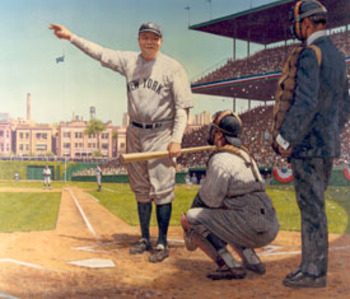
“What do you mean that moment was just another myth in my narrative, didn’t you see the artist painting my picture as I pointed to center field?”

When it comes to get into the Baseball Hall of Fame, it ought to be some kind of objective standard of true greatness that unlocks the door for candidates, but it isn’t. It’s more about popularity and myth, sort of as it is in our election of politicians to the presidency and other high offices of national service. Remember the words of family patriarch Joseph Kennedy when he told his sons, and I’m paraphrasing here, “Remember, Boys, it’s not who you are when it comes to running for office; its who people think you are.”

Apparently, the Hall of Fame works that way too. One of my favorite contributors here is a fellow from SABR that I’ve never met, a fellow named Cliff Blau. I like Cliff because he points out my errors and helps me keep on focus in my subject matter, two things that every writer of non-fiction, no matter how humble his or her podium is, needs to do: (1) Get it right, and (2) Stay on topic.

In response to my column about Ross Youngs getting into the Hall with career stats that were good, but really no better than contemporary fellow Texan Curt Walker, Curt Blau left the following public comment:

Youngs isn’t in the Hall because he played for McGraw. He’s in because he played with Bill Terry and Frankie Frisch, who dominated the Veteran’s Committee, and got all their buddies in.

Youngs, incidentally, was not a center fielder, but a right fielder. I can see why you’d be confused, because John McGraw was quoted as saying Youngs was the best outfielder he ever saw. Of course, if he had meant that, he’d have played Youngs in CF, which requires more skill than RF.

Anyway, the HOF doesn’t honor greatness. That’s been clear since 1937. It honors favorable narratives.

The wonderful Connie Mack biographer Norman Macht essentially wrote me the same thing about the influence of Bill Terry by e-mail a day or so earlier. And Norman Macht is one of the most dedicated seekers of truth over lore that I’ve ever actually met in the world of baseball research. I also have a strong hunch that Macht would agree with Blau’s last statement that “the HOF doesn’t honor greatness. That’s been clear since 1937. It honors favorable narratives.” I simply cannot speak with certainty for Norman Macht. He alone is allowed that privilege.

How strong is “narrative” – or story – in the pursuit of the White House or the Baseball Hall of Fame? It appears to be pretty darn powerful, the invisible, but tangible forced behind that old saying, “It’s not what you know (or do) that really matters; it’s who you know.” – The narrative includes the connected people who speak up for candidates on everything from getting good jobs to the attainment of high honors. And these leaps are often great enough to bypass others who are more qualified or more worthy of the honor that goes with the appointment.

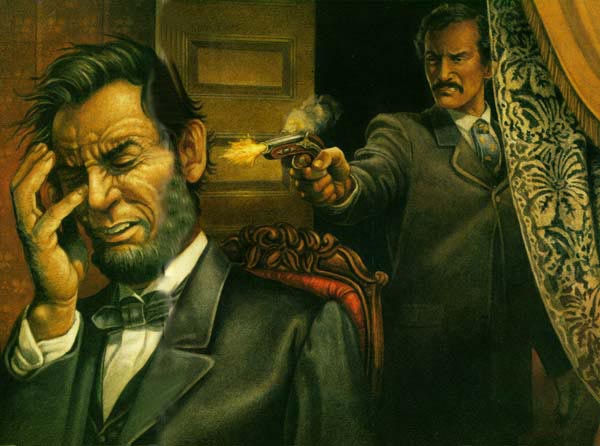
Of all nights, I can’t believe I left my axe at home.”

Legends are interesting, but, do we really need any more movies made 150 years after the fact about rail-spliting, axe-wielding presidents who also lived secret lives as vampire hunters and once served as the subject of a political baseball cartoon in which he wielded a bat rather than an axe? If we do, let’s elect Abraham Lincoln to the Baseball Hall of Fame without further delay!

Right, Cliff? – Right, Norman?

Administrative Note: Today marks my 1,000th column since the time The Pecan Park Eagle moved here to WordPress in 2009. Before that, we had about 600 posts under the same title at ChronCom from 2007 to 2009. Thanks to all of you who care enough to read what we have to offer on baseball, Houston history, and other musings.

Goodbye Again, Goodbye

August 8, 2012

Gulf Freeway nearing downtown Houston in the early 1950s. Old Buff Stadium was still there back then. You will see it in the lower right side foreground. And soon, the Finger Furniture Sports Museum that has preserved the old ballpark’s memory for the past half century will be gone too. Forever. (Photo by TxDot)

It’s way too early to know for sure what happens next to the property that has housed the Finger Furniture store on the Gulf Freeway at Cullen for the past fifty years, but it’s a safe bet that it will never again be reincarnated in our lifetime as the grand old baseball park it used be from 1928 to 1952, when it was known as Buffalo/Buff Stadium and then Busch Stadium from 1953 to 1961.

Gone now is the Houston Sports Museum, the small site within Finger’s that housed Houston’s only public collection and display of its early baseball history, thanks to the late Sammy Finger. The tradition was kept alive by Sammy’s son, the late Bobby Finger, and grandson Rodney Finger, but that stalwart effort is now gone with the wind as an “on-site” historical preservation at the location of home plate within the store of home plate in the original ballpark. Even if the Finger family now moves to reestablish the museum elsewhere in the community, and many us most sincerely hope they do, there will never again be a likely way to attach the museum to its root site in history. And that probability slips away with the absence of future operators on the site that have any emotional connection to what was once the heart of professional baseball in the City of Houston.

We are still waiting to hear from the Finger family on their exact plans for the artifact collection and we have no definitive date for the store’s actual closing, We are reasonably sure that any closing will first be preceded by one of those “going out of business” sales that may almost make us think the place isn’t closing at all, but you never know. This second time for Finger’s may be a closer that comes quick.

If you’ve never been to the museum at the 4500 Gulf Freeway location of Finger’s on the north (into town) side of the Gulf Freeway, you may want to check it out while that’s still possible. It would probably be a good idea to call Finger’s before you go down there, just to confirm that the museum site is still open for free public viewing.

When we get further specific word from the company on their future museum plans, if any, you can count us letting you know what’s up here at The Pecan Park Eagle.

Have a great Wednesday, everybody.

Dedication to the Long Term: The Art of the Sale

August 7, 2012

“Don’t stop, thinking about tomorrow 
Don’t stop, it’ll soon be here 
It’ll be, better than before 
Yesterday’s gone, yesterday’s gone”

… Fleetwood Mac

On the psychological plane, it’s still the same old story, a flight for love and glory, a case of do or die. And, at the rate they are going, in the end, will the fans still love the rebuilding Astros, as time goes by? I guess it all ends up in how things pan out for golden success in the long run, In the meanwhile, the question takes a sharp practical term: If it takes another two to three years to know that the club is moving back into status as a contender, and that may be harder to figure now as the team moves into the American League with its different rules about playing the game of baseball, how many empty seat seasons is the new ownership willing to tolerate on the way back to winning?

Maybe I’m wrong, but I don’t see big crowds flocking to watch the kind of baseball they are now playing at Minute Maid Park for the next two or three years. Neither do I see them bumping the turnstiles much to watch a club that’s been fixed enough to hope for a .500 ball finish. It’s just how we are in this town. Once you get past the hard-core of a few fans who might even show up to watch people like me play, the bulk of Houston fans want to watch winners who are capable of winning now.. That’s what the buzz with the Houston Texans is all about. Fans really are buying into the idea that Houston already has a football team that is capable of reaching the Super Bowl at the end of this season.

In baseball, we can’t stop thinking about tomorrow, but most fans won’t translate that into serious ticket-buting until they are convinced that the team’s tomorrow is at hand this year.

How do the Astros sell their “hang in there” message now and still sell tickets for the balance of 2012 and 2013? Those are the big operational questions. Or should be.

After losing in extras last night in the Nationals@Astros series opener, Houston is now 36-74, .727 – en route to a probable 53-109 finish by season’s end – or a full three games worse than 2011. How does the club get fans to buy season tickets for 2013 on the back of this load?

It won’t be easy – and it will take some great salesmanship. Winning is the only real permanent salesman, but, given the club’s new dedication to long-term success,  the marketing pitch is going to have to make an appeal for whatever remains among fans as an appreciation for delayed gratification in this era of microwave lunches and digital social networks.

Good Luck, Astros!