Archive for 2012

Happy Trails to You, Roger Clemens!

September 8, 2012

“Why, Roger, Why?”
Maybe the answer is this simple:
“Why not?”

Why did Roger Clemens do the two games and eight total innings of pitching for the Sugar Land Skeeters over the past two weeks?

(1) Most people have a bucket list – and pitching again somewhere was high on Roger’s agenda.

(2) It gave Roger a chance to test where his body was on the possibility of a much bigger comeback.

(3) It was playing an official game with son Koby as his catcher that was the real bucket list moment.

(4) Roger likes positive attention – and pitching sure beats going to court.

(5) Roger may want to play long enough again in the big leagues to pass Greg Maddux and a few others on the career wins list.

(6) By playing in a single big league game and then retiring again, Roger could postpone his eligibility for the Hall of Fame vote and separate himself from the steroids-afflicted crowd that otherwise is going to become eligible with him for a possible blanket shunning by voters in 2013 and, maybe, come up alone from that crowd in quieter times in 2018

(7) It’s the end of the trail for one of the greatest pitchers of all time. Pitching for the Sugar Land Skeeters a couple of times was Roger Clemens’ version of Roy Rogers’ old “Happy Trails to You” goodbye song to all his fans. Roger just said his goodbyes with a few well-pitched, but slightly slower baseballs.

http://www.youtube.com/watch?v=hgw_yprN_-w

“HAPPY TRAILS TO YOU, ROGER CLEMENS! YOU WERE, AND STILL ARE,  A GOOD ‘UN!”

In Memory of Thomas Rodriguez

September 7, 2012

Thomas Rodriguez
December 2011

In December 2011, we ran a two-part story on the remarkable way in which a family of young scrap gold dealers in Houston came upon the missing and stolen player’s ring of the late Houston Buff Jerry Witte by first finding me through my writings and then the family so that the lost object could be returned to them at  the purchase cost expended by the Rodriguez Brothers Westheimer Avenue Gold Exchange Store.

Here are the story lines and links to those two columns from December 2012:

A 2011 Baseball Christmas Story

https://thepecanparkeagle.wordpress.com/2011/12/24/a-2011-baseball-christmas-story/

 Lost MLBPA Ring: Rest of Story

 https://thepecanparkeagle.wordpress.com/2011/12/29/lost-mlbpa-ring-rest-of-story/

On 8/17/2012, I received a grief-stricken phone call from Robert Rodriguez that the youngest brother Tomas had suddenly passed away from a previously unknown heart condition. He was just shaken to the bone with sadness, a compelling tribute to the closeness of the Rodriquez family. (There is a photo in the second column that contains an image of Tommy from last year. I recall him as a polite and caring young man. Of course, all the Rodriguez kin are that way. They are just such good people.

I am writing  again today about the death to call your attention to a note I received as a column comment yesterday from family member Dee Rodriguez about a benefit they are planning for the family of the late Tomas Rodriquez. If any of you know the family, or would just like to participate because of all the good things these people do, here’s what Dee had to say and how you may reach her for further information:

Dee Rodriguez …

“Please be advised that a Fundraiser for Thomas Rodriguez will be held in Southern California at Kishi Restaurant in Upland CA on October 6-7. Our family has attended this restaurant for 20 years and this is there ACT OF KINDNESS. The owners are Japanese and suffered many losses of there people in the recent Tsunami.

“We have had a tremendous amount of request for reservations for the event. Press will be present and we hope to pass on the ACT OF KINDNESS! We have the Muslim, Christian as well as the Catholic Community supporting the fundraiser. We could have never imagined such support!!! We have Attorneys, Private Investigators, Hispanic Artist, Local Radio, Television supporting THE ACT of KINDNESS. Please come join us for a Japanese Lunch or Dinner on the 6th or 7th of October. We have had donations from as far away as Mexico City Mx and Egypt. Amazing!!!!!!

“Reservations can be made at 702-431-0354. See you there.

“You are so loved Thomas, people you have never met will be passing along your ACT OF KINDNESS. I still believe…………………… in Kindness. You were ment for this movement!”

May God bless the soul of the late Thomas Rodriguez and the entire Robert Rodriguez extended family.

The Day Few Showed Up for Babe’s Big Moment

September 6, 2012

Only 8,000 saw Babe Ruth hit No. 60.

Have you ever seen the box score from the game in which Babe Ruth hit Home Run  # 60 back in 1927?  Take a good look at the attendance too. This was the next to last game of the season, played at home in the cavernous 70,000 plus seats jewel park of baseball, Yankee Stadium, in only its fifth year of existence. The Yankees had long sewed up the pennant, but here was Ruth, going into the last two games of the year with a chance to break his own record of 59 from 1921, and only 8,000 fans show up to see the action?

Baseball Almanac Box ScoresWashington Senators 2, New York Yankees 4
Game played on Friday, September 30, 1927 at Yankee Stadium I
Washington Senators ab   r   h rbi
Rice rf 3 0 1 0
Harris 2b 3 0 0 0
Ganzel cf 4 0 1 0
Goslin lf 4 1 1 0
Judge 1b 4 0 0 0
Ruel c 2 1 1 1
Bluege 3b 3 0 1 1
Gillis ss 4 0 0 0
Zachary p 2 0 0 0
  Johnson ph 1 0 0 0
Totals 30 2 5 2
New York Yankees ab   r   h rbi
Combs cf 4 0 0 0
Koenig ss 4 1 1 0
Ruth rf 3 3 3 2
Gehrig 1b 4 0 2 0
Meusel lf 3 0 1 2
Lazzeri 2b 3 0 0 0
Dugan 3b 3 0 1 0
Bengough c 3 0 1 0
Pipgras p 2 0 0 0
  Pennock p 1 0 0 0
Totals 30 4 9 4
Washington 0 0 0 2 0 0 0 0 0 2 5 0
New York 0 0 0 1 0 1 0 2 x 4 9 1
  Washington Senators IP H R ER BB SO
Zachary  L(8-13) 8.0 9 4 4 1 1
Totals
8.0
9
4
4
1
1
  New York Yankees IP H R ER BB SO
Pipgras 6.0 4 2 2 5 0
  Pennock  W(19-8) 3.0 1 0 0 1 0
Totals
9.0
5
2
2
6
0

E–Gehrig (15).  DP–Washington 2. Harris-Bluege-Judge, Gillis-Harris-Judge.  2B–Washington Rice (33).  3B–New York Koenig (10).  HR–New York Ruth (60,8th inning off Zachary 1 on 1 out).  Team LOB–7.  SH–Meusel (21).  Team–4.  SB–Rice (19); Ruel (9); Bluege (15).  U–Bill Dinneen, Tommy Connolly, Brick Owens.  T–1:38.  A–8,000.

Game played on Friday, September 30, 1927 at Yankee Stadium I
Baseball Almanac Box Score | Printer Friendly Box Scores

And it was a Friday afternoon in New York City during the still halcyon fun and finance times of the Roaring Twenties – and only a relative handful of people showed up to see if the Bambino could do again what no other player through his era seemed capable of doing – break a slugging record set far ahead of the pack by a fellow named George Herman “Babe” Ruth.

And he did it. Off a forever famous fellow because he threw it, Tom Zachary. With one on and one out in the bottom of the 8th. And he did it with no controverted argument that any substance he may have put in his body had helped, but with plenty of awe that he may have accomplished what he did in spite of what he had taken into his physical being just hours and minute prior to his record accomplishment.

8,000 spectators that day represents about 11% of the 72,000 capacity that was Yankee Stadium of those times. Can you imagine how easy it must have been for everyone who was there to hear the echoing crack of Babe’s 60th HR contact moment that day? Did they cheer in scattered unison moment to Ruth’s swing and classic tip-toe trot around the bases? Were the skies still grey from the threat of rain? And was the threat of rain itself one of the big reasons so few people showed up to see one of the big moments in MLB history?

Almost as many will show up tomorrow night to watch the Roger and Koby Clemens father and son team serve as the Friday game battery for the Sugar Land Skeeters at Constellation Field. All that says to me is that the so-called “viral” moments of our current digital era just weren’t happening back in the day of 1927 when we barely had radio.

Perhaps, some of you New York Yankee experts have some better answers to the questions we have posed about the low attendance at “The Stadium” on September 30, 1927. All I know is that I would love to have a time machine and a ticket to that game. And I think I’d want to sit in the right field bleachers too. Well, maybe I’d prefer a seat behind the Yankee dugout. – It would always be possible to amble over to the right field bleachers to watch the rest of the game from the 8th inning til the last out. (more…)

Baseball: Some Old Familiar Sounds

September 5, 2012

The sounds of baseball are still there. Let’s make sure we never lose our wooden bats.

Baseball was always a flat-out all five sensory experience for many of us sandlot kids back in the day. The from the blurring, streaming  sight of baseballs flying through the air at differential heights, speeds, and trajectories, from the smell of horsehide game balls and soft-calf leather gloves and the oil we put on them, and the always homey aroma of freshly cut grass and incoming rain, it was all part of the summer everyday on the field.

The taste of salty sweat rolling down our faces and the quenching swigs of tap water, straight from the nozzle on the side of Mrs. McGee’s house, were both parts of the day, as was the sugary taste bud delight of Double Bubble Gum. “DB” always started as a gooey sweet chaw, ending up hours later as a forgotten, tasteless wad that ached the jaw after a hard-chewing, but mostly unconscious morning as our game chaw of choice.

And touch loomed heavy in the day. From the great solid vibes that came from putting the sweet spot of the bat on the long ball to the cold morning sting that came too often from early spring foul ball contact, we felt them all, including crashes with the turf and each other and all the stubbed toes and sore arms that we just had to play through quietly as thought they never happened.

Today I think I miss the close-up sound the most. As an outfielder, the sound of a wooden bat making contact with a horsehide baseball gave off all kinds of very different sonar messages to the body on where to run and, sometimes, when to turn around in the pursuit of long fly balls.We didn’t have to deal with that metal bat one-note pinging sound that says the same unhelpful thing about all stricken baseballs” “The ball has been hit. You figure out whether to run in or go deep. You’re on your own.”

Not in the wooden bat day, we weren’t. We were never on our own in those first few determining steps. All we had to do was listen and then let our body reflexes kick in to action as our first sensory guides to our fielder-reactive motion.

My favorite sound imagery from the field is of the sacrifice bunt of a runner to second that results in a disputed call at first:

MUMBLE! HOT DOGS! RUMBLE! BEER! As batter Jones squares to bunt, 3rd baseman Brown inches forward  to come in for a play. The visual plays out to the sounds of detached crowd murmurs and vendor calls.

PLUNK! Jones drops down a perfect bunt to the left side. It’s only going a distance of some 12-15 feet, but it has found the line dirt with a heavy counter-clockwise spin. It may be a hit, but will it stay fair?

CLUMP! CLUMP! CLUMP! 3rd baseman Brown races in, eyeing the ball, assessing the spin, and deciding a must-play-the-ball situation is in order.

CLIP! CLIP! CLIP! Righty-hitting runner Jones beats a blazing beat path, well on is way to first.

WHISH! Seizing the moment, Fielder Brown grabs the spinning fair bunt from the dirt with his bare right hand and gives it a mighty sideways heave to first that is more remindful of ancient hurler Kent Tekulve on one his best Pirate days than any Brooks Robinson play we’ve every seen or heard.

.SPLAT! Fielder Brown’s mad throw lands in 1st baseman Smith’s mitt.

SQUISH! One nanosecond later, runner Jones’s foot crosses the bag.

SAFE! Umpire Don Denkinger makes his call!

DAMN! All hell breaks loose from the team in the field.

And we probably could have seen the whole thing unfolding with our eyes closed with the help of a few sounds in play as our guides.

2013 Astros Needs: A Shot In the Dark Guess

September 4, 2012

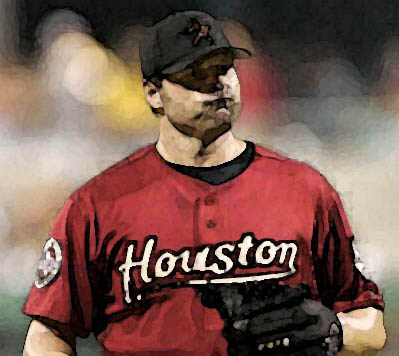
Hope this isn’t the scene on Opening Day 2013.

Ready or not, here they come. The 2012 Houston Astros ae about to limp away with a second straight 100 game plus losing season on their way to the American League West in 2013 with even slimmer hope of near term success against even tougher in-house competition. Next year the “Stros will be the fifth club in a five team division that already contains three clubs with winning records and one that’s light years closer than our local heroes.

Assuming we stay on path with the generally agreed upon course of returning to contention in three to five seasons, 2013 represents Year II of that effort and one with little prospect of a surprise early return to the playoffs ahead of schedule.

Bill Gilbert’s August 2012 report noted yesterday that the Astros are last in team batting and pitching, a finding that should surprise no one since our roster most probably uses more AA and AAA level players than most at the major league level. Some of thee players may progress on their own sufficiently to improve on the team’s record next season, but I seriously doubt they will, given the fact the team is headed for a tougher division in a new league and one with slightly different lineup rules and requirements due to the DH condition.

So, what do the Astros do? (1) Find a DH and just grin and bear it until home-bred stars blossom in the ascribed 3-5 season timeline; or (2) try to acquire some low-middle level help that is affordable through minor trades or free agency to  help fill in the gaps while we wait for this big performance egg on the farm to properly hatch. – Since it’s kind of hard to ask people to come see another 81-game home stand in 2013 with little more hope than we saw at MMP in July or August of this year, I’m betting on the latter option as our best bet and short-term hope.

My shot in the dark guess is that we will fall short of getting anywhere close to significantly improving the club on the cheap, we might have to settle for this much: 3 starting pitchers with ERA’s around 4.00 for five innings of work; 3 relievers who are capable of holding a lead over two innings of wrk: and 1 closer who cn get the job done in the few opportunities he is presented.

Next I’d like to see a shortstop who can complement Altuve  as a fielder and hitter.  Is anyone in the farm pipeline even close to being ready? If not, leave Tyler Greene at SS and find a 3rd baseman who does a better job of filling the bill.

Of course, a DH – one who hits for power would be great.

And 2 more hitters who can hit for power and better averages.

Is this too much to ask for by 2013? – Probably.

“When Will It End?”

September 3, 2012

By Bill Gilbert, Guest Columnist, Pecan Park Eagle, Labor Day, 2012.

Bill Gilbert, SABR
Roger Hornsby Chapter

I was in Houston to take in the Astros last two games in August against the division leading Giants and Reds.  The games were a good representation of the way things have gone this season and illustrated where the Astros stand in comparison with the league’s elite teams, losing the games 6-2 and 9-4 to finish the month with a 6 game losing streak.  The Giants game drew a crowd of 12,835 (paid), the lowest ever at Minute Maid Park which prompted a comment from a TV sportscaster that it was so quiet, you could hear babies cry.

The Astros completed the month of August with a record of 5-22, a modest but disappointing improvement over the July record of 3-24.  The two-month record of 8-46 has to be one of the worst in baseball’s long history.

Normally when a team struggles, the chief fault can usually be placed on either the pitching or hitting.  In the Astros case, it is both.  The Astros rank near the bottom of the major leagues in virtually every important pitching and hitting category.  Among National League teams, only the Rockies (5.22) have a higher ERA than the Astros (4.76).  On the offensive side, the Astros rank last in the National League in runs per game (3.49), batting average (.238) and on base percentage + slugging average (OPS) (.675).  August was even worse with 2.78 runs per game, a batting average of .224 and an OPS of .629.

When the rebuilding effort reached full steam in July with the trade of several veteran players, it was expected that the remaining team would have difficulty competing.  However, it was not expected to be this bad.  The highlight of the month was an improbable two game winning streak against the Brewers on August 10-11with two walk-off wins, their first of the season.  One of the wins was in extra innings, the first time that the team had scored a run in 12 extra-inning games.

The Astros were left with a team composed primarily of young players with limited experience.  The starting pitchers were very inconsistent, winning only 3 games in August (two by staff ace Lucas Harrell) and the team was left without a pitcher with closing experience after the trades of Brett Myers and Brandon Lyon.  The Astros converted only 2 of 5 save opportunities in August, both by Wilton Lopez.

On the offensive side, there were few bright spots in August.  Brett Wallace and Tyler Greene led the club with 4 home runs and Jason Castro batted .305.  Jose Altuve continues to lead the team in hitting (.294) and batted .285 in August.  Third baseman, Matt Dominguez, obtained in the Carlos Lee trade, came on strong after being promoted late in the month with a triple, double and single in his first game and a home run in his second game.

Manager Brad Mills was replaced in August by Tony DeFrancesco on an interim basis. The month of September should see the debut of some of the prospects obtained in trades and some serious playing time for players from the minor leagues as Astro management continues to assess the readiness of the younger players to compete in the major leagues in 2013.

Bill Gilbert

9/2/12

One More Charge Up Tal’s Hill

September 2, 2012

If CF was shortened to 400 feet in MMP, could the space be remodeled and closed off so that it became useful as another food service on the main floor concourse level?

This will be short and sour/sweet. We’ve already danced the cogent issues to death: (1) Contrived or not, the hill is part of our ballpark’s identity; (2) It is a tribute to the man, Tal Smith, who has done more than any other over the past half century to the building of everything that is positive and enjoyably memorable about major league baseball in Houston, in spite of any recently intended or misinformed efforts to treat him as just another discardable employee from the previous ownership. If anyone’s name beyond that of Tal Smith more belongs on the new “Astros Walk of Fame,” player or not, I cannot imagine who that would be;  (3) The 436 feet deep center field distance that marks the back wall of Tal’s Hill must remain, regardless of what happens to the field bump itself. It is that Polo Grounds similar deep center effect that allows pitchers the space to survive at MMP by learning to force batters up the middle with most of their power blows. Move that CF distance in to 400 feet and the place becomes the inescapable band box/pin ball game field that scared the success out of Jose Lima and a few others back in the ballpark’s opening 2ooo season. Measurements of 315-400-325 feet would light things up pretty good.

So?

We keep reading that quote from Jim Crane that (unidentified) fans keep telling him, or asking him, “what do we need all that space in center field for?” And Mr. Crane’s comment is along the lines that these fans (“minor shareholders?”) have a point because ownership has been thinking of many other uses for that same Tal’s Hill space?

Like what? It’s not as though you can build anything in center field that is any way mobile or distracting to the batter? In fact dead center field needs to be that agreed upon deep green color that we see in every other MLB park.

So what is Mr. Crane talking about?

Better question – Why was it so hard to see what he probably was talking about? Bear with me. I could be wrong here, but maybe not:

If you knock out Tal’s Hill and move the CF distance in about 35-40 feet closer to home plate, it opens the door open to restructuring that abandoned area into retail space that is only approachable, or viewable, from the concourse area. It could become an Astros Hall of Fame, but, more than likely, it could become another food and beverage retailer or souvenir shop.

Last Word from this fan: Please leave Tal’s Hill where it is. Or, if you cannot leave this fitting reminder of a truly great figure in Astros/Colt .45s history in place, at least, leave the outfield distance in CF at 436 feet. Our young pitchers deserve a home field advantage, not a “limanizing” baptism in the bandbox that MMP becomes with a shorter center field wall.

Come September, One More Time

September 1, 2012

Autumn in Houston (To tell the whole truth, I had to wait until November 2011 to get this photo in my Houston front yard. It still depicts the way September feels to me.)

Know it or not, our inner clocks just got another flick of the dial with the coming of September about eight  hours ago.  Even though it may still run hard, warm, and wet with the discomforting heat and humidity of August, it isn’t really summer anymore once we get past Labor Day, even if autumn doesn’t officially arrive for another three weeks on Saturday, September 22nd. .The kids are back in school, we are back into the eight straight months that contain the letter “R” and none of them are summer, even if September in Houston often still feels that way.

I’m no doubt greatly affected by my ancient Houston childhood on this point.  “Back in the day,” we found ourselves back in class every year on the first Tuesday after Labor Day. And, as every school kid even now always knows, once you’re back in class again, summer as we knew it was 100% over and out.

Noe it’s just a matter of time. Somewhere between here and late October in Houston, a cool front (or what we prefer locally to call everything from a light to freezing blue norther) will sweep down upon us, lower the temps and air-water content, and brush the skies into a clear periwinkle blue color. And it will once more  feel like a new lease on life just walking out the front door n the morning.

Here are a few more “Come September” associations I have with times past as we move into the first day of what always felt to me like New Year’s Day because this month, more than January, always felt like the time of new beginnings to me:

September 1946: On 9/21/1946, the University of Houston played their first ever college football game against Southwestern Louisiana Institute (now the University of Louisiana at Lafayette) Cougar QB Charlie Manichia scored the first UH TD in history, but the Coogs still lost in their first try, 13-7.

September 1947: It’s my first full season as a baseball fan of the Houston Buffs. First hero Solly Hemus and the Buffs are about to wrap up the Texas League pennant and then add the Dixie Series crown to their banner year.

September 1949: The Rice Owls began their run at a 1949 Southwest Conference Championship and the names Tobin Rote and Froggy Williams would immortalize themselves in my young life memory.

September 1962: Houston’s first season as a big league baseball club is nearing an end. We fans are wondering how long it is going to take for our club to win its first World Series.

September 2005: The Astros are on the brink of reaching their first World Series.

September 2012: Tonight, 9/01/2012, my wife Norma and I are going to watch the UH Cougars begin their final football season in Robertson Stadium, the same venue where they started 66 years ago. After this 2012 season ends, Robertson will be demolished and replaced with a new stadium that will be ready by 2014. I’m not really sure what the interim plan is for 2013, the UH first year in the Big East Conference. i’m supposing they will work something out with Rice and Reliant, and possibly BBVA Compass, to play their home games locally elsewhere.

Happy September memories, everybody. Hope you will share a few of your “Come September” moments with us too.

The 20 Best Career E.R.A.’s in MLB History

August 31, 2012

Mariano Rivera’s Career 2.21 E.R.A. places him at the # 11 spot and the only active player among the 20 Best MLB Career E.R.A.’a of All Time.

What are the odds against the chance that any manager will ever have a group like this one to pick his starting rotation or entire pitching staff from? – I’d say they must be somewhere at 1,000,000 to 1 against the possibility, but it’s still fun to dream. (I’m no oddsmaker. It may be closer to a trillion to one.)

Please note that the only active player on the list is not even a starter, but the someday to be Hall of Fame one-big-pitch nemesis that is still the name we mostly think of when we consider the main guy in history who stands out as the consummate closer, the one and only Mariano Rivera.

Because of changes in the game and the role of pitching, very few of the career E.R.A. leaders among the top 1,000 names are active in the game today. At the # 11 spot, Mariano Rivera and his 2.21 mark is the only active player in the “20 Best” group until we move down and beyond to Adam Wainwright at the # 186 spot with a 3.08 mark. As you will quickly see in the Baseball Almanac excerpted chart used here, there have been only three men, all from the dead ball era, that have registered career E.R.A. records below the 2.00 mark. These guys played at a time in which just about all of our current E.R.A. seasonal leaders would have been seen as doing inferior work by the standards of those Turn of the 20th Century times.

Once again, thanks to Baseball Almanac for the ready availability of those handsome and provocative all time record displays.

Earned Run Average
All Time Leaders Top 20/ Baseball Almanac
Name ERA (Raw ERA) Rank
Ed Walsh 1.82 (1.816) 1
Addie Joss 1.89 (1.887) 2
Jim Devlin 1.89 (1.890) 3
Jack Pfiester 2.02 (2.024) 4
Joe Wood 2.03 (2.030) 5
Mordecai Brown 2.06 (2.057) 6
John Ward 2.10 (2.102) 7
Christy Mathewson 2.13 (2.133) 8
Rube Waddell 2.16 (2.161) 9
Walter Johnson 2.17 (2.167) 10
Mariano Rivera 2.21 (2.214) 11
Jake Weimer 2.23 (2.231) 12
Orval Overall 2.23 (2.233) 13
Tommy Bond 2.25 (2.250) 14
Will White 2.28 (2.276) 15
Babe Ruth 2.28 (2.277) 16
Ed Reulbach 2.28 (2.284) 17
Jim Scott 2.30 (2.298) 18
Reb Russell 2.33 (2.334) 19
Andy Coakley 2.35 (2.350) 20
Eddie Plank 2.35 (2.350)

Baseball Hit Lingo, One More Time

August 30, 2012

Texas Leaguer: “a blooping arc batted ball that has just enough ‘oomph’ to elude the glove of the infielder going back for it while also falling short of the outfielder’s glove as he hustles in for it, touching the ground safely and getting the hitter to first with a special kind of bloop single.”

I haven’t walked this road in print recently, but it’s always fun to do. That is, to go through the fun-litany of all the “comes to mind” nicknames that baseball people over time have come up with as special descriptions of the many different kinds of hits a batter may get over time just playing the grand old game.

Texas Leaguer always jumps first to the front of my mind, probably because I heard it used so much by Loel Passes on radio broadcasts of Houston Buffs games – and by Dizzy Dean on the Saturday telecasts of the big league Game of the Week. A Texas Leaguer is “a blooping arc batted ball that has just enough ‘oomph’ to elude the glove of the infielder going back for it while also falling short of the outfielder’s glove as he hustles in for it, touching the ground safely and getting the hitter to first with a (other name coming up) bloop single. – The technical difference here is: It takes both the coming in and going out fielders to justify the Texas Leaguer call. You can get a bloop single, however, with only one infielder going out – or one outfielder coming in.

Here are a few other special hit nicknames that come to mind without research. These just happen to be my favorites. Please feel free to add your own best picks as column responses to this article. Maybe we’ll get the beginning of a baseball’s special hit compendium collection started here.

Worm Burner: A ball hit sharply through the infield with little to no bounce. It’s dynamic speed and hard rolling energy contact with the ground’s surface and generate a level of frictional heat that is sufficient to burn the flesh of  all worms who live just beneath the surface of the ballpark’s terra firma.

Blue Darter: A slashing line drive that leaves the infield on a catchable ground-parallel trajectory, but at a rate of speed that is beyond most human capacity for fielding response, unless your name was Brooks Robinson. Blue Darters derives their name from the blue-hue blur they create as the only visual evidence that is available to those fielders with vision that is sufficient to trek their infinitesimally brief life spans.

Seeing-Eye Single: A ball that isn’t necessarily hit hard, just hard enough to see its way through the small hole of space that opens between two crossing fielders who fail to stop this kind of batted ball on its merry way to the outfield and registration as a hit for the batter that placed it in motion.If you had to pick out a movie character that best personifies the “seeing eye single,” I would nominate Steve McQueen in “The Great Escape” for that roll.

Rope: A ball that leaves the infield as a live drive on an ascending trajectory. Ropes frequently clear an infielder’s glove by a couple of inches, only to leave the ball park by twenty feet in height at the point of departure. Bob Boyd of the Houston buffs and Baltimore Orioles was so good at this style of hitting that his nickname became “The Rope.” Oh yes. a fellow named Lou Gehrig was a pretty fair “rope” hitter in his own right.

Baltimore Chopper: Made famous by the hustling, mean-spirited, anything-for-a-win Baltimore Orioles of the 1890s, these were balls that were first bunted, but sometimes batted down upon the home plate for the sake of the gigantic bounce this kind of contact created, allowing the batter to reach fist safely before the fielder could make make a play.

That’s it for me this morning – and I hardly touched the long ball calls. Please step up and add your own favorites to the lexicon pool. And also give us as much info as you feel we may need to understand what you are talking about.

It won’t hurt you – and it could be a lot of fun.