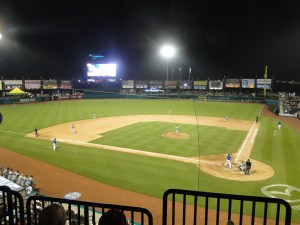

When 39-year old unknown Roy Hobbs arrived as a fill-in position player for the not-so-good New York Knights in the book and movie, “The Natural,” he rode the pines until destiny and circumstance brought his hitting ability to center stage and finally revealed him as a guy who could literally knock the cover off the ball.
After that, it was all about: “Who is this guy? Where did he come from? And why is it we never heard of him until now?”
End of fiction. Beginning of fact: There are no 39-year old Roy Hobbs level hitters out there – just a few poetic souls who may like to think they are. By age 39, most often, the guys who were good enough to hit, pitch, run, or field at the big league level are either retired or getting ready to do so.
What made me think of this reality this morning was the news that 35 year old former Astros closer Brad Lidge says that he is now retiring. Of course, at 35, we don’t know for sure if its a real retirement from the game or the Andy Pettitte type that later gets reversed by the call of the mound and the aroma of fresh bucks from a pennant chasing closer-spent team down the line.
The larger thought that awakened today is the fact that, until they establish themselves as fully delivered MLB players at some variable level of competence, all players universally are, and mostly are, in their own language, either “prospects” or “suspects” – as major league talent.
And what separates one group from another? It appears to start with age and the expectations placed upon each of them by the scouts and other systemic evaluations used by each particular MLB club. There is no hard and fast number on the age cut-off for prospects, but the line seems to get clearer by the mid-20s in age. It also depends on when a club signs a player. If they signed a guy at 16 in Venezuela, its possible they may still see him as a prospect by age 24. On the other hand, age 24-25 for original signees puts them more in the suspect category and all those “where have you been” questions.
If we use the current Astros rebuilding program as a model, it would appear that no player has much prospective value to the long-term future once they hit 27-28. And that makes sense. Once players hit 30, the aging card begins to kick in with some as bad legs, weaker arms, and slower bats. You never know. Maybe some will play to 40 with no significant loss of physical ability, but most will not. Physical ability will lessen. For some it will be gradual. For others, it will be all at once.
Again, it makes sense that teams dedicated to winning are better off maintaining a roster of good players who won’t all age at once than putting all their eggs into the basket with one or two great players and not much else.
Of course, there are all kinds of performance and personality factors that will help clubs separate the keepers from the klunkers along the way. For hitters, bat speed and pitch selectivity are important, no matter what kind of hitter a guy may be. For pitchers, the ability to deliver different pitches on the corners at variable speeds from deliveries that all look the same is big. And for fielders, speed, agility, and arm strength are big measuring sticks. Throw in the guy’s personal life, habits, and behaviors – and what its like to have him in the clubhouse – and you just begin to go through all the technical things that separate prospects from suspects on their ways to either major league careers or trips out the door.
You just won’t find any 39 year old Roy Hobbs types showing up in the spring who can really knock the cover off the ball.
 The Pecan Park Eagle
December 4, 2012 at 7:18 am |
Good-by Jim Deshaies.
Looking forward to your write-up on him. I understand the team wanted him but couldn’t persuade him to stay. I wonder why?
Well, they’re certainly are some job openings with this franchise. If the Astros do get a name change, I thought of a possibility:
The Houston Browns. What do you think?